
Wall Art Guide, Wall Art Tutoriels
Amazon.com Wall Art for Living Room: Online Main Space Shop
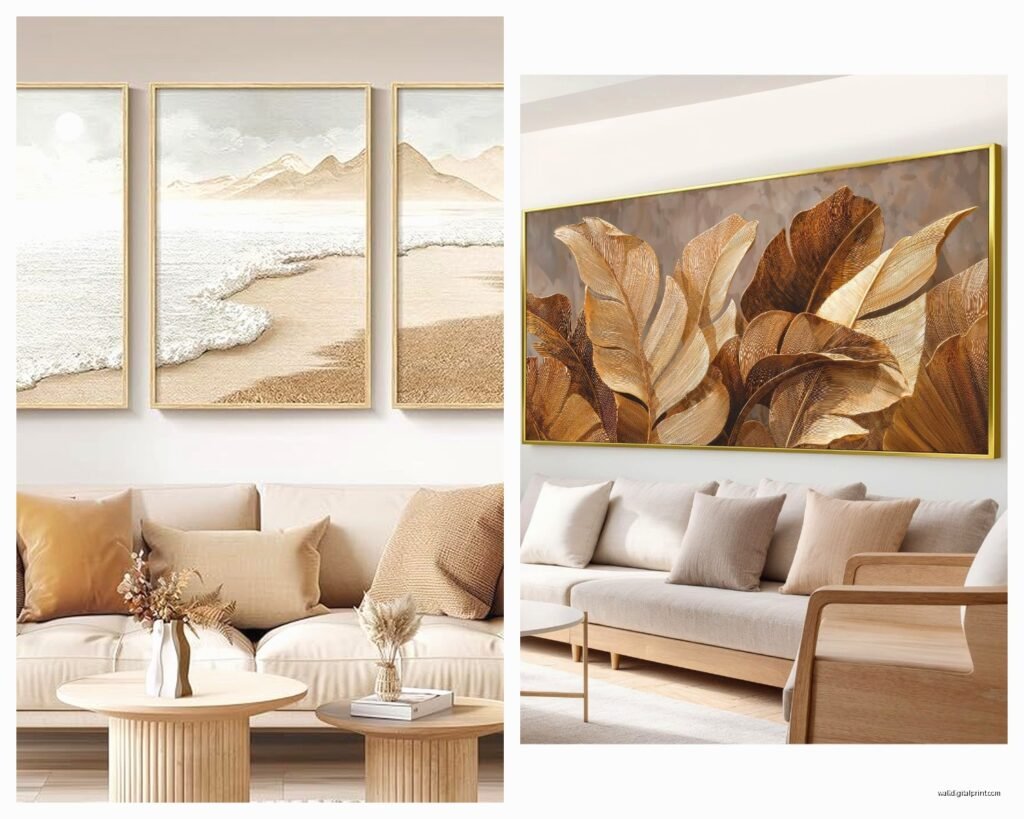
Oct
So I’ve been down this Amazon wall art rabbit hole more times than I want to admit, and honestly the living room is where people mess up the most because they either go too small or pick something that looks amazing on screen but shows up looking like a dorm poster.
Start With Your Actual Wall Measurements
Okay this is gonna sound obvious but measure your wall space before you do anything else. I had a client who ordered this gorgeous three-panel canvas set and it was like…maybe a third of the size she needed. The general rule I tell people is your art should take up about two-thirds to three-quarters of the furniture width beneath it. So if your couch is 90 inches, you’re looking at around 60-67 inches of art width total.
Amazon’s search filters are actually pretty decent for this. You can filter by size which saves so much time. I usually search “large wall art living room” and then immediately hit those size filters on the left sidebar.
Canvas vs Framed vs Metal Prints
The canvas prints on Amazon are hit or miss but mostly hit if you stick with certain sellers. Look for “gallery wrapped” which means the image continues around the sides so you don’t get those weird white edges. I’ve ordered probably fifteen canvas pieces from Amazon over the past two years for staging and my own place, and the ones that came stretched on wooden frames were way better than the rolled canvas ones you have to frame yourself.

Framed prints can be good but check the reviews for photos of the actual frame quality. Some of them use this really thin plastic that looks cheap in person even though the art itself is fine. Metal prints are having a moment right now and they actually photograph really well for that modern industrial look, but they’re heavier than you think so make sure you’ve got the right wall anchors.
Multi-Panel Sets
Oh and another thing, those three-piece and five-piece sets are everywhere on Amazon. They can look really sophisticated but spacing is everything. Most people hang them too far apart. I go with 2-3 inches between panels max. Any more and it starts looking disconnected.
The five-panel ones are tricky because you need a really long wall. I made that mistake in my own living room last year and ended up returning a set because it just overwhelmed the space. Stick with three panels unless you’ve got like 12+ feet of empty wall.
What Actually Looks Good
This is subjective obviously but after curating art for different spaces I’ve noticed some patterns. Abstract pieces in neutrals with maybe one accent color tend to work in most living rooms because they’re flexible. If you search “abstract wall art canvas” you’ll get a million options.
Nature photography can be stunning but it’s easy to veer into hotel lobby territory. I look for pieces with interesting compositions not just pretty landscapes. Close-ups of leaves, architectural details in nature, that kind of thing reads as more curated.
Black and white photography is pretty safe and works with most color schemes. There’s a seller on Amazon called Wieco Art that does decent reproductions of classic pieces.
Reading Reviews the Right Way
Okay so funny story, I once ordered this beautiful ocean wave print based on the main photo and when it arrived the colors were completely different. Now I always scroll through customer review photos first before I even read the descriptions. People will post what it actually looks like in their homes with regular lighting.
Look for reviews that mention color accuracy specifically. If multiple people say “colors are more muted than shown” or “much brighter in person” you’ll know what to expect. Also check if people mention the canvas quality, whether it arrived damaged, and how the mounting hardware was.
Reviews with less than 4 stars can actually be more helpful than the 5-star ones because people explain what went wrong.
Price Points That Make Sense
You can find canvas sets for like $30-40 which seems amazing but they’re usually pretty thin canvas with okay-ish printing. For a living room where people actually spend time I’d budget at least $60-100 for a decent sized piece or set. The quality jump is noticeable.

That said I’ve gotten some surprisingly good pieces in the $50 range. There’s this brand called Pyradecor that makes large abstract canvases and the quality is solid for the price. My cat knocked one off the wall once and it didn’t even get damaged so there’s that.
The Actual Hanging Part
Most Amazon wall art comes with hanging hardware but it’s usually just those little sawtooth hangers which are fine for smaller pieces but sketchy for anything over like 24 inches. I always use proper wall anchors or hit a stud if possible.
Get a level. Seriously. I’ve rehung so many pieces for people who just eyeballed it and it’s always slightly crooked. There are these cheap laser levels on Amazon for like fifteen bucks that make it so much easier especially for multi-panel sets.
For the height, the center of your art should be around 57-60 inches from the floor which is average eye level. But if you’re hanging above furniture bring it down so there’s about 6-8 inches between the furniture top and the bottom of the frame.
Command Strips Are Your Friend Sometimes
Wait I forgot to mention, if you’re renting or don’t want to put holes in your walls, the heavy-duty Command strips actually work for canvas art. I’ve used them for pieces up to about 5 pounds with no issues. Just follow the directions exactly and let them set for the full hour before you hang anything.
Specific Searches That Work
Instead of just searching “wall art” which gives you everything including weird stuff, try these:
- “Large canvas wall art for living room modern”
- “3 piece wall art set contemporary”
- “Oversized wall art 60×40”
- “Textured canvas art” if you want something with dimension
- “Minimalist line art prints” for that modern gallery vibe
Adding “modern” or “contemporary” to your search filters out a lot of the dated looking stuff. Unless you’re specifically going for traditional which is totally fine but that’s a different search strategy.
Color Matching Without Losing Your Mind
This is gonna sound weird but I take a photo of my living room on my phone and then look at Amazon listings on the same phone so I can kind of compare the colors side by side. It’s not perfect but it helps.
If you’ve got a neutral room, you can go bold with the art. If you’ve already got colorful furniture and textiles, stick with more neutral art so it doesn’t get too chaotic. I learned this the hard way with a bright abstract piece that clashed with some throw pillows and it bugged me for months.
Teal and gold seems to be having a moment and there’s tons of options in that color combo. Gray and white is classic. Navy blue works in almost any space.
Return Policies Are Important
Amazon’s return policy for home decor is pretty good usually 30 days but check the specific listing because some third-party sellers have different rules. I’ve returned maybe four or five pieces over the years when they just didn’t work in the space and it’s been straightforward.
Keep the packaging at least for the first few days until you’re sure you’re keeping it. Some of those canvas sets come in really compact boxes and if you destroy the packaging it’s harder to return.
Brands I’ve Had Good Luck With
Okay so these aren’t like fancy art galleries but for Amazon quality they’re solid. Wieco Art does decent reproductions. Pyradecor I mentioned before for abstracts. Visual Art Decor has some good options for larger pieces. Cao Gen Decor Art has interesting photography prints.
PIY and Ardemy are two more that show up a lot in searches and I’ve ordered from both without issues. The printing quality was good and they arrived well-packaged.
This doesn’t mean other sellers are bad, these are just ones I’ve personally tested. There’s probably hundreds of good options I haven’t tried yet.
Mixing Amazon Art With Other Pieces
Your living room doesn’t have to be all Amazon art obviously. I mix in stuff from local artists, vintage finds, even things I’ve printed myself. The Amazon pieces work great as anchor pieces especially the larger ones and then you can layer in smaller more personal items around them.
A big abstract canvas from Amazon over the sofa with a gallery wall of personal photos and smaller art on an adjacent wall looks way more curated than matchy-matchy everything.
Seasonal Switching
Some people like to change their art seasonally which sounds extra but it’s actually kinda nice. Amazon makes this affordable enough that you could have a few different pieces and rotate them. I have a client who does this and stores the off-season art in those under-bed storage bags.
Warmer tones and landscapes for fall, cooler abstracts for summer, that kind of thing. Not necessary at all but if you get bored easily it’s an option.
What to Avoid
Super trendy stuff that’s gonna look dated in a year. Like those “live laugh love” word art things or really specific pop culture references. Unless that’s your thing then go for it but resale value tanks and you’ll probably get sick of it.
Anything with obvious printing lines or pixelation in the review photos. If you can see the dots in someone’s customer image it’s gonna bug you in person.
Pieces that are trying too hard to match a specific decor trend. The gray and yellow chevron phase, remember that? Yeah.
The Lighting Factor
Where your art hangs matters for how it looks. If it’s gonna be in direct sunlight check that the listing mentions UV protection or fade-resistant inks. Canvas can fade over time in bright sun.
Also think about your room’s lighting when you’re looking at listings. Cool LED lights will make warm-toned art look different than if you’ve got soft white bulbs. I was watching this design show the other night and they made a whole thing about this and honestly they’re right.
Prime vs Third-Party Shipping
If you’ve got Prime definitely filter for Prime eligible items because shipping is faster and the return process is easier. Some of the third-party sellers take forever to ship and you’re stuck waiting three weeks for something that doesn’t work.
That said I have ordered non-Prime items when it’s exactly what I wanted and it’s been fine just slower. Read the shipping estimates carefully.
Oh and another thing, sometimes the same art is available from multiple sellers at different prices. Check a few listings before you buy because I’ve seen price differences of like $20-30 for the identical piece.
