Wall Art Guide, Wall Art Tutoriels
Zen Wall Art: Meditation Mindfulness Peace Balance Decor
Oct
So I’ve been down this whole zen wall art rabbit hole for like the past year, and honestly it started because my own meditation corner looked absolutely terrible. Like I had this beautiful cushion setup but the walls were just… blank? And it felt wrong somehow.
The thing about zen wall art is you gotta understand what actually creates that calm feeling versus what just looks like it should. I made this mistake early on where I bought this huge Buddha print from one of those mass market sites and it was so glossy and in-your-face that it literally stressed me out more than having nothing at all. My dog kept barking at it too which didn’t help.
What Actually Works for Meditation Spaces
Okay so here’s what I’ve learned through way too much trial and error. The best zen wall art has this quality where you can look at it without your brain getting all activated. You want something that your eyes can rest on, not something that demands attention.
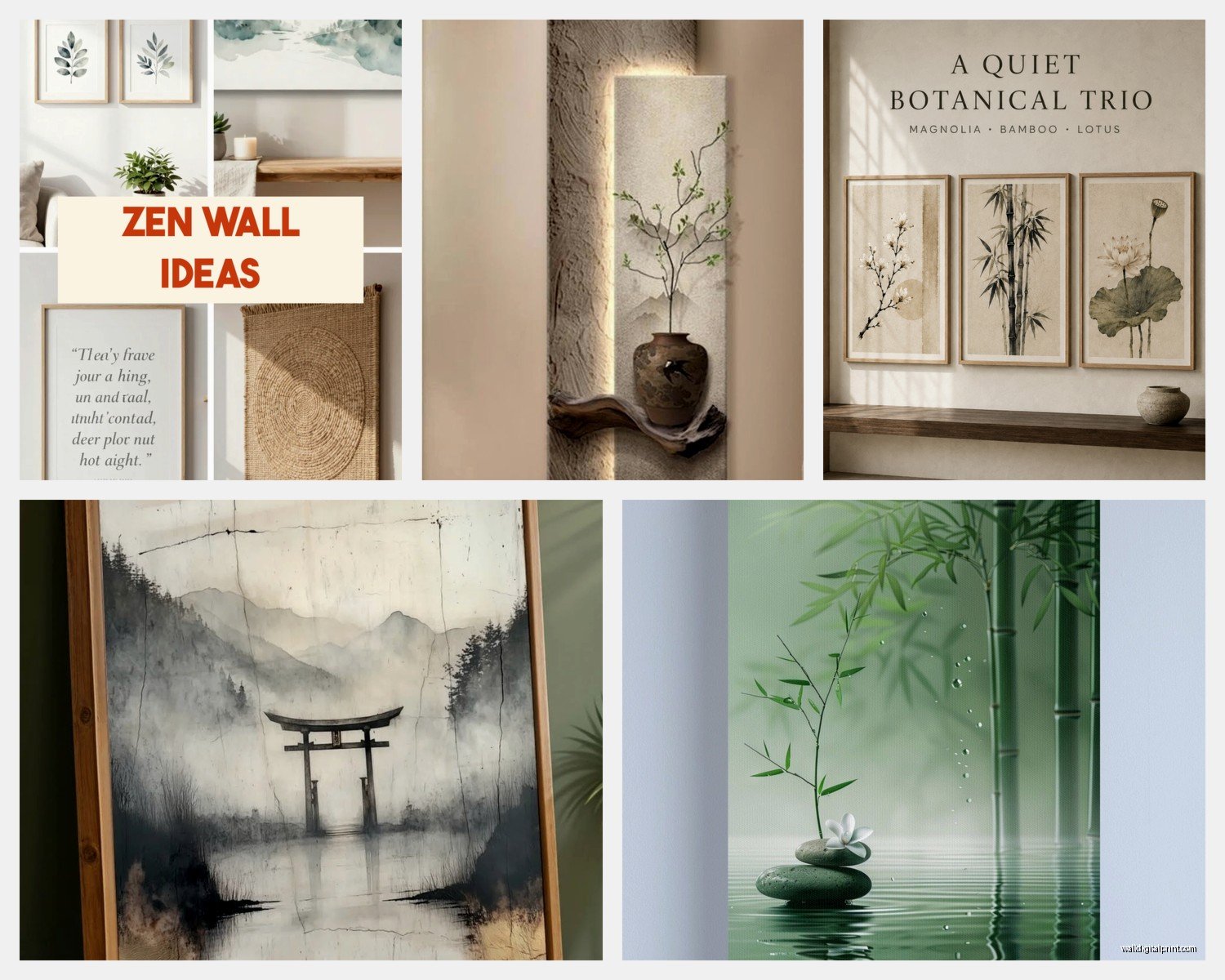
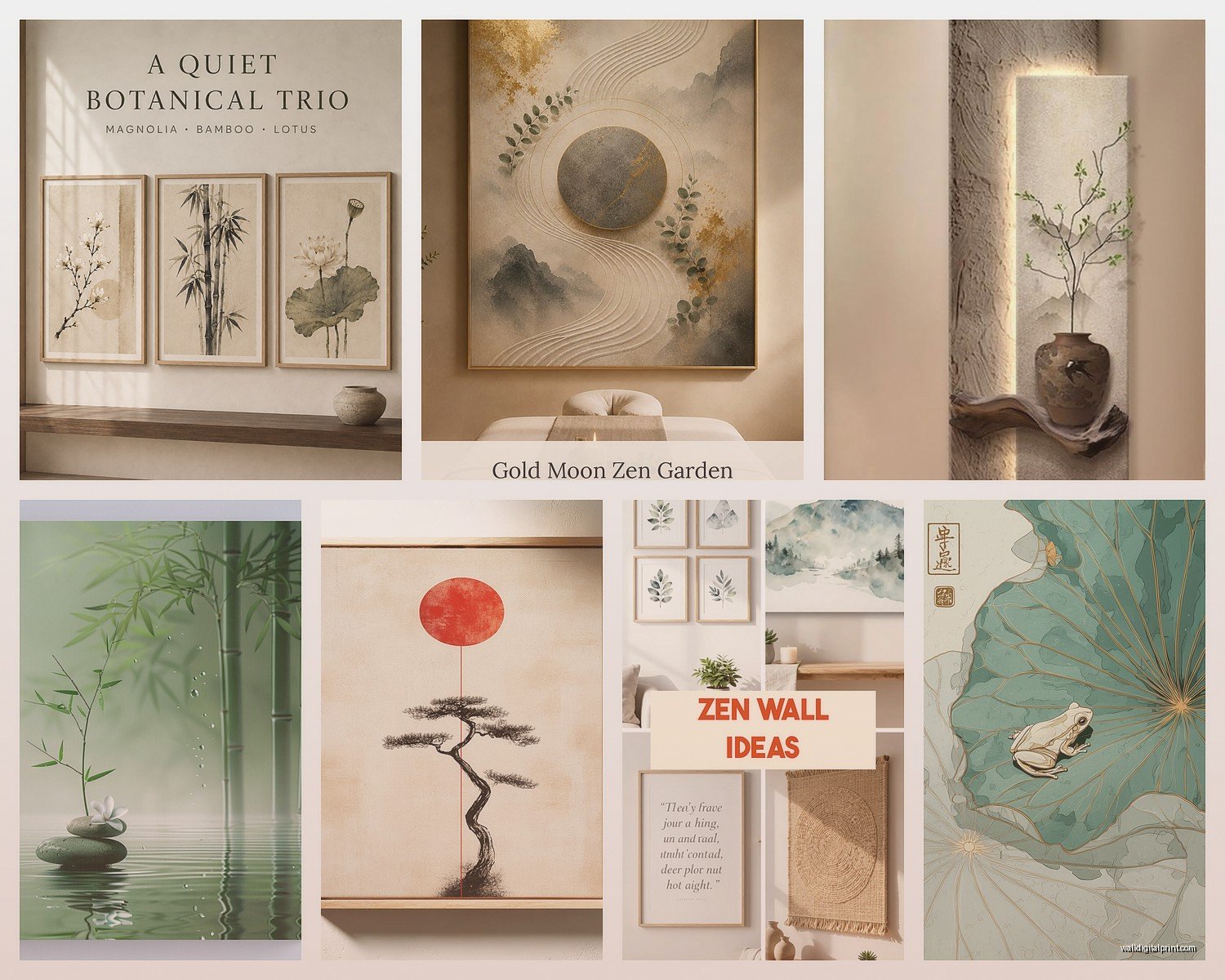
Natural elements are gonna be your best bet. I’m talking bamboo prints, stone gardens, water scenes, that kind of thing. But here’s the trick – they need to be muted. Not vibrant greens and blues, but more like… faded versions? I found this print of bamboo stalks in this soft sage color and it’s literally perfect because it’s there but it doesn’t scream at you.
The sizing is weirdly important too. I thought bigger was better but actually medium-sized pieces work best for meditation spaces. Something around 24×36 inches or even smaller. When it’s too large it becomes the focal point and that’s not what you want. You want it to support the space, not dominate it.
Materials That Don’t Ruin the Vibe
This is gonna sound weird but the frame and material matter SO much more than I expected. Canvas prints have this texture that works really well – they absorb light instead of reflecting it. Those glossy prints I mentioned? Total disaster. Every time light hits them you get this glare and it completely breaks your focus.
I’ve tested wood frames, metal frames, and frameless canvas wraps. For zen spaces the frameless wraps or really simple wood frames in light colors work best. Black frames can work but they need to be thin. Chunky black frames make everything look too formal and gallery-like.
Oh and another thing – textured art is amazing if you can swing it. I found this rice paper print mounted on wood that has actual dimension to it and there’s something about the shadows it creates that changes throughout the day. It’s like the art is breathing with the space.
The Color Psychology Part Nobody Talks About
Everybody says “use calming colors” but what does that actually mean when you’re standing in front of seventeen different prints online? From my experience, here’s what works:
- Grays and taupes – these are your base, they go with everything and don’t compete with your wall color
- Soft sage and muted olive – green is calming but not when it’s neon, you want the color you see in actual nature after the sun’s been beating on it all day
- Warm whites and creams – sounds boring but creates this cocoon feeling
- Dusty blues – but only if your space has cool tones already, otherwise it feels off
- Earthy browns – think driftwood and dried clay, not chocolate
I had this whole phase where I tried to incorporate gold accents because I saw it in some fancy meditation studio. It looked ridiculous in my actual apartment. Gold reads as decorative and precious, which makes your brain think about value and money and all that stuff you’re trying to avoid when meditating.
Specific Art Types That Actually Help
Enso circles are everywhere in zen decor and there’s a reason. That brushstroke circle thing – it gives your mind something to trace without getting complicated. I have one above my meditation cushion and I catch myself following the brushstroke with my eyes sometimes when I’m settling into practice. It works.
But don’t get the perfectly printed ones. The whole point of the enso is the imperfection, the humanity in the brushstroke. Look for ones that have visible texture or slight irregularities. I found mine on Etsy from someone who actually does traditional brush painting and you can see where the brush had more ink versus less ink.
Landscape minimalism is another winner. I’m talking about those really simplified mountain scenes or horizons. Just a few lines suggesting hills or water. My client canceled last month so I spent an hour comparing these minimal landscape prints and the best ones have maybe three colors max and lots of negative space. The negative space is actually the most important part – it’s where your mind gets to rest.
Stone and Rock Gardens
Zen garden prints can go either way. The really detailed ones with every pebble visible? Too much. But abstract interpretations of rock arrangements work great. I have this print that’s basically just five stones suggested in charcoal gray on off-white and it’s one of my favorites.
The key is whether you can soft-focus your eyes on it. If the details demand that you look at them sharply, it’s not gonna work for meditation.
What to Actually Avoid
Text. Just don’t. I know those “breathe” and “be present” prints are tempting but words activate the language processing part of your brain. Even if it’s a calming word, your brain is reading it and that’s not the same as resting.
I made this mistake with a “peace” print in beautiful calligraphy and I realized I was literally reading it every time I looked at it. Defeated the whole purpose.
Also avoid anything too symmetrical or geometric unless it’s super simple. Mandalas are tricky – some people love them for meditation but I find them too busy. If you do go with a mandala, get one that’s mostly one color with subtle variations, not those rainbow ones.
Animals are usually a no for me unless they’re really abstracted. A realistic crane or koi fish makes you think about the animal, what it represents, all that symbolic stuff. But a simple line drawing suggestion of a bird? That can work.
The Hanging and Placement Part
okay so this matters more than you’d think. Eye level is standard for regular art but for meditation spaces I actually hang things slightly lower. You want it positioned where your eyes naturally land when you’re sitting in your meditation posture.
I sit on a cushion on the floor so my art is hung lower than normal – maybe 50 inches to center instead of the standard 57-60. If you meditate in a chair, standard height is fine.
Distance is important too. You want the art far enough away that you’re not focusing on individual details but close enough that it’s in your natural sight line. For me that’s been about 4-6 feet. Closer than that and my eyes want to examine it, further and it becomes background.
Lighting Considerations
Natural light is best but not direct sunlight hitting the art. That creates glare and also fades prints over time. I have my meditation space set up perpendicular to the window so light comes in from the side. The art gets illuminated but doesn’t reflect light back at me.
If you need artificial light, warm LEDs work way better than cool white. Cool white makes everything feel clinical. I use a simple floor lamp with a fabric shade that diffuses the light – nothing pointed directly at the art.
Where to Actually Buy This Stuff
I’ve ordered from basically everywhere at this point. Etsy is honestly your best bet for authentic-feeling pieces. Search for “minimalist zen art” or “wabi sabi wall art” and you’ll find actual artists selling prints of their work. The quality varies but you can usually tell from the shop reviews.
Society6 and Redbubble have some good options but you have to wade through a lot of mass-produced stuff. Use specific search terms like “ink wash landscape” or “sumi-e inspired” rather than just “zen art.”
For physical stores, HomeGoods and TJ Maxx sometimes have decent pieces in their wall art section but it’s hit or miss. I found an amazing three-panel bamboo print there for like thirty bucks but had to go back weekly for two months to find it.
oh wait I forgot to mention – thrift stores can be goldmines. People donate the weirdest stuff and I’ve found some really beautiful simple landscapes and abstract pieces that work perfectly for meditation spaces. You gotta be willing to dig though.
DIY Options That Don’t Look Terrible
If you’re even slightly crafty, making your own zen wall art is actually easier than you’d think. I did this thing where I bought plain canvas boards and just painted them in gradients of gray. Literally just gray getting lighter from bottom to top. Took me maybe an hour including drying time and it looks intentional.
Pressed botanicals under glass also work great. I collected some dried grasses and ferns, arranged them simply on white paper, and put them in basic Ikea frames. Very wabi sabi, very calming, cost me almost nothing.
The enso circle thing? You can totally do that yourself. Get some black acrylic paint, a wide brush, and just practice making circles on cheap paper until you get one you like. The imperfection is the point so you can’t really mess it up. I did like fifteen before I got one I wanted to frame but it was actually kinda meditative making them.
Multiple Pieces vs Single Statement Art
This is personal preference but I’ve tried both. A single piece keeps things simpler and gives your eyes one place to land. Three pieces in a row can work if they’re really cohesive – like the same image split into panels or three variations on the same theme.
What doesn’t work is a gallery wall situation. Too much visual input. Your meditation space isn’t the place for that curated eclectic look that’s everywhere on Instagram.
I currently have just one piece above my meditation cushion and two smaller pieces on the adjacent wall, but they’re spaced far apart. The eye can take them in separately, they’re not competing.
Rotating Your Art
Something I started doing that’s been really nice – switching out the art seasonally or even just when I feel like I need a refresh. I keep a few different pieces and rotate them. Right now I have the bamboo up but in winter I switch to this minimal mountain landscape that feels more appropriate somehow.
You don’t need to commit forever to one piece. The whole point is supporting your practice and sometimes that means changing things up when they start to feel stale or invisible.
The Actual Investment Range
You can do this cheaply or spend a lot, both work. I’ve seen people create beautiful meditation spaces with $20 prints from Etsy in basic frames. I’ve also invested in a $200 original ink painting that I’ll probably keep forever.
For most people, the sweet spot seems to be $40-80 per piece. That gets you a decent quality print in a good frame or a nice canvas wrap. Less than that and you’re usually dealing with thin canvas or flimsy frames that look budget. More than that, you’re paying for original art or really high-end printing which is lovely but not necessary.
Frame quality matters though. A beautiful print in a cheap warped frame looks worse than a decent print in a solid frame. If you’re gonna skimp somewhere, don’t let it be the frame.
I’ve probably spent like $300 total on my meditation space art over the past year but that includes several pieces I rotated out and some mistakes. If I were starting fresh now with what I know, I could do it for under $100 easily.
The most important thing honestly is that it feels right to you. I’ve been in meditation spaces with absolutely gorgeous expensive art that felt cold, and spaces with simple DIY pieces that felt perfect. Trust your gut on what makes you feel calm when you look at it, because that’s literally the only metric that matters.