Wall Art Guide, Wall Art Tutoriels
Guitar Wall Art: Music Instrument String Rock Decor
Oct
So I’ve been obsessing over guitar wall art lately because my studio apartment needed something that didn’t scream “I bought everything from the same big box store” and honestly? This whole category is way more complex than you’d think.
What Actually Works on Walls
Okay so first thing – actual guitars versus guitar art. I tried hanging a real vintage acoustic last year and it looked amazing for like three weeks until I noticed the neck was warping from the humidity changes. My friend who’s a luthier basically yelled at me through text messages. Real guitars need climate control if they’re gonna be wall décor, which… most of us don’t have unless you’re storing wine or something.
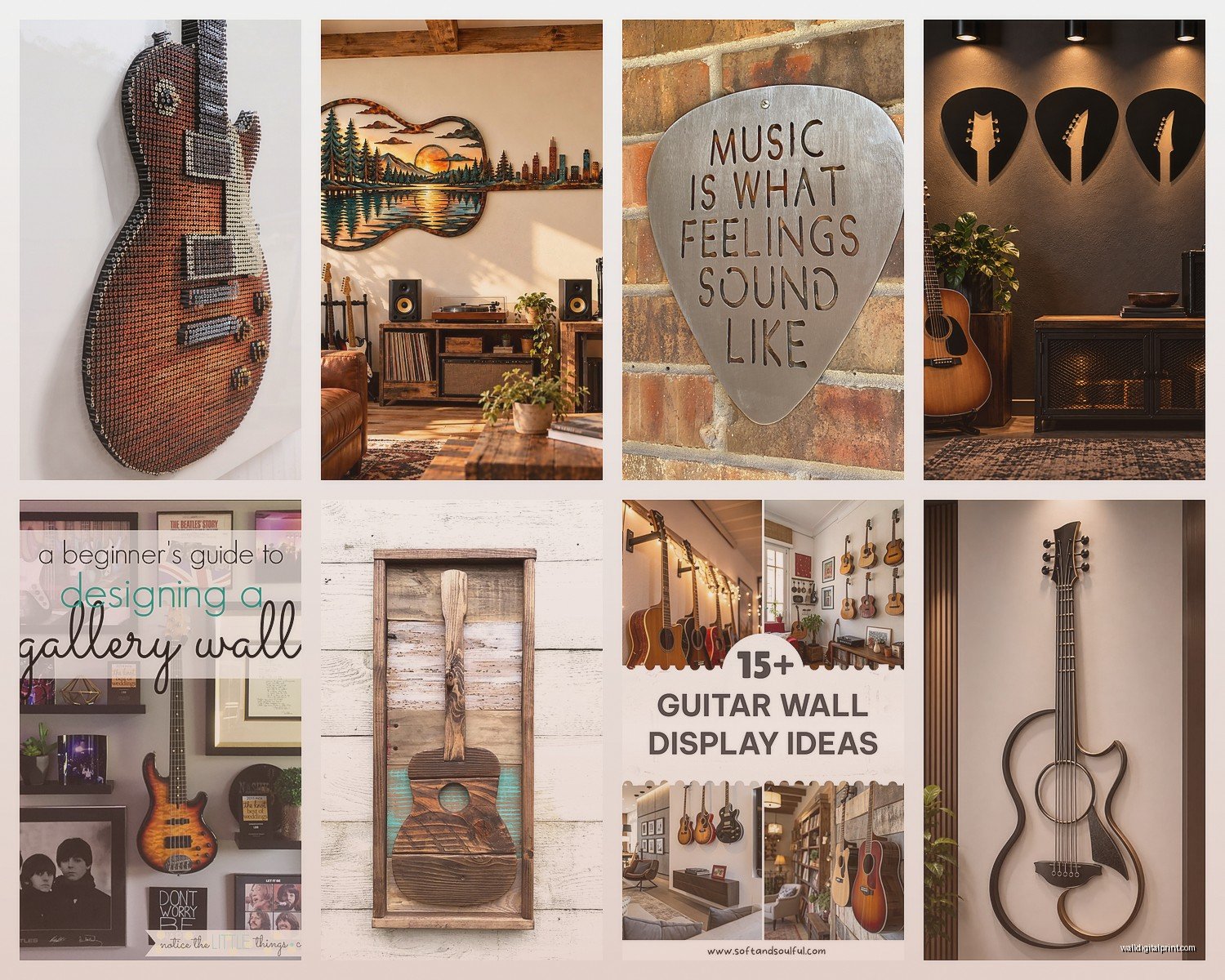
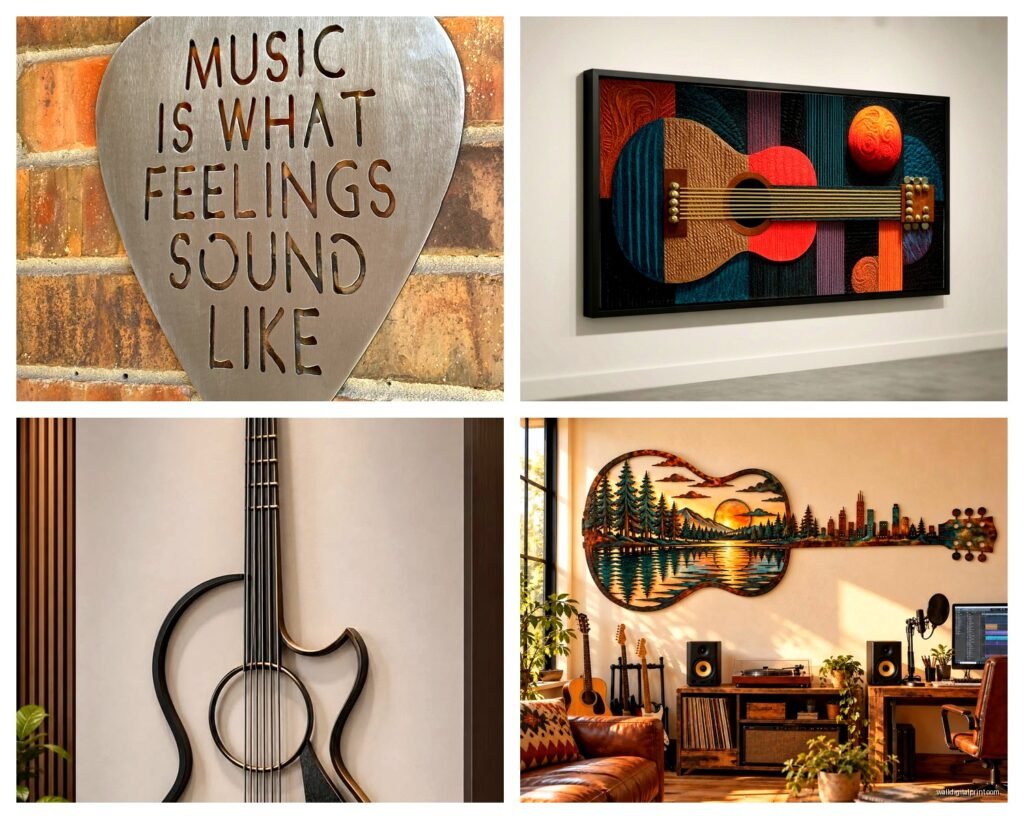
The safer route is guitar-shaped metal art or prints. I found this amazing metal silhouette piece at a craft fair that’s held up perfectly. It’s this brushed copper finish that catches light differently throughout the day and cost me like $45? The artist used recycled materials which wasn’t why I bought it but made me feel less guilty about impulse purchasing.
Size Matters Way More Than You Think
Here’s where I messed up initially – I bought this cute little 12-inch guitar print thinking it would be a subtle accent piece. Looked like a postage stamp on my wall. You need to go bigger than feels comfortable when you’re shopping online. I’m talking at least 24 inches for a focal point, or if you’re doing a gallery wall situation, multiple pieces in the 16-20 inch range.
My general rule now is measure your wall space, then get something that fills about 60-75% of that area. Sounds like too much but trust me. I have a 3-foot metal guitar sculpture above my record player now and it finally feels proportional.
The Gallery Wall Approach
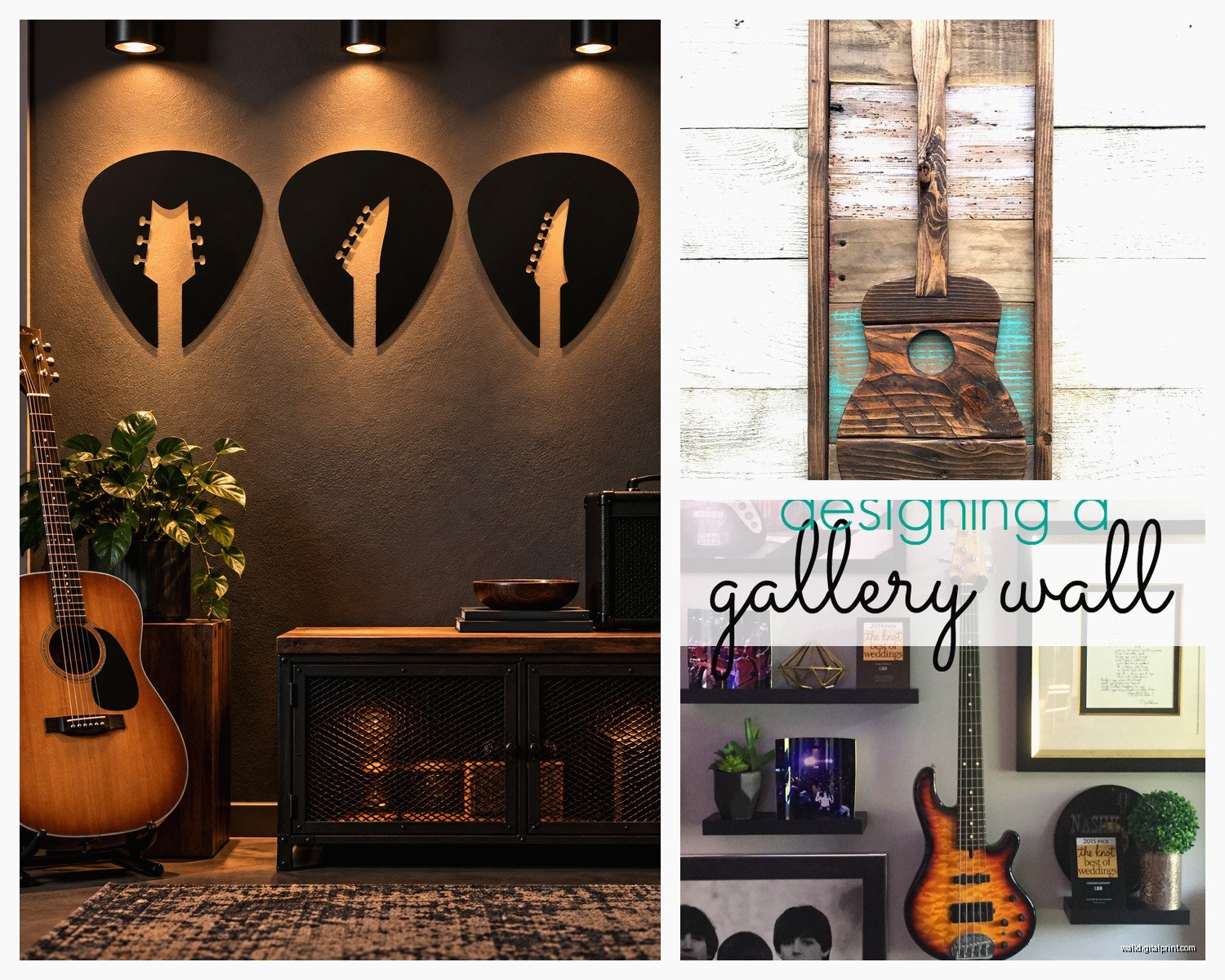
Oh and another thing – if you’re gonna do multiple pieces, odd numbers work better. Three guitars, five guitars, whatever. I did seven small vintage guitar picks framed with actual concert photos and it’s probably my favorite wall in the apartment. Got the frames from that discount store, spray painted them matte black, and suddenly they looked intentional instead of cheap.
Layout templates help SO much. I literally cut out paper shapes the size of my frames and taped them to the wall first. Felt ridiculous doing it but saved me from like fifteen nail holes in the wrong spots.
Materials and Durability
Metal art is gonna last forever basically. I have a steel cutout of a Stratocaster that’s been through two moves and still looks perfect. Wood pieces are gorgeous but they need to be sealed properly – learned that when my reclaimed wood guitar piece started splitting after six months near a sunny window.
Canvas prints are the easiest option honestly. They’re lightweight so hanging them is straightforward, and if you get tired of them in a year or two, you’re not out hundreds of dollars. I rotated through three different canvas sets before committing to my current metal pieces.
There’s also this cool stuff made from actual guitar strings – like wall sculptures created by wrapping and weaving old strings into shapes. It’s very textural and catches light in interesting ways. Got one from an Etsy seller who makes them from broken instruments. Little pricey at $120 but it’s a conversation starter every single time someone comes over.
The LED Backlit Situation
Wait I forgot to mention – LED-backlit guitar signs are having a moment right now. They’re very bar/music venue vibes which works if that’s your aesthetic. I tested one in my client’s basement music room and it looked incredible at night but kinda cheap during the day? The acrylic edges were visible and it just didn’t have the same impact.
If you go this route, make sure it has a dimmer switch. The one I installed was WAY too bright initially, like airplane landing strip bright. With a dimmer it became actually usable mood lighting.
Color Coordination Without Looking Matchy-Matchy
This is gonna sound weird but I choose guitar art based on what’s already in the room rather than starting fresh. My couch has these burnt orange pillows so I found metal guitar art with a rust patina finish that picks up those tones. Feels cohesive without being too coordinated.
Black and white photography of guitars is the safe choice that works with literally everything. I have a series of close-up shots showing guitar necks and fretboards that are technically guitar art but abstract enough that they don’t scream “I really like guitars” if that makes sense.
For colorful pieces, pull colors from your existing textiles or accent pieces. My friend has this amazing rainbow gradient guitar print that matches the vintage concert posters in her hallway. It all feels connected even though nothing actually matches.
Hanging Methods That Don’t Destroy Walls
Okay so funny story – I used to just hammer nails wherever and hope for the best. Then I moved into a place with plaster walls and that approach resulted in several crater-sized holes and a very angry landlord.
Command strips work for lighter pieces under 5 pounds. The velcro-style ones specifically, not the hook kind. I’ve had canvas prints hanging for over a year on these with zero issues. Just follow the weight limits exactly or you’ll wake up to your art on the floor – been there.
For anything heavier, you gotta find studs or use proper anchors. I finally bought a stud finder after the third time I tried the “knock on the wall” method and failed spectacularly. Best $15 I’ve spent. French cleats are great for heavy metal sculptures – they distribute weight evenly and you can adjust positioning easily.
Picture hanging wire gives you more flexibility with positioning versus a single hook. My metal guitar piece uses wire and I can shift it slightly left or right without removing it entirely, which helped when I realized I hung it three inches off-center initially.
The Height Thing Everyone Gets Wrong
Eye level means different things depending on whether you’re sitting or standing in that room. For my living room where I’m usually on the couch, I hung my guitar art lower than standard because I’m viewing it while seated. In the hallway where I’m walking past, it’s at traditional 57-60 inches to center height.
Also consider what’s below it. Above a couch or console table, leave about 6-8 inches of space. I made the mistake of hanging a piece too high above my media console and it just floated awkwardly with too much dead space.
Where to Actually Find Good Stuff
Etsy has been my go-to honestly. You can find independent artists making custom pieces, and the quality is generally better than mass-produced stuff. Search terms that work: “metal guitar wall sculpture,” “vintage guitar print,” “music room decor,” “rock and roll wall art.”
Local music stores sometimes sell consignment art from local artists. I found an amazing piece made from broken drumsticks and guitar picks at a shop that mostly sells used equipment. It was displayed behind the counter and I literally asked if it was for sale.
Estate sales and flea markets if you want actual vintage guitars for display. Just check the condition carefully – I almost bought a “vintage” guitar that was actually from the 90s and had significant structural damage. Bring someone who knows instruments if you’re going this route.
Custom Options Worth Considering
If you play guitar or have a specific model you love, custom metal cutouts of that exact guitar shape are super cool. I had one made of a Les Paul silhouette for my brother’s birthday and it was like $80 for a 30-inch piece. The shop let me choose the metal finish – he went with distressed black.
Personalized pieces with song lyrics or band names can work if they’re done tastefully. My client wanted their wedding song lyrics incorporated into guitar art and we found an artist who did wood burning on a guitar-shaped wood panel. Turned out beautiful and meaningful without being cheesy.
Styling Around Guitar Art
Don’t make everything music-themed or it starts feeling like a Hard Rock Cafe. I have my guitar art but the rest of the wall has botanical prints and abstract pieces. The guitar element stands out because it’s not competing with fifteen other music references.
Layering works great with guitar art. Lean a smaller framed piece in front of a larger guitar sculpture on a shelf. Prop a vintage guitar against the wall below your guitar art. It creates depth and makes the display feel curated rather than just… stuck to the wall.
My cat keeps trying to scratch the canvas prints so I had to move them higher than planned, which actually ended up looking better anyway. Sometimes problems create better solutions I guess.
Lighting Makes or Breaks It
Picture lights are worth it for larger pieces. I installed a small LED picture light above my main guitar sculpture and the difference is dramatic. Highlights the metalwork details and makes it feel gallery-quality.
Natural light considerations – don’t hang prints or photographs where direct sunlight hits them for hours daily. Fading happens faster than you think. I’ve repositioned pieces twice now because I didn’t consider afternoon sun angles.
Budget Breakdown From My Experience
You can definitely do this cheap. Canvas prints start around $20-30 for decent quality. I’ve bought several in this range that still look good years later. Metal art ranges wildly – $40 for small simple cutouts up to $300+ for large detailed sculptures.
Custom work obviously costs more but sometimes it’s worth it. That personalized piece I mentioned was $150 and became a family heirloom basically, so price per value ended up being good.
DIY is an option if you’re crafty. I tried making my own guitar string art and… it was fine? Took forever and didn’t look as professional as I wanted but cost maybe $25 in materials. Better for gifts than your own main wall art probably.
Wait I forgot to mention thrift stores – I’ve found framed guitar photography for under $10 multiple times. Usually needs a frame update but the print itself is good quality. Just hit up thrift stores in neighborhoods near music venues or college areas.
The key is mixing price points. My wall has a $200 metal sculpture, two $30 canvas prints, and one $15 thrift store find. Nobody can tell which is which and the overall look is cohesive and interesting without breaking the bank completely.