Wall Art Guide, Wall Art Tutoriels
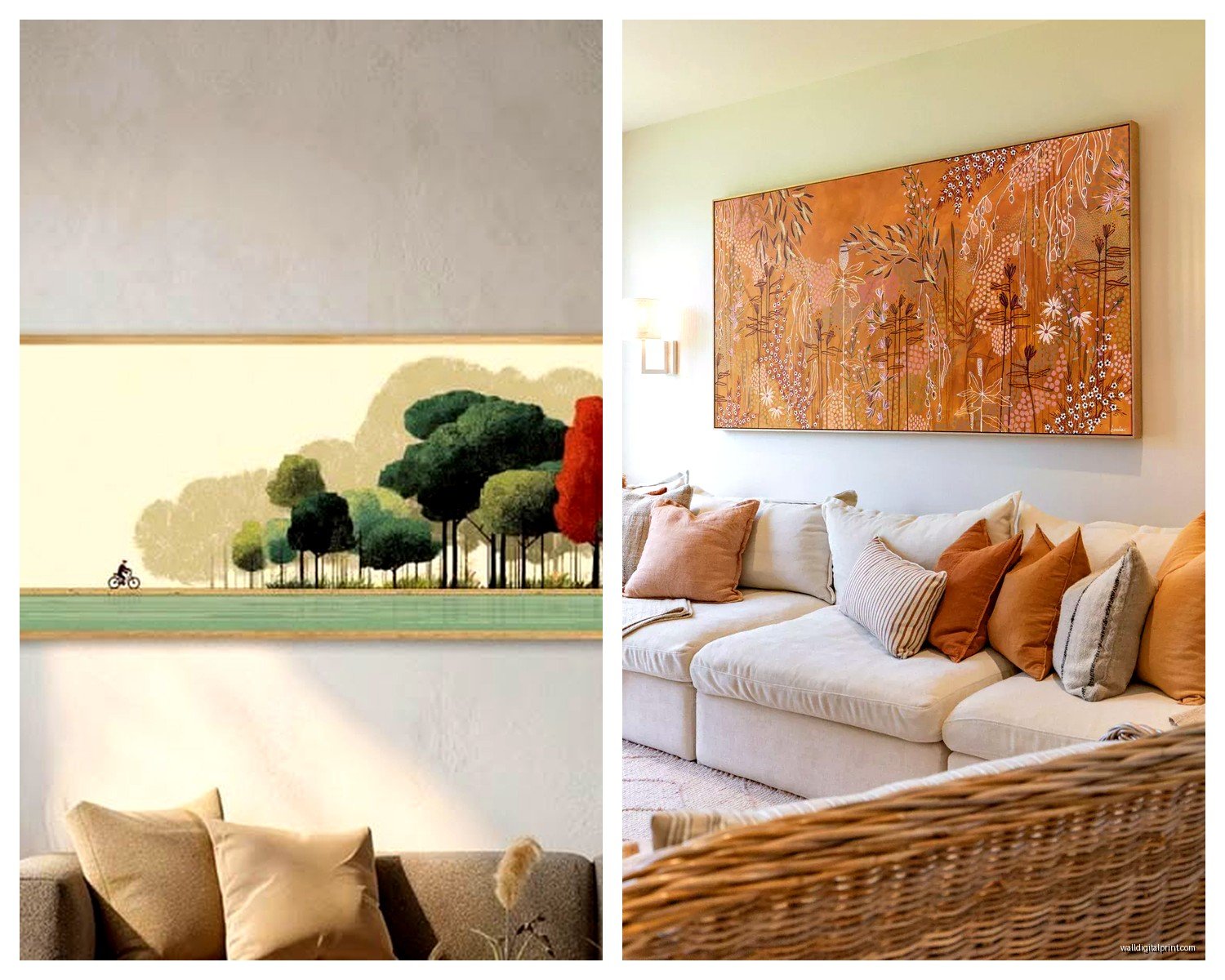
Long Horizontal Wall Art: Wide Panoramic Landscape Format
Oct
So I’ve been obsessing over horizontal wall art lately and honestly it’s one of those things that seems straightforward until you’re actually standing in your living room with a measuring tape at 10pm wondering if you should go wider or if that’s gonna look ridiculous.
Why Horizontal Panoramic Stuff Actually Works
Okay so the thing about these wide landscape pieces is they do something really specific to a room that regular square or vertical art just can’t pull off. They literally stretch your eye across the wall, which makes spaces feel wider. I had this narrow hallway in my apartment last year and threw up a 60-inch wide landscape of some misty mountains and it genuinely made the whole corridor feel less claustrophobic. My sister walked in and was like “did you knock down a wall?” so yeah, it works.
The panoramic format is usually a 2:1 or 3:1 ratio, meaning it’s two or three times wider than it is tall. Sometimes you’ll see even more extreme ratios like 4:1 but those are harder to work with unless you’ve got a really specific spot in mind.
Measuring Your Wall (Without Losing Your Mind)
Here’s what I actually do and not what those perfect Instagram posts show. First, find your furniture anchor point. Most of the time you’re hanging art above a sofa, console table, bed, or fireplace. The general rule is your art should be about two-thirds to three-quarters the width of the furniture below it.
So if you’ve got a 90-inch sofa, you’re looking at roughly 60-70 inches of art width. Could you go to 80? Sure, if the wall is big enough and there’s breathing room on either side.
But here’s where people mess up… they measure the furniture width and immediately order art that size without considering the whole wall. You need at least 6-8 inches of empty wall space on each side of the art. Otherwise it looks crammed in there like you’re trying to wallpaper the place with one giant print.
I use painters tape to map out the dimensions on the wall before buying anything. Sounds extra but I’ve returned way too many pieces because they looked different in my head. The tape lets you live with the size for a day or two and see how it feels when you walk into the room.
The Height Thing Nobody Talks About
The center of your art should be at eye level, which is typically 57-60 inches from the floor. But if you’re hanging above furniture, you want 6-8 inches between the top of the furniture and the bottom of the frame. This gets tricky with horizontal pieces because they’re not very tall to begin with.
Like I had this 48×16 canvas and when I did the math for proper spacing above my console table, the whole thing ended up mounted way higher than felt natural. So sometimes you gotta break the rules a bit and just eyeball what looks right in context.
Choosing the Right Subject Matter
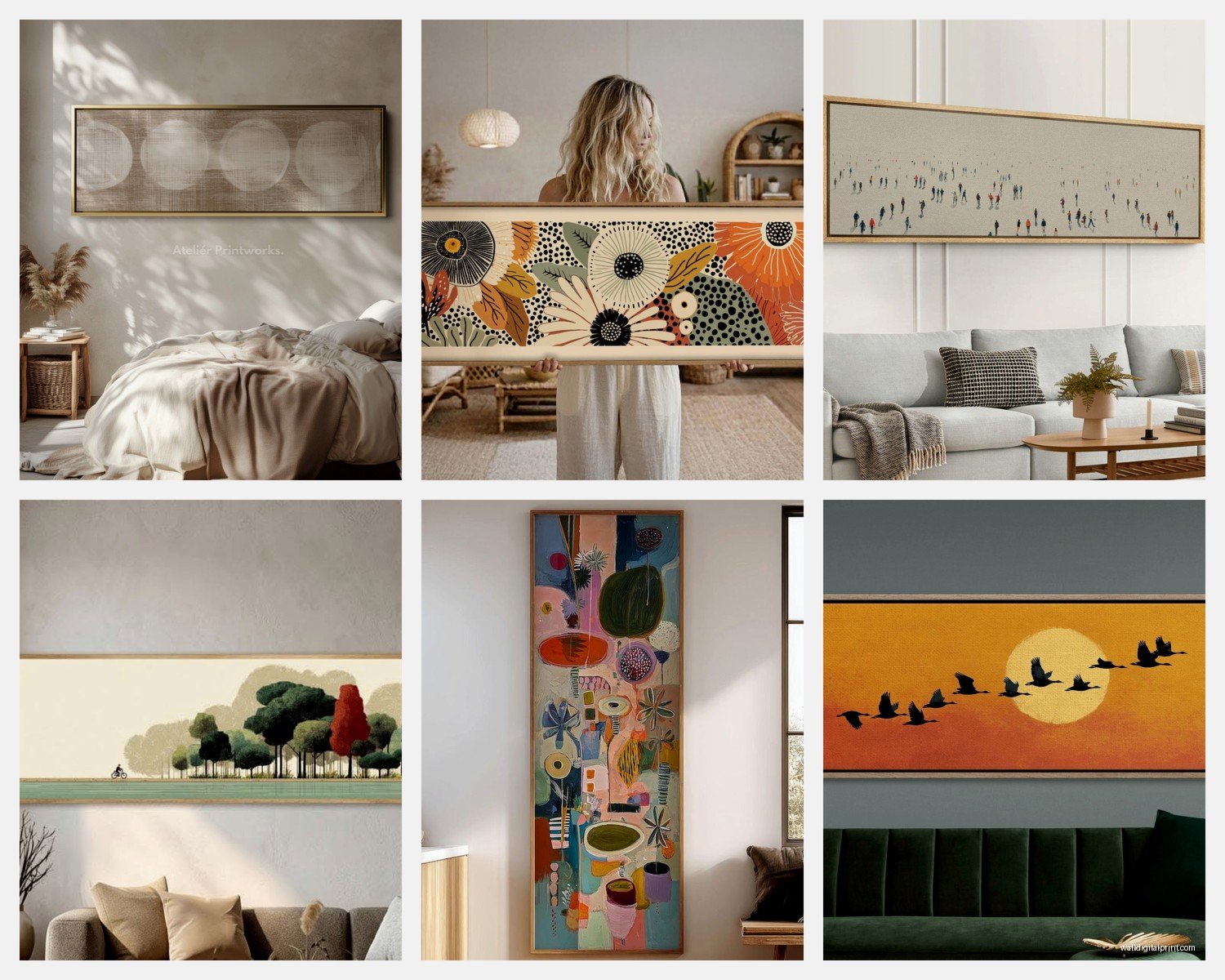
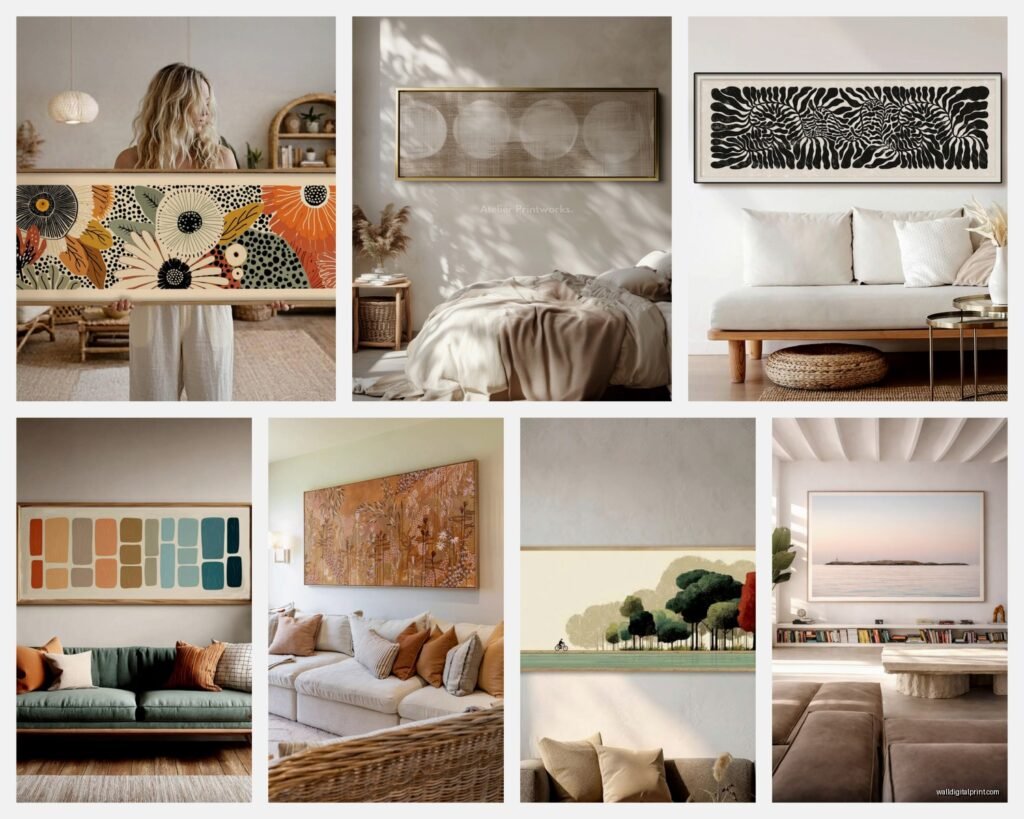
Landscapes are the obvious choice for panoramic format because that’s how we actually see landscapes in real life… stretched out horizontally. Mountains, beaches, city skylines, forest treelines – these all make sense.
But I’ve also seen really cool abstract pieces in this format, especially stuff with horizontal movement like brush strokes or color fields. There’s this artist I follow who does these minimalist color block paintings in super wide formats and they’re gorgeous over modern sofas.
What doesn’t work as well: portraits, obviously, or anything with a strong vertical element like tall trees or buildings where you’re looking up. You can make it work but it feels forced.
Oh and another thing – photography vs painting vs prints. Photography in panoramic format can be stunning but you gotta make sure the resolution is high enough. A grainy beach sunset blown up to 72 inches wide is gonna look pixelated and cheap. If you’re going the photo route, ask about the DPI and make sure it’s at least 150, preferably 200+ for larger sizes.
Material and Medium Options
Canvas is probably the most popular and honestly the easiest to work with. It’s lightweight, doesn’t need glass, and has that gallery-wrapped edge thing that looks finished from the sides. I’ve got a bunch of canvas pieces and they’re pretty forgiving if you’re DIY-ing the hanging.
Framed prints give you more flexibility with matting and style. You can do a thin black metal frame for modern spaces or a chunkier wood frame for something more traditional. But here’s the annoying part – custom framing a 60+ inch wide piece gets expensive fast. Like $300-500 expensive depending on the frame and mat options.
Metal prints are having a moment right now and they work really well for panoramic landscapes, especially modern photography. The colors pop and they’re super durable. Acrylic prints too, though those are heavier and need more robust hanging hardware.
I tried a wood print last year (my client canceled so I spent an hour comparing options for my own place) and the texture is really cool for rustic or organic landscapes. Not great for detailed cityscapes though.
The Triptych Loophole
Wait I forgot to mention – if you can’t find or afford one massive panoramic piece, you can fake it with a triptych or multi-panel setup. Three separate panels hung close together (like 2-3 inches apart) that form one continuous image.
This is actually easier to hang because the individual pieces are lighter and more manageable. Plus if you move, you’ve got more flexibility in reconfiguring them. I’ve done this with Ikea prints before and it looked way more expensive than it was.
Just make sure the panels are evenly sized and the image actually flows across all three. Some cheap sets have weird gaps in the composition that make it obvious they were separated.
Where to Actually Buy This Stuff
Society6 and Redbubble have tons of panoramic options and you can choose your size and material. Quality is hit or miss depending on the artist, so read reviews.
Etsy is great for unique pieces and you can often commission custom sizes from artists. I’ve worked with a few sellers who’ll adjust dimensions to fit your specific wall.
For photography, try 500px or even Adobe Stock if you want to license an image and have it printed yourself. Mpix and Nations Photo Lab do good quality large format prints.
If you want actual original art and have the budget, Saatchi Art and Artsy have panoramic landscape sections. You’re paying more but you’re getting something unique.
Ikea actually has some decent large horizontal prints for under $100 if you’re just testing out the look. They’re not gonna be heirloom quality but they’re fine for renters or if you change your decor frequently.
Hanging These Monsters Without Destroying Your Wall
Okay so funny story, I tried to hang a 72-inch canvas by myself once and it fell at 3am and scared my dog so badly she wouldn’t go in the living room for two days. Get help for anything over 48 inches. Seriously.
For the actual hardware, use proper wall anchors or hit studs if possible. A 60+ inch piece might not weigh a ton but it’s got leverage working against those hanging points. I use heavy-duty D-rings and wire on the back, then hang from two separate hooks on the wall for stability.
There are these clever LED hanging systems now where the hook clicks into a rail – makes adjusting the position way easier than traditional picture hooks. Worth looking into if you’re the type who can never get things level on the first try (hi, it’s me).
For canvas wraps without frames, make sure the hanging hardware is installed about one-third down from the top of the piece, not in the center. This helps it hang flush against the wall.
The Level is Your Friend
Use a real level, not the app on your phone. I’ve been burned by the app thing too many times. And measure from the ceiling or a fixed point, not the floor, because floors are rarely actually level.
Mark your holes with a pencil before committing. I use those sticky note tabs to mark where the hardware needs to go, then I can step back and see if the position looks right before making holes.
Styling Around Panoramic Art
The thing about these wide horizontal pieces is they’re pretty dominant visually, so you gotta balance the rest of your wall decor. I usually keep it minimal – maybe a couple small shelves or sconces on either side, but nothing that competes.
If you’re doing a gallery wall situation, the panoramic piece should probably be the anchor at eye level with smaller pieces arranged around it. Don’t try to stack another horizontal piece directly above or below because it’ll look like stripes.
Color coordination matters more with big pieces like this. If your panoramic landscape has a lot of blue tones, it’s gonna influence the whole room’s color story. I learned this the hard way when I bought this gorgeous teal ocean print and suddenly all my warm-toned throw pillows looked wrong.
Console tables or credenzas below the art are your chance to add dimension. A couple tall objects (lamps, vases, candlesticks) help connect the vertical space between furniture and art. Just don’t clutter it – three to five objects max.
Lighting Makes or Breaks It
If you’re investing in a nice panoramic piece, light it properly. Picture lights are traditional but can cast shadows. I prefer adjustable track lighting or recessed ceiling spots aimed at the art.
Natural light is tricky because it can fade prints over time. If your panoramic piece is opposite a big window, consider UV-protective glass or acrylic if it’s a framed print. Canvas is more forgiving but will still fade eventually in direct sunlight.
This is gonna sound weird but I sometimes use those battery-operated LED puck lights behind furniture to uplight a piece from below. Creates this cool ambient effect at night and you don’t need an electrician.
Common Mistakes I See All The Time
Going too small. People get nervous about large art and end up with something that looks dinky on a big wall. If you’re debating between two sizes, go bigger almost always.
Hanging it too high. I swear every house I visit has art hung like six inches too high. Your neck shouldn’t hurt to look at it comfortably.
Ignoring the room’s orientation. A horizontal panoramic piece emphasizes width, which is great for long narrow rooms but can make already wide rooms feel stretched out weird. Sometimes a vertical piece or square actually works better even if you love panoramic landscapes.
Mixing too many orientations on one wall. If you’ve got a dominant horizontal piece, keep other art in that same general direction. A bunch of vertical pieces scattered around a panoramic landscape looks chaotic.
Cheap frames on expensive prints. If you’re gonna splurge on the art, don’t cheap out on the frame. It’s like putting a nice painting in a frame from the dollar store… everyone can tell.
Not considering the viewing distance. A super detailed panoramic photograph needs to be viewed from far enough back to appreciate the whole composition. If it’s in a small room where you’re always close to it, you might want something with bolder simpler elements.
DIY Options If You’re Crafty
You can make your own panoramic art cheaper than buying it. Print your own photos at a local print shop, mount them on foam core or wood boards, and either frame them or do a floating mount.
I’ve also done the thing where you take multiple standard-sized frames (like three or four 16×20 frames) and create a panoramic effect by framing sections of one image or complementary images. Costs less than one custom panoramic frame.
Paint your own abstract panoramic piece if you’re into that. Horizontal brush strokes, color blocking, or even a simple gradient can look really sophisticated in a wide format. Nobody needs to know it took you an hour and cost $40 in supplies.
There’s also fabric stretching over wood frames – you can use interesting textiles or even wallpaper to create texture-based panoramic wall art. Works great for bohemian or eclectic spaces.
Okay so that’s basically everything I’ve figured out through trial and error with these things. The main takeaway is measure twice, go bigger than feels safe, and make sure it’s actually level because once you notice it’s crooked you’ll never unsee it. Also maybe don’t hang heavy stuff at 3am while watching true crime documentaries because your spatial reasoning is definitely impaired.