Wall Art Guide, Wall Art Tutoriels
Geode Wall Art: Agate Crystal Slice Gemstone Natural
Oct
So I’ve been completely obsessed with geode wall art lately and honestly it started because a client wanted this whole “elevated organic” vibe in her dining room and I was like, okay we need something that’s not basic but also not trying too hard, you know?
What You’re Actually Looking At
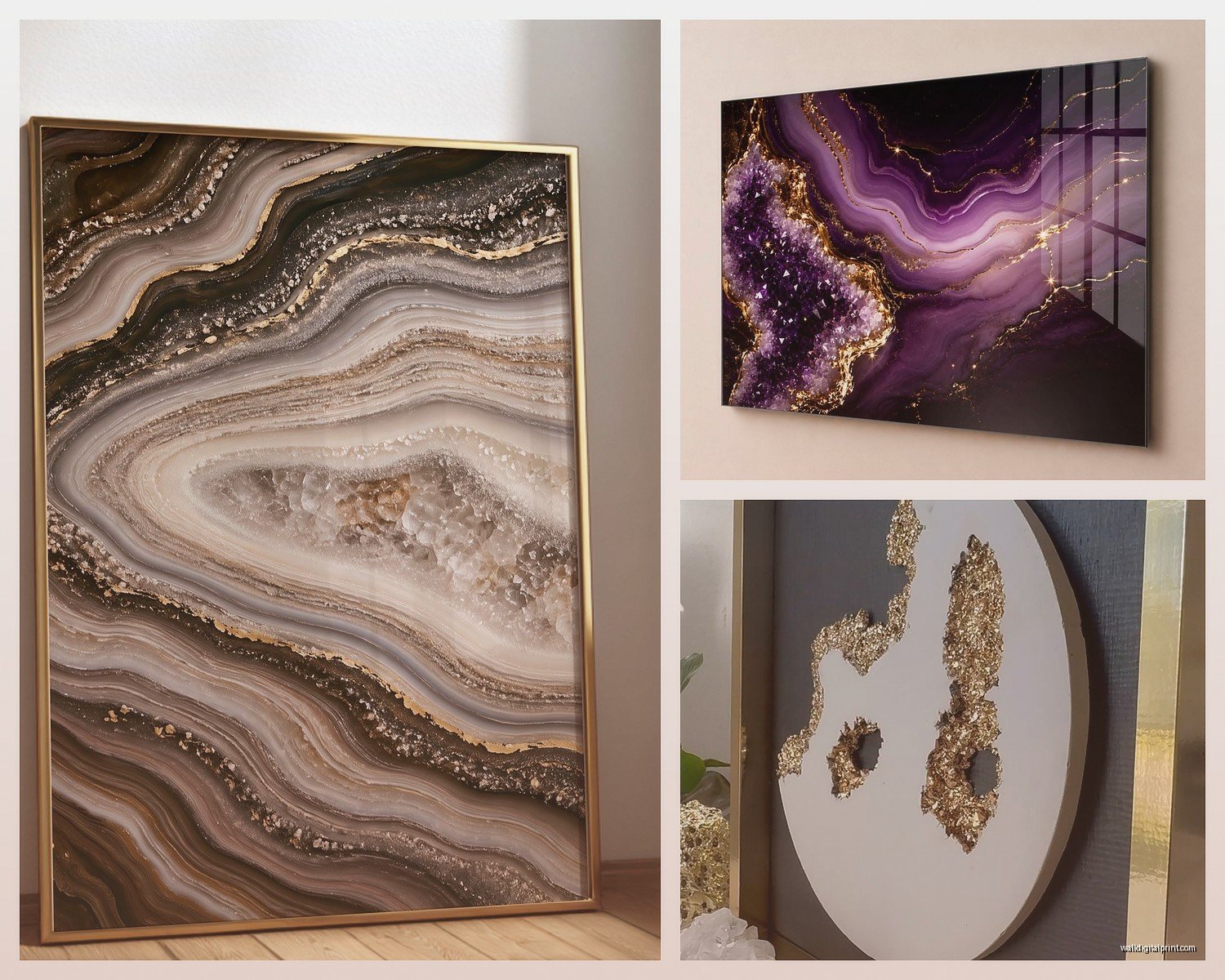
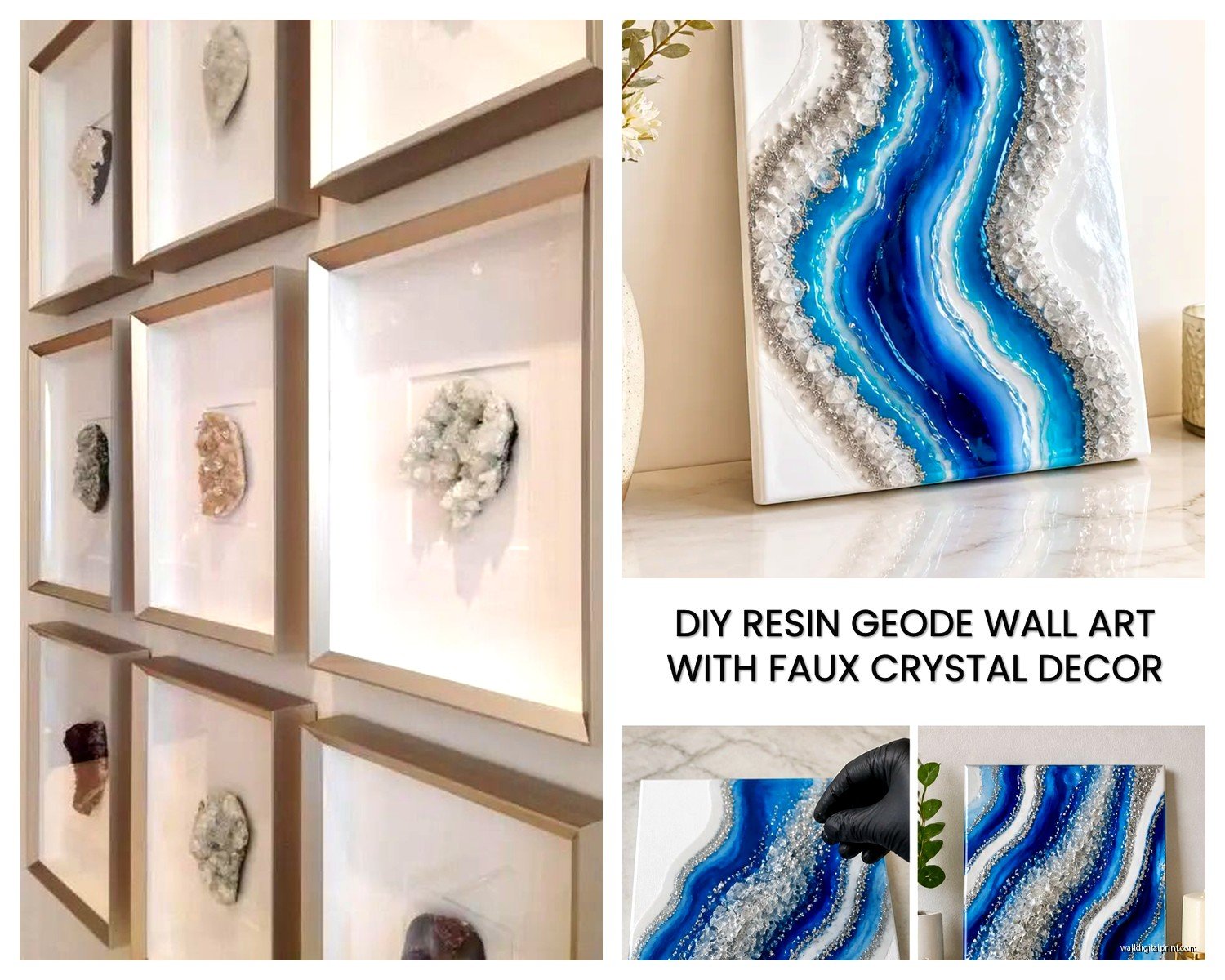
Okay so geode wall art is basically slices of agate or other crystals that have been cut thin enough to either let light through or just show off those insane natural patterns. The real ones are actual stone – like they literally slice these geodes open and polish them. Then there are resin versions which honestly can look amazing too, but that’s a whole different conversation.
The natural agate slices are what I’m gonna focus on because they’re just… they hit different. Each one is completely unique which sounds cliche but when you’re standing in someone’s living room trying to pick between three different pieces, you really feel it.
Types You’ll Actually Find
Raw Edge vs Polished Edge
Raw edge keeps that natural bumpy exterior of the geode intact. It’s more organic looking, kinda rustic. Polished edge is when they smooth out the entire perimeter so it’s sleek all around. I usually go polished for modern spaces and raw for boho or eclectic rooms, but like, there are no rules.
Backlit vs Non-Backlit
This is where it gets interesting. Some agate slices are thin enough that you can mount them with LED lights behind them and they glow. It’s actually insane how pretty this is, especially with the more translucent pieces. The thicker ones won’t transmit light so they’re just mounted flat against the wall.
I installed a backlit one in my own bedroom last month and my cat is absolutely convinced it’s a portal to another dimension or something, she just sits and stares at it.
Size Matters Here
You can get tiny 4-inch coasters all the way up to massive 24-inch statement pieces. The pricing jumps dramatically once you go over 12 inches though. Like, dramatically.
How to Pick One That Won’t Disappoint
Oh and another thing – buying these online is tricky because the photos never quite capture the actual colors. I learned this the hard way when I ordered what looked like a gorgeous purple and pink piece and it showed up basically brown with a hint of mauve.
Color Variations:
- Blue agate – usually dyed, just so you know, natural blue is super rare and expensive
- Pink and purple – can be natural or enhanced, ask the seller
- Brown and cream – almost always natural, very earthy
- Gray and white – natural, very versatile for any decor
- Teal and green – usually dyed but gorgeous if you’re into it
I’m not against dyed agate honestly. If the color is what you need for your space and it’s labeled correctly, go for it. Just don’t pay natural prices for enhanced stones.
Thickness Check
For backlit installations you want pieces that are 3-5mm thick. Any thicker and the light won’t penetrate well. For regular mounting, 5-10mm is ideal because it has more presence but isn’t crazy heavy.
Weight is actually something to consider – a big natural agate slice can be like 5-10 pounds. Your wall needs to handle that.
Where to Actually Buy These
Etsy is honestly my go-to because you can message sellers directly and ask for actual photos of the specific piece you’re getting. Don’t buy from listings that say “similar to photo” unless you’re okay with whatever shows up.
I’ve also found great pieces at:
- Local gem and mineral shows – the prices are usually better and you can see exactly what you’re getting
- HomeGoods/TJ Maxx sometimes has smaller pieces but it’s hit or miss
- Amazon has options but read reviews carefully, lots of resin pieces marketed as real stone
- Specialty crystal shops if you have them locally
Wait I forgot to mention – if you’re near a big city, check out the wholesale crystal districts. I’m in a few design groups and people always share these random warehouse locations where you can get pieces for like 40% less than retail.
Mounting This Thing Without Disasters
Okay so mounting is where people get nervous but it’s really not that complicated. I’ve done this probably 15 times now and only had one incident where… actually that was user error, I used the wrong wall anchors.
For Non-Backlit Pieces
You need:
- Heavy duty picture hanging strips OR
- A proper wall anchor rated for the weight
- Small adhesive bumpers for the bottom edge (prevents wall damage)
Most agate slices come with a small metal stand or they’ll have a hole drilled for hanging. If there’s a hole, just use a regular picture hanger. If not, the 3M Command Picture Hanging Strips work great for pieces under 3 pounds. Anything heavier, you gotta use proper wall anchors.
The adhesive bumper things on the bottom corners keep the slice from sitting flush against the wall which prevents moisture buildup and also protects your paint. Learned that one from my contractor friend.
For Backlit Installation
This is gonna sound complicated but I promise it’s not:
- Get an LED puck light or strip light – battery operated is easiest
- Mount the light to the wall first
- Use standoffs (small metal spacers) to mount the agate about 1/2 inch in front of the light
- Wire management is key – hide those cords or use battery powered
I actually prefer the battery operated LED pucks because dealing with cords and outlets is annoying. You’ll need to change batteries every few months but whatever, it’s worth it for the clean look.
Some people use a small shadow box frame and mount the light inside with the agate in front. That works too and looks really polished.
Styling Tips That Actually Work
So in terms of where to put these… they work almost anywhere but some spots are better than others.
Best locations:
Dining room – catches light during meals, becomes a conversation piece
Bedroom – especially backlit ones, great ambient lighting
Bathroom – the moisture thing is fine as long as there’s ventilation, looks amazing with the spa vibes
Office – adds that natural element without being too distracting
Entryway – makes a statement immediately
I did a gallery wall for a client using five different sized agate slices in similar color tones and it turned out incredible. We mixed in some brass frames with pressed botanicals and it was this whole elevated nature thing.
Color Coordination
This is where my art curator brain kicks in. You want the agate to either complement your existing palette or provide an intentional contrast.
Like, if your room is all neutrals – beige, white, cream – a soft pink or gray agate just melts right in. But if you want it to be a focal point, go for something with more drama. Deep purple, vibrant teal, or even one with crazy banding patterns.
The banding is those concentric circles or layers you see in the stone. Some pieces have really defined bands, others are more cloudy or crystalline in the center. The crystalline druzy centers are beautiful but they catch dust like crazy, just FYI.
Caring for Your Geode Art
These are pretty low maintenance but there are some things to know. Dust with a soft cloth or use a small brush to get into the crevices if yours has a druzy center. Don’t use water or cleaning products – agate can be porous and you don’t want to risk staining or damage.
Keep them out of direct sunlight if possible because prolonged UV exposure can fade some of the colors, especially if they’re dyed or heat-treated.
Oh and another thing – temperature changes can theoretically cause cracking but I’ve never actually seen this happen. Just don’t like, put it directly above a heating vent or fireplace.
Price Reality Check
Small pieces (4-6 inches): $15-40
Medium (8-12 inches): $50-150
Large (14-20 inches): $150-400+
Extra large (20+ inches): $400-1000+
These are rough estimates and depend hugely on quality, thickness, color, and whether it’s backlit-ready. I’ve seen small pieces go for $100 because they had exceptional clarity or rare coloring.
If you’re on a budget, honestly the 8-10 inch range gives you the most bang for your buck. Still makes an impact, won’t break the bank.
Common Problems and Fixes
Problem: The piece fell off the wall
Fix: You probably underestimated the weight. Use proper anchors rated for at least double the actual weight.
Problem: The colors look different than online photos
Fix: This happens. If it’s from Etsy you can usually return it. Otherwise, try it in different lighting – sometimes it grows on you.
Problem: There’s a crack or chip
Fix: Super glue works for small chips on the edge. For cracks, honestly that’s just part of natural stone sometimes. You can try to exchange it if it was shipped that way.
Problem: The backlight isn’t bright enough
Fix: Use a stronger LED or add a second light. Some agates are just thicker/more opaque than others.
My Actual Favorites
If you’re asking me what to actually buy right now, I’d say start with a gray or neutral toned piece around 10 inches. It’s versatile, won’t clash with anything, and you can always add more colorful ones later.
For backlit specifically, look for pieces described as “translucent” or “light-reactive.” Pink and purple ones tend to glow the prettiest in my experience.
The natural edge pieces have more character but polished edges photograph better if that matters to you.
And honestly? Don’t overthink it. I spent like three weeks deliberating over which piece to get for my living room and then ended up loving one I bought on impulse at a gem show for $45. Sometimes you just gotta go with what speaks to you, as cheesy as that sounds.
One more thing – these make really good gifts for people who are hard to shop for. Like, who doesn’t want a beautiful slice of the earth on their wall? I gave one to my sister last Christmas and she still texts me photos of it in different lighting.
Anyway, that’s basically everything I know about geode wall art from actually working with them and not just reading about it online. Let me know if you end up getting one, I wanna see where you put it.