Wall Art Guide, Wall Art Tutoriels
Abstract Wood Wall Art: Modern Natural Carved Non-Representational
Nov
So I’ve been down this rabbit hole with abstract wood wall art lately and honestly it’s way more complicated than just “buy the wavy one” like everyone suggests. Let me break down what I’ve actually learned from installing these in like six different spaces this year.
The Thing Nobody Tells You About Size
Okay so first mistake everyone makes – including me the first time – is buying pieces that are too small. You think “oh it’s a statement piece, it’ll work” but then you hang it and it just looks like you couldn’t afford the bigger version. For abstract wood art specifically, you want it to take up at least 2/3 of your wall width if it’s going above a sofa or console. I learned this the hard way in my own living room and had to return a gorgeous carved piece because it just looked lost.
The sweet spot I’ve found is around 48-60 inches wide for most residential spaces. Anything smaller works better in groupings, which actually brings me to something else – you can totally do a triptych situation with abstract wood pieces but make sure they’re from the same collection or at least the same wood tone because mixing walnut with light oak looks intentional in your head but chaotic on the wall.
Carved vs Layered vs Burned
There are basically three main types you’ll see and they give totally different vibes:
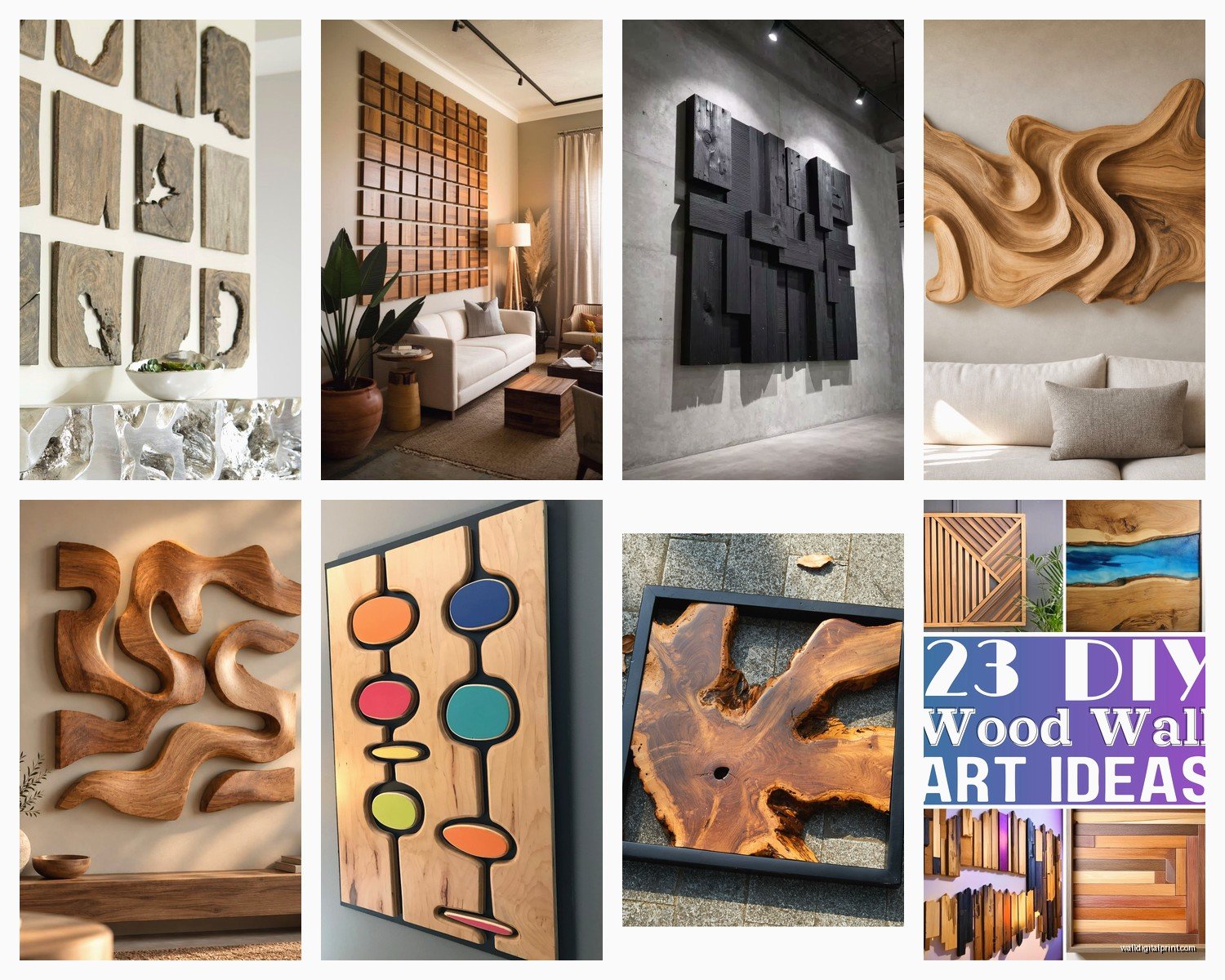
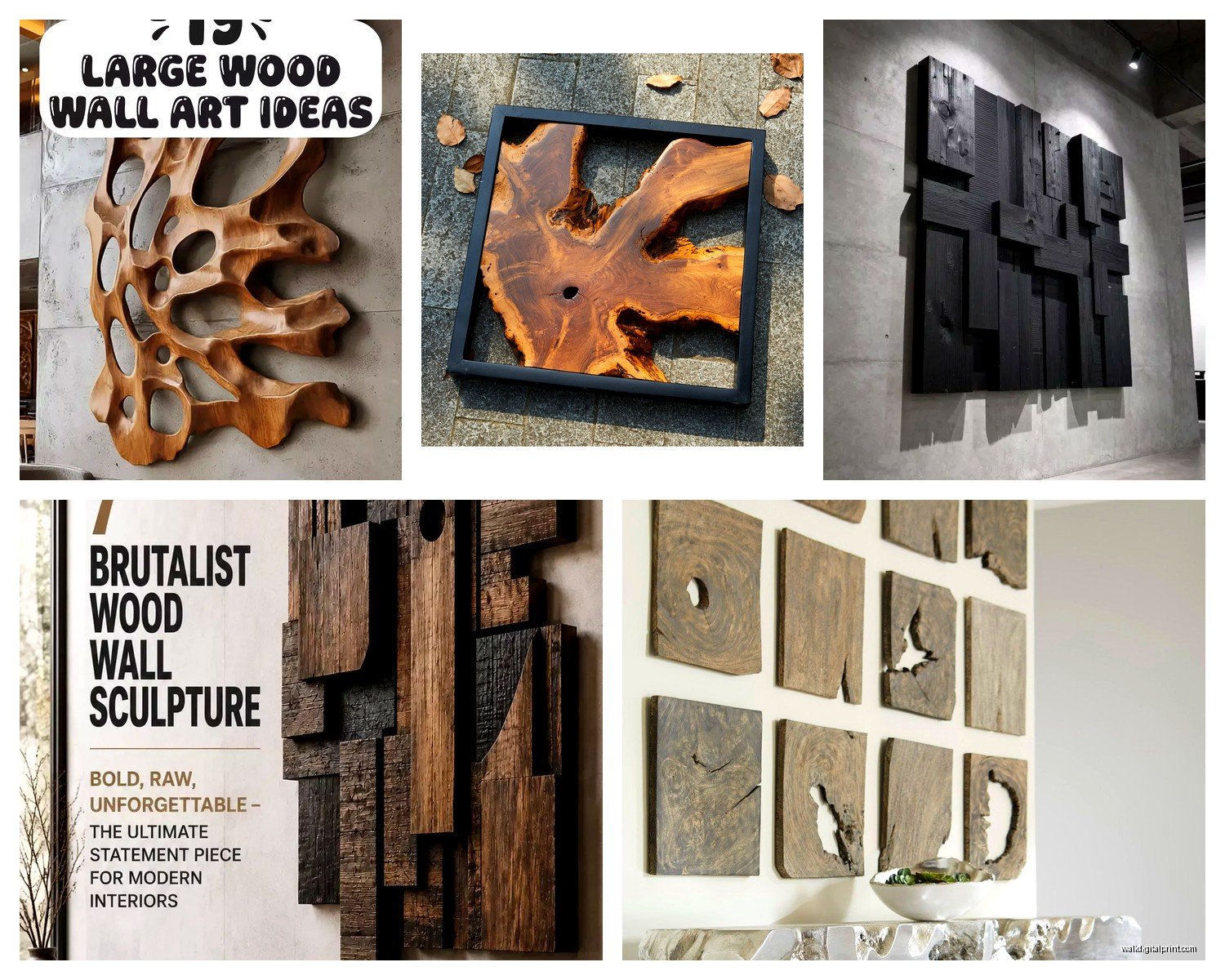
Carved pieces are where they actually gouge into a single slab of wood. These have this really tactile quality and the shadows change throughout the day which is cool if your wall gets natural light. I installed one in a client’s entryway that faces east and the morning light situation is incredible. Downside is they’re usually heavier and you absolutely cannot skip the proper mounting hardware.
Layered pieces use multiple wood strips or shapes arranged at different depths. These are actually my favorite for modern spaces because you get dimension without it being too rustic. They’re also usually lighter weight which matters more than you’d think when you’re trying to hang something yourself at 8pm on a Tuesday because you promised yourself you’d finish the guest room.
Burned or scorched pieces use that shou sugi ban technique or just artistic burning to create the pattern. Super dramatic, very textural, but here’s the thing – they can smell like smoke for weeks after you get them. Not kidding. Had a client almost return one until I told her to leave it in the garage for a bit.
Wood Types Actually Matter
This is gonna sound pretentious but the wood species completely changes the whole aesthetic. Walnut gives you those rich dark tones with natural variation – great for moody spaces or if you’re going for that organic modern thing everyone’s obsessed with. Oak is lighter and has more visible grain which reads as casual and coastal even when it’s carved into abstract patterns.
Maple is super smooth and takes stain really evenly so if you see abstract pieces with gradient effects it’s probably maple. And then there’s reclaimed wood which I have mixed feelings about? Like yes it’s sustainable and has character but sometimes “reclaimed” just means “we made new wood look old” and you’re paying extra for the story.
My cat knocked over my coffee while I was researching this last month and I found out the hard way that sealed vs unsealed wood matters for cleaning. Make sure whatever you get has some kind of protective finish unless you want water rings from your own fingerprints.
The Finish Question
Speaking of finishes – matte vs glossy is a whole thing. Matte looks more natural and sophisticated but shows dust like crazy. Glossy or semi-gloss is easier to maintain but can look cheap if the carving isn’t super precise. I usually go for a satin finish which is the middle ground nobody talks about.
How to Actually Choose a Design
Okay so you’re staring at like forty different abstract patterns online and they all look the same in the thumbnail. Here’s what I do: screenshot the ones you’re considering and literally put them next to a photo of your actual wall in your photos app. Sounds basic but it works.
Look for designs that have negative space. Solid carved patterns can be overwhelming especially in smaller rooms. I love pieces where there’s rhythm to the carving – like repeating waves or geometric cuts – because your eye has somewhere to go. Totally random chaos patterns are trendy right now but honestly they’re hard to live with long-term.
Horizontal vs Vertical Orientation
This matters way more than people think. Horizontal pieces make rooms feel wider which is great for narrow spaces or above beds. Vertical pieces draw the eye up which helps with low ceilings. I have a vertical carved piece in my bathroom (yeah, bathroom, I’ll explain the moisture thing in a sec) and it makes the whole space feel taller even though it’s literally 7 feet.
Installation Without Losing Your Mind
Oh and another thing – the mounting hardware that comes with these is usually garbage. Like truly terrible. You’re gonna want to get your own wall anchors especially if you’re not hitting studs. I use these heavy-duty toggle bolts for anything over 15 pounds and I’ve never had an issue.
Most abstract wood pieces have either a sawtooth hanger on the back (annoying to level) or French cleats (way better). If you have a choice, French cleat all the way. You mount one piece on the wall, one on the back of the art, and they hook together. Makes adjusting so much easier and the weight distribution is better.
Wait I forgot to mention – use a laser level. Your phone level app is not accurate enough for large pieces and you will hang it crooked and not notice until three days later when the light hits it differently and then you’ll be mad at yourself.
The Stud Finder Situation
Get a decent stud finder, not the $8 one from the hardware store that beeps randomly at nothing. I wasted an entire Saturday once trying to hang a 50-inch carved piece because my cheap stud finder kept lying to me about where the studs were. Ended up using the knocking method like a caveman.
Where These Actually Work Best
Living rooms obviously, but I’ve had surprising success in dining rooms above sideboards. The organic quality of wood warms up spaces that might otherwise feel too formal. Bedrooms are great too – there’s something calming about natural materials near where you sleep and the non-representational aspect means you’re not staring at like, a face or whatever while you’re trying to fall asleep.
Bathrooms are tricky. You can do it if the piece is properly sealed and you have good ventilation but I wouldn’t put it directly above the tub. Moisture will warp it eventually no matter what the seller says. I learned this from a very expensive mistake in 2019 that we don’t need to discuss.
Kitchens – honestly I’m on the fence. It can look amazing but grease particles are real and wood is porous even when sealed. If you’re gonna do it, keep it far from the stove.
Mixing With Other Wall Art
This is gonna sound weird but abstract wood pieces actually play really well with framed prints and photos if you’re strategic. The key is treating the wood piece as the anchor and keeping everything else simpler. I did a gallery wall last month where the carved wood piece was the center and surrounded it with black and white photography in slim frames. Looked intentional instead of chaotic.
Don’t try to mix multiple wood art pieces unless they’re explicitly designed as a set. Different carving styles and wood tones just fight with each other visually and not in a good tension way.
What to Actually Look For When Shopping
Okay so when you’re online shopping for these (because let’s be real, you’re not finding good options at HomeGoods), here’s what matters:
Check the thickness. Anything under 1 inch tends to look flimsy. 1.5 to 2 inches is the sweet spot for dimensional pieces.
Read reviews specifically about packaging. Wood art gets damaged in shipping all the time and some sellers just throw it in a box with bubble wrap and hope for the best. Look for mentions of corner protection and sturdy packaging.
Make sure there are actual measurements in the listing including depth. Some photos make pieces look way more substantial than they are.
Check if it’s solid wood or veneer over MDF. Not that MDF is always bad but you should know what you’re paying for. Solid wood weighs more and feels more substantial but costs more too obviously.
Price Ranges That Actually Make Sense
I’m gonna be real with you about pricing because there’s such a huge range. You can find abstract wood pieces for $80 on Amazon and $2000 from artist studios and the quality difference is… significant but not always proportional to price.
For machine-carved pieces (which most are), $200-500 is reasonable for good quality in the 36-48 inch range. Handcarved pieces from actual artists start around $600 and go up from there. If you see something under $100 that looks amazing it’s probably either tiny or MDF with photo laminate which like, fine for some spaces but know what you’re getting.
Caring for These Long-Term
Dust with a soft cloth, that’s basically it. Don’t use furniture polish or anything oil-based unless the manufacturer specifically says to. Wood can darken over time especially if it gets direct sunlight so if you’re particular about color consistency maybe rotate where it hangs every few years or use UV-protective glass nearby? That sounds excessive as I type it but I have clients who care about this stuff.
If you notice any cracks forming (wood expands and contracts with humidity changes) that’s usually cosmetic unless it’s like, a structural crack through the whole piece. A little cracking actually adds character in my opinion but I know some people hate it.
Common Mistakes I See People Make
Hanging it too high. The center of the piece should be at eye level which is around 57-60 inches from the floor. I see so many installations where it’s like mounted at ceiling height for no reason.
Not considering the room’s existing wood tones. If you have warm oak floors and cool gray-brown furniture, adding a honey-toned wood art piece can look off. It’s fixable but requires some intentionality with other decor.
Buying something because it’s trendy without thinking about whether you actually like abstract art. These pieces are pretty permanent-feeling once they’re up so make sure you’re into the aesthetic long-term.
Forgetting about light switches and outlets. Measure twice, buy once, etc.
okay so I think that covers most of what I’ve learned through trial and error with these pieces… they’re honestly one of my favorite ways to add texture and warmth without going full rustic cabin vibes, just gotta be smart about selection and installation