Wall Art Guide, Wall Art Tutoriels
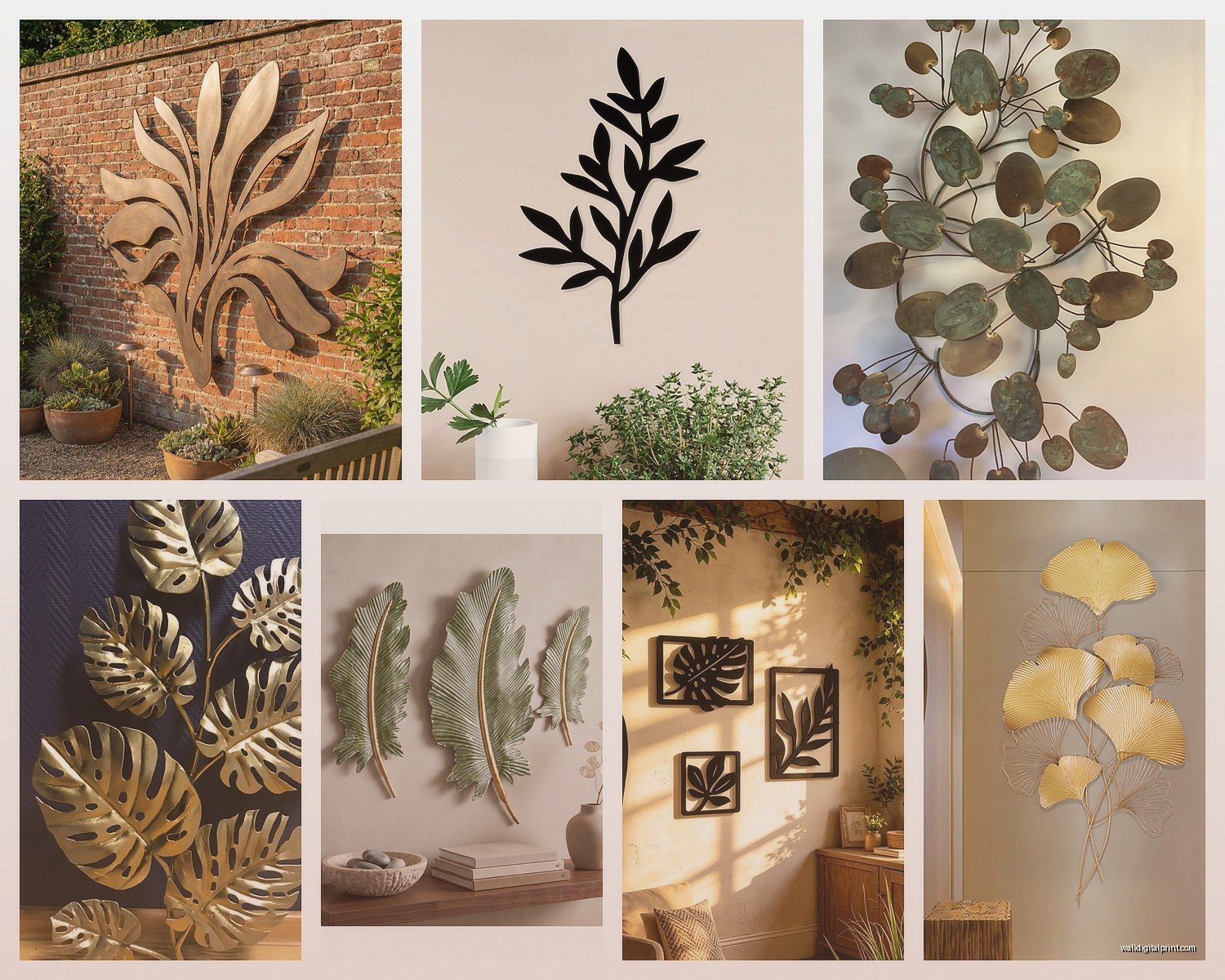
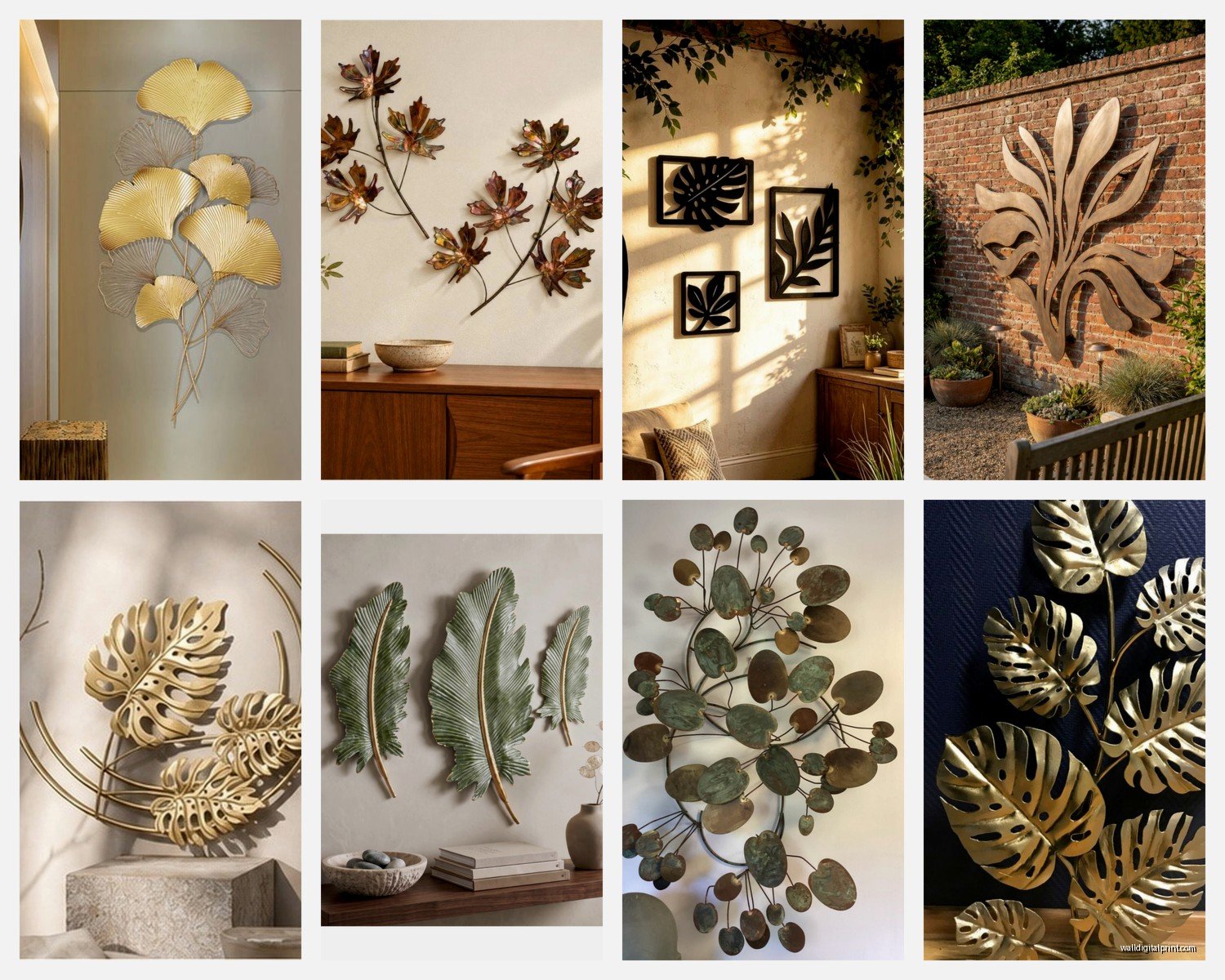
Metal Leaf Wall Art: Sculptural Botanical Tree Designs
Oct
So I’ve been totally obsessed with metal leaf wall art lately and honestly it started because this client kept sending me Pinterest boards at like midnight with all these botanical tree designs and I was like okay I gotta figure this out properly.
What Actually Works for Different Spaces
The sculptural tree designs come in basically three categories and this matters way more than I thought it would. You’ve got your flat cutout style which is basically laser-cut metal sheets, then there’s the 3D layered pieces where leaves stick out at different depths, and finally the full sculptural ones that are almost like actual metal sculptures mounted to the wall.
For smaller spaces like entryways or that weird narrow wall everyone has, the flat cutouts are gonna be your friend. I put one in my own hallway last month and it’s maybe 24 inches tall, bronze finish, and it doesn’t overwhelm the space. The 3D layered stuff needs at least 8-10 feet of wall space to not look cramped… learned that the hard way when I ordered one for above a console table and it just felt aggressive.
Finishes and Why They’re Kinda Everything
Okay so the finish is where people mess up constantly. You’ll see options like:
- Oil-rubbed bronze or antique bronze
- Brushed copper or hammered copper
- Raw metal with clear coat
- Painted metal in metallics or matte colors
- Multi-tone patina finishes
The oil-rubbed bronze is super forgiving because it hides imperfections and looks expensive even when it’s not. I’ve used pieces from like $80 to $400 and honestly in photos you can’t tell the difference. The copper ones though… they’re gorgeous but they show every fingerprint during installation and if you have high humidity they’ll develop this greenish patina over time. Some people love that aged look, some people hate it.
Raw metal with clear coat is having this moment right now but here’s the thing nobody tells you – it needs to be ACTUALLY sealed properly or it’ll rust. I had one piece in a bathroom area and within six months there were rust spots because the “protective coating” was basically nothing.
Installation Reality Check
Most of these pieces come with either keyhole hangers on the back or D-rings, and you’re gonna need proper wall anchors unless you’re hitting studs. The flat designs are usually fine with regular picture hangers, but anything 3D or heavy needs real anchors.
I keep a stud finder in my car now because I got tired of going back and forth. Mark your studs with painter’s tape first, then hold up the piece with someone helping you (or do the paper template trick where you trace it on kraft paper first). The sculptural ones can weigh anywhere from 5 to 30 pounds depending on size so don’t skip this step.
Wait I forgot to mention – some of the really intricate leaf designs have these delicate branches that can bend during shipping. Check everything before you install because returning a mounted piece is a nightmare. I literally spent 20 minutes once gently bending bronze leaves back into shape with needle-nose pliers.
Size Guidelines That Actually Help
Everyone says “measure your wall” but like… that doesn’t help when you’re scrolling through options online at 10pm. Here’s what I’ve figured out:
For above a couch or bed, you want the art to be roughly two-thirds the width of the furniture. So a standard 7-foot couch needs something around 50-55 inches wide. But with tree designs specifically, they’re often taller than they are wide, so sometimes you need to cluster pieces or go with a more horizontal branch design.
The vertical tree silhouettes look amazing on narrow walls next to doorways or in stairwells. I have this one client who has a two-story foyer and we did a 6-foot tall metal tree that follows the staircase line and it’s honestly one of my favorite installations ever.
Mixing Metals Without Looking Confused
This is gonna sound weird but mixing metal finishes in botanical designs actually works better than in other decor. Like you can have a copper tree with bronze leaves or a silver trunk with gold-tone branches and it reads as intentional because nature is already varied.
The trick is keeping the same temperature – all warm metals (bronze, copper, gold) or all cool metals (silver, pewter, gunmetal). Don’t mix warm and cool unless you really know what you’re doing or have a designer helping you.
Where to Actually Buy These Things
I’ve ordered from probably fifteen different places at this point and here’s my honest breakdown. Etsy has the most unique handmade options but shipping times are unpredictable – I’ve waited three weeks for pieces. Wayfair and Overstock have huge selections and fast shipping but the quality is hit or miss, you gotta read recent reviews not just the top ones.
Local metal artists are actually competitive price-wise if you have any near you, and you can see the work in person which is huge. I found this guy at a craft fair who makes custom sizes and his stuff is better quality than most online retailers at similar prices.
Amazon has options but honestly the photos are so misleading… I ordered what looked like an intricate olive branch design and it arrived and was literally six separate leaves on wires. Not what I expected at all.
Custom vs Ready-Made
Custom pieces start around $200-300 for something decent-sized and go up from there. Ready-made ranges from like $40 for small simple designs to $600+ for large statement pieces. I usually tell people to go custom if they have a specific size requirement or want a particular tree species represented.
Oh and another thing – some artists will do custom colors which is amazing if you’re trying to match existing decor. I had someone powder coat a willow tree design in this sage green color and it was perfect for a nursery.
Styling These Without Overthinking It
The botanical tree designs are pretty self-sufficient statement pieces so you don’t need to do much around them. Where people go wrong is adding too much other stuff on the same wall. Like keep it to maybe one or two small shelves or a simple console table underneath.
Lighting makes a HUGE difference though. If you can add a picture light above or some uplighting below, the shadows from the 3D elements create this whole other layer of visual interest. I installed some battery-operated puck lights behind a layered leaf design once and my client literally texts me photos of it at different times of day because the shadows change.
For color palette, these work with basically everything but they really pop against:
- Deep charcoal or navy walls
- Warm white or cream
- Sage green or dusty blue
- Natural wood paneling
I had my dog try to eat the lower leaves off one of my sample pieces last week so maybe keep them higher up if you have pets who are weird like mine.
Maintenance and Long-Term Reality
Metal art is pretty low maintenance but dust accumulates in all those little crevices between leaves. I use a microfiber duster or sometimes a soft paintbrush to get into detailed areas. Don’t use any harsh cleaners – just dry dusting or occasionally a barely damp cloth.
The outdoor-rated pieces can technically go outside but even the weatherproof coatings will fade and weather over time. I’ve seen pieces last 5+ years outside but they develop character (aka rust spots and patina) which again some people love.
Indoor pieces basically last forever if you’re not moving them around constantly. The biggest issue is usually installation damage from people not using proper anchors and the piece falling.
Trends I’m Seeing Right Now
Eucalyptus branches are everywhere suddenly – more than traditional oak or maple trees. Palm fronds and monstera leaves are having a moment too, more tropical-modern vibe. Also seeing a lot of abstract interpretations rather than realistic trees, like geometric leaf patterns or stylized branch formations.
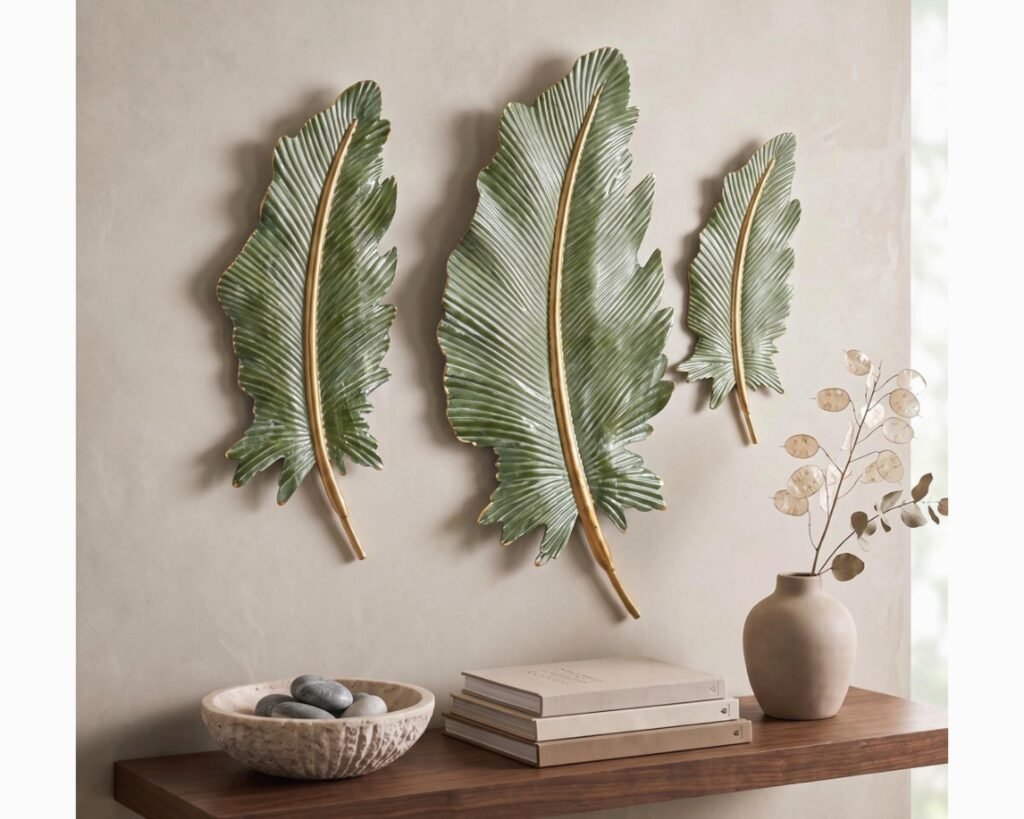
The multi-panel sets are popular too where you get like three separate pieces that create one tree when arranged together. These are actually easier to hang level than one large piece but you gotta plan the spacing carefully.
Common Problems and Actual Solutions
Problem: Piece arrives bent or damaged
Solution: Most can be carefully reshaped with pliers if it’s minor. Major damage, just return it immediately with photos.
Problem: Can’t find studs where you want the art
Solution: Heavy-duty drywall anchors rated for the weight. I use the toggle bolt kind for anything over 10 pounds.
Problem: Looks too small or too big once installed
Solution: This is why I always make paper templates first, seriously it saves so much hassle.
Problem: Doesn’t match the vibe you expected
Solution: Sometimes adding a complementary piece nearby helps, or changing the lighting. Or just return it, life’s too short for wall art you don’t love.
The sculptural designs specifically can look really different in person versus photos because the depth doesn’t translate online. I’ve had pieces look flatter than expected and others that were way more dimensional than I thought, so if possible try to see similar styles in person first.
Okay so funny story, I was installing this massive 5-foot metal oak tree design and my measuring tape broke halfway through and I had to finish using a piece of string and a ruler like some kind of pioneer woman. Still got it level though.
Price Points and What You Get
Under $100: Usually smaller pieces (under 24 inches), simpler designs, thinner metal, basic finishes. Fine for accent walls or starter pieces.
$100-$300: Mid-range sweet spot. Better quality metal, more intricate designs, decent finishes that’ll last. This is where I shop most often for client projects.
$300-$600: Larger statement pieces, hand-finished details, quality construction, often from smaller makers or artists. Worth it if it’s a focal point.
Over $600: Custom work, very large scale, or designer/artist pieces. Sometimes worth it, sometimes you’re paying for a name.
I’ve found amazing pieces at every price point honestly, it’s more about knowing what quality markers to look for – welded connections versus glued, thickness of the metal, quality of the finish, hardware included.
The botanical tree designs have this timeless quality that most trendy wall art doesn’t, which makes them a better investment even at higher price points. I installed one seven years ago in my first apartment and it’s moved with me three times and still looks current.