Wall Art Guide, Wall Art Tutoriels
Lion Wall Art: King Jungle Big Cat Majestic Animal
Nov
So I’ve been obsessing over lion wall art lately because honestly, when you get it right, it completely transforms a space, but there’s so much terrible stuff out there that looks either too safari-themed or like something from a kid’s bedroom.
The first thing you gotta figure out is what style actually works for your space. I made this mistake last year with a client where we ordered this massive realistic lion portrait and it was just… too much. Too aggressive for their dining room. Now I always ask: do you want majestic and calm or powerful and intense? Because that changes everything.
Choosing the Right Style for Your Actual Space
Okay so the main styles I see working in real homes:
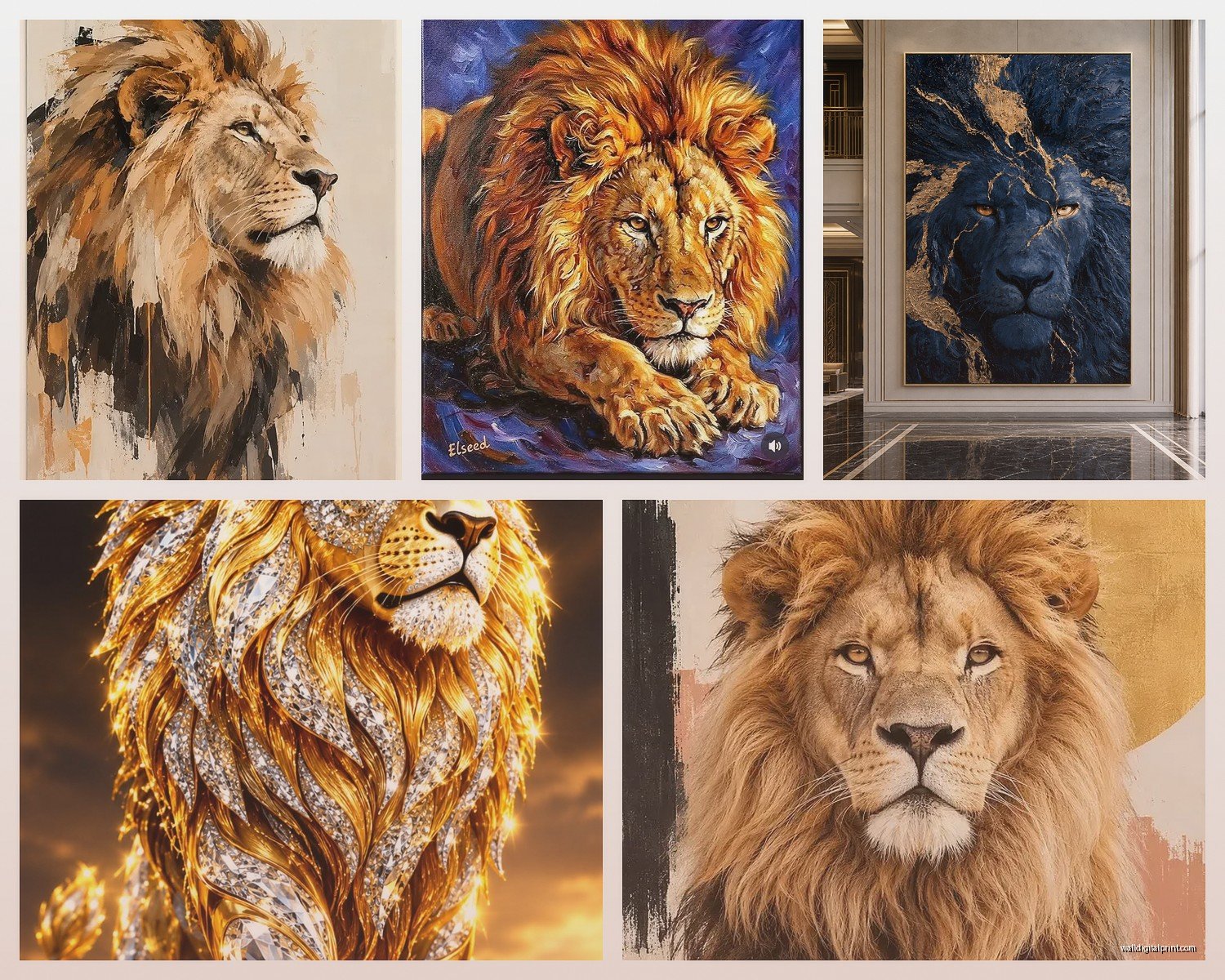
Photographic prints – these are the black and white close-ups of lion faces, usually super detailed. They work amazing in modern spaces, offices, or anywhere you’ve got clean lines. I put one in my own living room last month and my sister said it looked like a magazine spread which… I’ll take it. The key is getting high resolution though, like seriously don’t cheap out because a pixelated lion just looks sad.
Abstract/geometric lions – this is where you get those polygon designs or watercolor splashes. Way more versatile than you’d think. I was watching The Crown the other night and got distracted thinking about how one of these would look perfect in a transitional space where you’re mixing traditional furniture with modern art. They’re less committal if that makes sense.
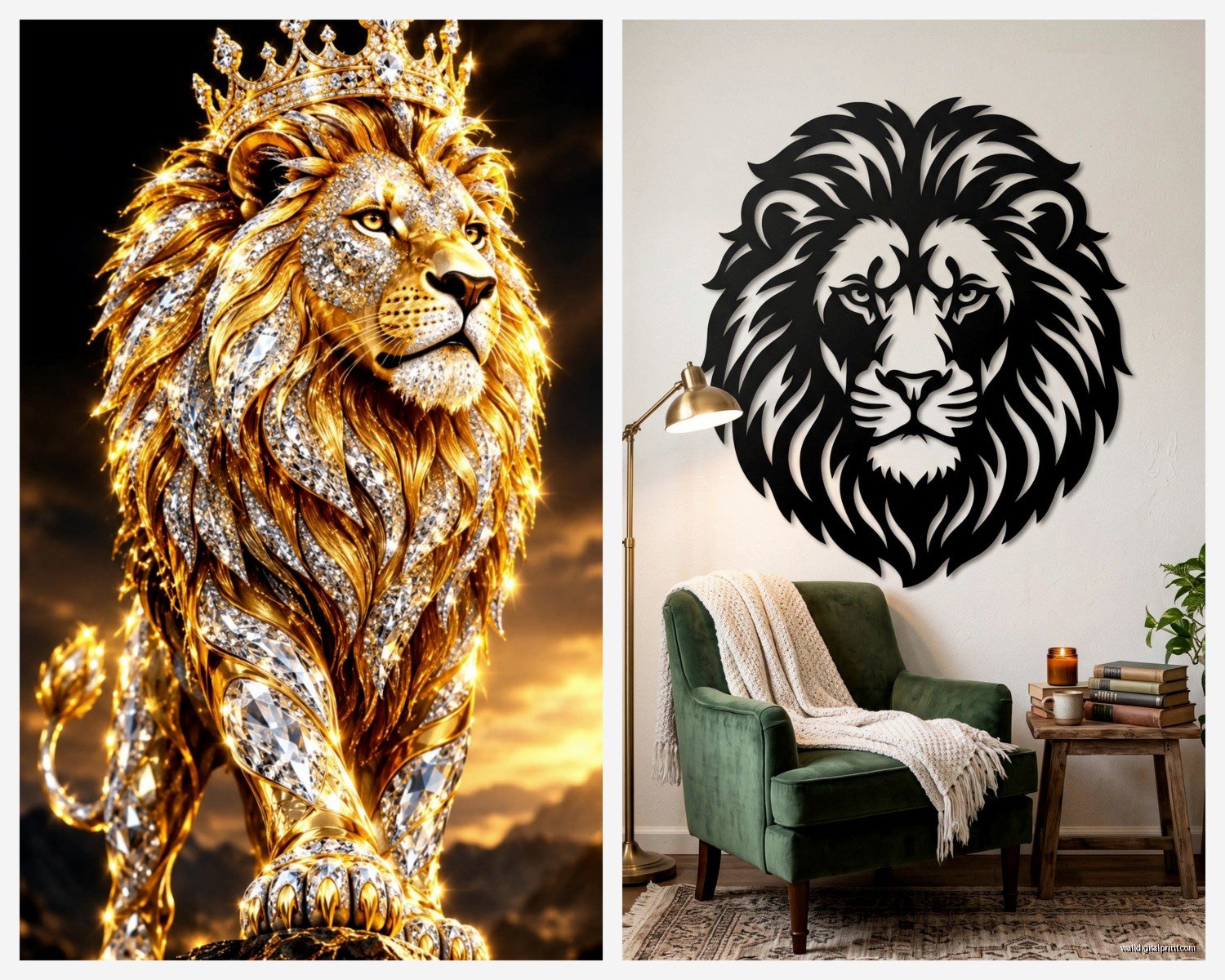
Gold leaf or metallic lions – okay this is gonna sound weird but these are having a moment. Not like tacky gold, but subtle metallic accents on a neutral background. Works incredibly well in glam spaces or if you’ve got any brass fixtures in the room.
Minimalist line drawings – single continuous line forming a lion’s profile. Super chic, very Scandinavian. My friend just got one for her nursery and it’s actually sophisticated enough that she won’t need to replace it when the baby becomes a teenager.
Size Matters More Than You Think
I cannot stress this enough – measure your wall before you do anything else. I have this whole embarrassing story about ordering a 16×20 thinking it would be perfect and it looked like a postage stamp on the wall. Here’s what actually works:
For above a sofa or bed, you want the art to take up about 2/3 to 3/4 of the furniture width. So if your couch is 84 inches, you’re looking at roughly 56-63 inches of art width. You can do one large piece or a gallery wall situation.
Single statement pieces work best at 30×40 or larger for main walls. Anything smaller and it needs companions or it’ll look lost.
Gallery walls with lions – and oh man I love these – you can mix 8x10s, 11x14s, and 16x20s. But keep an odd number, like 3 or 5 pieces total. The human eye just likes that better for some reason.
Where to Actually Hang Lion Art
Living room is obvious, but I’ve been putting lion art in unexpected places lately and it’s working really well:
Home offices – there’s something about a lion that makes you feel more confident on Zoom calls, not gonna lie. Position it behind your desk so it’s visible on camera if you want that power move.
Dining rooms – a large serene lion portrait across from the table creates this unexpected elegance. Not a roaring lion though, learned that one the hard way.
Bedrooms – go for calmer, contemplative lion images here. The intense aggressive stuff doesn’t really promote good sleep vibes.
Entryways – a lion is literally the first impression of your home. I did a narrow vertical lion print in a tight hallway entry and it completely changed the energy.
Materials and Quality Stuff You Need to Know
Canvas prints are the most popular and honestly the easiest. They arrive ready to hang, they’re lightweight, and they don’t need glass so no glare issues. But – and this is important – make sure it’s actual canvas, not that poster paper wrapped around foam board. You can tell by looking at the edges and feeling the texture.
Framed prints behind glass give you more of a gallery feel. I usually go this route for black and white photography because the glass adds depth. Just position them where you won’t get window glare or you’ll be so annoyed every afternoon when the sun hits.
Metal prints are newer and they’re actually incredible for modern spaces. The lion image gets infused into aluminum and it has this luminescent quality. They’re pricey but they last forever and you can clean them with glass cleaner which is clutch if you have a dusty house like mine.
Acrylic prints – these are my secret weapon for high-end looks. The image is printed on the back of clear acrylic and it has this 3D depth that’s hard to describe. Light passes through differently. They’re heavy though, so you need proper wall anchors.
Color Schemes That Actually Work
If your room is mostly neutral – grays, whites, beiges – you have the most options. Black and white lion photography is classic and never looks dated. Sepia tones add warmth without being too colorful.
For rooms with color, you gotta be more strategic. I just finished a project where the room had navy blue accents, and we found this lion print with subtle blue undertones in the shading. It tied everything together without being matchy-matchy which would’ve been terrible.
Gold and bronze tones in lion art work beautifully with warm color schemes – rust, terracotta, warm grays, creams.
Wait I forgot to mention – if you’ve got a lot of wood furniture, especially darker woods, consider a lion print with some brown tones or warm blacks. Pure stark black and white can look too harsh against walnut or mahogany.
The Framing Situation
Pre-framed art is convenient but the frames are usually basic. If you’re gonna invest in a nice lion print, budget for custom framing or at least upgrade the frame.
Black frames – sleek, modern, disappear into the background so the lion is the focus. Safe choice that works almost everywhere.
Natural wood frames – add warmth, work great in boho, farmhouse, or Scandinavian spaces. I’m partial to light oak for lion art because it softens the intensity.
Gold or brass frames – okay so these need the right room but when they work, they WORK. Glam spaces, traditional rooms, anywhere you’ve already got gold accents. A gold-framed lion portrait is basically interior design confidence.
White frames – clean and gallery-like. Best for colorful or abstract lion art where you want a neutral boundary.
Floating frames – these are where the art sits inside the frame with a gap around it. Super contemporary look. My client canceled last Tuesday so I spent an hour comparing floating frame options online and honestly the custom ones are worth it.
Multi-Panel and Triptych Options
Oh and another thing – split panel lion art is really popular right now. The image is divided across 3 or 5 canvases that you hang with small gaps between them. It makes the art feel larger and more dynamic.
For these, the spacing between panels should be 2-3 inches usually. I’ve seen people hang them too far apart and it just looks like separate random pieces instead of one cohesive image.
The panels don’t have to be equal sizes either. You can do a large center panel with smaller side panels, which creates this cool focal point effect.
Mixing Lion Art with Other Pieces
You don’t have to do a whole lion theme – actually please don’t unless you’re going for maximum drama. One statement lion piece mixed with abstract art, landscapes, or even botanical prints creates way more visual interest.
I did a gallery wall last month with a central lion portrait surrounded by abstract geometric prints in coordinating colors. The lion became the anchor but the whole wall felt collected and intentional, not theme-y.
Mixing animal art is tricky though. Lions with other safari animals can veer into “I really like animals” territory instead of sophisticated design. If you’re gonna do multiple animals, make sure they’re the same artistic style and treated as a curated collection.
Lighting Your Lion Art
This is something people forget and then wonder why their expensive art looks flat. Picture lights are ideal – those little brass or black fixtures that mount above the frame and angle down. They create drama and depth.
Track lighting or adjustable recessed lights work too if you can angle them. You want the light hitting the art at about a 30-degree angle to avoid glare.
For canvas prints especially, side lighting from a nearby floor lamp can create interesting shadows and dimension. I’ve got a lion canvas in my bedroom and there’s a lamp on the dresser next to it that hits it perfectly in the evenings.
Where to Actually Buy Good Lion Wall Art
Etsy has incredible options from independent artists. You can find unique pieces nobody else will have, and you’re supporting actual artists. Read reviews though because quality varies wildly. Look for shops with lots of sales and recent positive reviews.
Society6 and Redbubble let artists upload designs that get printed on demand. The quality is pretty consistent and they have tons of styles. Returns are easy too which takes the pressure off.
Local art fairs and galleries – I know this sounds obvious but I’ve found amazing lion photography at local shows. Plus you can see the actual quality in person before buying.
Anthropologie and West Elm have curated selections that are usually safe bets. More expensive than online printing services but the quality is reliable and the styles are on-trend.
For budget options, honestly Amazon has some surprisingly decent canvas prints if you read reviews carefully. Look for ones with actual photo reviews from buyers. My cat knocked over my coffee onto some Amazon art samples I had and the ink didn’t run so that’s… something.
Custom printing services like CanvasPop or Shutterfly let you upload your own image if you’ve found lion photography you love. Just make sure you have high enough resolution – at least 150 DPI at the size you want to print.
Installation Tips That’ll Save You
Use a level. Seriously just use one. Eyeballing it never works and a crooked lion looks ridiculous.
For heavy pieces over 15 pounds, use wall anchors or find studs. I’ve had art fall at 3am and it’s terrifying. Toggle bolts work great for drywall.
The center of the art should be at eye level, which is usually 57-60 inches from the floor. But if you’re hanging above furniture, leave 6-8 inches between the furniture top and the bottom of the frame.
Command strips work for lighter pieces and they’re renter-friendly. Make sure you get the weight rating right though – I’ve had pieces slide down walls because I underestimated.
For gallery walls, lay everything out on the floor first and take a photo. Then trace the frames on kraft paper, tape the paper to the wall, and nail through the paper where hooks should go. Remove paper and hang. Sounds fussy but it prevents so many mistakes.
Maintenance Stuff Nobody Tells You
Canvas prints collect dust. Use a soft brush attachment on your vacuum on low power, or a microfiber cloth. Don’t use cleaning products directly on canvas.
Glass-covered prints – just use glass cleaner but spray it on the cloth first, not directly on the glass. You don’t want cleaner seeping under the frame.
Keep art out of direct sunlight if possible because colors fade. UV-protective glass helps but it’s expensive. I’ve had clients whose beautiful lion prints got washed out after a year on a sunny wall.
Humidity is the enemy, especially for canvas. Don’t hang valuable art in bathrooms unless you have really good ventilation.
The style trends right now are leaning toward more minimalist, line-art lions and away from the super realistic roaring poses. But honestly, get what you actually like because trends change and you’re the one living with it. I still love a good dramatic black and white lion portrait even though everyone’s doing geometric animals now.
Mix metallic accents if your space can handle it – a lion print with gold leaf details or bronze tones feels current without being trendy.
Oversized single pieces are more popular than gallery walls at the moment, probably because people want that instant impact without the installation headache.
Just remember the lion should fit your actual lifestyle and space, not some idealized version of what you think your home should look like.