Wall Art Guide, Wall Art Tutoriels
Compass Wall Art: Navigation Direction Travel Nautical
Nov
So I just hung three compass pieces in my studio last week and honestly, I’m still thinking about placement because one of them feels slightly off but let me tell you what I’ve learned from doing this probably two dozen times for clients and my own spaces.
Why Compass Wall Art Actually Works
Okay so compass art is having this massive moment and it’s not just the nautical trend thing. Like yes, if you’re doing coastal vibes it’s perfect, but I’ve used compass pieces in urban lofts, mid-century modern living rooms, even a minimalist bedroom that had zero connection to sailing or beaches. The thing is, compasses are circular which breaks up all the rectangular art everyone defaults to, and they’ve got this symbolic direction thing that doesn’t feel too on-the-nose if you pick the right style.
My neighbor asked me last month why her gallery wall felt boring and I realized she had literally all rectangular prints. Added one compass piece and suddenly the whole wall had a focal point.
Types You’ll Actually Find
There’s basically four categories and I’m gonna be real with you about what works where.
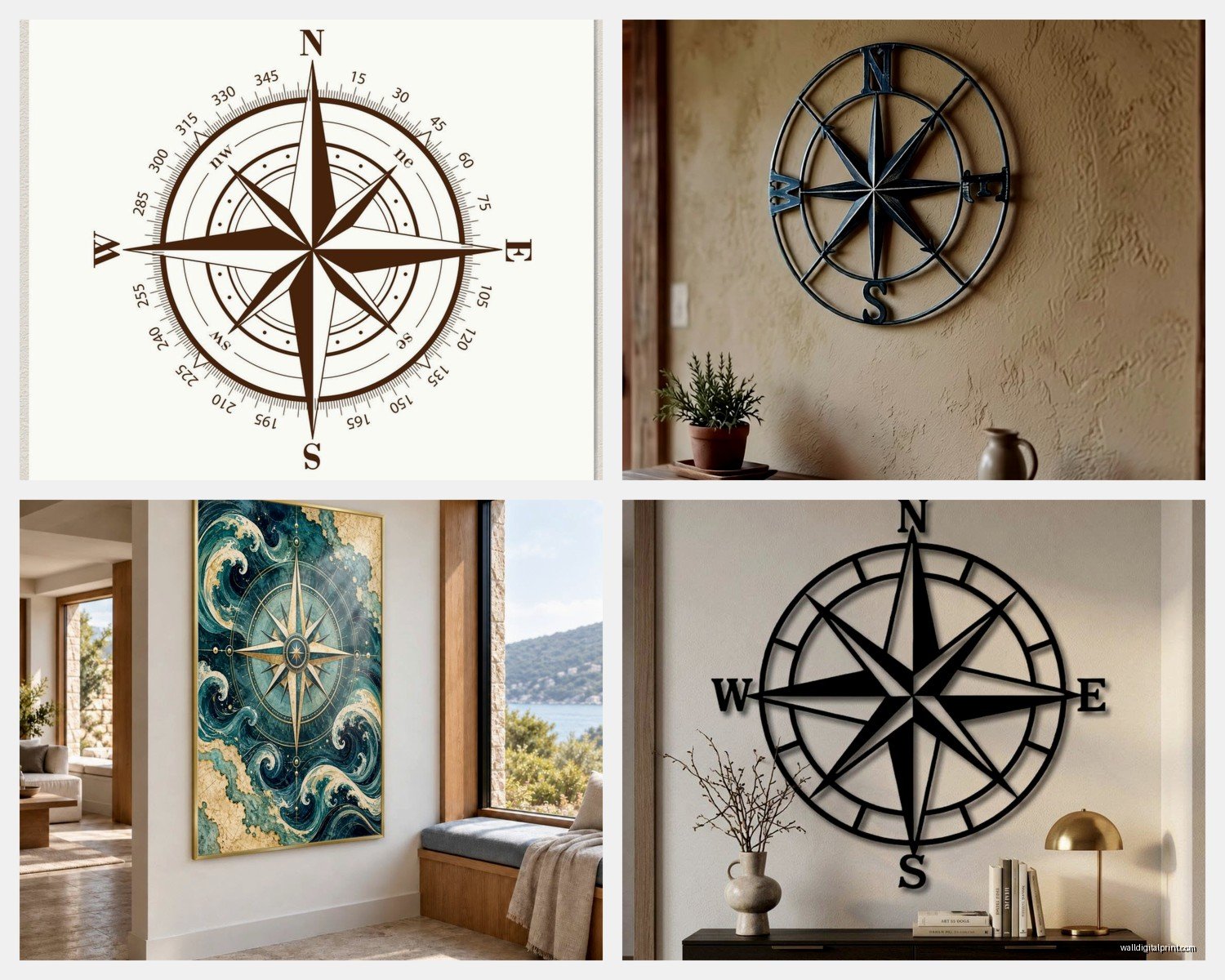
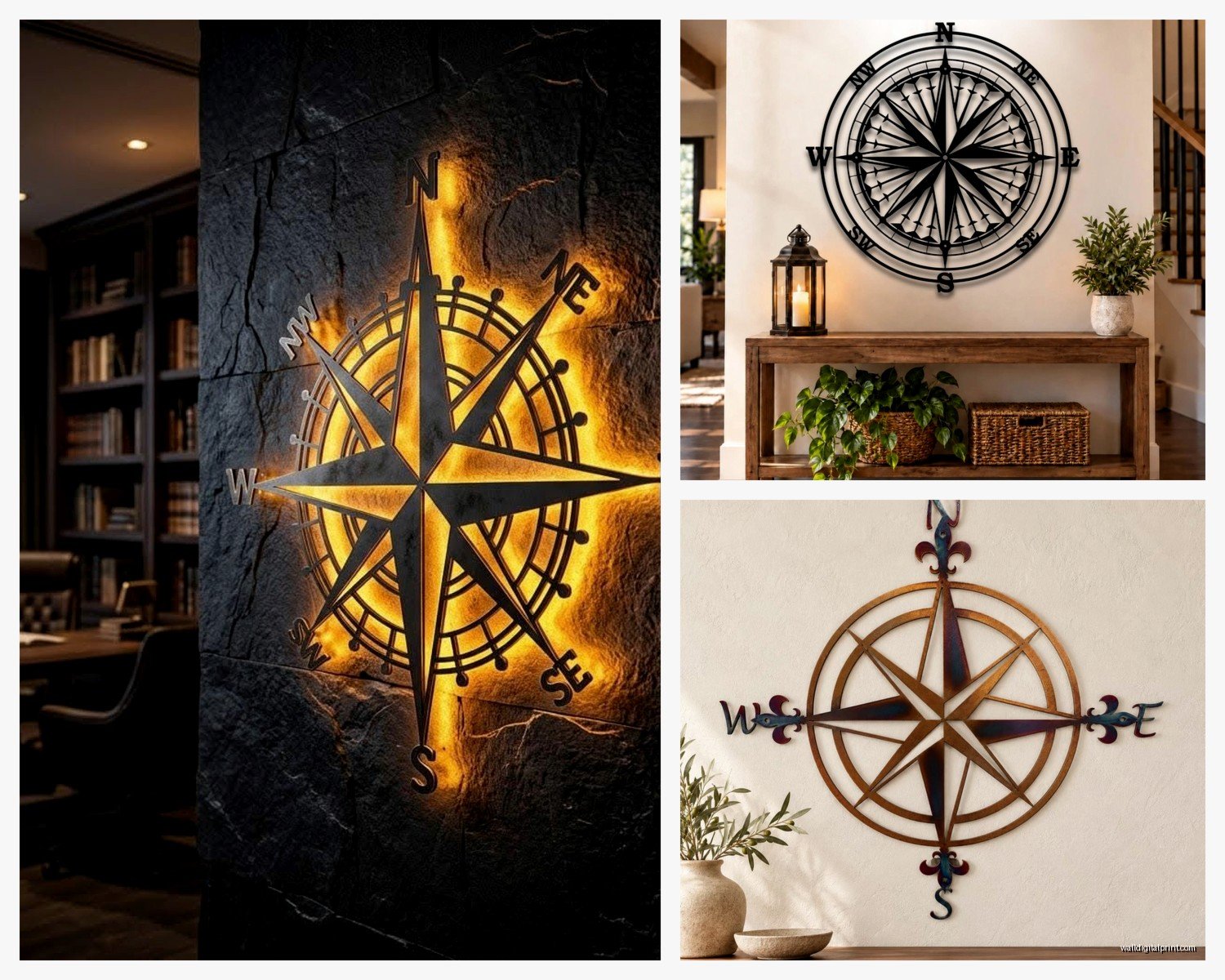
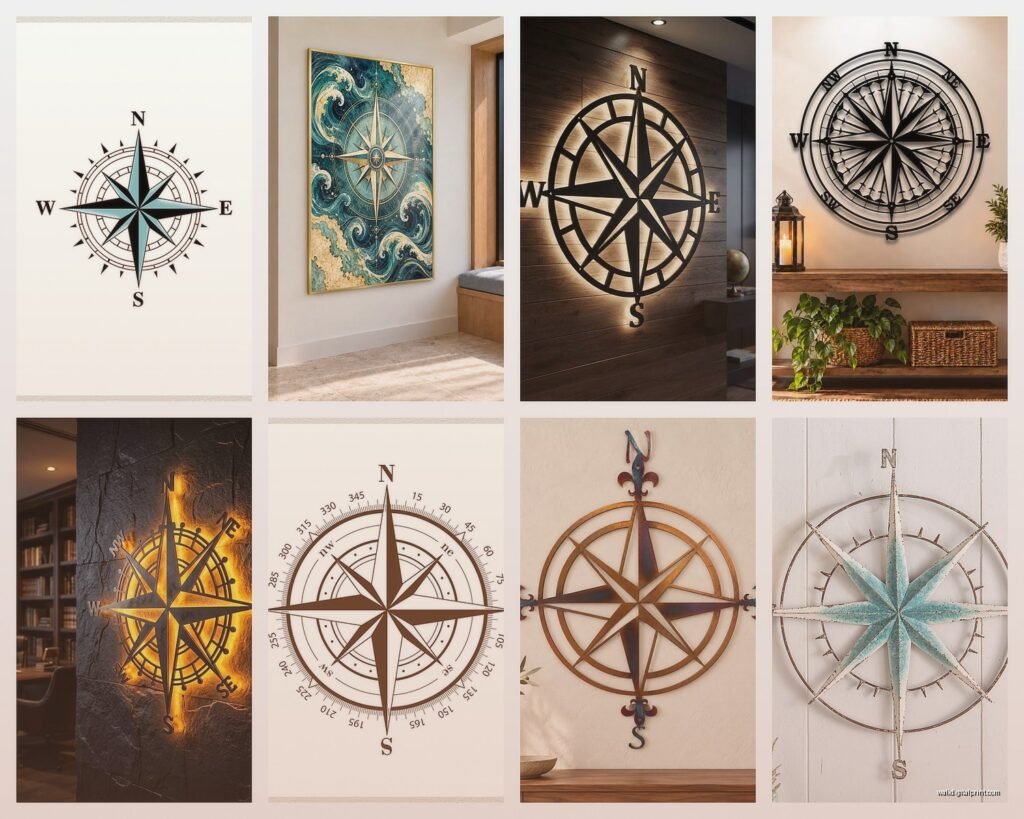
Vintage Reproduction Metal Compasses
These are the ones that look like they came off an old ship. Usually metal, sometimes with a distressed finish. I got one from this Etsy shop (spent way too long comparing shops when my client canceled one afternoon) and the detail was insane. They range from like $45 to $300 depending on size and how authentic the aging looks.
Best for: masculine spaces, home offices, above a bar cart, rustic or industrial rooms
The problem with these is they can read really heavy. I made the mistake of putting a 30-inch bronze one in a client’s small entryway and it just dominated everything. Moved it to their den and it was perfect.
Printed Canvas or Paper
Way lighter feeling, usually vintage map style or watercolor compasses. These are everywhere on Wayfair, Amazon, Society6. Price range is wild – $20 for a basic print to $200 for something from an actual artist.
I’ve tested a bunch and honestly the cheap ones can look cheap if the printing quality sucks. Check reviews for color accuracy because I ordered this gorgeous blue and gold one that arrived looking weirdly greenish.
Best for: bedrooms, guest rooms, lighter coastal themes, layering in gallery walls
Wood Cut or Carved
Oh and these are my current obsession. They’re usually laser cut or hand-carved wood, sometimes painted, sometimes natural finish. There’s this one maker on Instagram who does them in reclaimed barn wood and they’re stunning but like $400.
The depth on these is what makes them special. They cast shadows and have actual dimension which photographs really well if you care about that.
Best for: modern farmhouse, Scandinavian minimalist, anywhere you want texture
Mixed Media or Modern Interpretations
This is everything from abstract geometric compass designs to ones made with rope, ones with LED backlighting (which sounds tacky but I saw one done well in a teen’s room), mosaic tile versions.
I’m weirdly into the minimalist line-drawing compass styles right now. Very simple, usually black on white or vice versa.
Size Matters More Than You Think
Okay so this is where people mess up constantly.
For above a sofa or bed: you want roughly 2/3 to 3/4 the width of the furniture. So if your couch is 84 inches, you’re looking at something in the 56-60 inch range. A compass piece works solo here or as the center of a gallery wall.
Small wall spaces (like between windows or in a hallway): 12-18 inches is your sweet spot. I see people putting massive pieces in narrow hallways and you can’t even step back far enough to see them properly.
Statement walls or above a fireplace: go big. 30-40 inches minimum. I did a 42-inch metal compass above a fireplace last year and the client texts me photos of it randomly because she’s still obsessed.
My cat knocked over a 16-inch wooden one I had leaning against the wall waiting to hang and it somehow survived without a scratch, so there’s that durability test passed.
How to Actually Hang These Things
Metal compasses are heavy. Like heavier than you expect. Don’t use those basic picture hooks unless it’s tiny. I learned this the hard way when one fell at 2am and scared the hell out of me.
For anything over 10 pounds: wall anchors or find a stud. I use those toggle bolt anchors for drywall and they’ve never failed me. The package will tell you weight limits – actually follow them.
For circular pieces without a clear “top”: some come with a sawtooth hanger on back which is fine, but the better ones have a recessed keyhole slot or D-rings. D-rings give you more flexibility for leveling.
Leveling circular art is weirdly harder than rectangular because your eye catches when the design elements aren’t perfectly vertical even if the outer circle is level. I use a level app on my phone plus step back and eyeball it from like 10 feet away.
Wait I forgot to mention – some of the really decorative metal ones come in multiple pieces that you assemble on the wall. Read the instructions because I definitely didn’t once and had to redo the whole thing.
Styling Around Compass Art
This is gonna sound weird but compass pieces look better with asymmetry around them. Like if you’re doing a gallery wall, don’t center everything perfectly. Let the compass be slightly off-center with other pieces balanced around it.
I did this configuration that worked really well: 24-inch compass in the middle-ish, three smaller nautical prints to the right staggered, two vintage maps to the left. Looked intentional but not too matchy.
Colors that work with most compass art: navy obviously, but also rust orange, deep greens, cream, weathered grays. I paired a gold compass with blush pink in a bedroom once and got so many compliments.
If you’re going full nautical theme don’t overdo it. Compass plus like… maybe rope elements or one ship painting. Not compass AND anchor AND ship wheel AND lighthouse. That’s theme park territory.
Unexpected Places for Compass Art
Mudroom or entryway – there’s something perfect about a compass near where you come and go
Home office behind your desk – the direction symbolism thing actually works here, plus it’s interesting for video calls
Bathroom – okay hear me out, I did a small vintage map compass in a powder room with navy walls and it was chef’s kiss
Kids rooms – especially for the travel-obsessed kid or adventure themes that aren’t too babyish
What to Look for When Buying
Read the actual dimensions carefully. I’ve ordered things that looked huge online and arrived tiny because I didn’t process that it was listed in centimeters or whatever.
Check what’s included for hanging. Some come with hardware, most don’t. Super annoying when you’re ready to hang and realize you gotta make another hardware store run.
Material quality for metal pieces: look for actual metal not plastic painted to look like metal. You can usually tell in reviews when people mention it feeling cheap or lightweight.
For prints: check if it’s canvas, paper, or wood. Canvas tends to look more expensive. Paper needs to be matted and framed which adds cost. Wood-mounted prints are having a moment and they’re usually ready to hang which is convenient.
Color accuracy varies wildly between sellers. If you’re trying to match a specific blue or whatever, order from places with good return policies. I’m looking at you, random Amazon sellers with no returns.
Price Ranges and Where to Actually Shop
Budget (under $50): Target sometimes has decent ones, Amazon basics, Wayfair sales, Hobby Lobby with a coupon
Mid-range ($50-150): West Elm, Pottery Barn, Etsy from established shops, Anthropologie when they have sales
Investment ($150+): One Kings Lane, Etsy artists, vintage stores for authentic pieces, custom commissioned work
I’ve found the best value is usually Etsy shops that make their own stuff. You’re getting quality without the massive retail markup.
Oh and another thing – estate sales and antique markets sometimes have real vintage compasses or nautical instruments that you can mount. I found an actual brass compass for $30 that would’ve been $200+ in a fancy store. Needed some polishing but totally worth it.
Common Mistakes I See All the Time
Hanging it too high. Standard rule is center of the art at 57-60 inches from the floor, but adjust based on furniture and ceiling height.
Picking a style that doesn’t match anything else in the room. Like ultra-modern compass in a traditional space can work but you gotta have other transitional elements.
Getting one that’s too ornate for a small space. Visual clutter is real.
Not considering the wall color. A dark bronze compass on a dark wall just disappears. You want some contrast.
Forgetting about the space below it. If you’re putting it above a console table or shelf, style that surface to complement it. I usually do books, a small plant, maybe a candle situation.
My Current Favorites
There’s this wooden geometric compass from a maker called… hold on let me find it… okay I can’t remember the shop name but it’s laser-cut layered wood in natural and black. Looks expensive, was like $85.
For traditional spaces, the metal ones with the aged brass finish and cardinal direction markers are classic. Can’t go wrong.
If you want something really unique, look for compasses that incorporate other elements. I saw one that was half compass half world map and it was actually cool not cheesy.
The minimalist single-line compass drawings work in literally any modern space. Safe choice if you’re unsure.
Maintenance and Long-term Stuff
Metal ones might need occasional dusting or polishing depending on the finish. The distressed ones hide dust better honestly.
Canvas prints can fade in direct sunlight. UV protective glass exists but adds cost.
Wood pieces might need to be treated if you’re in a humid climate. I learned this when one warped slightly in a bathroom.
Check the hanging hardware every year or so especially for heavy pieces. Screws can loosen over time.
Anyway that’s basically everything I know about compass wall art from hanging probably fifty of these things. The key is picking one that actually fits your space and not just buying it because it looks cool in someone’s Instagram photo where the lighting and room are completely different from yours. Start with measuring your wall space and figure out what size makes sense, then narrow down style from there.