Wall Art Guide, Wall Art Tutoriels
Round Metal Wall Art: Circular Sculptural Designs
Nov
So I’ve been completely obsessed with round metal wall art lately and honestly it started because I hung this massive copper circle piece in my own dining room and now every client wants one. Let me just dump everything I know because I’ve made so many mistakes with these things.
Why Circle Shapes Actually Matter More Than You Think
Okay so here’s the thing about circular wall art that nobody tells you upfront. Your walls are already full of rectangles and squares – windows, doors, frames, furniture below it. When you throw a circle into that mix, it literally makes people’s eyes stop and look. I tested this theory when my cat knocked over a rectangular mirror last month and I replaced it with a round metal sunburst thing, and suddenly every single person who came over commented on that wall. Before? Nothing.
The psychology bit is that circles don’t have a “direction” like vertical or horizontal pieces do, so they work in basically any spot. But and this is important, they need breathing room. You can’t cram a circular piece into a tight corner between two bookcases because the whole point is that soft shape contrasting with hard edges.
Materials and Finishes That Actually Hold Up
I’ve worked with probably 15 different types of metal wall art at this point and some are just garbage. Copper and brass age beautifully if you’re into that patina look, but if you want them shiny you’re gonna be polishing them every few months. I learned this the hard way with a $300 brass piece that turned completely green within a year because my client lived near the ocean.
Steel and iron are workhorses. They’re heavy which sounds bad but actually means they feel substantial and expensive. The powder-coated ones are best for durability – I have a matte black steel circle in my office that’s been there for three years and still looks perfect.
Aluminum is lightweight which makes hanging easier but honestly it can look cheap if it’s not done well. The brushed aluminum finishes are better than the shiny ones in my opinion.
Oh and another thing, mixed metal pieces where they combine like copper with black iron? Those are having a moment right now and they’re more forgiving because the variety of finishes means a little tarnish on one part doesn’t ruin the whole thing.
The Weight Issue Nobody Warns You About
Real talk – a 30-inch metal circle can weigh anywhere from 5 to 25 pounds depending on materials. I once watched a client’s piece rip straight out of drywall because they used the little nail that came with it. You need proper anchors. Toggle bolts for drywall, and even then I usually tell people to find a stud if the piece is over 15 pounds.
My contractor friend showed me this trick where you mount a french cleat on the back instead of using wire or D-rings, and it’s been a game changer for the heavier sculptural pieces. Way more secure and the art sits flatter against the wall.
Size Calculations That Actually Work
This is where everyone messes up including me initially. The rule I use now is that your circular piece should take up about two-thirds to three-quarters the width of the furniture below it. So if you have a 60-inch console table, you want a circle that’s roughly 40-50 inches in diameter.
But wait here’s where it gets tricky – circular pieces visually read smaller than rectangular ones of the same width. I don’t know why this is, something about how our brains process shapes, but I’ve seen it happen repeatedly. So you can actually go slightly bigger than you think and it’ll look proportional.
For walls with no furniture below, measure the wall section and aim for the circle to fill about 50-60% of that space. I hung a 36-inch piece on a wall that was about 72 inches wide between two doorways and it looked perfect. Less than that and it starts looking like a decorative plate.
Multiple Circles Situation
Okay so funny story, I had a client who bought three different sized metal circles and wanted them arranged in a cluster. We tried like 8 different configurations and what finally worked was using odd numbers (three or five pieces, never four) and overlapping them slightly. The edges should literally overlap by about 2-3 inches.
Keep the spacing between pieces that aren’t overlapping consistent – I use 3-4 inches between centers. And you want variation in size but not too much. Like don’t pair a 6-inch circle with a 36-inch one, that just looks weird. Stick to ratios where the largest is no more than double the smallest.
Styles and What Actually Looks Good Where
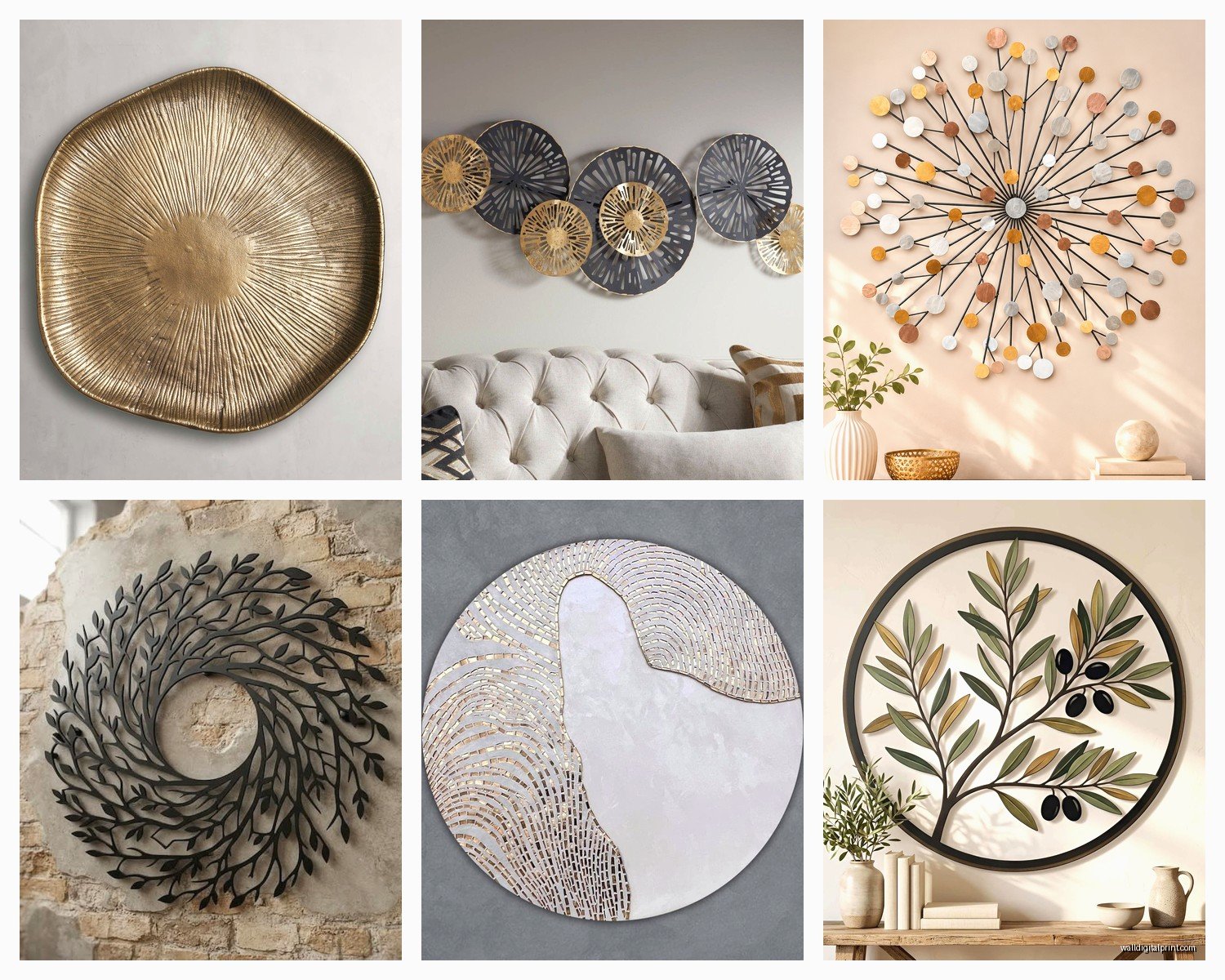
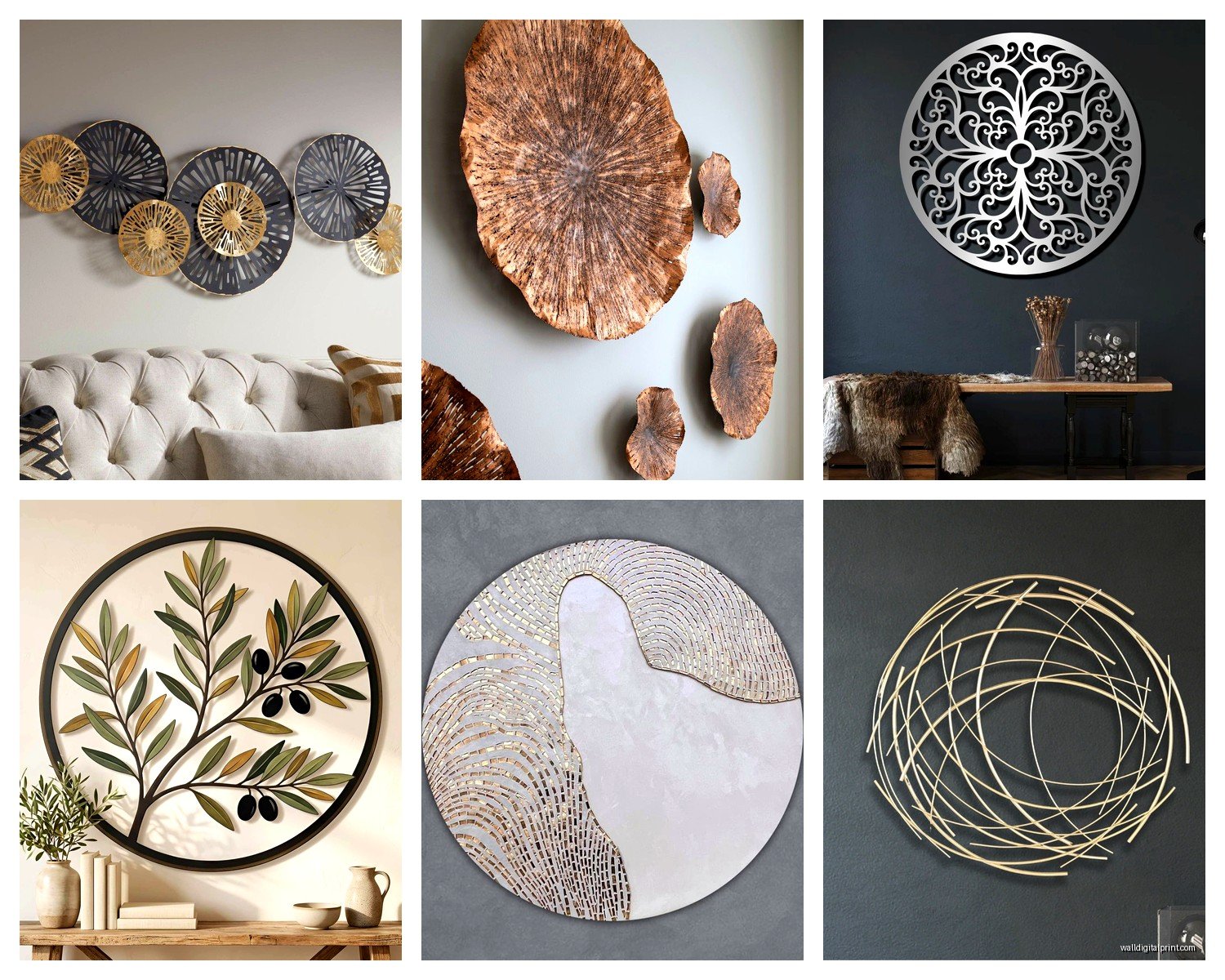
Sunburst designs are everywhere right now and honestly they work in mid-century modern spaces or even traditional rooms if you get one in a darker finish. The ones with uneven rays look more organic and less formal than the perfectly symmetrical versions.
Geometric cutout circles where the design is like negative space within the circle? Those are my favorite for modern spaces. They create really cool shadow patterns when you get the lighting right. I installed one behind my desk with a picture light above it and the shadows on the wall are actually cooler than the piece itself.
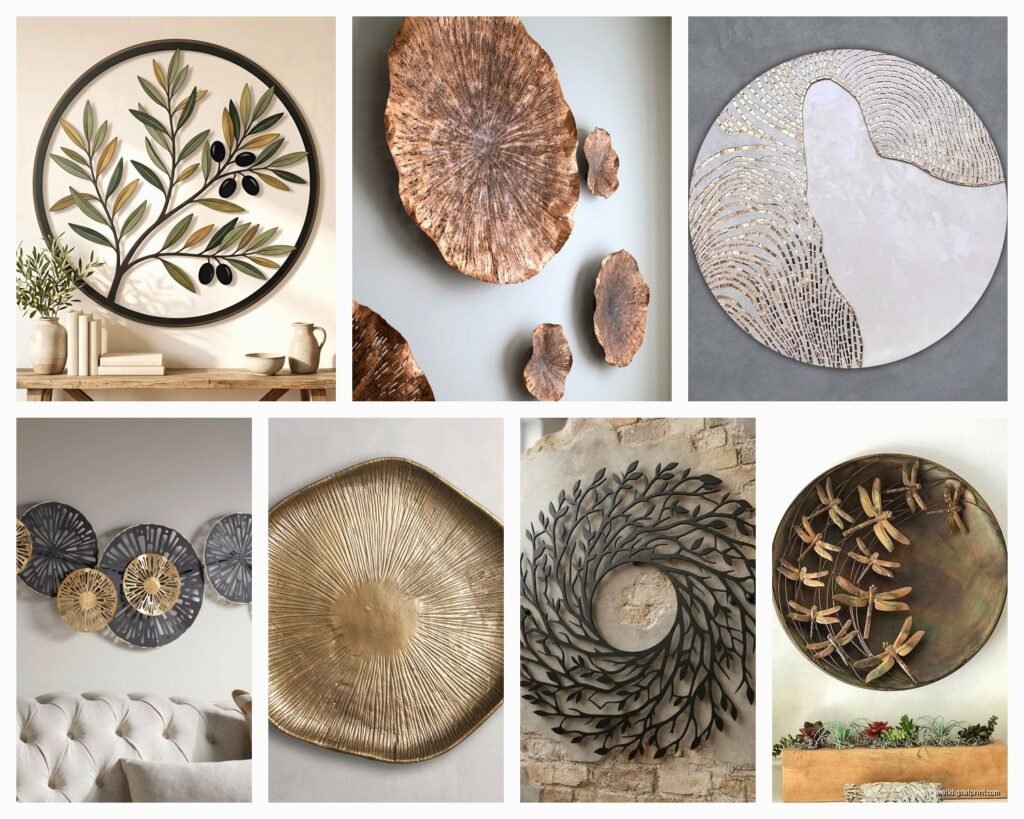
Abstract sculptural circles that have like depth and layers coming off the wall – these read as actual art rather than decor. They’re pricier usually starting around $200 and going up to thousands, but if you want something that feels gallery-worthy this is it. I curated a show last year that featured several metal sculptors and the dimensional circular pieces were the first to sell.
Mandala style patterns are having a bohemian moment. They work really well in bedrooms or meditation spaces but can look too busy in a living room unless your style is maximalist.
Color and Finish Combos
Matte black is the safest choice and works literally everywhere. It’s almost boring how reliable it is. Pairs with everything, doesn’t compete with other elements.
Gold and brass tones need warm undertones in your room. If you have cool grays and blues everywhere, a gold circle is gonna look out of place. But in a room with warm woods, creams, terracotta – perfection.
Copper is tricky because it can read orange or pink depending on the finish. I always tell people to get a sample or at least see it in person first.
Mixed metallics like black with gold accents or copper with silver – these are actually easier to work with than single metals because they bridge different color temperatures in your room.
Wait I forgot to mention the distressed or rusted finishes. These are great for industrial or farmhouse styles but they will shed little bits of rust occasionally so maybe don’t hang them over your white linen sofa.
Hanging Techniques That Don’t Fail
Eye level is generally 57-60 inches from the floor to the center of the piece but honestly I adjust this all the time based on ceiling height and what’s in the room. In a room with 12-foot ceilings, I’ll go higher. Above furniture, you want 6-8 inches between the furniture top and the bottom of the art.
For the actual hanging process with heavy circular pieces, I always use two anchor points instead of one centered hook. This prevents tilting and spinning. Space them about a third of the diameter apart. So for a 30-inch circle, put anchors about 10 inches apart.
The paper template trick – trace your circle on kraft paper, tape it to the wall, mark your hanging points through the paper, then remove the paper and install your hardware. This has saved me from so many measurement mistakes.
Dealing With Textured Walls
Oh man textured walls are the worst for metal art. The piece won’t sit flat and you get these gaps that look sloppy. My solution is to use adhesive foam bumpers on the back at strategic points to create even spacing. Those little clear rubber bumpers you can get at hardware stores. Put them at 3-4 spots around the perimeter and suddenly the piece floats evenly off the wall.
For really heavy texture like brick or stone, I’ve actually mounted pieces on a thin backing board first (painted to match the wall) and then mounted the board. Extra work but it looks professional.
Where to Actually Buy These Things
Etsy has independent metal artists and you can get custom sizes and finishes. Prices range wildly but I’ve found pieces there for $80-$400 that look like they cost way more. Just read reviews carefully because shipping damage is real with metal art.
West Elm and CB2 have decent options in the $150-$300 range. Nothing groundbreaking but solid quality and good return policies.
HomeGoods and TJ Maxx sometimes have them for like $40-$80 but it’s hit or miss. I’ve found some surprisingly good pieces there though. My client canceled last week so I spent an hour in HomeGoods comparing their metal wall art and found this awesome textured bronze circle for $59 that I grabbed for my guest room.
Local metal artists and fabricators – if you want something truly custom, find someone local who works with metal. I’ve commissioned three pieces this way and while they’re more expensive ($400-$1000+), you get exactly what you want in the right size and finish.
Wayfair has a huge selection and their photos are pretty accurate. I’ve ordered probably 10 pieces from there for clients with good results. Just watch the reviews for comments about quality issues.
Styling Around Circular Metal Art
The biggest mistake I see is people hanging the circle and thinking they’re done. You gotta style around it. If it’s above a console, add asymmetrical elements below – tall candlesticks on one side, a stack of books on the other. The circle provides symmetry so your styling can be looser.
Layering works really well with metal circles. I’ll sometimes put a round mirror behind a metal circle sculpture that’s more open/geometric, and the mirror catches light through the cutouts. Creates depth and reflects light into the room.
Plants near circular metal art is like a cheat code for good design. The organic shapes of plants play off the geometric circle shape. I keep a fiddle leaf fig next to my copper circle and the combination just works.
Don’t match your metals too perfectly. If you have a brass circle on the wall, don’t go out and buy all brass accessories. Mix in some matte black or wood tones to create contrast.
Maintenance Reality Check
Dust these things regularly because dust shows up way more on metal than you’d think, especially on matte finishes. I use a microfiber cloth or one of those fluffy dusters.
For shiny finishes like polished brass or copper, you’ll need to polish them occasionally if you want to maintain the shine. I use a gentle metal polish like Wright’s or Bar Keeper’s Friend diluted with water. Test in an inconspicuous spot first though.
If you have a piece with a protective coating, don’t use harsh chemicals on it. Just warm water and mild soap with a soft cloth.
The outdoor pieces need different care – look for ones specifically rated for outdoor use with weather-resistant coatings. Even then, bring them in during harsh weather if you can.
When Things Go Wrong
Scratches on powder-coated finishes can sometimes be touched up with matching spray paint. I keep a collection of matte black, bronze, and gold spray paints for touch-ups. Light coats from about 12 inches away.
If a piece starts to tarnish and you actually like the patina, you can seal it with a clear matte sealer to stop it at that stage. Otherwise you’re gonna keep polishing forever.
Bent pieces are honestly hard to fix yourself without making it worse. If it’s a quality piece, contact the maker or seller. I’ve had good luck with companies replacing damaged items.
The thing with round metal wall art is that it’s one of those elements that can completely transform a space without requiring a huge commitment. You’re not painting walls or buying new furniture, just adding one sculptural element that changes the whole vibe. And unlike trendy stuff that feels dated in two years, a well-chosen metal circle is pretty timeless, especially if you stick with classic finishes like matte black or natural metals.