Wall Art Guide, Wall Art Tutoriels
Buddha Metal Wall Art: Zen Sculptural Meditation Figure
Nov
So I’ve been obsessing over Buddha metal wall art lately because honestly, I walked into this client’s meditation room last month and she had this stunning copper piece that just completely changed the energy of the space, and I’m gonna tell you everything I figured out because choosing the right one is way more complicated than you’d think.
Figuring Out Which Metal Actually Works for Your Space
Okay so first thing – the metal type matters SO much more than I expected. I tested this theory in my own living room and my sister’s apartment, and the difference is wild.
Copper and bronze give you this warm, living quality. Like, the copper one I got develops this gorgeous patina over time, which some people hate but I’m obsessed with. It shifts from bright penny color to these deep greens and browns depending on humidity. My cat knocked it off the wall once (long story) and I noticed the back was completely different from the front after six months of hanging.
Iron and steel are your go-to if you want that stark, modern zen look. They’re heavier though – gotta make sure your wall can handle it. I learned this the hard way when a client insisted on this massive iron mandala piece and we had to reinforce the drywall. Not fun.
Brass is interesting because it sits right in the middle. Shiny but not too shiny, substantial but workable. I’ve got a brass Buddha head in my office and it catches afternoon light in this really subtle way that doesn’t feel too loud.
Aluminum is lightweight and perfect for renters who don’t wanna deal with heavy-duty anchors, but it can look cheap if you’re not careful. The powder-coated ones are better – they have more depth.
Size and Proportion Thing Nobody Talks About
This is gonna sound weird but I actually made a cardboard template before buying my first piece because I kept misjudging sizes online. A 24-inch Buddha looks totally different on a website than on your actual wall.
Here’s what I figured out: for meditation spaces or bedrooms, you want something that draws focus but doesn’t overwhelm. I usually go for 18 to 30 inches for a focal point above a meditation cushion or small altar. Anything bigger starts feeling like a statement piece rather than a contemplative one.
Living rooms can handle larger pieces – 36 to 48 inches – especially if you’ve got high ceilings. But measure your wall space first and leave at least 6 to 8 inches of breathing room on each side. I made this mistake in my first apartment where I got this gorgeous 40-inch piece and it was just crammed between a window and a doorframe looking all claustrophobic.
The Actual Design Styles You’ll Find
Wait I forgot to mention – there are like five main styles and they give completely different vibes.
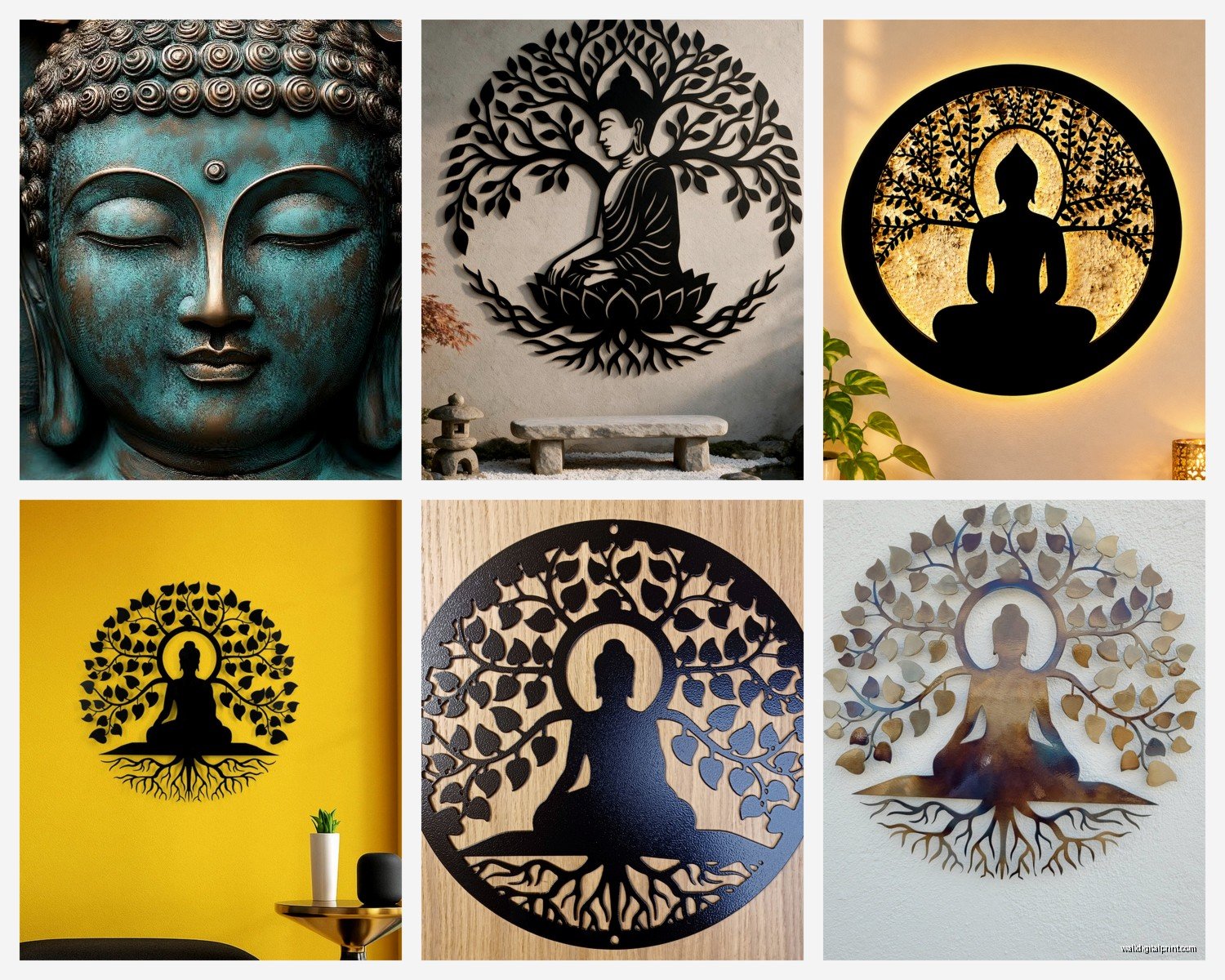
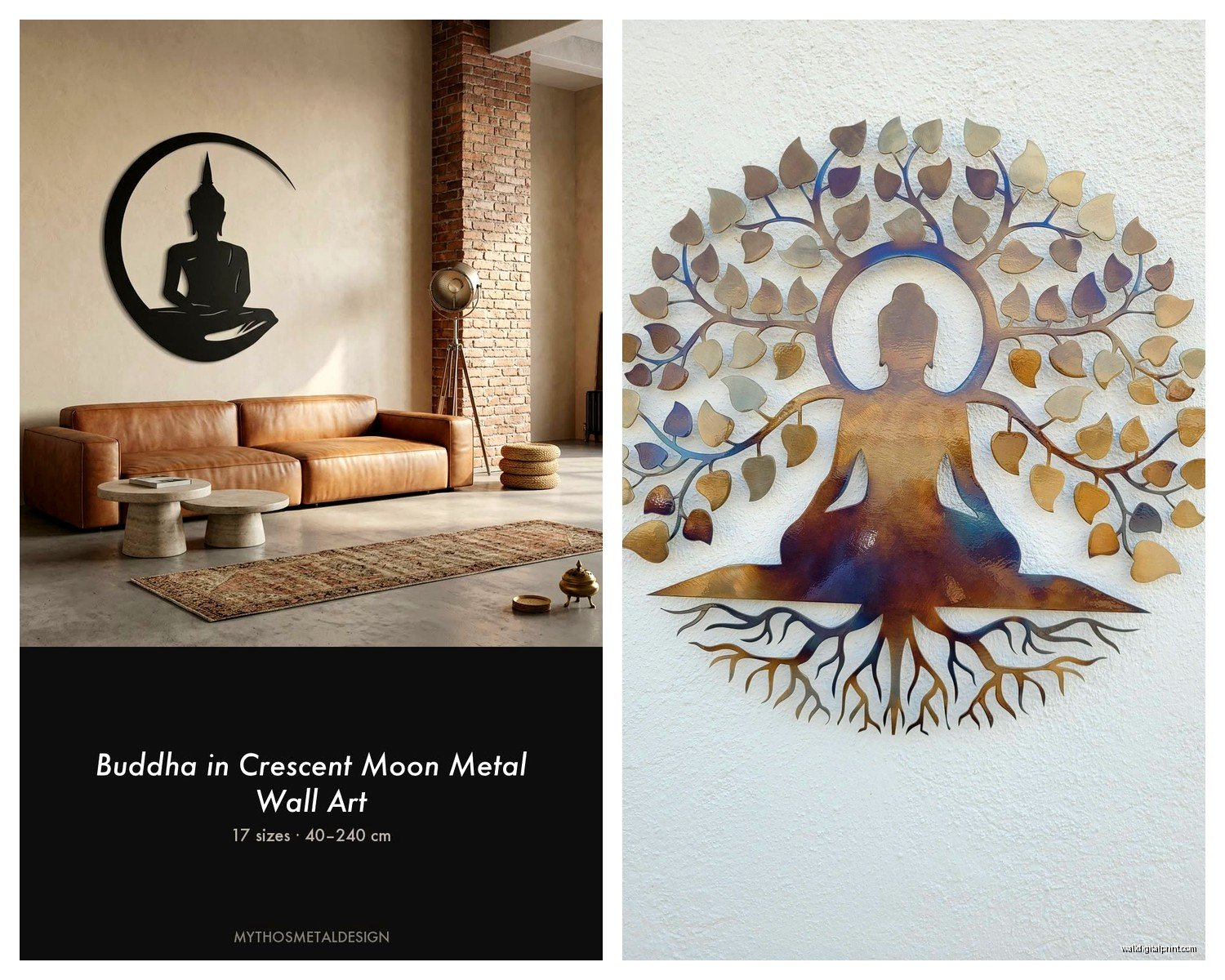
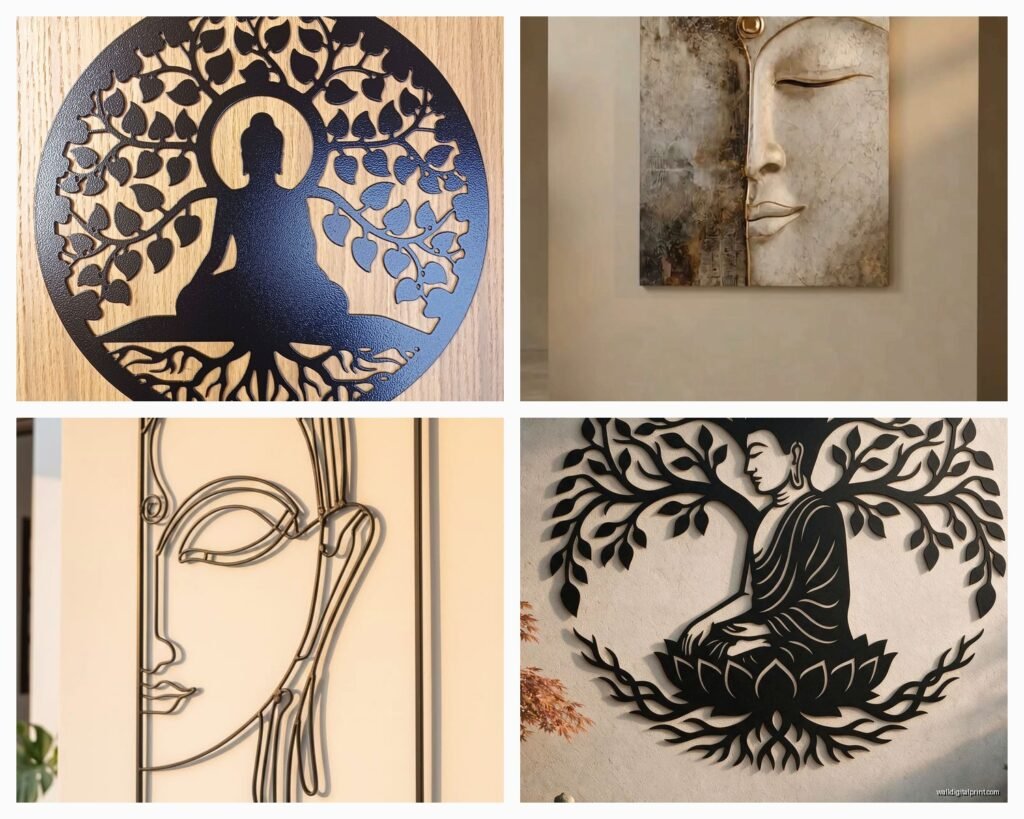
Silhouette/Shadow Art is basically the outline of Buddha in meditation pose. Super minimalist, works great in modern spaces. I have one in matte black steel in my bedroom and it’s perfect because it’s not overly religious-looking if that’s a concern for you or guests.
3D Sculptural Pieces have actual depth and dimension. These are my favorites honestly because they create these amazing shadow patterns when light hits them. I watched my friend’s copper sculptural piece change throughout the day as sunlight moved across her yoga room and it was like having different art at different times.
Mandala Integration combines Buddha figures with geometric mandala patterns. These are busier visually but incredible if you’re into sacred geometry. They work better on larger walls where you can appreciate all the detail.
Multi-Panel Sets – okay so funny story, I initially hated these because they seemed gimmicky, but then I installed a three-panel set in a narrow hallway and it completely transformed the space. The triptych format works really well for creating flow in awkward wall spaces.
Mixed Media pieces incorporate wood, stone, or resin with the metal. I’m kind of on the fence about these because they can look really high-end or really tacky depending on execution.
Installation Is Where People Mess Up
Alright so this part is crucial and I’ve seen so many beautiful pieces installed poorly.
First, find your studs if you’re hanging anything over 10 pounds. I use one of those magnetic stud finders because the electronic ones are temperamental. Most metal Buddha art comes with D-rings or sawtooth hangers, but honestly? I replace them half the time with heavy-duty picture wire for pieces over 15 pounds.
For drywall without studs, you gotta use proper anchors. I swear by toggle bolts for metal art – they distribute weight way better than those plastic anchor things. My client canceled last week so I spent an hour comparing different anchor types at the hardware store like a total nerd, and toggle bolts won every time for anything over 8 pounds.
The height thing – standard rule is center of the artwork at 57 to 60 inches from the floor, which is average eye level. But for meditation spaces, I actually go lower, like 48 to 52 inches, because you’re often sitting and you want it at eye level from that position.
Leveling Without Losing Your Mind
Use a laser level if you have one, but honestly a regular bubble level works fine. The trick I learned from this old contractor is to use painter’s tape to mark your holes first. Stick the tape, mark through it, drill through it, then remove it. Keeps your wall cleaner and you can adjust before committing.
Oh and another thing – for really large pieces, get someone to help you. I tried hanging a 36-inch steel mandala by myself and it was a disaster. You need one person to hold it level while the other checks from a distance.
Placement Ideas That Actually Work
I’ve tested these in probably twenty different spaces now:
Above a meditation cushion or yoga mat – obvious but effective. Keep it centered and low enough to see clearly when seated.
Bedroom accent wall – behind the bed or on the wall you face from bed. Creates a focal point without being too stimulating. I went with a simple Buddha silhouette in my room and it’s the first thing I see in the morning which is actually kinda nice.
Entryway or foyer – sets the tone immediately when people enter. I did this in my apartment with a smaller brass piece and people always comment on it.
Home office – wait this is gonna sound weird but having a Buddha figure visible during video calls has sparked so many interesting conversations. Plus it reminds me to breathe during stressful work moments.
Outdoor covered spaces – patios or covered balconies work if you get weather-resistant metal. Copper and bronze develop beautiful patinas outdoors. Just make sure it’s actually protected from direct rain.
Maintenance and Keeping It Looking Good
So nobody tells you this but metal art needs some care depending on the finish.
Raw copper and bronze will patina – that’s the whole point. If you want to keep the original color, you gotta seal it with clear lacquer and reapply every couple years. I don’t bother because I love the aged look.
Powder-coated or painted pieces just need dusting. I use a microfiber cloth every few weeks. Don’t use cleaners unless you know they’re safe for the finish.
Iron and steel can rust if they’re not sealed properly, especially in humid climates. I learned this when a client in Florida had rust spots develop after a year. She had to sand and reseal it, which was annoying but fixable.
For cleaning, warm water and mild soap works for most finishes. Test in a small spot first though. I once used the wrong cleaner on a brass piece and it left weird streaks that took forever to buff out.
The Patina Question
Some people ask me if they should prevent patina or embrace it. Honestly it depends on your aesthetic. I love the living quality of patina – it means the piece is aging with your space. But if you want that bright metallic look forever, seal it properly from the start.
Where to Actually Buy These
I’ve ordered from probably a dozen different places and here’s what I found:
Etsy has amazing handcrafted options from individual artists. Quality varies wildly though, so read reviews carefully and ask about thickness of the metal. I got burned once with a piece that was basically thin sheet metal that bent if you looked at it wrong.
Wayfair and Overstock have budget-friendly options but they’re hit or miss. Check the weight specifications – if it’s too light for its size, it’s probably flimsy.
Specialized meditation or zen decor stores often have higher quality pieces but you’ll pay more. I’ve found some gorgeous stuff from stores that focus on Buddhist art and decor.
Local artisan markets or craft fairs – don’t sleep on these. I found my favorite piece at a local art festival and got to meet the artist who made it. Plus you can see exactly what you’re getting.
Budget Real Talk
You can find decent pieces starting around forty to sixty dollars for smaller aluminum or thin steel pieces. Mid-range is like hundred and fifty to three hundred for good quality copper, bronze, or thicker steel. High-end handcrafted pieces can run five hundred plus and honestly some of them are worth it if you’re gonna keep them forever.
I usually tell people to buy the best quality they can afford rather than getting multiple cheaper pieces. One stunning focal point beats three mediocre ones every time.
Color and Finish Combos That Work
Natural metal finishes – copper, brass, bronze – work beautifully with warm neutrals, deep blues, forest greens, and earth tones. My copper Buddha looks incredible against my sage green wall.
Black or dark finishes pop against white, cream, or light gray walls. Very modern and clean.
Metallic silver or polished steel needs careful pairing. Works great with cool grays, black, white, but can clash with warm tones. I usually avoid mixing metals in the same room but silver Buddha art with brass accents can work if they’re separated enough.
Oh and another thing – consider what’s around the piece. If you’ve got a lot of other metal in the room (lamps, frames, hardware), try to keep a cohesive metal family. All warm metals or all cool metals generally looks more intentional.
The lighting in the room matters too. I installed track lighting to highlight a sculptural piece in my meditation corner and it completely changed how the shadows and depth read. Even just a nearby lamp can create interesting effects with dimensional metal art.
Look, at the end of the day it’s about what makes you feel calm and centered when you look at it. I’ve seen people stress over every detail and end up with technically perfect but soulless spaces. Pick something that resonates with you, install it properly so it doesn’t fall on your head, and let it become part of your daily environment. The best piece is the one you’ll actually appreciate every time you see it rather than the one that checks all the design boxes.