Wall Art Guide, Wall Art Tutoriels
Manga Wall Art: Japanese Comic Anime Graphic Novel Art
Nov
So I’ve been down this manga wall art rabbit hole for like three years now and honestly it started because a client wanted their game room to look “less sad” and we ended up covering one wall in these massive Chainsaw Man panels and it completely changed the space.
First thing you gotta know is that there’s basically three routes you can go with manga art and they’re all super different price points. You’ve got actual manga pages (which sounds weird but stay with me), printed posters of manga covers or iconic panels, and then there’s original fan art or licensed prints. I’ve used all three and they each have their place.
The Actual Manga Page Route
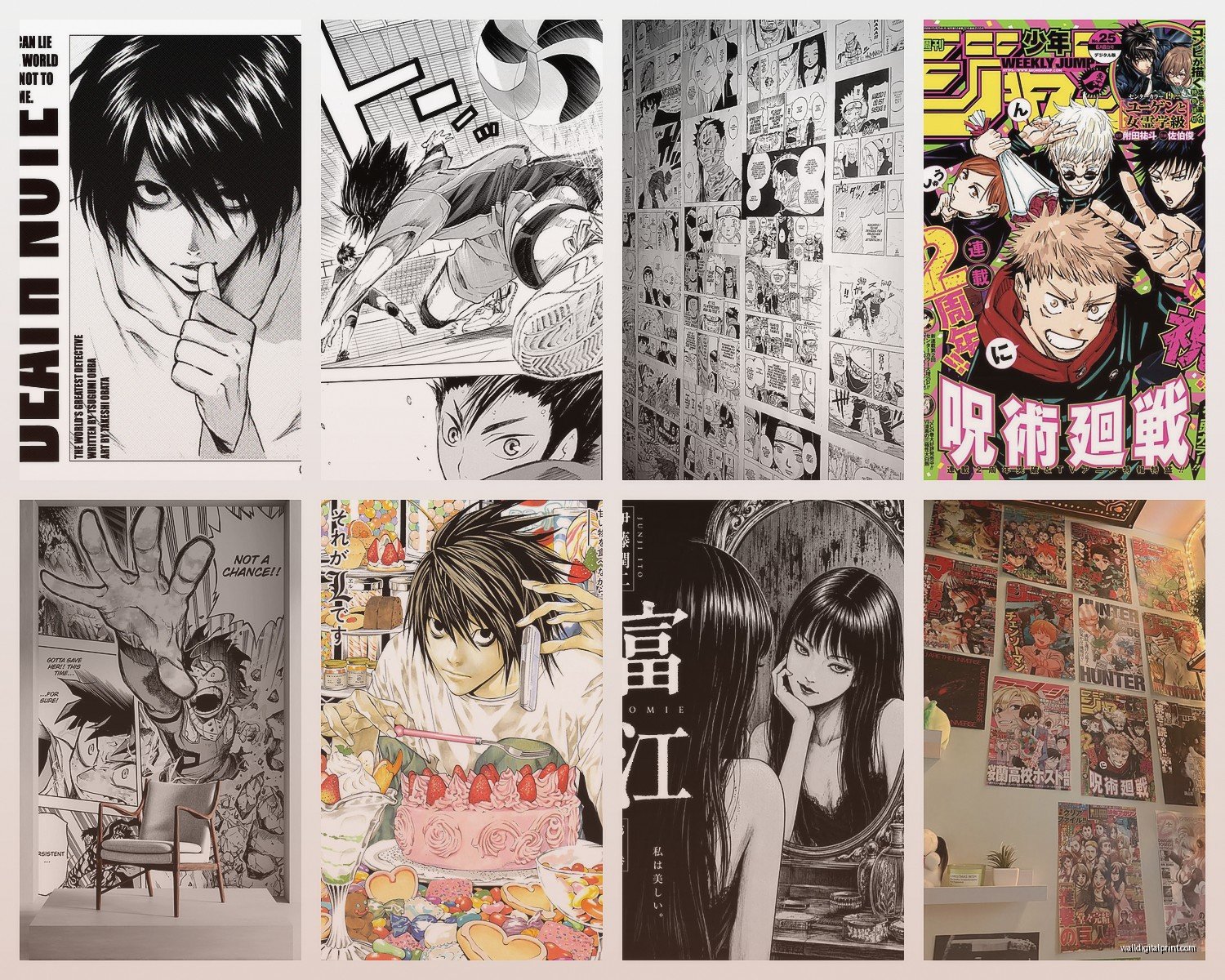
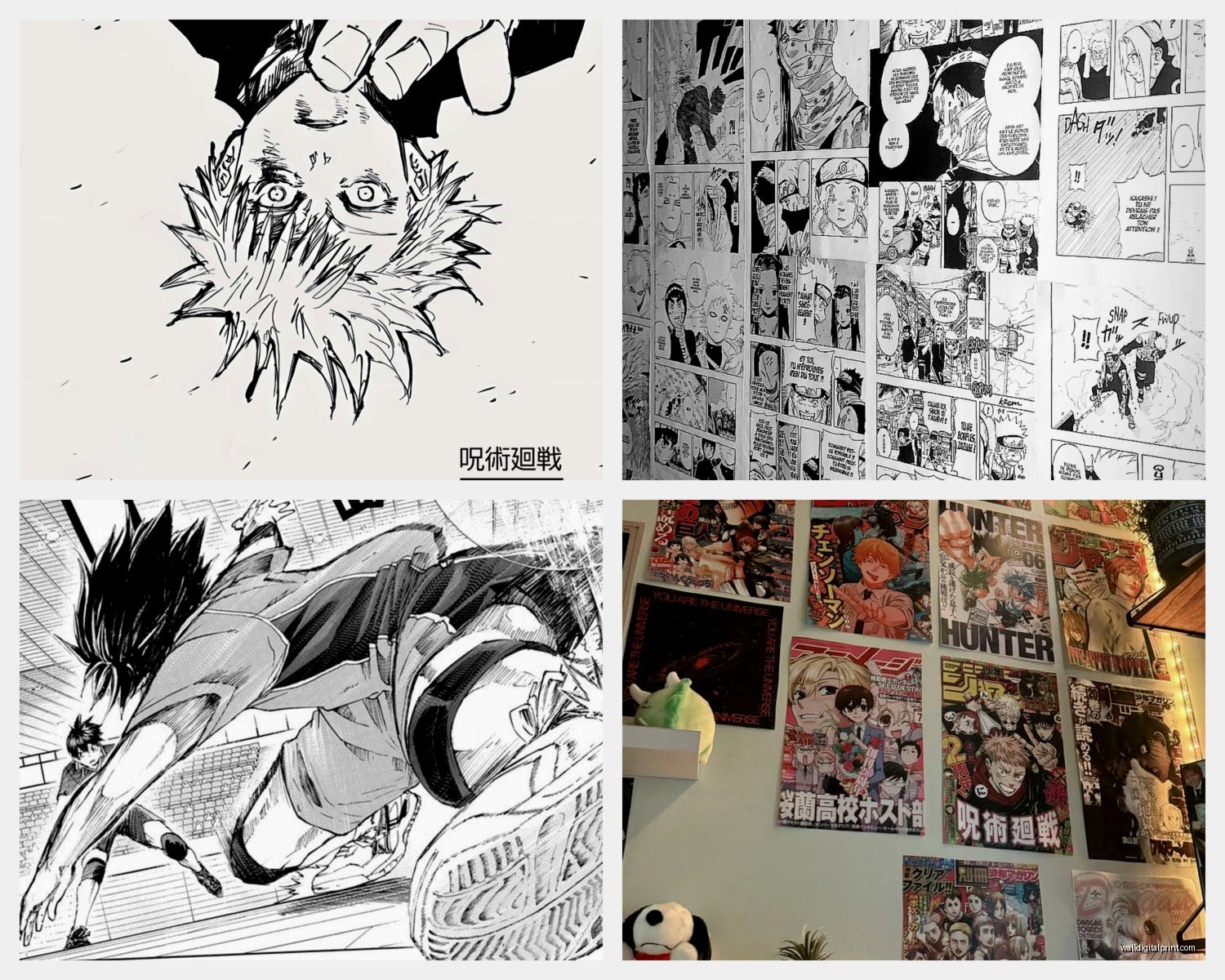
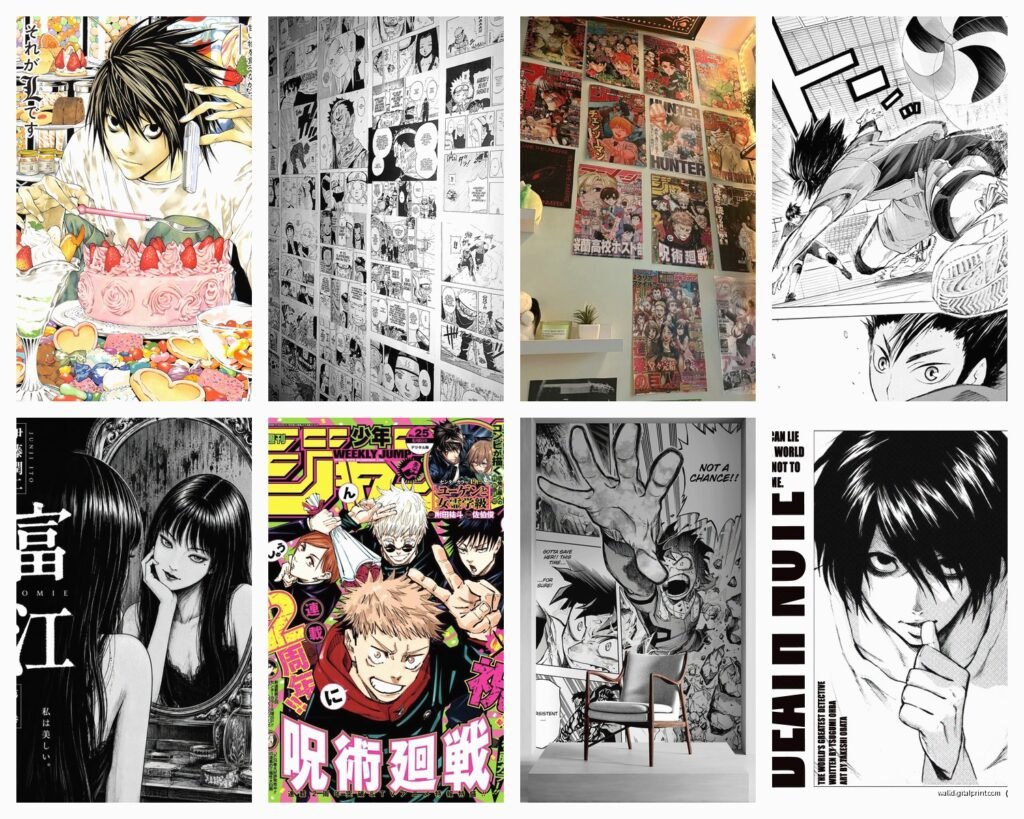
Okay so this is gonna sound weird but framing actual manga pages is like… ridiculously effective? I discovered this when I was reorganizing my studio and found these old Berserk volumes that got water damaged. Instead of tossing them I cut out the pages that survived and the dramatic black and white panels looked insane in simple black frames.
You can find damaged or duplicate manga volumes at used bookstores for like $2-5 each. The key is picking pages with strong compositions – full page spreads work best. I usually look for:
- Action scenes with dynamic movement lines
- Character close-ups with intense expressions
- Environmental shots that show the artist’s detail work
- Pages with minimal dialogue bubbles or you can carefully cut those out
For framing these I swear by IKEA’s RIBBA frames in black. They’re cheap, they’re consistent, and when you hang like 6-9 of them in a grid it looks intentional and gallery-like. The 5×7 size works perfectly for standard manga pages. Make sure you use acid-free backing though because the paper quality in manga isn’t great and it’ll yellow faster than you think.
Where This Works Best
I did a whole wall in someone’s home office last year with Tokyo Ghoul pages and it created this moody atmosphere that somehow made Zoom meetings less awful. The black and white keeps it from being too busy but there’s enough detail that it’s interesting. My cat knocked three of them off the wall once and I didn’t even notice for two days because the wall still looked full.
Printed Posters and Canvas Prints
This is where most people start and honestly it’s the easiest route but you gotta be careful because there’s SO much garbage quality stuff out there.
Redbubble and Society6 have tons of options but the quality is hit or miss. I’ve ordered probably 30+ prints from various sellers and here’s what I learned – always go for the thicker paper stock options even though it costs more. Those thin posters look cheap the second you put them up and they wrinkle if you even look at them wrong.
For canvas prints I actually prefer Displate now. They’re metal posters with this magnetic mounting system and they’re pricey but they look sharp and you don’t have to deal with framing. I have a massive My Hero Academia one in my hallway and people always think it’s painted. The colors stay vibrant and they’re easy to swap out when you get bored.
Size Matters More Than You Think
Don’t go too small. I made this mistake early on – bought these cute 11×14 prints thinking they’d look good in my living room and they just disappeared on the wall. For a statement piece you want at least 24×36 inches. If you’re doing a gallery wall you can mix sizes but keep the smallest at 16×20.
Wait I forgot to mention – if you’re printing your own stuff (which I’ll get to) go to a actual print shop not your home printer. FedEx Office does decent work and the quality difference is massive. Bring them a high resolution file though, at least 300dpi or it’ll look pixelated and terrible.
Finding High Quality Images
Okay so funny story, I spent like six months trying to figure out where to get good quality manga images that wouldn’t look blurry when printed large. The official manga volumes are scanned at different qualities and a lot of what you find online is compressed.
Your best options are:
Official art books – These are goldmines. Series like Attack on Titan, Demon Slayer, Jujutsu Kaisen all have official art books with high-res images. You can sometimes find scans online but honestly buying the physical book and scanning pages yourself gives you the best quality. My scanner is a Epson V600 and it handles this perfectly.
Digital manga platforms – If you subscribe to Shonen Jump or similar services you can screenshot panels from the digital versions. They’re usually better quality than scanned physical copies. Just make sure you’re not screenshotting with UI elements in the frame because I’ve done that and felt really dumb when I went to print.
Licensed merchandise sites – Right Stuf Anime and similar retailers sell official posters and prints. They’re more expensive but you’re getting actual licensed stuff with proper color reproduction.
Color vs Black and White
This is totally personal preference but I lean heavily toward black and white manga panels for most spaces. Color manga art is gorgeous but it can clash with your existing decor really easily. I had a client who wanted Naruto art and we went with black and white panels instead of the colorful promotional art and it integrated way better with their navy and gray color scheme.
That said, if your space is pretty neutral, color prints can be that pop you need. I’ve got a One Piece spread above my desk that’s full color and it makes me happy every time I look at it even though it technically clashes with my green walls.
Mixing Manga Styles
You can totally mix different manga series on the same wall if you’re strategic about it. Keep the framing consistent – all black frames or all white frames. And try to match the art style density. Like don’t put a minimal slice-of-life manga next to something as detailed as Vagabond because they’ll compete weirdly.
I did a project where we mixed panels from different shonen series but kept them all action scenes with similar energy levels and it worked great. The key was maintaining that black and white palette and similar line weights.
The DIY Printing Route
If you wanna save money and have more control, printing your own stuff is the way. I use Printful sometimes for one-offs but for multiple prints I go local.
Find a print shop that does large format printing. Bring them a USB drive with your files saved as high-res PDFs or TIFFs. Most places charge like $3-8 per print depending on size which is way cheaper than buying pre-made posters.
For paper I usually go with matte photo paper or cardstock. Glossy can work but you get glare issues depending on your lighting. I learned this the hard way when I hung a glossy Fullmetal Alchemist print right across from a window and you literally couldn’t see it during the day.
Framing Without Going Broke
Custom framing is insanely expensive so don’t do that unless you’re framing something really special. Standard size frames from IKEA, Target, or Michael’s are your friends. Michael’s has 50% off sales basically every week so never pay full price there.
I bulk bought like 20 black frames during a sale and now I can swap out art whenever I want. Having consistent frames means you can change the actual prints without the wall looking chaotic.
For larger pieces consider poster hangers – those magnetic wooden bars that clamp onto the top and bottom. They’re trendy right now and they’re actually practical because you can swap prints super easily. I got a set from Amazon for like $25 and use them in my bedroom for rotating manga art.
Hanging Systems That Don’t Destroy Your Walls
Command strips work for lighter frames but I don’t trust them for anything over like 5 pounds. I’ve had too many crashes. For a gallery wall I use a picture rail system – you install one rail at the top of your wall and hang everything from adjustable cables. It looks clean and you can rearrange without making new holes.
If you’re renting this is definitely the way to go. I installed one in my apartment and my landlord didn’t care because it’s just one line of small holes at the ceiling line.
Specific Series Recommendations
Based on what I’ve worked with, here’s what looks best on walls:
Berserk – The dark fantasy aesthetic translates incredibly well to wall art. Those detailed armor and landscape panels are museum-quality honestly.
Vagabond – Takehiko Inoue’s brushwork is insane and looks gorgeous printed large. Very sophisticated for like an office or study.
Junji Ito – If you want something unsettling and conversation-starting. I have a Uzumaki spiral panel in my bathroom and it’s perfectly weird.
Any Makoto Shinkai manga adaptations – The backgrounds are basically landscape paintings. Really pretty for living spaces.
Chainsaw Man – Bold compositions, great energy, very current. Works well for younger spaces or game rooms.
Layout Ideas That Actually Work
The gallery grid is foolproof – same size frames in a perfect grid pattern. I usually do 3×3 or 4×3 depending on wall size. Use a level and measure carefully because if it’s even slightly off it’ll bug you forever.
For a more dynamic look try the salon style where you mix sizes but keep consistent spacing between frames. I lay everything out on the floor first, take a photo, then recreate it on the wall. This method takes forever but looks really custom.
Single statement piece works too obviously – one massive canvas or framed print centered on the wall. This is good if you’ve got a really striking image or if your walls are already busy with other stuff.
Oh and another thing – consider the room’s purpose. I wouldn’t put intense horror manga in a bedroom where you’re trying to sleep, you know? Save the peaceful slice-of-life stuff for bedrooms and go wild with action scenes in social spaces.
Lighting Makes a Huge Difference
If you’ve got overhead lighting that’s fine but adding picture lights or wall washers takes it to the next level. I installed some LED strip lights above my manga wall and the way it highlights the details at night is chef’s kiss.
Natural light is tricky though – direct sunlight will fade prints over time. If your manga wall gets direct sun, use UV-protective glass in the frames or hang blackout curtains you can close during peak sun hours.
My living room wall gets morning sun and I rotate the prints every six months or so because I’ve noticed some fading on the ones that get hit directly. It’s annoying but better than having permanently faded art.
The Legal Stuff Nobody Talks About
Technically printing copyrighted manga panels for your own home is a gray area. For personal use in your own space most people don’t worry about it. If you’re gonna sell prints or do this commercially though, stick to licensed products or commission original fan art.
I work with a few artists on Instagram who do amazing manga-inspired original pieces. They’re more expensive but you’re supporting artists and you don’t have to worry about copyright issues. Plus you get truly unique art.
Look for artists who do commission work in manga styles – search hashtags like #mangacommission or #animeartist and you’ll find tons of talented people. Prices range from like $50 for simple pieces to $300+ for detailed work but it’s worth it for statement pieces.
Anyway that’s basically everything I’ve figured out through trial and error and probably too much money spent on frames. The main thing is just start – grab a few prints or frames and see how they feel in your space. You can always add more or change things up and that’s kinda the fun part honestly.