Wall Art Guide, Wall Art Tutoriels
Vertical Wall Art for Living Room: Portrait Format Main Space
Nov
So I’ve been working with vertical art in living rooms for like three years now and honestly it’s one of those things where everyone gets it wrong at first because we’re so used to thinking horizontal for everything above the couch.
The biggest thing with portrait format pieces is they actually pull your eye up and make your ceiling feel higher. I had this client last month with an 8-foot ceiling situation and we hung this massive 48×72 inch abstract piece and suddenly the whole room felt like it had an extra foot of height. It’s kinda magic actually.
The Size Thing Everyone Messes Up
Okay so here’s what drives me crazy. People buy these tiny 16×20 inch pieces and wonder why they look like postage stamps on their wall. For a main living room wall, you’re looking at minimum 30×40 inches, but honestly I usually go bigger. Like 36×48 or even 40×60 if the wall can handle it.
The rule I use is measure your wall width and the art should be roughly 2/3 to 3/4 of whatever furniture is below it. So if you’ve got a console table that’s 60 inches wide, you want art that’s around 40-45 inches wide. For vertical pieces specifically, you can go a bit narrower width-wise because the height compensates.
My dog just knocked over my coffee cup but anyway…
Where to Actually Hang This Stuff
The height thing is where people really struggle. Standard rule is center the piece at 57-60 inches from the floor, which is like gallery standard eye level. But here’s the thing with tall vertical pieces, sometimes that looks weird because the top edge ends up really high.
What I do instead is think about the viewing angle. If you’re mostly looking at this art while sitting on your couch, you want the visual center slightly lower, maybe 54-56 inches. If it’s in an entryway or somewhere you’re standing most of the time, go with the standard 57-60.
I measured wrong once in my own living room and had to patch like six holes in the wall so learn from my mistakes and use a laser level. Worth the $25 investment, trust me.
The Furniture Relationship
This is gonna sound weird but vertical art works amazing above furniture that’s NOT your couch. Like behind a console table, next to a tall bookshelf, in that awkward narrow wall between two windows. Everyone defaults to putting their big art over the sofa but some of the best living rooms I’ve styled have the statement piece somewhere totally unexpected.
I did this loft apartment in Brooklyn where we put a 40×60 portrait painting on the wall opposite the couch, above a credenza, and it became like the focal point when you walked in. The couch wall just got a few smaller horizontal pieces and it balanced everything out perfectly.
Color Coordination Without Being Matchy Matchy
So you don’t want to match your art exactly to your throw pillows because that’s very 2015. What actually works is pulling one or two accent colors from the piece and echoing them in your textiles and accessories.
I’ve got this thing I do where I take a photo of the art on my phone and then walk around the furniture store or scroll online with it pulled up. If something makes me go “oh that works” when I look between the art and the object, I add it to the maybe pile. Very scientific lol.
The other approach is go neutral with your big furniture pieces and let the vertical art be the color moment. Gray couch, cream rug, wood coffee table, then BAM a vertical piece with deep blues and coral tones. That’s actually my living room right now and I change the art every few months because I’m extra like that.
Framing Choices That Don’t Suck
Okay framing is where you can blow your budget real fast. Custom framing a large vertical piece can run $400-800 easily. I usually steer people toward either canvas gallery wraps that don’t need frames at all, or getting ready-made frames in standard sizes.
The standard sizes to look for are 24×36, 30×40, and 36×48. If you find art in these dimensions you can get decent frames from places like Michael’s or even Amazon for under $150. Wait for the Michael’s 50% off framing sales, they happen like every other week.
Black frames are safe but can be harsh. Walnut or natural wood frames add warmth without competing with the art. White or cream frames work great in more traditional or coastal spaces. I literally have three different frames for the same piece of art in my storage closet because I swap them based on my mood which is probably excessive.
Mixing Vertical With Other Art
So this is where it gets interesting. You can totally do a gallery wall that includes vertical pieces but you gotta plan it out. I use painter’s tape on the floor and arrange everything there first, take a photo from above, then recreate it on the wall.
For a vertical focal piece, you can flank it with smaller horizontal or square pieces. Or do a vertical piece on one side of a doorway or window and balance it with a grouping of smaller pieces on the other side. Asymmetrical but balanced, you know?
I watched this whole YouTube video about the golden ratio while eating leftover Thai food last night and honestly some of that math stuff is helpful but also you can just eyeball it and if it looks good it looks good.
Styles That Work in Portrait Format
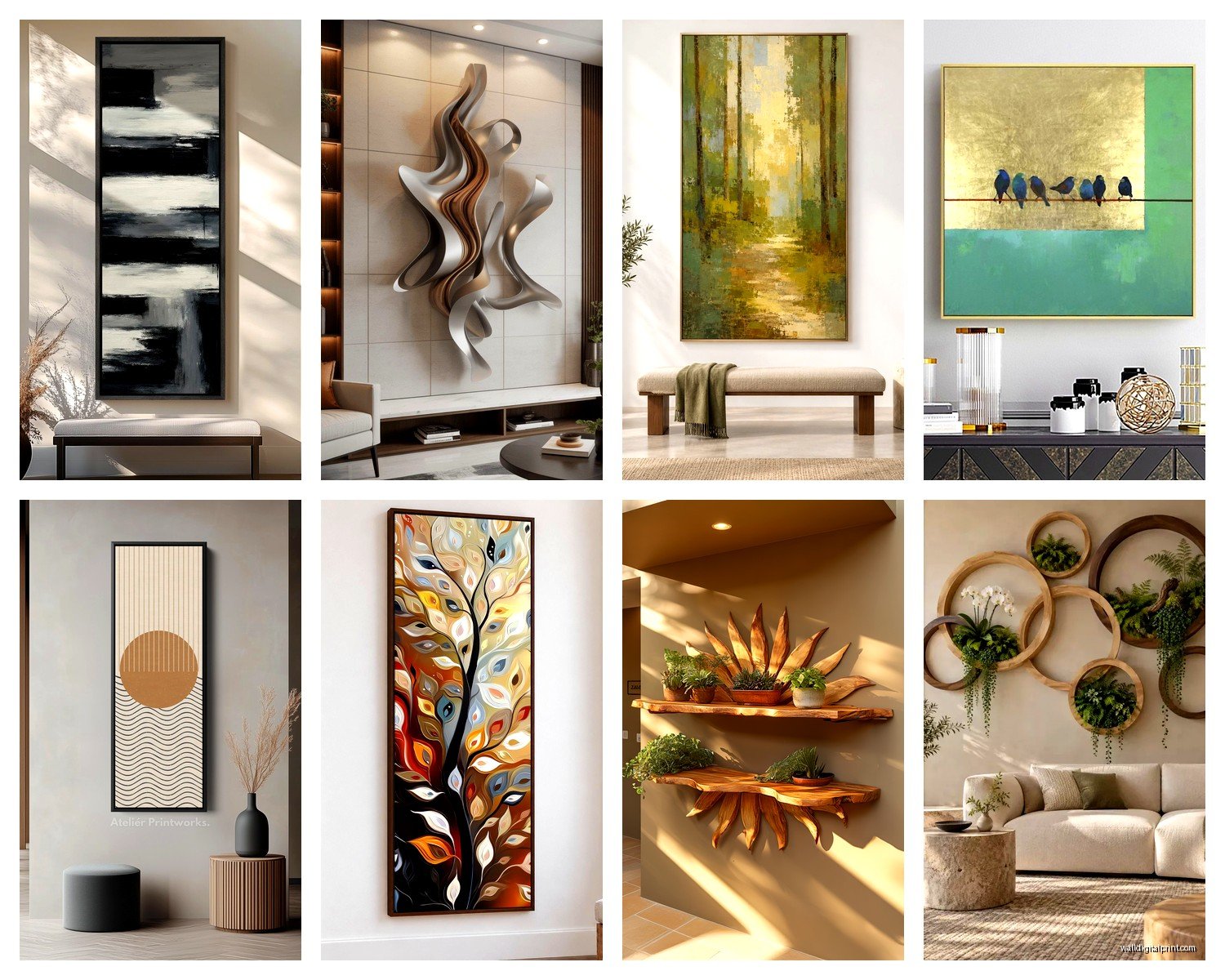
Abstract art is probably the easiest for vertical orientation because there’s no “right way” to view it. Landscapes can be tricky in portrait unless it’s like a waterfall or a tree scene or something with vertical elements naturally.
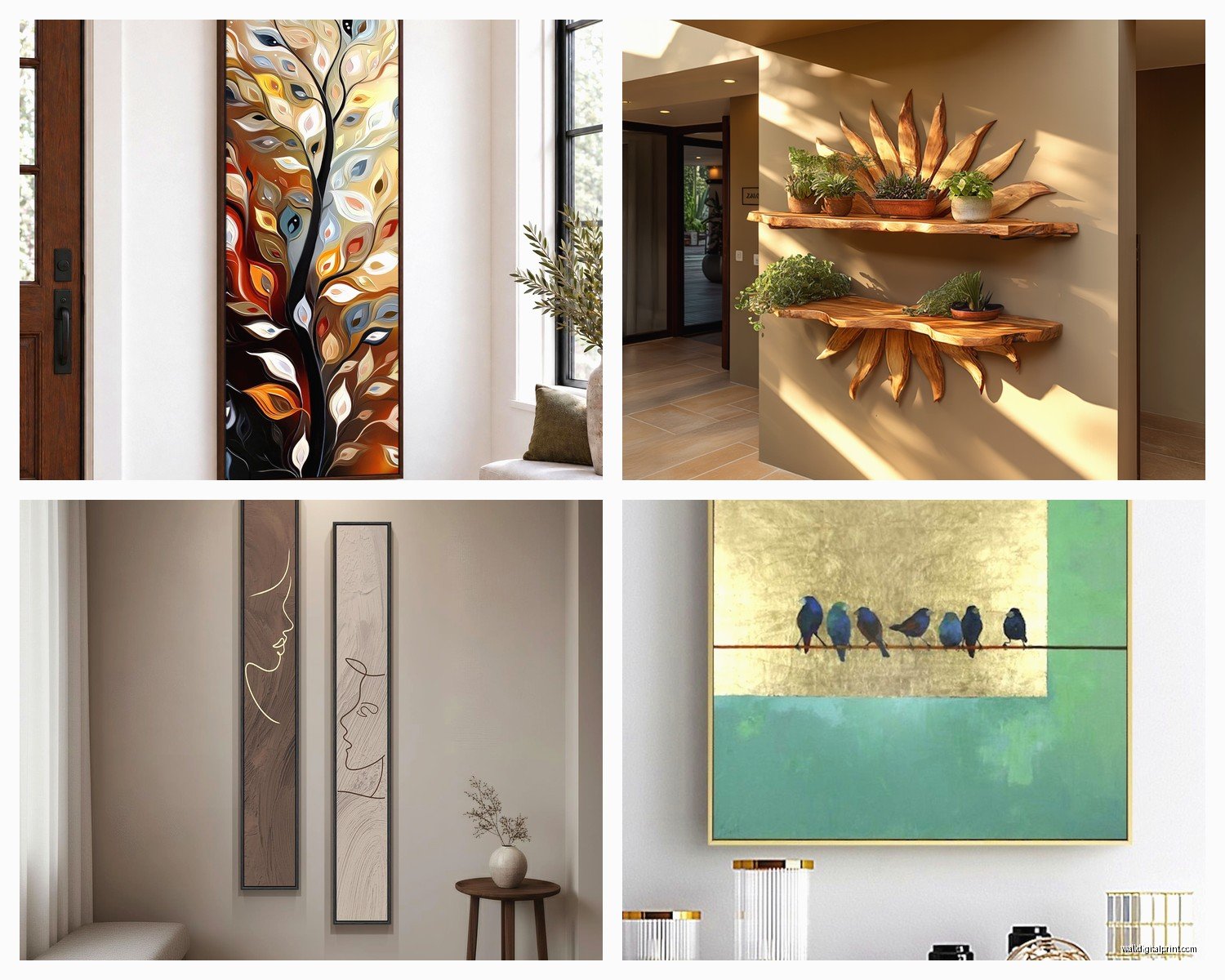
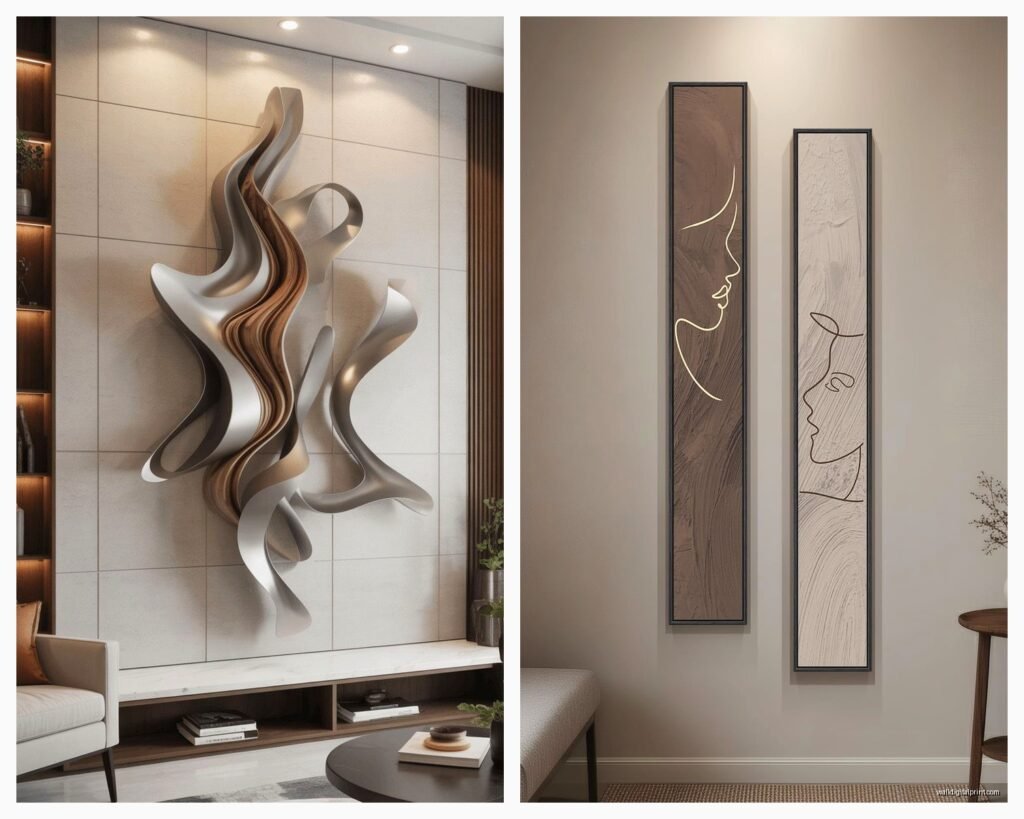
Figurative art and portraits obviously work great. I’m seeing a lot of line drawing portraits right now, very minimal, and those look sick in tall narrow formats. Photography can go either way but architectural photography and nature shots with height work really well.
Oh and another thing, typography art. Like those prints with quotes or single words in interesting fonts. Those are made for vertical spaces and you can find affordable ones on Etsy or Society6.
Budget Breakdown From Someone Who’s Done This Too Many Times
If you’re looking at affordable options, start with prints. You can get large format prints from artists on Etsy for $50-150. Add a frame for another $100-200 and you’re still under $400 total for a major statement piece.
Mid-range is original art from emerging artists or limited edition prints, running $300-800 for the art itself. I follow a bunch of artists on Instagram and a lot of them do payment plans which is clutch.
High-end is investment pieces, original paintings or photographs from established artists. That’s $1000+ but if you’re gonna splurge on one piece of art for your living room, vertical format gives you a lot of impact for your money.
I bought this piece from a local artist at a street fair for $400 two years ago and it’s still my favorite thing in my apartment. Sometimes the best finds aren’t even online.
Lighting That Actually Makes the Art Look Good
You need proper lighting or your beautiful vertical piece is just gonna be a dark rectangle at night. Picture lights are classic but they create glare sometimes. I prefer track lighting or adjustable can lights aimed at the art from about 30 degrees off center.
LED strips behind the frame can create this cool floating effect but that’s more of a modern vibe, not for everyone. The easiest solution is honestly just making sure you have good ambient lighting in the room and maybe a floor lamp positioned to wash light across the wall.
Natural light is great but watch for direct sunlight because that’ll fade your art over time. I learned this the hard way with a watercolor piece that lost like half its color intensity in a year.
The Weird Walls Where Vertical Art Saves the Day
Narrow walls next to fireplaces? Perfect for vertical pieces. That slice of wall between two doorways? Vertical art. Above a radiator where you can’t put furniture? You guessed it.
I styled this Victorian house once with all these weird architectural quirks and narrow wall segments, and vertical art was literally the only thing that made sense. We did like five different portrait-format pieces throughout the living and dining area and it tied everything together.
Also stairway walls. If your living room opens to a staircase, vertical art on that stairway wall can be visible from the living room and it creates good visual flow.
What to Avoid Because I’ve Seen It Go Wrong
Don’t hang vertical art sideways thinking it’ll work as horizontal. I mean obviously, but I’ve seen it attempted.
Don’t go too small. I cannot stress this enough, if you’re gonna do vertical, commit to the size. A wimpy little vertical piece just looks like you didn’t know what size to buy.
Don’t hang it so high that you need a ladder to dust it. Practical considerations matter and if you can’t reach it easily you won’t maintain it and it’ll get gross.
Avoid super busy patterns in vertical format for your main piece because it can feel overwhelming when it’s that tall. Save the busy stuff for smaller accent pieces.
Where I Actually Shop for This Stuff
Etsy is my go-to for prints and affordable originals. Search by size and orientation to narrow things down. Society6 and Minted have good selections too, though I find their prices a bit higher.
Local art fairs and studio tours are goldmines. You meet the artist, you can see the actual piece in person, and you’re supporting local creatives.
Facebook Marketplace and estate sales sometimes have amazing vintage pieces. I found a 1970s abstract painting that was 36×60 for $75 and it just needed a frame refresh.
For prints of famous works or photography, AllPosters and Art.com have huge selections and you can filter by orientation and size which is super helpful.
Instagram is actually where I discover most artists now. Follow hashtags like #verticalart #portraitart #abstractpainting and you’ll find so much stuff.
Making It Work With Your Actual Life
If you have kids or pets, hang it high enough that it’s not gonna get knocked into. Use proper wall anchors, especially for heavy pieces. I use two D-rings and wire on the back for anything over 15 pounds, with anchors rated for at least double the weight of the piece.
Renters, you can use those Command picture hanging strips for lighter pieces up to like 12 pounds. For heavier stuff you gotta just accept you’ll need to patch a few holes when you move, it’s worth it to have art you actually like looking at.
The other thing is don’t be precious about changing it up. Art isn’t permanent. If you buy something and decide six months later it’s not working, sell it or move it to another room. Your living room should evolve with you.
My coffee table is covered in art catalogs right now because I’m helping a friend pick pieces for her new place and honestly this is my favorite part of the job, just gonna keep doing this whether people pay me or not probably.