Wall Art Guide, Wall Art Tutoriels
Large Vertical Wall Art for Living Room: Oversized Portrait Main Space
Nov
So I’ve been thinking about this vertical wall art thing nonstop since my friend Sarah texted me at like midnight asking if she should buy this massive 6-foot portrait for above her couch and honestly, the whole oversized vertical art trend is trickier than it looks.
Why Vertical Actually Makes Sense (Sometimes)
Okay so here’s the thing about vertical art in living rooms – everyone assumes you need horizontal pieces because walls are wide, right? But if you’ve got high ceilings or a narrow wall situation, vertical can actually make the space feel more balanced. I learned this the hard way when I hung a wide landscape piece in my last apartment and it just… sat there looking awkward because my ceilings were 10 feet tall.
The rule I usually follow is if your wall is taller than it is wide, or if you’re working with standard 8-foot ceilings but the wall space is only like 4-5 feet across, vertical is gonna look way more intentional.
Sizing This Monster Correctly
Here’s where people mess up constantly. You see a gorgeous 72×36 inch portrait online and think yes that’s the one, but then it arrives and either completely overwhelms your sofa or looks like a postage stamp floating above your furniture.
What I do – and this works – is measure your wall space first obviously, but then measure your couch or whatever furniture is below. The art should be roughly two-thirds to three-quarters the width of your furniture. So if you’ve got a 7-foot sofa, you’re looking at art that’s about 50-60 inches wide max.
For height, you want the center of the piece at eye level when you’re standing, which is usually around 57-60 inches from the floor. But if it’s going above a couch, the bottom edge should sit about 6-8 inches above the back of the sofa. I measured this obsessively in my living room with painter’s tape before committing and my cat kept trying to attack the tape which was… not helpful.
The Ceiling Height Factor
If you’ve got standard 8-foot ceilings, don’t go taller than 48-60 inches for your art. With 10-foot ceilings you can push to 72 inches or even bigger. I worked with a client who had 12-foot ceilings and we went with an 84-inch piece that looked absolutely insane when we unpacked it but once it was up? Perfect.
What Actually Works Style-Wise
Okay so the content of the art matters way more than people think. Not all oversized vertical pieces work in a living room – some feel too formal, some too busy.
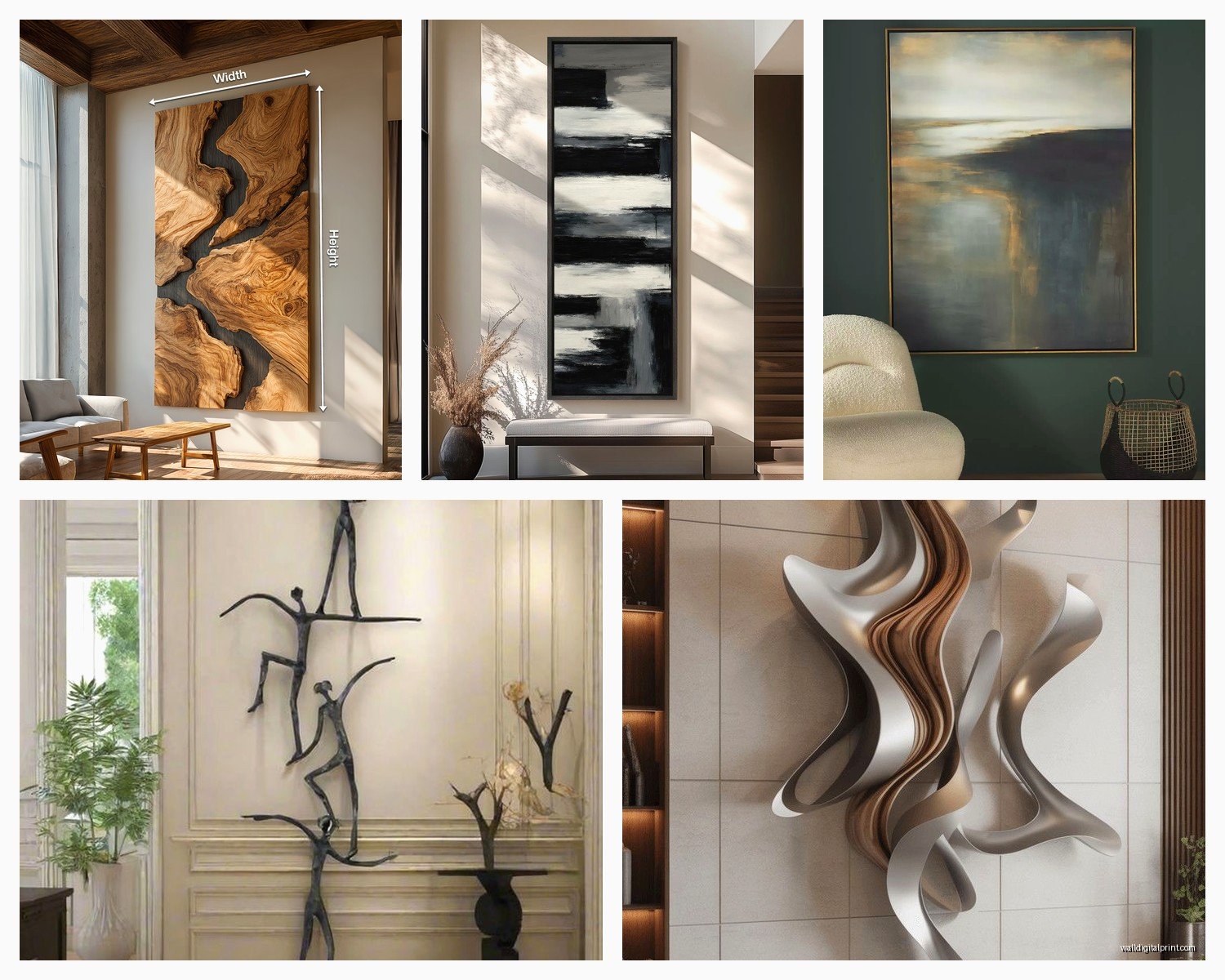
Abstract vertical art is probably the safest bet because it reads as modern but doesn’t demand too much attention. I’m talking like bold brushstrokes, geometric shapes, minimal color palettes. There’s this one piece I keep seeing everywhere with navy and gold leaf that’s super popular right now and honestly it works in like 80% of spaces.
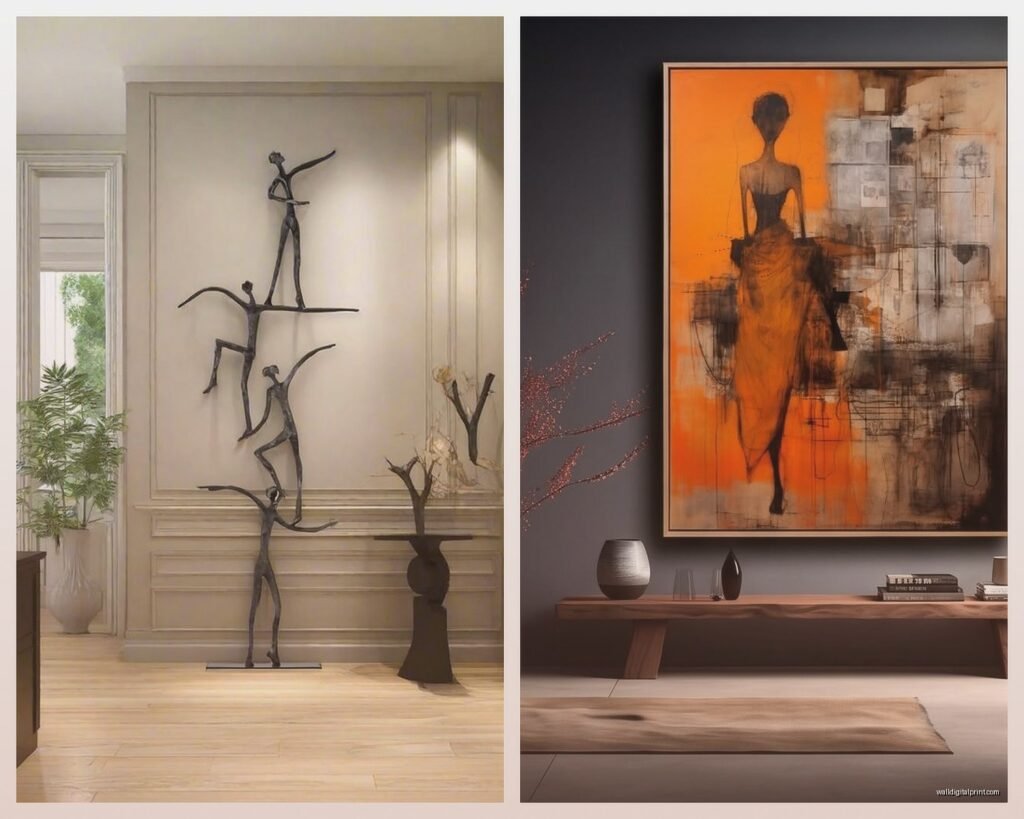
Photography prints can be amazing but you gotta be careful. A giant portrait of a person staring into your living room can feel… intense? I had a client who bought this massive black and white portrait of a woman’s face and after two weeks she was like “I feel like she’s judging me when I watch Netflix” so we swapped it out.
What I’d Actually Hang
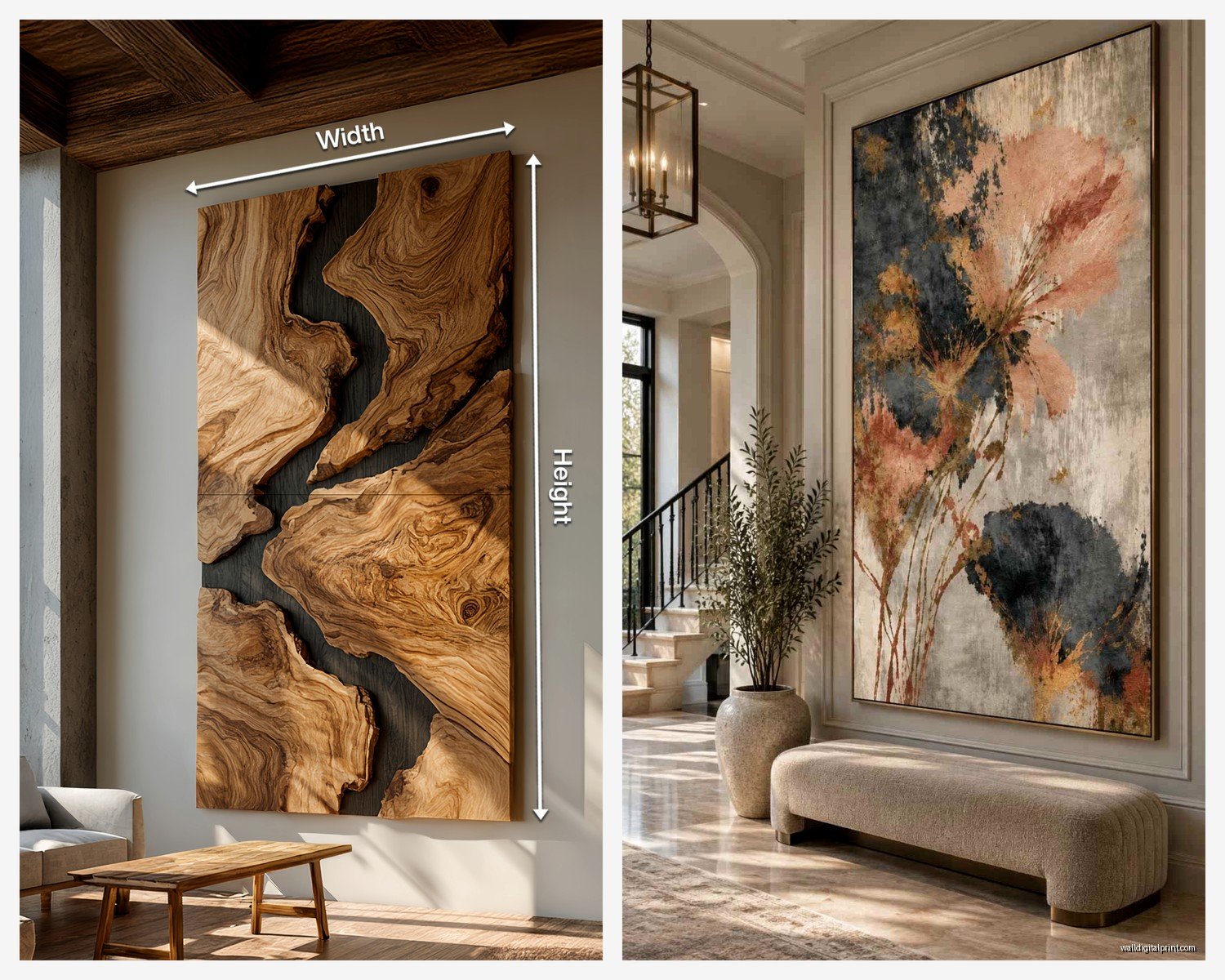
- Botanical prints – oversized leaves or flowers in muted colors
- Abstract landscapes that have vertical movement like waterfalls or tall trees
- Minimalist line drawings that don’t compete with your furniture
- Textured pieces with actual dimension like woven fiber art or wood relief
- Black and white photography of architecture or nature
Framing and Materials (This Gets Expensive Fast)
Oh and another thing – the frame situation is where your budget can totally explode. A canvas print without a frame runs like $200-500 for oversized stuff, but add a custom frame and you’re suddenly at $800.
Canvas gallery wraps are your friend here. The image wraps around the edges so you don’t need a frame at all, and it looks intentional and modern. Just make sure the edges are finished properly – some cheap ones have visible staples which looks terrible.
If you want a frame, go with something simple. Thin black metal frames or light wood (oak or maple) work with almost everything. Ornate frames on oversized pieces usually look too heavy unless you’re going for like a classical European vibe.
Material Options
I’ve tested pretty much everything at this point:
Canvas is classic and lightweight which matters when you’re hanging something huge. It absorbs light nicely so there’s no glare issues.
Metal prints are having a moment and they look incredibly crisp and modern, but they’re heavy as hell and the reflective surface can be annoying depending on your lighting.
Acrylic prints are stunning – the depth and color saturation is insane – but also heavy and expensive. Plus fingerprints show up if you touch them which drives me crazy.
Paper prints need to be framed with UV-protective glass or they’ll fade, which adds weight and cost. But the art quality is usually the best.
Where to Actually Buy This Stuff
So I spent like three hours last Tuesday comparing options because my client canceled and I had nothing better to do (was rewatching The Bear in the background which probably wasn’t helping my stress levels).
Minted has really good quality and tons of options for vertical art. Their framing is pricey but solid. I’ve ordered from them maybe a dozen times and only had one issue with shipping damage.
Etsy is great for unique pieces and you’re supporting actual artists. Search for “large vertical abstract art” or whatever style you want plus “printable” if you want to save money by printing locally. Just make sure the resolution is high enough – you need at least 150 DPI at the size you’re printing.
Society6 and Redbubble are hit or miss on quality. The prints are fine but not amazing. Good if you’re on a tight budget or want something temporary.
Local art fairs and galleries – okay this is gonna sound weird but I’ve found some of my favorite oversized pieces at local art shows. You can see them in person which is huge, and sometimes you can negotiate on price.
The DIY Route That Actually Works
If you’re crafty or just broke (no judgment, oversized art is expensive), you can make your own. I did this in my last place and it turned out better than expected.
Buy a large canvas from an art supply store – you can get a 48×24 inch canvas for like $40-60. Then either:
Paint it yourself with acrylics in an abstract pattern. Seriously just tape off some geometric shapes and go wild with colors that match your room.
Or download high-res art from sites that offer free or cheap printables, get it printed at a local print shop on paper or canvas, then stretch it yourself or mount it to foam board.
Printing Locally
Most print shops can do large format printing. I use a place near me that charges about $8 per square foot for canvas printing. So a 48×24 inch piece (8 square feet) runs around $65 plus tax. Way cheaper than buying pre-made.
Just bring them a high-resolution file on a USB drive or email it. They’ll usually do a test print of a small section to make sure colors look right.
Hanging Without Destroying Your Walls
This is where people get nervous and honestly, I get it. Hanging a 30-pound piece of art is scary.
For anything over 20 pounds, you need wall anchors or you need to hit studs. I use these heavy-duty drywall anchors that are rated for like 50 pounds – they’re the ones that look like plastic toggles. Work perfectly and I’ve never had anything fall.
Use a level obviously, but here’s my trick – take a picture of the wall with your phone, then use the markup tool to draw where you think the art should go. It helps you visualize before making holes.
Hanging Hardware
D-rings on the back of the frame are standard but I prefer sawtooth hangers for lighter pieces (under 15 pounds) because they’re easier to adjust if you’re slightly off.
Wire hanging can work but it’s harder to get level and the wire can stretch over time with heavy pieces.
French cleats are the absolute best for really heavy art (over 40 pounds). One piece screws to the wall, one to the back of your art, and they lock together. Super secure and you can easily remove the art later.
What If You Hate It After Hanging It
Wait I forgot to mention – live with it for at least a week before deciding you hate it. I can’t tell you how many times I’ve hung something and immediately thought it was wrong, but after a few days it grew on me.
If you genuinely hate it after a week, here’s what usually went wrong:
The colors clash with your room – this is fixable with different art or by adding accent pillows in the art’s colors to tie things together.
The scale is off – either the piece is too big or too small. This is harder to fix but sometimes adding smaller pieces around it can help balance things.
The style doesn’t match – like you bought modern abstract art but your room is very traditional. You might need to update other elements in the room or swap the art.
Living Room Layout Considerations
The placement matters so much. Above the sofa is classic but not your only option.
On a narrow wall between windows or doorways can actually be perfect for vertical art. I did this in a client’s space where we had a 3-foot wide wall between two windows and a tall vertical botanical print looked incredible there.
Behind a console table or bar cart is another good spot. The art becomes a backdrop for your styled surface.
In a reading nook or corner seating area – this is where vertical art really shines because these spaces are usually tighter and benefit from the vertical emphasis.
Color Coordination Without Being Matchy-Matchy
Your art doesn’t need to match your couch exactly (please don’t do this actually). But pulling one or two colors from the art into your room through pillows, throws, or even a vase makes everything feel cohesive.
I usually tell people to pick up the accent color from the art, not the dominant color. So if you have a mostly white abstract with navy and gold accents, bring in navy or gold elsewhere, not more white.
Neutral art (black, white, gray, beige) works with literally everything which is why it’s so popular. Less exciting maybe, but you’ll never get tired of it.
Lighting Makes or Breaks It
Oh man, lighting is so important and people forget about this. You spent $600 on art and then hang it in a dark corner where no one can see it properly.
If you can, add picture lights or wall sconces on either side. Those battery-operated picture lights from Amazon are like $30 and make a huge difference.
Natural light is great but watch for direct sunlight which will fade your art over time. UV-protective glass or keeping blinds closed during peak sun hours helps.
Track lighting aimed at the art works if you already have tracks installed. Just make sure the angle doesn’t create glare if you went with glass or acrylic.
Okay so I think that covers most of what you need to know. The main thing is don’t overthink it too much – art is personal and if you love it, it’ll probably work in your space. Just measure twice, hang once, and maybe keep the receipt for the first month just in case.