Wall Art Guide, Wall Art Tutoriels
Black Metal Kitchen Wall Art: Dark Sculptural Cooking Space
Nov
So I’ve been completely obsessed with black metal wall art in kitchens lately and honestly it started because a client wanted to do this whole moody cooking space thing and I was like… okay let me figure out how to make this not look like a goth teenager’s bedroom, you know?
First thing you gotta know is that black metal art in kitchens is tricky because kitchens already have SO much visual noise. You’ve got appliances, cabinets, countertops, all your cooking stuff everywhere. Adding dark sculptural pieces could go really wrong really fast, but when it works it’s incredible.
Start With Your Wall Color Situation
Okay so this is gonna sound backwards but black metal art actually looks best against either really light walls or really dark walls. That middle-ground beige or gray situation? Not great. I learned this the hard way in my own kitchen where I had this greige color and the black metal piece I bought just kind of… disappeared? Like it didn’t pop at all.
If you’ve got white or cream walls, the contrast is chef’s kiss. The black metal becomes this dramatic focal point. But here’s what surprised me – if you paint one wall a deep charcoal or even black, then use matte black metal art, you get this layered dimensional thing happening that’s really sophisticated.
The Finish Matters More Than You Think
Matte black versus glossy black versus powder-coated – these are completely different vibes. Matte absorbs light so it feels more organic and soft even though it’s metal. Glossy reflects your kitchen lights and can look too shiny, almost cheap sometimes. Powder-coated is somewhere in between and it’s the most durable if you’re putting it near your stove where grease might be an issue.
I usually recommend matte for most people because it photographs better too if you’re into that.
Scale Is Everything and Everyone Gets It Wrong
Listen, the biggest mistake I see is people buying pieces that are way too small. In a kitchen you need to go bigger than you think because there’s so much competing for attention. That cute 12×12 inch metal leaf design? It’s gonna get lost next to your fridge and your coffeepot and everything else.
My rule is measure your wall space and aim for art that takes up at least 60-75% of that area. So if you have a blank wall that’s 4 feet wide, you want something that’s at least 2.5 to 3 feet wide. Yeah it feels aggressive when you’re ordering it but trust me.
Where to Actually Put This Stuff
The wall behind your dining table or breakfast nook is obvious and it works great. But here’s some spots that people don’t think about:
- Above upper cabinets if you have that awkward gap to the ceiling
- On the side of a cabinet or pantry door
- In that weird space between the window and the corner
- Above the range hood if it’s not too close to heat sources
That last one is tricky because obviously open flames and metal art need some distance, but if you have decent ventilation and you’re not putting it like 6 inches from the burners you’re probably fine. I did this in my last project and the homeowner hasn’t had any issues in 2 years.
Sculptural Styles That Actually Work in Kitchens
Okay so not all black metal art makes sense in a cooking space. Here’s what I’ve found works:
Abstract geometric stuff is probably the safest bet. Think overlapping circles, angular patterns, those trendy line drawings of faces or bodies. They add visual interest without being too literal or theme-y.
Botanical designs are huge right now – metal leaves, branches, oversized flowers. My cat knocked over my coffee this morning looking at a monstera leaf piece I was considering and honestly the chaos felt appropriate for the vibe we’re going for here.
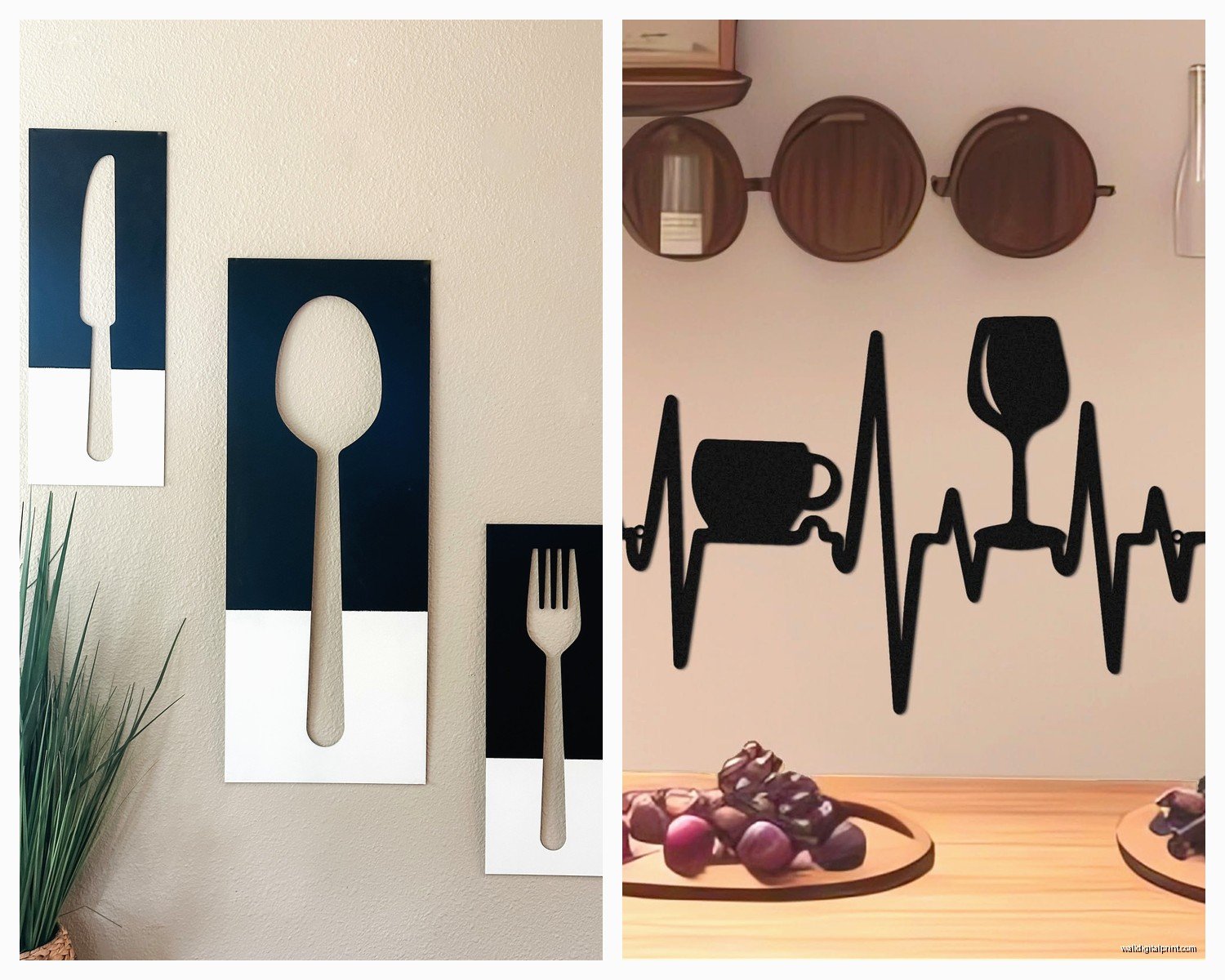
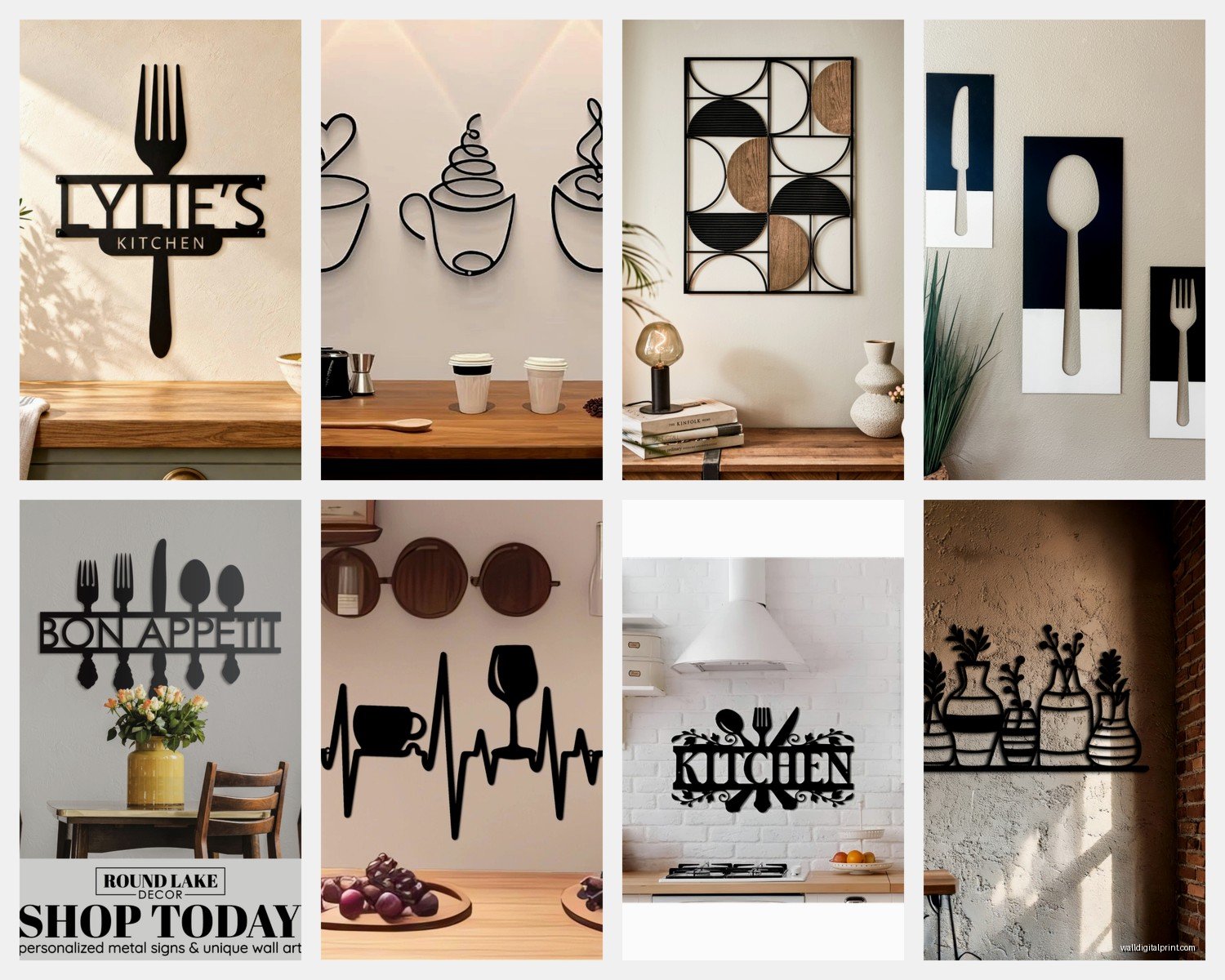
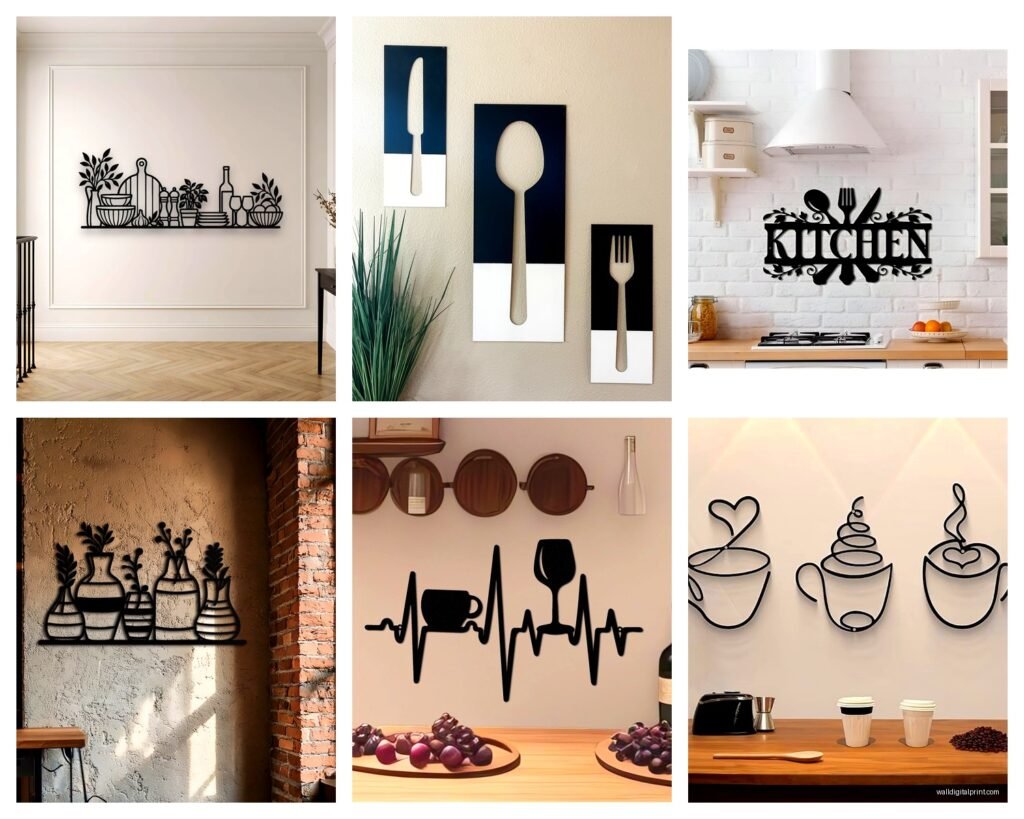
Food-related imagery CAN work but you gotta be careful it doesn’t look too cutesy or literal. Like a sculptural interpretation of kitchen tools? Maybe. A metal sign that says “EAT” in giant letters? Probably skip it.
Three-Dimensional vs Flat
This is where it gets interesting. Flat metal art is easier to hang and usually cheaper, but 3D sculptural pieces create shadows and depth that change throughout the day as light shifts. I’m obsessed with pieces that have layered elements or parts that stick out from the wall.
There’s this one artist on Etsy (wait I forgot to mention, Etsy is actually where I find most of my good stuff) who does these layered mountain ranges in black metal with different depths and it creates this whole landscape effect. Used it in a modern farmhouse kitchen last year and the homeowners literally text me photos of it in different lighting.
Installation Tips Nobody Tells You
So you bought your piece and now you gotta hang it. Black metal is usually heavier than it looks, especially sculptural stuff.
Use proper wall anchors. Not those flimsy ones that come in the package sometimes. Go to the hardware store and get actual heavy-duty anchors rated for the weight. I’ve seen too many pieces fall because someone used whatever random nail they found in their junk drawer.
For really heavy pieces over like 15 pounds, you want to hit a stud if possible. Use a stud finder, they’re like $10 and worth it.
The Leveling Thing
Here’s my weird tip – take a photo with your phone before you commit to drilling. Hold the piece up, step back, take a picture. The camera shows you what your eye might miss in terms of whether it’s level or centered properly. I learned this from a photographer friend and it’s saved me so many times.
Also if you’re hanging multiple pieces to create a gallery wall situation, lay them out on the floor first in the exact configuration. Take measurements. Draw a little diagram. Don’t wing it unless you enjoy putting 47 holes in your wall.
Mixing Black Metal With Other Finishes
Your kitchen probably has other metal finishes already – cabinet hardware, faucet, light fixtures. Do they need to match? Honestly… not really?
I used to think everything had to coordinate but mixing matte black art with brushed nickel hardware and brass light fixtures can actually look really collected and intentional. The key is to have at least one other black element in the room so the art doesn’t feel random. Could be black cabinet hardware, a black faucet, black barstools, whatever.
What doesn’t work is mixing black with chrome. Chrome reads too cold and shiny next to matte black and it creates this weird tension that’s not the good kind.
Texture Combinations
Oh and another thing – black metal art looks amazing against natural textures. Wood, stone, concrete, marble. If you have a subway tile backsplash or something really plain, the black metal adds that sculptural element that keeps it from feeling boring.
In my own kitchen I have white oak floating shelves and the black metal piece above them creates this beautiful contrast between organic and industrial.
Maintenance Reality Check
Black metal shows dust and fingerprints like crazy, not gonna lie. Especially matte black. You’ll need to dust it regularly, maybe once a week if you actually use your kitchen.
For cleaning, just use a dry microfiber cloth. Don’t use water unless you absolutely have to because some finishes can water spot. If you get grease splatter on it (which will happen eventually), a slightly damp cloth with mild soap works but dry it immediately.
The powder-coated stuff is the most forgiving for kitchens because it’s sealed and more resistant to moisture and grease.
Budget Breakdown From Someone Who’s Bought A Lot Of This
You can find decent black metal wall art starting around $40-50 for smaller pieces. Mid-range stuff that’s good quality runs $100-200. Custom or artist-made sculptural pieces can easily hit $300-500 or more.
Where to shop:
- Etsy for unique handmade stuff and supporting actual artists
- West Elm and CB2 have good modern options that aren’t too expensive
- HomeGoods if you want to hunt for deals but selection is random
- Amazon has some options but quality is really hit or miss, read reviews carefully
- Local metal artists or fabricators if you want something custom
I’ve had good luck with Etsy sellers who do custom sizing. Sometimes you find the perfect design but it’s the wrong size, and a lot of artists will make it bigger or smaller for not that much extra money.
Red Flags When Shopping
If the product photos are all AI-generated or super filtered, be suspicious. You want to see real photos in actual spaces. Check if they show the back/mounting hardware – good sellers are transparent about how it hangs.
Read the measurements like three times because scale is so hard to judge in photos. I once ordered something I thought was 3 feet wide and it showed up at 3 inches. Okay that’s an exaggeration but you get it.
Styling Around Your Black Metal Art
Once it’s up, you might need to adjust other stuff in your kitchen to make it work. This is where it gets fun.
If your art is really bold and geometric, keep your counters pretty minimal. You don’t want clutter competing with a statement piece. But if your art is more subtle or organic, you can layer in more accessories.
I like to echo the black somewhere else in the space – black canisters, a black utensil holder, black dish towels. Just little touches that tie it together.
Plants look incredible with black metal art by the way. The contrast between living green things and dark metal is *chef’s kiss*. Pothos, snake plants, herbs in black pots – all great.
Lighting Considerations
This is something I didn’t understand until I started playing with it – lighting makes or breaks black metal art. Under-cabinet lighting that casts upward can create really cool shadows if you have 3D pieces. Pendant lights should be positioned so they don’t create weird glare on glossy finishes.
Natural light is your friend. If you have a window near your art wall, the changing light throughout the day makes sculptural pieces come alive. I was watching this documentary about light in architecture last night and it reminded me how much difference it makes.
Avoid putting black metal art in a really dark corner with no light source. It’ll just be a black hole. You need enough light to see the detail and texture.
The Mood You’re Actually Creating
Let’s be real about what black metal kitchen art does – it makes the space feel more intentional, more designed, maybe a little edgy. It’s not gonna make your kitchen feel cozy and warm in the traditional sense. But it can make it feel sophisticated and interesting.
Some people think black = depressing but in a kitchen with good light and white or natural elements, black metal art just reads as modern and confident.
Okay wait I forgot to mention – if you have a really small kitchen, you might want to skip super heavy sculptural pieces and go for something more linear or open in design. Solid black chunks of metal can make a small space feel claustight but pieces with negative space keep things feeling open.
You can always start with one piece and see how you feel. This isn’t like painting your whole kitchen black, it’s art, you can change it. I swap out pieces seasonally sometimes just because I get bored and want something different to look at while I’m making coffee.
The main thing is just to go for it if you’re feeling it. Don’t overthink it to death.