Wall Art Guide, Wall Art Tutoriels
Large Vertical Wall Art: Oversized Tall Portrait Pieces
Oct
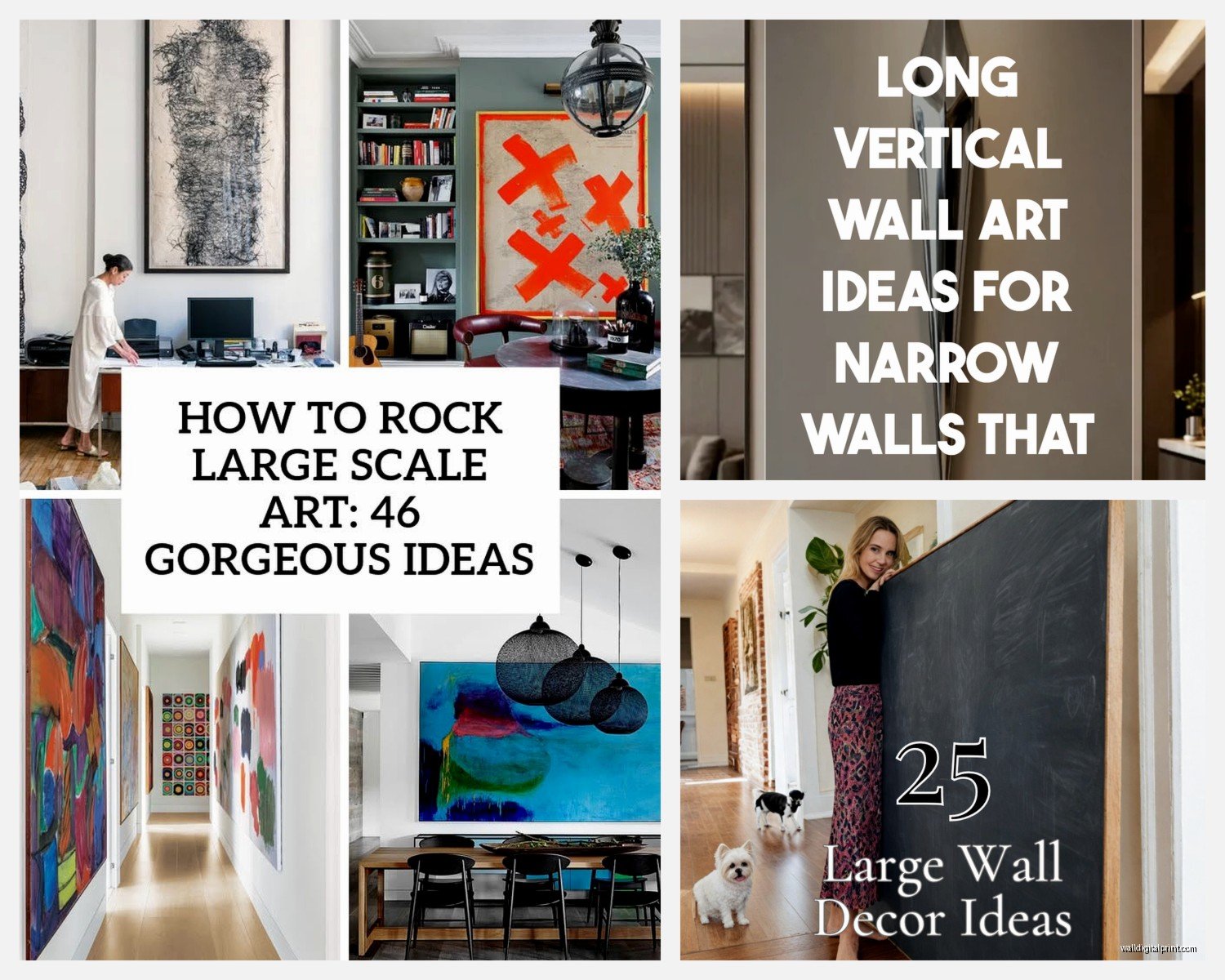
So I’ve been obsessing over large vertical wall art lately because honestly, that wall space above staircases and in hallways is just…awkward? And I realized most people default to horizontal pieces when vertical is actually where it’s at for so many spaces.
Why Vertical Even Matters
Okay so here’s the thing about tall portrait-oriented pieces that nobody really talks about. They pull your eye UP which makes ceilings feel higher, and in narrow spaces like hallways or that weird wall next to your fireplace, they just fit better proportionally. I had this client last month who kept trying to force a landscape piece in her entryway and it looked like a postage stamp no matter what size we went with. Switched to a 72-inch vertical piece and suddenly the whole space made sense.
The scale thing is real though. You need to think bigger than feels comfortable at first. Like way bigger.
Figuring Out What Size You Actually Need
This is gonna sound weird but I measure with painter’s tape first. Just tape out the dimensions on your wall because looking at numbers means nothing. A 60×40 piece sounds huge until you see it on a 12-foot wall and then it’s…sad.
For most spaces I’m working with:
- Standard 8-foot ceilings: go at least 48-60 inches tall
- 9-10 foot ceilings: 60-84 inches works better
- Those dramatic two-story entryways: honestly 8-10 feet tall isn’t overkill
The width should usually be about 1/3 to 1/2 the height for true vertical impact. So like a 72×36 or 72×48 keeps that tall dramatic look without getting into weird skinny territory.
Oh and another thing – leave breathing room. The art should take up about 2/3 to 3/4 of the wall width, not the entire thing edge to edge. I see people do that and it looks like wall-to-wall carpeting but vertical.
What Actually Looks Good at That Scale
Abstract pieces are your friend here because they don’t have orientation issues. Nobody’s tilting their head trying to figure out if that brushstroke is supposed to be upside down. I’ve been pulling a lot of:
Neutral abstracts with texture – the texture part is key because flat color fields at 6 feet tall can read as…blank? You want visible brushstrokes or mixed media or something.
Vertical landscapes – think waterfalls, tall trees, canyons. Anything that naturally exists in a vertical format. I found this amazing birch forest piece last week that’s 84 inches tall and it’s just *chef’s kiss* in tall spaces.
Line art and minimal stuff – but it has to be bold enough. Delicate line drawings get lost at this scale. You need thick lines or high contrast.
What doesn’t work as well: busy patterns (too overwhelming), horizontal scenes forced into vertical (awkward cropping), multiple small elements stacked vertically (just do a gallery wall at that point).
Where to Actually Buy These Without Going Broke
Okay so funny story, I spent like three hours comparing prices when my dog was at the groomer and the markup on “custom” oversized art is INSANE at traditional galleries.
Affordable options that don’t look cheap:
Minted does custom sizing on a lot of their art prints and you can go up to like 54×108 inches on some pieces. Their framing is actually decent quality too. I’ve used them for client projects and nobody knew it wasn’t a $3000 gallery piece.
Society6 has oversized options but quality is hit or miss. Stick with their premium prints and avoid anything with lots of detail because the printing can get muddy.
Etsy sellers who do large-scale prints – this is where I find the best value honestly. Search “large vertical abstract art” and filter by shops that have actual reviews with photos. There’s this one seller who does custom sizes up to 96 inches and prints on canvas for like $400 which is…insane compared to gallery prices.
If you’ve got more budget:
Saatchi Art has original pieces and you can filter by orientation and size. Buying original at this scale gets expensive fast though, like $2000-8000 range easily.
Local art schools and student shows – I’ve found AMAZING oversized pieces for $300-600 from emerging artists who are just trying to move inventory and don’t have storage for massive canvases.
The Framing Situation
Here’s where it gets tricky because framing something that’s 6+ feet tall is gonna cost you. Sometimes more than the art itself which is…yeah.
Canvas wraps are your most affordable option. The image wraps around the edges and you hang it as-is. Make sure the edges are at least 1.5 inches deep though or it looks flimsy.
Floating frames work really well for oversized pieces because they add that finished look without the weight and cost of traditional framing. Frame It Easy does custom sizes and I’ve had good luck with them.
Traditional framing – gotta find a local framer who can handle the size. Most online services max out around 40×60. Budget at least $400-800 for quality framing on anything over 60 inches.
Wait I forgot to mention – if you’re doing acrylic or metal prints, those can go frameless and look super modern. More expensive upfront but you skip framing costs entirely.
Actually Hanging the Thing
This part stresses people out but it’s not that complicated, just requires the right hardware.
For anything over 50 pounds you need:
- Two heavy-duty D-rings or wire on the back (not sawtooth hangers, those fail)
- Wall anchors or studs – find the studs if possible
- A level and someone to help you because eyeballing a 6-foot piece is how you end up with it crooked
The height thing trips people up. The CENTER of your art should be at 57-60 inches from the floor, which is standard gallery height. But with super tall pieces, sometimes you fudge this a bit lower so the bottom isn’t too high off furniture.
My actual process:
Measure the wall height. Mark 60 inches from the floor with light pencil. Measure your art height and figure out where the top will land. Use painter’s tape to map it out. Step back. Does it look right? If yes, proceed. If no, adjust.
For the actual hanging, I use those monkey hook things for drywall up to about 40 pounds, they’re idiot-proof. Anything heavier gets toggle bolts or I’m finding studs with my stud finder (which my cat is obsessed with for some reason, she attacks it every time).
Styling Around Vertical Pieces
The art is the statement, so everything else should support it not compete with it.
Keep furniture lower and simpler. A tall piece looks even more dramatic when there’s a low console or bench underneath. The vertical/horizontal contrast is what makes it work.
Don’t put stuff directly in front of it. I see people place a tall piece and then shove a bookshelf in front of it and I’m like…what are we doing here.
Lighting matters SO much with large pieces. You want either natural light hitting it or dedicated picture lights. Track lighting works if it’s positioned right. Dark corners kill the impact.
Common Mistakes I See All the Time
Going too small – this is the #1 issue. People get scared of scale and buy something that’s technically “large” but not large enough for the space. When in doubt, size up.
Hanging it too high – just because it’s tall doesn’t mean it should float near the ceiling. You still want it at viewing height.
Choosing busy patterns – at 6+ feet tall, a busy pattern becomes wallpaper. Unless that’s specifically the vibe you want, stick with simpler compositions that have breathing room.
Forgetting about doorways and clearance – measure your doorways before ordering an 8-foot canvas. I learned this the hard way trying to get a piece up a stairwell with a low ceiling. Had to return it.
Specific Spaces Where Vertical Art Saves the Day
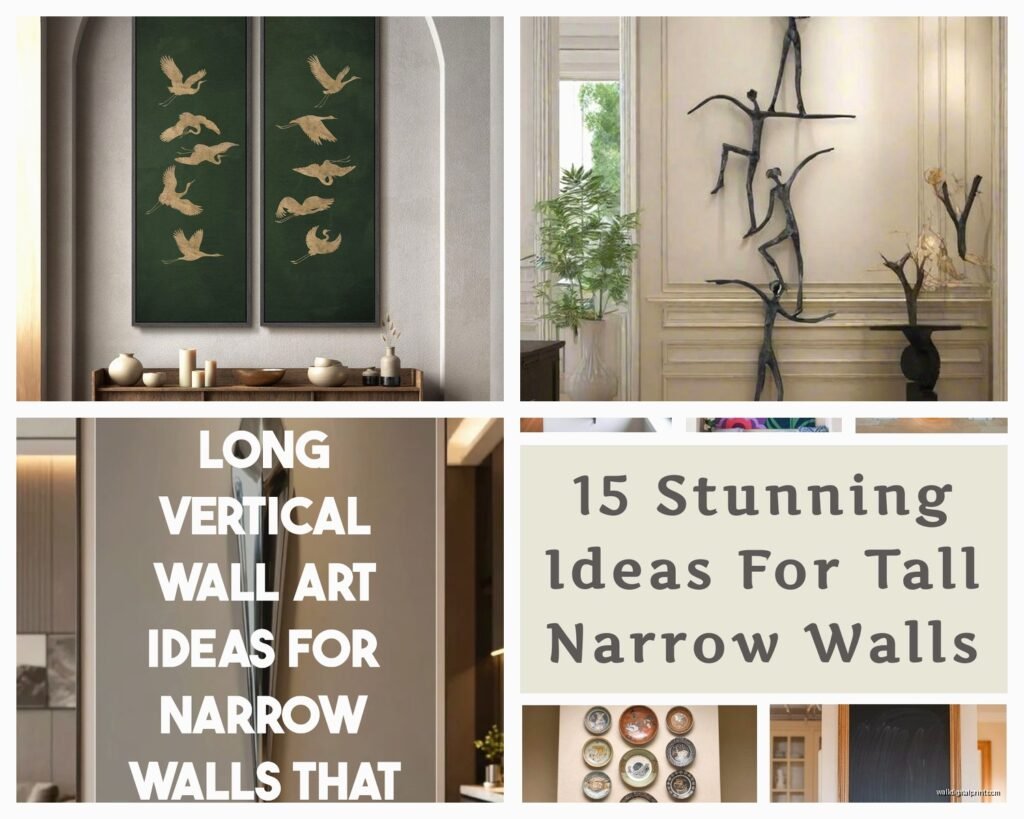
Stairwell walls – this is the PRIME location for vertical art. You’ve got all this tall narrow wall space that’s basically begging for it. One tall piece or a vertical gallery wall arrangement.
Beside fireplaces – those narrow walls flanking a fireplace? Perfect for skinny tall pieces.
Entryways – sets the tone immediately when you walk in. A dramatic vertical piece in an entry is just…it works.
Above beds – okay hear me out because this goes against the usual horizontal headboard art. If you have a low platform bed and high ceilings, a tall narrow piece or two tall pieces can look really interesting.
Dining rooms – especially if you have a tall buffet or bar cabinet, vertical art above it maintains the upward momentum.
The DIY Route
If you’re remotely crafty, making your own large-scale art is way more doable than you’d think. Canvas stretcher bars are cheap, you can get them in any length. Stretch your own canvas or buy pre-stretched.
Abstract techniques that work at large scale:
- Tape resist patterns with house paint
- Textured plaster or joint compound applied with palette knives
- Large brushstrokes in limited color palette
- Color blocking with painter’s tape
I made a 60×30 abstract for my own hallway using literally just white, black, and one shade of blue. Took three hours, cost maybe $80 in materials. Nobody believes I made it.
The key with DIY at this scale is confidence. Hesitant marks look hesitant. Bold messy marks look intentional and artistic.
Oh and another thing – if you mess up, just paint over it. That’s the beauty of working large, you can keep layering until something clicks.
Honestly the whole vertical art thing has changed how I approach wall space entirely. Once you start seeing those tall narrow walls as opportunities instead of problems, it opens up so many options. And clients always have that moment when the piece goes up where they’re like “oh THIS is what this wall was supposed to be.”
Just measure twice, order once, and don’t be scared of scale. The worst thing you can do is go too small and have it look like you just…gave up halfway through decorating.