
Wall Art Guide, Wall Art Tutoriels
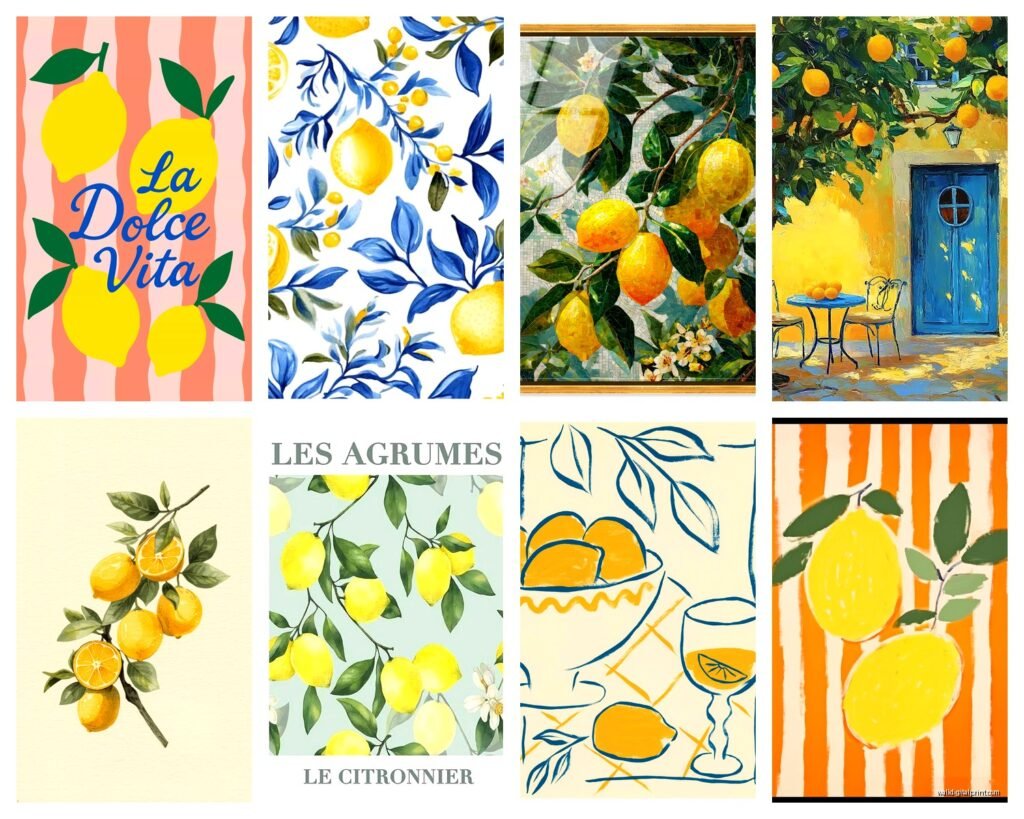
Lemon Wall Art: Citrus Yellow Fruit Kitchen Fresh Decor
Aug
So I’ve been obsessing over lemon wall art lately and honestly it started because my sister texted me at like 11pm asking how to make her kitchen feel less blah without painting, and I was half-watching some cooking show and just blurted out “lemons!” and then I couldn’t stop thinking about it.
Why Lemon Art Actually Works in Kitchens
Here’s the thing about lemon wall art that nobody really tells you upfront. It’s not just cute citrus fruit prints, it actually does something to a space. The yellow tones bounce light around in a way that makes kitchens feel bigger and brighter, especially if you’ve got one of those kitchens with only one window or weird lighting. I tested this theory in my own breakfast nook which gets exactly 47 minutes of direct sunlight per day and yeah, the difference is real.
The yellow doesn’t have to be screaming neon either. You can go vintage botanical print style with muted yellows and greens, or modern graphic with bold colors. Both work but they give completely different vibes which I’ll get into in a sec.
Picking the Right Style for Your Space
Okay so this is where it gets fun but also kinda overwhelming because there are like a million options. I’m gonna break down what I’ve actually used in client spaces and my own kitchen:
Vintage Botanical Prints
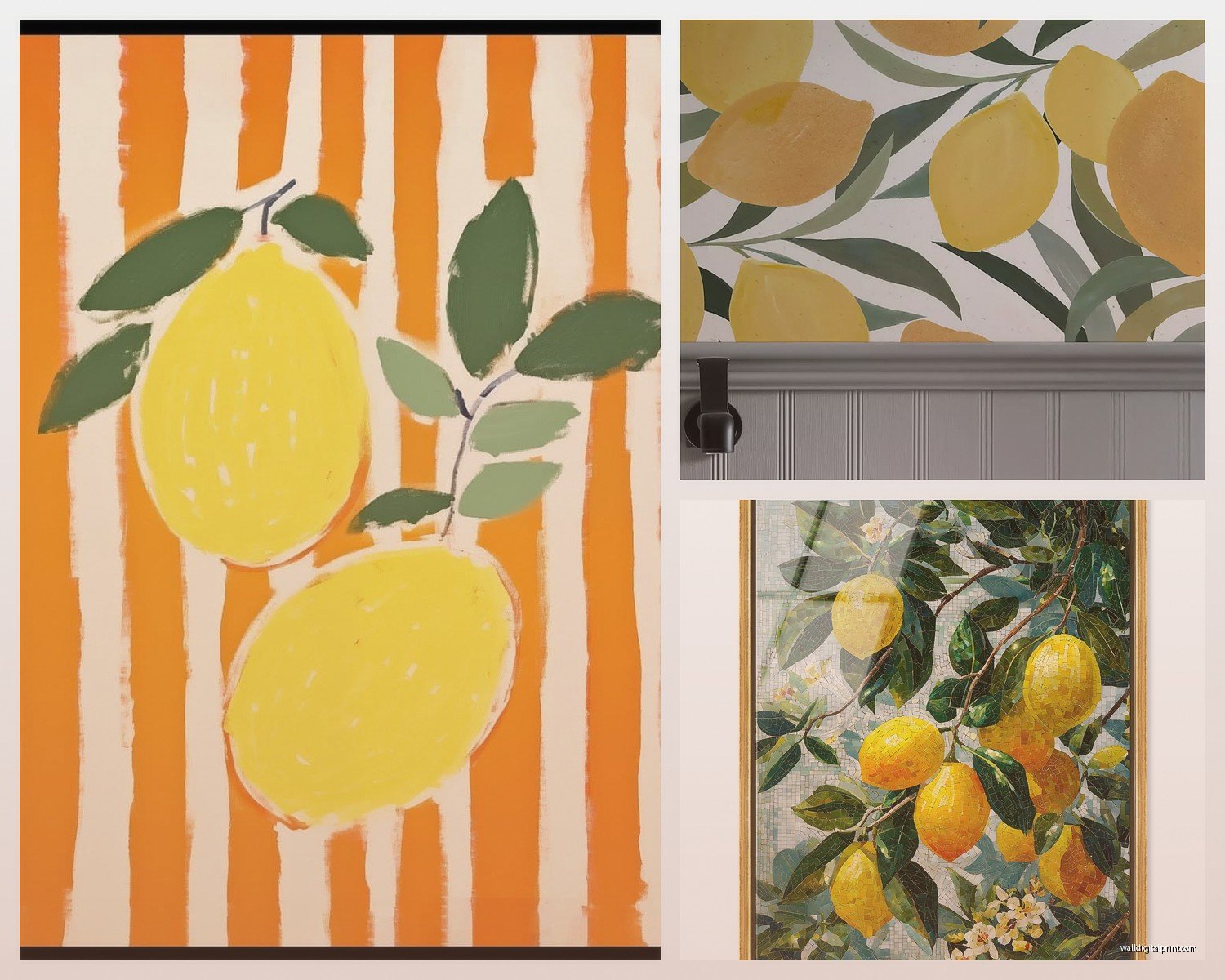
These are my go-to for traditional or farmhouse kitchens. Think old-school illustrations with Latin names underneath, aged paper backgrounds, the whole deal. You can find real antique ones on Etsy but they’re gonna cost you like $80-200 per print which is insane. What I actually do is buy high-quality digital downloads for like $5-8 and print them at a local print shop on textured paper. Frame them in simple black or wood frames from IKEA.
I did this for a client’s kitchen last month and we printed three different lemon botanical prints in 11×14 size, spent maybe $60 total including frames, and it looks like she spent hundreds. The key is printing on good paper, not your home printer with regular copy paper because that looks cheap immediately.
Modern Graphic Lemon Art
If your kitchen is more contemporary or minimalist, you want clean lines and bold colors. I’m talking solid yellow lemons on white backgrounds, geometric lemon shapes, abstract interpretations. Society6 and Minted have tons of these from independent artists.
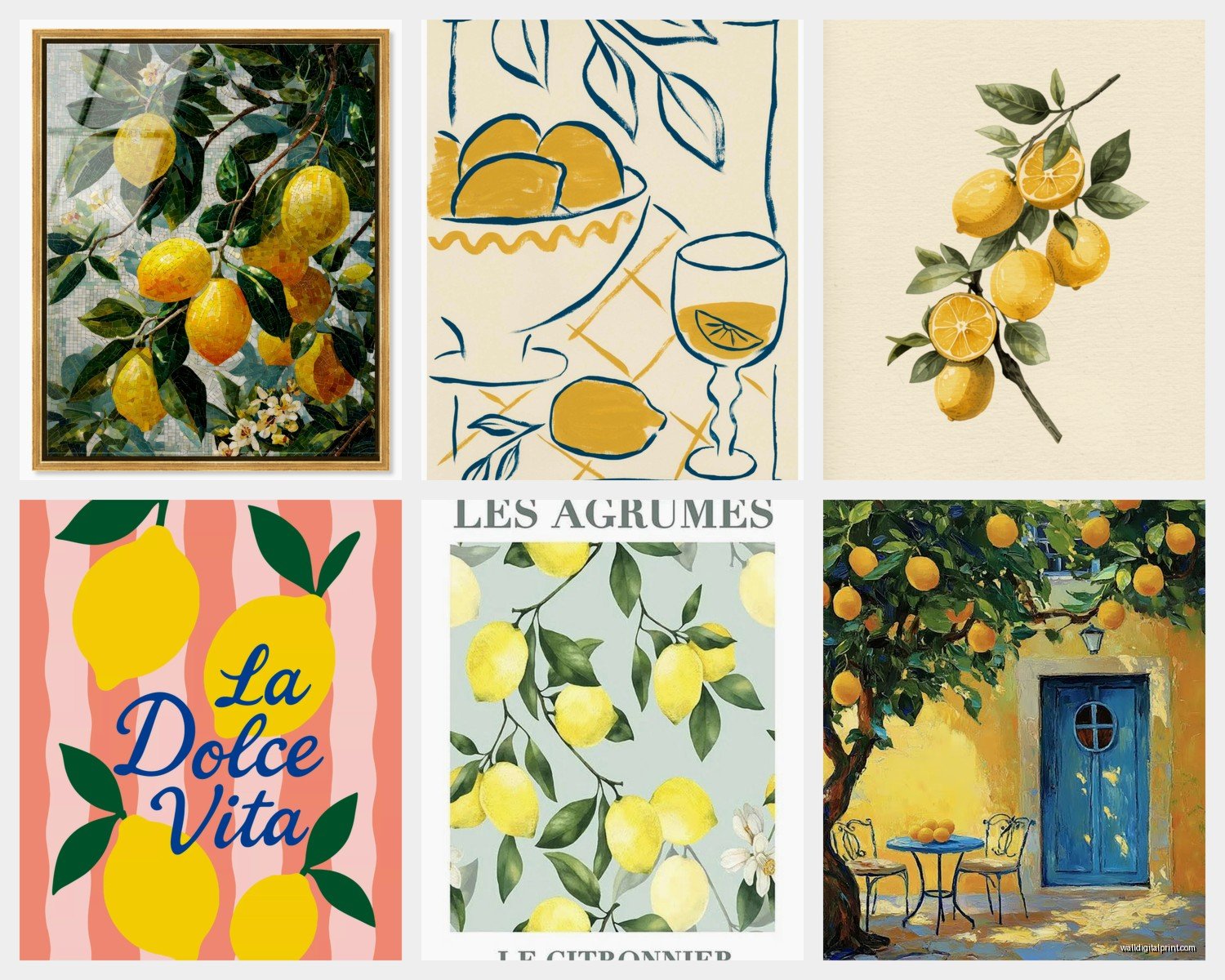
One thing I learned the hard way though, modern lemon prints can look really juvenile if you’re not careful. Like too cutesy. You gotta look for ones with sophisticated color palettes, not primary yellow but maybe mustard or golden yellow mixed with navy or charcoal gray.
Photography Prints
Real lemon photography is underrated honestly. Close-up shots of lemon slices with water droplets, lemons on the tree with leaves, artistic flat lays with lemons and other kitchen stuff. These work in literally any kitchen style because they’re just real images.
I found this photographer on Instagram who shoots the most gorgeous citrus photos and sells prints directly. Can’t remember her handle right now but I’ll probably remember at 3am tonight when I can’t sleep. Anyway, photographic prints feel more grown-up and less themed if that makes sense.
Size and Placement Strategy
This is where people mess up the most, I swear. They buy art they love and then just stick it wherever and wonder why it looks off.
For above the dining table or breakfast nook, you want something substantial. Either one large piece that’s at least 24×36 inches, or a gallery wall situation. I did a gallery wall in my kitchen with nine small lemon prints in matching white frames, arranged in a perfect grid, and it’s the thing people comment on most when they visit.
Above the stove or on the wall behind your counter, go smaller and simpler. You don’t want visual clutter where you’re actually working. Maybe one medium-sized print or two small ones. And make sure whatever you hang there is sealed properly or behind glass because kitchen grease is real and will ruin unprotected art.
Oh and another thing, the whole “hang art at eye level” rule? Kinda doesn’t apply in kitchens. You’re standing and moving around, so I usually hang kitchen art slightly higher than you would in a living room. Like 60-65 inches from floor to center of the frame instead of the standard 57 inches.
Framing Options That Don’t Break the Bank
Okay so funny story, I used to spend SO much money on custom framing until I realized it’s literally unnecessary for kitchen art. Here’s what actually works:
IKEA Ribba frames are my secret weapon. They come in tons of sizes, they’re like $5-20 depending on size, and they look clean and modern. I’ve used them in $2 million homes and nobody has ever questioned it. Get them in black for a gallery feel or white for something lighter and brighter.
For a more rustic or farmhouse vibe, check out thrift stores for old frames. You can usually find decent wood frames for a couple bucks each. Sometimes they’re ugly colors but that’s what spray paint is for. I spent one Saturday afternoon spray painting seven thrift store frames in matte white and saved probably $150 compared to buying new.
If you want something fancier, Framebridge does online custom framing that’s way cheaper than local frame shops. You upload your art, they frame it and ship it to you. I’ve used them for client projects and the quality is solid.
DIY Lemon Art Projects
Wait I forgot to mention, you can totally make your own lemon art if you’re even slightly crafty. I’m not talking about painting realistic lemons because that requires actual skill, but there are easier options.
I did this watercolor lemon slice project where you literally just paint rough yellow circles with some white highlights and darker yellow sections. It looks abstract and artistic even if you have zero painting experience. Use watercolor paper and good paints though, the cheap stuff looks watery and sad.
Another thing that works is pressing real lemon slices and leaves and framing them. You dry them in a book for like two weeks, then arrange them on pretty paper and frame under glass. Very botanical and unique. My cat knocked over one of these while I was making it and I had to start over but that’s besides the point.
Lemon Print Downloads
If you go the digital download route from Etsy or Creative Market, here’s what you gotta know. Check the resolution before buying. You want at least 300 DPI for printing. The listing should say what sizes it can be printed at, don’t try to print a file at a larger size than recommended or it’ll look pixelated and terrible.
I usually buy downloads that come in multiple size ratios so I can print them as 8×10, 11×14, or 16×20 depending on what I need. More flexible that way.
Color Coordination Tips
This is gonna sound weird but lemon art works with way more color schemes than you’d think. Obviously it’s perfect with white kitchens, yellow and white is classic. But I’ve also used lemon prints in:
- Navy blue kitchens – the yellow and blue contrast is chef’s kiss
- Gray kitchens – adds warmth without being orange or red
- Green kitchens – citrus and greenery just make sense together
- Black and white kitchens – pops of lemon yellow break up the stark contrast
The trick is pulling colors from the art into the rest of the space. If your lemon print has green leaves, add some green dish towels or a green vase. If it has a blue background, maybe blue cabinet handles or a blue rug. Makes everything feel intentional instead of random.
Where to Actually Buy Lemon Wall Art
Okay so you’re probably wondering where to get this stuff. Here’s where I actually shop, not just where I tell clients to look:
Etsy is honestly my first stop. You can find everything from digital downloads to original paintings to vintage prints. Filter by price and style and you’ll find something. Just read reviews before buying because some sellers are amazing and some ship stuff that looks nothing like the photos.
Society6 has independent artists and you can get the same design as a framed print, canvas, or even other stuff like throw pillows if you wanna go full lemon theme. Quality is pretty consistent in my experience.
Minted is pricier but really high quality. Good if you want something special for a main wall. They have sales pretty often so don’t buy at full price.
Amazon has tons of lemon art but it’s hit or miss quality-wise. I’ve gotten some great stuff and some absolute garbage. Check the reviews carefully and zoom in on customer photos.
HomeGoods/TJ Maxx sometimes has lemon art in their home decor section. It’s totally random what you’ll find but when you find something good it’s usually cheap. I found a set of three lemon prints in gold frames for $25 total last year.
Making It Not Look Too Themed
Here’s the thing nobody talks about with lemon kitchen decor. There’s a fine line between fresh and cheerful versus looking like you’re trying to open a lemonade stand. You gotta balance it.
Don’t do all lemons everything. Like if you have lemon wall art, don’t also get lemon dish towels and lemon canisters and lemon curtains. Pick one or two places for the lemon motif and keep everything else neutral or in complementary colors.
I usually do lemon art on the walls and then maybe one other lemon accent like a ceramic lemon bowl or lemon-print napkins, but that’s it. Everything else is white, wood, or solid colors.
Also mix in other art or decor. A gallery wall with three lemon prints and three non-lemon prints (like abstract art or landscape photos) feels more collected and less themed.
Seasonal Rotation Strategy
This might sound extra but hear me out. I keep my lemon art up year-round because yellow is cheerful in every season, but I have a client who swaps her kitchen art seasonally and uses lemons for spring and summer. She stores them in those flat art storage boxes and rotates in fall/winter themed stuff when the weather changes.
If you’re gonna do this, make sure all your seasonal art uses the same frame style so you’re not buying different frames for each season. That gets expensive and wasteful.
Maintenance and Long-Term Care
Kitchen art gets dirty, that’s just facts. Grease particles and cooking steam and all that. Prints behind glass are way easier to clean, you just wipe the glass with glass cleaner. Canvas prints are harder because you can’t really clean them without damaging them.
I learned this after hanging a beautiful canvas lemon print right next to my stove and within six months it had this weird greasy film that wouldn’t come off. Now I only use glass-covered prints anywhere near cooking areas, and save canvas for dining areas or walls far from the stove.
If you have a print that’s not behind glass and it gets dusty, use a barely damp microfiber cloth and gently wipe it. Don’t scrub or use cleaning products directly on the print.
Quick Installation Tips
Use proper hardware for the wall type. Drywall needs drywall anchors for anything heavier than a few pounds. Plaster walls need different anchors. I once hung a heavy framed print with just a nail in drywall and it crashed down at 2am and scared me half to death.
For gallery walls, use a level and measure carefully. Or cheat like I do and use those gallery wall template kits where you arrange paper templates on the wall first, nail through the paper, then remove the paper and hang your frames. Makes it foolproof.
Command strips work for lightweight frames and are great for renters, but don’t trust them with anything heavy or valuable. I’ve had mixed results with them in kitchens because temperature and humidity changes can affect the adhesive.
Anyway that’s basically everything I know about lemon wall art from actually using it in real spaces. It’s one of those things that seems simple but there’s more to think about than you’d expect. The main thing is just pick stuff you actually like looking at and don’t overthink the rules too much because it’s your kitchen and you’re the one who has to live with it every day.
