Wall Art Guide, Wall Art Tutoriels
Modern Large Wall Art for Living Room: Oversized Contemporary
May
So I’ve been obsessing over large wall art lately because my living room looked like a sad waiting room for way too long, and I finally figured out what actually works versus what just looks good on Instagram.
First thing – and I cannot stress this enough – measure your damn wall. I know it sounds obvious but I’ve watched three different clients (and okay, myself once) order something that looked “big enough” online only to have it arrive and look like a postage stamp. You want your art to take up roughly two-thirds to three-quarters of your furniture width below it. So if you’ve got an 8-foot sofa, you’re looking at art that’s somewhere between 60-72 inches wide. I use painter’s tape to mark out the dimensions on the wall before buying anything now, which sounds super extra but it’s saved me so much return shipping drama.
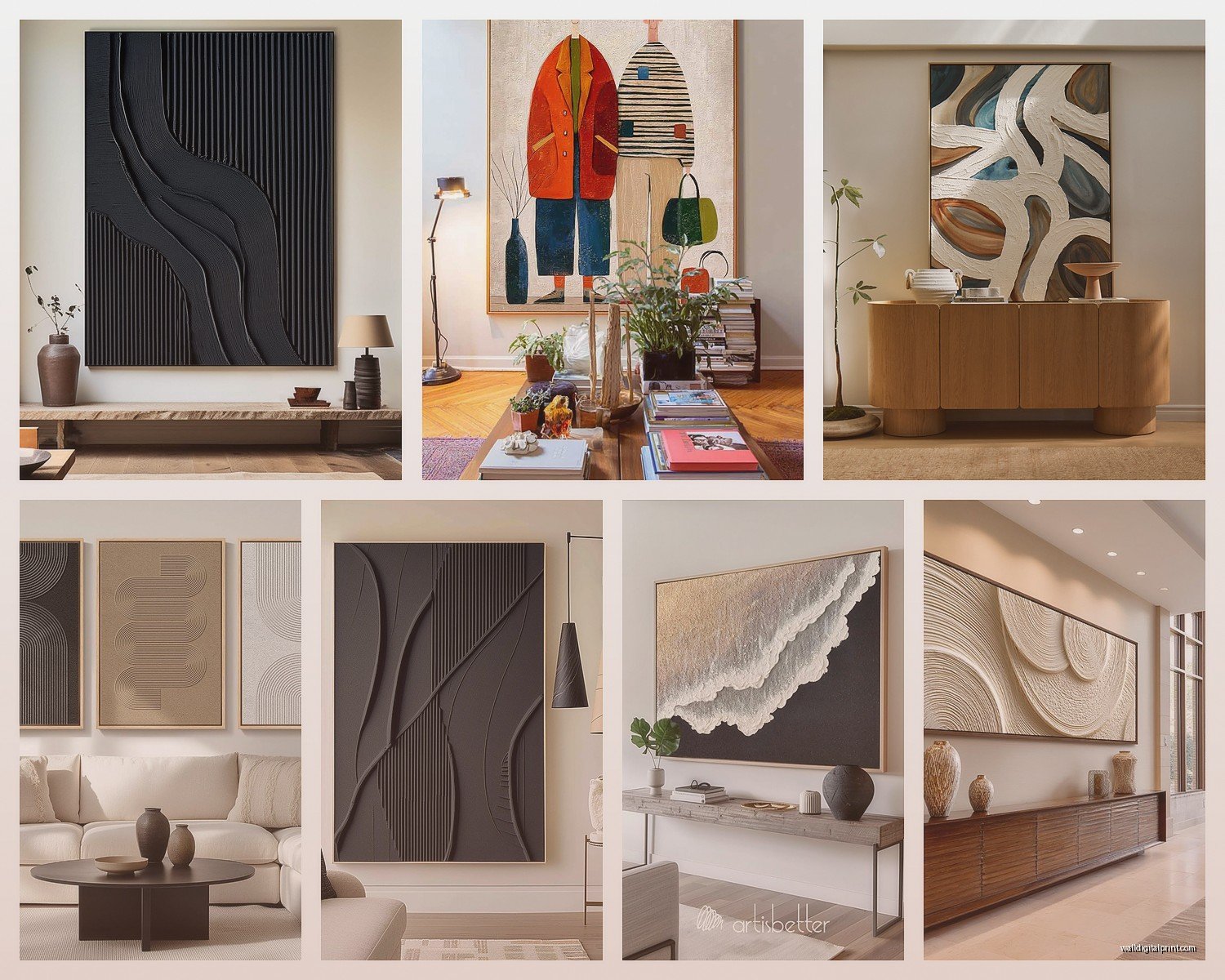
The oversized contemporary stuff – like anything over 40 inches – completely changes how a room feels. It’s weird but true. I had this massive 60×40 abstract piece in navy and gold tones that I hung in my client Sarah’s place last month, and suddenly her entire beige situation looked intentional instead of just… forgotten. The scale tricks your eye into thinking the room is more curated than it actually is.
What Actually Works Style-Wise
Okay so abstract art is gonna be your safest bet for contemporary spaces. You don’t have to worry about it clashing with stuff or looking too literal. I’m talking about pieces with geometric shapes, bold brushstrokes, that sort of thing. The beauty is they work with almost any color scheme – you can pull accent colors from them or just let them be their own thing.
My current favorite combo is black and white abstract with like one accent color. Super versatile. I did this in my own space with a massive black and white piece that has these gold leaf details, and I can change my throw pillows and accessories whenever I want without the art looking weird.
Minimalist line drawings are having a moment too. Those simple one-line face profiles or body sketches – they photograph really well which is probably why they’re everywhere, but in person they can look kinda flat if you’re not careful. The trick is getting one that’s LARGE. Like 48 inches minimum. Otherwise it just looks like you printed something from Etsy and called it a day.
Material Choices That Matter
Canvas is classic for a reason – it’s lightweight, easy to hang, and has that gallery vibe. Most oversized contemporary pieces come stretched on wooden frames so they arrive ready to hang. The wrapped edges mean you don’t need a frame which honestly saves you hundreds of dollars. I always check that the image wraps around the sides though, not just blank canvas edges. Makes it look more finished.
Metal prints are super underrated for modern spaces. They’re literally printed on aluminum, and the colors are INSANE – way more vibrant than canvas. Plus they’re durable as hell. I hung one in a client’s home office and it’s still perfect three years later. They work best with photography or digital art rather than painterly stuff. The reflective quality adds this whole other dimension. Only downside is they’re heavier so you need proper wall anchors.
Acrylic prints (sometimes called plexiglass prints) give you that high-end gallery look. The image is printed on the back of clear acrylic so there’s this depth to it. They’re pricey though – like easily double what you’d pay for canvas. Worth it if you want something really statement-making. My friend has this massive abstract acrylic piece in her entryway and every single person asks about it.
Oh and framed prints – if you go this route with oversized art, skip the glass. It’s too heavy and creates glare. Look for pieces with just the frame and matting if you want that look.
Color Coordination Without Overthinking It
Here’s what I do: pick art that has at least one color from your existing room, but don’t try to match everything perfectly. That matchy-matchy thing reads as trying too hard. Like if you have navy pillows, getting art with some navy in it creates cohesion, but it doesn’t need to be the exact same shade.
Neutral art (blacks, whites, grays, beiges) is the cheat code. It works with literally everything and you can update your decor around it forever. I have a client who’s changed her living room style twice in four years and the same large black and white abstract piece works perfectly both times.
If you want color – and honestly a pop of color in art can make a neutral room feel intentional – go for stuff with multiple colors. That way you have options for pulling accent colors into other decor. I’m currently obsessed with pieces that have rust orange, sage green, and cream together. Very 2024 but in a way that won’t feel dated next year… I think.
The Triptych Situation
Three-panel art can look amazing or terrible, there’s no in between. The key is treating the three pieces as ONE large piece – hang them close together, like 2-3 inches apart max. I see people spacing them out like 6 inches apart and it just looks disconnected. The whole point is creating one large visual impact.
They’re actually easier to hang in some ways because you can adjust the spacing slightly to fit your exact wall width. Plus they’re lighter per piece so less wall damage. But you need a level and measuring tape – this isn’t a eyeball situation. I learned that the hard way when I hung a triptych in my dining room and didn’t measure properly and now it’s like… slightly off but not enough to justify rehanging and making more holes.
Where to Actually Buy This Stuff
Okay so Wayfair and Overstock have tons of options under $300 which is honestly pretty reasonable for oversized art. The quality is hit or miss though – read the reviews carefully and look at customer photos. Sometimes what looks textured online is actually just a flat print.
Etsy is great for finding artists who do custom sizes. I’ve commissioned probably five pieces through Etsy sellers and it’s usually cheaper than you’d think. Plus you get something more unique. Just make sure they have good reviews and communicate clearly about shipping times. I had one piece take 8 weeks once when they said 4, which was annoying but it turned out beautiful so whatever.
West Elm and CB2 if you want that safe contemporary look and don’t mind spending more. Their stuff is curated so it’s all gonna look current and professional. I use them when I don’t have time to hunt around.
Society6 and Minted let you choose your size and material which is super convenient. Their artist selection is huge. Quality is pretty consistent. Not the cheapest but reliable.
For actual original art, Saatchi Art online has real paintings from actual artists. You’re looking at $500+ for oversized pieces but it’s the real deal, not a print. I bought a 48×36 abstract piece from an artist in Portland last year and it’s genuinely my favorite thing in my house.
Hanging Heavy Art Without Destroying Your Walls
Anything over 20 pounds needs wall anchors, not just nails. I use these heavy-duty picture hanging kits from the hardware store that come with the right anchors and screws. For drywall, you want toggle bolts or molly bolts. They distribute the weight properly.
Wire hanging is standard for canvas pieces – there’s usually wire on the back. Use two hooks instead of one for oversized pieces. It distributes weight better and keeps the art level. Space them at the same distance from the edges, usually about a third of the way in from each side.
French cleats are what museums use and they’re actually not that complicated. It’s basically two interlocking pieces – one on the wall, one on the art. Super secure for really heavy pieces. You can buy them or make them but honestly for oversized art I just buy them.
The center of your art should be at eye level, which is roughly 57-60 inches from the floor to the center of the piece. This is where people mess up – they hang stuff way too high. If you have furniture below it like a sofa, you want about 6-8 inches between the furniture and the bottom of the art. Any more and it looks floaty and disconnected.
Mixing Styles and Multiple Pieces
Gallery walls with large art can work but it’s tricky. You need one anchor piece that’s significantly larger than the others – like a 40×30 paired with smaller 16×20 pieces around it. Keep the spacing consistent, about 2-3 inches between all pieces.
I’m personally more into the single large statement piece thing right now. It’s easier to get right and has more impact. But if you have a really large wall, like 12+ feet wide, one piece might look lonely even if it’s big. That’s when I do two large pieces side by side, same size and similar style but not matching. Creates a cool diptych effect without being too matchy.
Oh and another thing – you can lean really large art on the floor against the wall instead of hanging it. This works great on mantel ledges or console tables. Gives you flexibility to move stuff around. My cat knocked over a leaning piece once though so… maybe secure it somehow if you have pets.
Lighting Makes or Breaks It
Natural light is obviously ideal but if your art is getting direct sunlight, the colors will fade over time. UV protective glass helps but that’s expensive and heavy. I usually just position art on walls that get indirect light.
Picture lights are those little lights that mount above the frame – they look super gallery-like but they require wiring unless you get battery-operated ones. I did install one over a large piece in my bedroom and it does make it look fancier. You can also use track lighting or spotlights aimed at the art.
Even just having a floor lamp nearby that casts light on the wall helps. Art looks flat and dull in a dark room no matter how great it is.
Budget Real Talk
You can absolutely find good oversized art under $200. It’ll be a print on canvas, not original, but nobody knows that unless they’re like inspecting it up close. I’ve done entire living rooms with art under $150 per piece and they look expensive.
Middle range is $200-500 – you’re getting better quality prints, nicer materials, maybe some texture or hand-painted details added to prints. This is my sweet spot for most projects.
Over $500 you’re looking at original paintings or really high-end prints with fancy materials. Worth it if you’re gonna be in that space for years, but not necessary for a first apartment or if you like changing things up frequently.
The biggest mistake I see is buying cheap small art instead of saving up for one large quality piece. The large piece will always make more impact. Like always. I’d rather have one great 48×36 canvas than five mediocre 16×20 prints scattered around.
Trends That Are Lasting Versus Fading
Abstract expressionism style – the big gestural brushstrokes – that’s been around forever and isn’t going anywhere. Safe choice.
Minimalist line art is peaking right now so it might feel dated in a few years. Still fine if you love it but just know it’s very “of this moment.”
Botanical and nature photography in large scale is getting more popular. Feels fresh but timeless enough that it won’t look ridiculous in five years.
The super bright, almost neon color blocking thing? That’s already starting to feel 2022. Unless that’s your vibe then go for it, but resale value might be rough.
Honestly though, if you love something, trends don’t matter. I have a piece I bought in 2015 that everyone said was “so trendy” and I still love it. Your space, your rules and all that.
Just measure your wall, pick something that makes you feel something when you look at it, and hang it properly so it doesn’t fall on your head. That’s really the whole thing.