Wall Art Guide, Wall Art Tutoriels
Shark Wall Art: Ocean Predator Marine Jaws Decor
Aug
So I’ve been totally obsessed with shark wall art lately and honestly it started because a client wanted to do this whole ocean theme but make it “edgy not cutesy” and we went down this rabbit hole together. Let me just dump everything I’ve learned because there’s actually a lot more to this than just slapping a great white poster on your wall.
Size Actually Matters More Than You Think
Okay so first thing – you gotta figure out your wall space before you fall in love with a piece. I made this mistake in my own living room where I found this AMAZING hammerhead silhouette print and ordered it without measuring and it was like…comically small on my wall. Looked like a postage stamp.
For above a couch or bed you want something that’s at least two-thirds the width of the furniture. So if your couch is 90 inches wide you’re looking at around 60 inches of art minimum. With shark art especially the dramatic ones with open jaws or breaching shots you really need that scale to get the impact. A tiny shark just looks sad.
Single large piece versus gallery wall is the next decision and honestly it depends on your vibe. One massive shark photograph or painting makes a bold statement – very focused, kinda masculine energy even though I hate gendering decor. Gallery walls with multiple shark species or mixed ocean predator themes give you more flexibility and you can build it over time which is nice for the budget.
Material Choices That Don’t Suck
Canvas prints are everywhere and they’re fine but here’s the thing – shark imagery really pops on metal prints. The metallic finish adds this underwater shimmer quality that you just can’t get with canvas. I did a comparison for a beach house client between the same great white image on canvas versus aluminum and the metal version looked like the shark might actually swim off the wall. Way more depth.
Acrylic prints are another option that works beautifully with shark photography especially. The glossy finish mimics water surface and adds dimension. They’re pricier though, not gonna lie. Expect to pay like 40-60% more than canvas for the same size.
Framed prints give you the most control over the final look. You can match your existing decor with the frame style – black metal frames work great for modern spaces, driftwood or weathered wood frames if you’re going coastal, even gold or brass if you want that vintage scientific illustration vibe. Oh and speaking of scientific illustrations those old-school shark anatomy drawings are having a MOMENT right now.
Quick Material Breakdown
- Canvas: affordable, lightweight, safe choice but can look flat
- Metal: expensive but the shimmer effect is unreal with ocean subjects
- Acrylic: glossy and dimensional, best for photography
- Framed paper prints: most versatile for matching decor styles
- Wood prints: rustic vibe, works if you’re doing beach cottage aesthetic
Style Categories You’ll Actually Encounter
This is where it gets fun because shark art comes in so many different flavors and you need to match your space’s existing vibe or you’ll end up with something that feels off.
Photographic realism is probably what you’re picturing – actual shark photos, usually dramatic shots of great whites breaching or close-ups of those intense eyes and teeth. These work best in modern or contemporary spaces. The super high-contrast black and white versions are *chef’s kiss* for minimalist rooms. I used a black and white shark breach photo in a client’s home office and it’s literally the first thing everyone comments on.
Vintage scientific illustrations are my personal favorite lately. These are the old-timey anatomical drawings and species charts that look like they came from a 19th century marine biology textbook. They add sophistication and work in traditional spaces, libraries, studies. You can find reproduction prints on Etsy pretty easily. Mix several species in matching frames for a collected-over-time look.
Abstract and artistic interpretations range from watercolor sharks to geometric line art to those trendy minimalist single-line drawings. These are great if you want the shark theme but subtle. Works in bedrooms or spaces where you don’t want aggressive energy. My friend has this beautiful watercolor hammerhead in soft blues and grays in her nursery and it’s actually really calming.
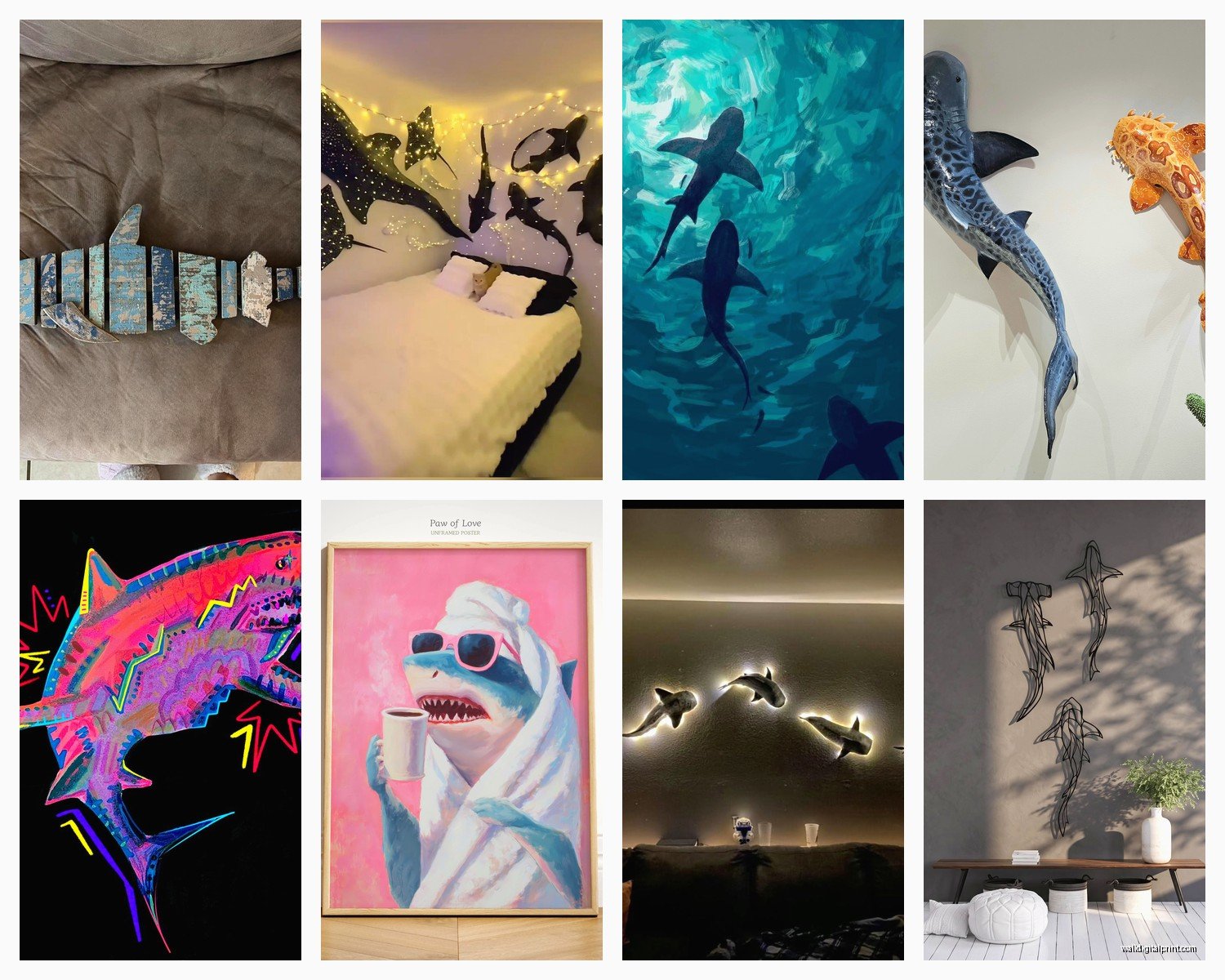
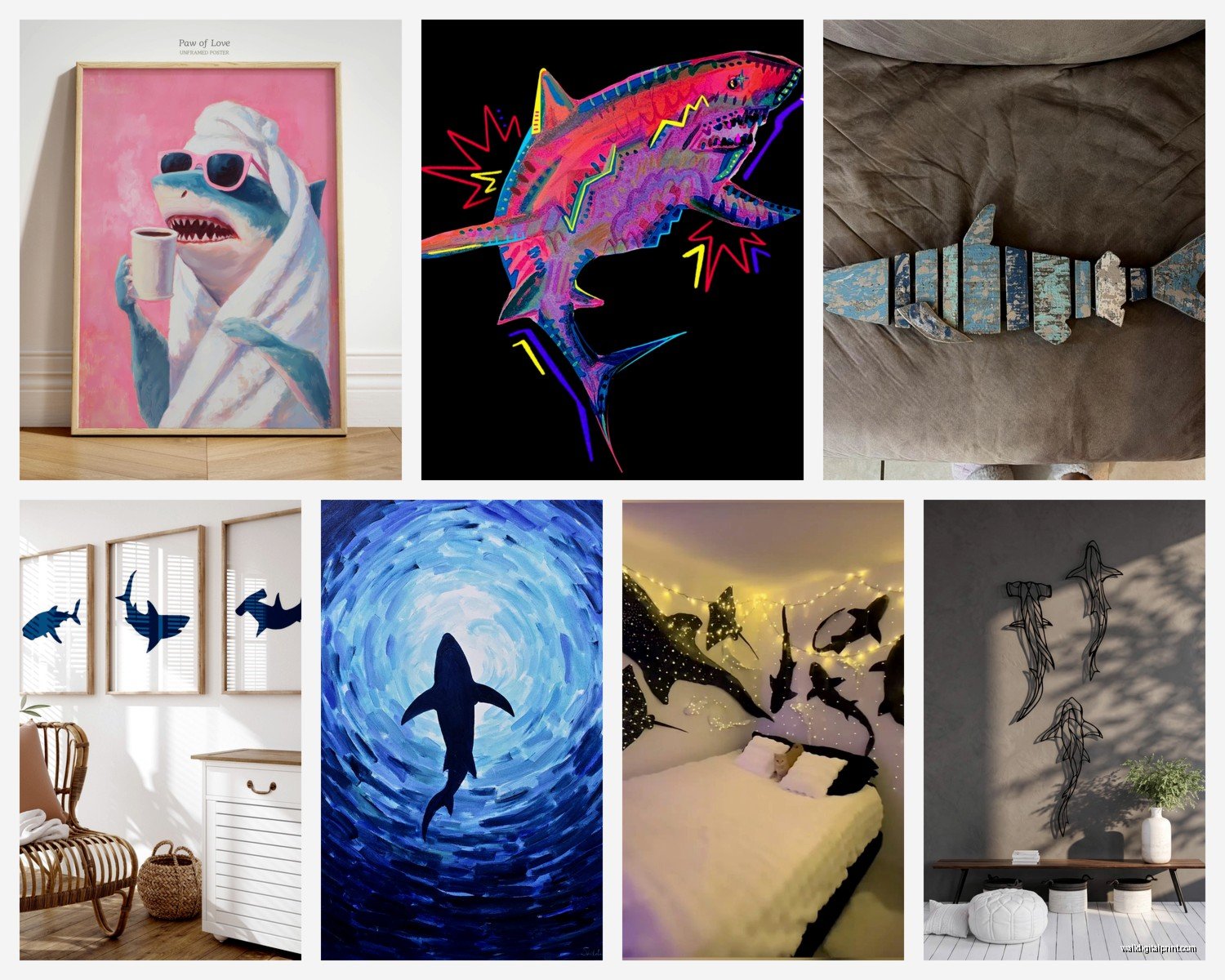
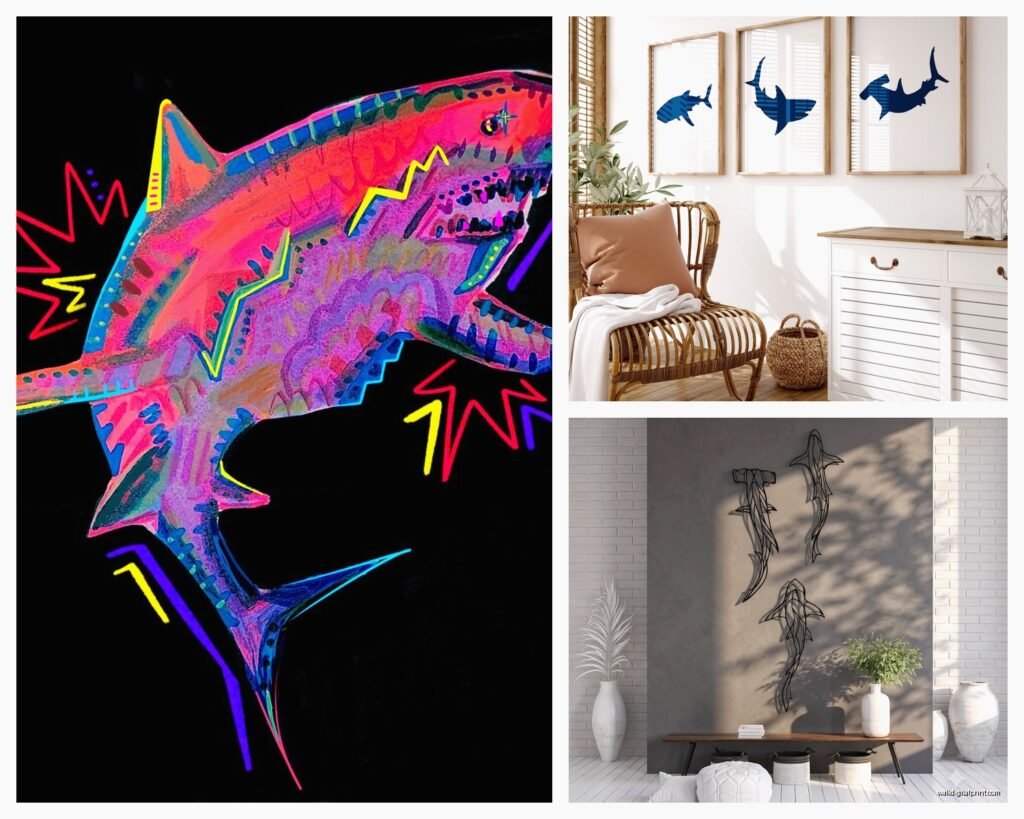
Pop art and graphic design style gives you bold colors and stylized sharks. Think Andy Warhol vibes or retro surf poster aesthetics. These inject personality and work well in entertainment spaces, game rooms, teen bedrooms, creative studios.
Mixed media and 3D elements – okay this is gonna sound weird but there are artists doing really cool stuff with layered materials, like sharks made from driftwood or metal sculptures or resin pieces with actual depth. These are statement pieces and investment pieces but they’re conversation starters for sure.
Color Schemes That Actually Work
You’d think shark art means blue and gray and that’s it but there’s actually way more flexibility. The key is matching or complementing your existing palette.
Traditional ocean blues and teals are obvious and they work. Deep navy, aqua, turquoise – these create that immediate ocean connection. Pair them with white, sand, and natural wood tones for coastal vibes. But don’t feel locked into this.
Black and white or grayscale shark art is incredibly versatile. Works with literally any color scheme you already have. I use this approach when clients have colorful rooms and don’t want to add more competing colors. A dramatic black and white shark photograph becomes a neutral anchor.
Unexpected color pops can be really cool – think sunset orange and pink backgrounds with shark silhouettes, or those deep purple and indigo underwater scenes. I saw this amazing piece once with a whale shark against a purple coral reef background and it was stunning in a room with jewel tone accents.
Metallic accents like gold, silver, or copper with shark imagery give you that elevated look. There are prints out there with gold leaf details on shark fins or metallic ink that catches light. Fancy but not over-the-top.
Room-by-Room Breakdown
Living rooms can handle the big dramatic pieces. This is where you want impact. Great white breaching, hammerhead close-up, tiger shark patrol shot. Go large, go bold. Above the couch is the obvious spot but don’t ignore the wall opposite your seating area – that’s what you’ll actually look at while sitting down.
Bedrooms need more careful consideration because you’re sleeping there and you don’t necessarily want a shark’s open jaws being the last thing you see before bed…or maybe you do, no judgment. I actually prefer calmer shark imagery for bedrooms – side profiles, sharks swimming peacefully, abstract interpretations. Or lean into the vintage scientific illustration route.
Bathrooms are perfect for shark art hello it’s literally a water room. Smaller prints work great here. You can do a fun gallery wall of different shark species. Just make sure if it’s a steamy bathroom you’re using materials that can handle moisture or frame everything under glass.
Kids rooms depend on the age and fear factor. Younger kids might do better with cartoonish friendly sharks or colorful graphic designs. Older kids and teens often love the edgier predator imagery. My nephew has this sick set of three panels showing a shark attack sequence (on a surfboard not a person) and he thinks it’s the coolest thing ever.
Home offices benefit from shark art because there’s something about apex predator imagery that creates focused energy. Sounds weird but multiple clients have told me their shark art makes them feel more confident during video calls. The psychology of having a powerful creature behind you I guess?
Dining rooms can pull off shark art if you’re going for conversation-starter vibes. Not everyone’s thing but I’ve seen it work beautifully especially with the vintage scientific prints or sophisticated photography.
Mixing Shark Art with Other Ocean Elements
You don’t have to commit to ALL sharks ALL the time. Actually mixing shark pieces with other ocean life creates more visual interest.
Pair sharks with sea turtles for that predator-prey dynamic or just species diversity. Add some coral photography or abstract wave art. Throw in some vintage nautical maps or compass designs. The key is maintaining a consistent style – if your shark art is photographic keep everything photographic, if it’s illustrated keep the other pieces illustrated too.
Wait I forgot to mention – lighting makes a HUGE difference with shark art. If you’re investing in a nice piece get a picture light or position it where natural light hits during the day. The dimensionality of a shark image really comes alive with proper lighting. Track lighting works too if you have it.
Common Mistakes I See People Make
- Going too small – shark art needs presence, don’t be timid
- Hanging things too high – the center of the art should be at eye level (around 57-60 inches from the floor)
- Mixing too many styles – pick a lane aesthetically
- Ignoring the room’s existing mood – aggressive predator imagery might not work in your zen meditation corner
- Cheap printing that looks muddy – shark details matter, invest in decent quality
- Not considering the viewing distance – super detailed pieces need to be viewed up close, bold simple images work from across the room
Where to Actually Buy This Stuff
Society6 and Redbubble have tons of independent artists selling shark designs in every format imaginable. Quality varies but you can usually read reviews. Good for finding unique styles and supporting artists.
Etsy is my go-to for vintage scientific prints and unique handmade pieces. You can find original paintings, custom sizes, really specific species. Just vet the seller reviews.
Traditional art print retailers like Art.com or AllPosters have huge selections and frequent sales. The quality is consistent and reliable even if it’s less unique.
Photography sites like 500px or smugmug connect you directly with underwater photographers. If you want authentic ocean predator photography from people who actually dive with sharks this is the way. Usually more expensive but you’re getting the real deal.
Local art fairs and coastal town galleries often have amazing shark art especially if you’re near the ocean. I found this incredible metal sculpture piece at a beach town art walk last summer.
The Framing and Hanging Part
If you’re buying unframed prints don’t cheap out on framing. A $30 print in a $15 frame looks like a $15 piece. A $30 print in a proper $80 frame looks like a $200 piece. Math that makes sense.
For heavy pieces especially metal or framed glass use proper wall anchors. Drywall anchors for drywall, find studs when possible. A shark crashing off your wall at 2am is not the vibe.
Gallery walls need planning – lay everything out on the floor first or use paper templates on the wall. There are apps for this too but I’m old school. Keep consistent spacing between pieces, usually 2-3 inches works.
Oh and another thing – consider the “weight” of the image when placing it. A dark, heavy, dramatic shark image will visually anchor a space. Don’t put it floating weirdly in a corner, give it a prominent position.
My cat just knocked over my coffee so that’s fun but anyway the last thing I’d say is don’t overthink it too much. If you see a shark piece that makes you feel something – excitement, calm, badass energy, whatever – that’s probably the right choice for your space. I’ve been doing this for years and sometimes the pieces that break the “rules” end up being favorites because they just feel right.
Start with one piece you love and build from there if you want. You don’t need a whole shark-themed room unless that’s your thing. Even one well-chosen piece can completely transform a space and give it personality. Just measure your wall first seriously don’t be like me with my tiny hammerhead situation.