Wall Art Guide, Wall Art Tutoriels
Southwestern Wall Art: Desert Southwest Santa Fe Decor
Sep
So I’ve been completely obsessed with Southwestern wall art lately and honestly it started because a client wanted to redo their living room in this whole Santa Fe vibe but didn’t want it to look like a tourist trap gift shop, you know? And I’ve learned SO much about what actually works versus what just looks kinda cheap and overdone.
The Main Categories You Should Know About
Okay so there are basically a few main types you’re gonna see everywhere. There’s the traditional Native American inspired stuff with geometric patterns, the desert landscape paintings, those cow skull things (which can be amazing or terrible depending), pottery and woven pieces, and then the more rustic wood art. Each has its own vibe and honestly you probably want to mix them rather than going all-in on just one style because otherwise it gets repetitive real fast.
Geometric Patterns and Native Designs
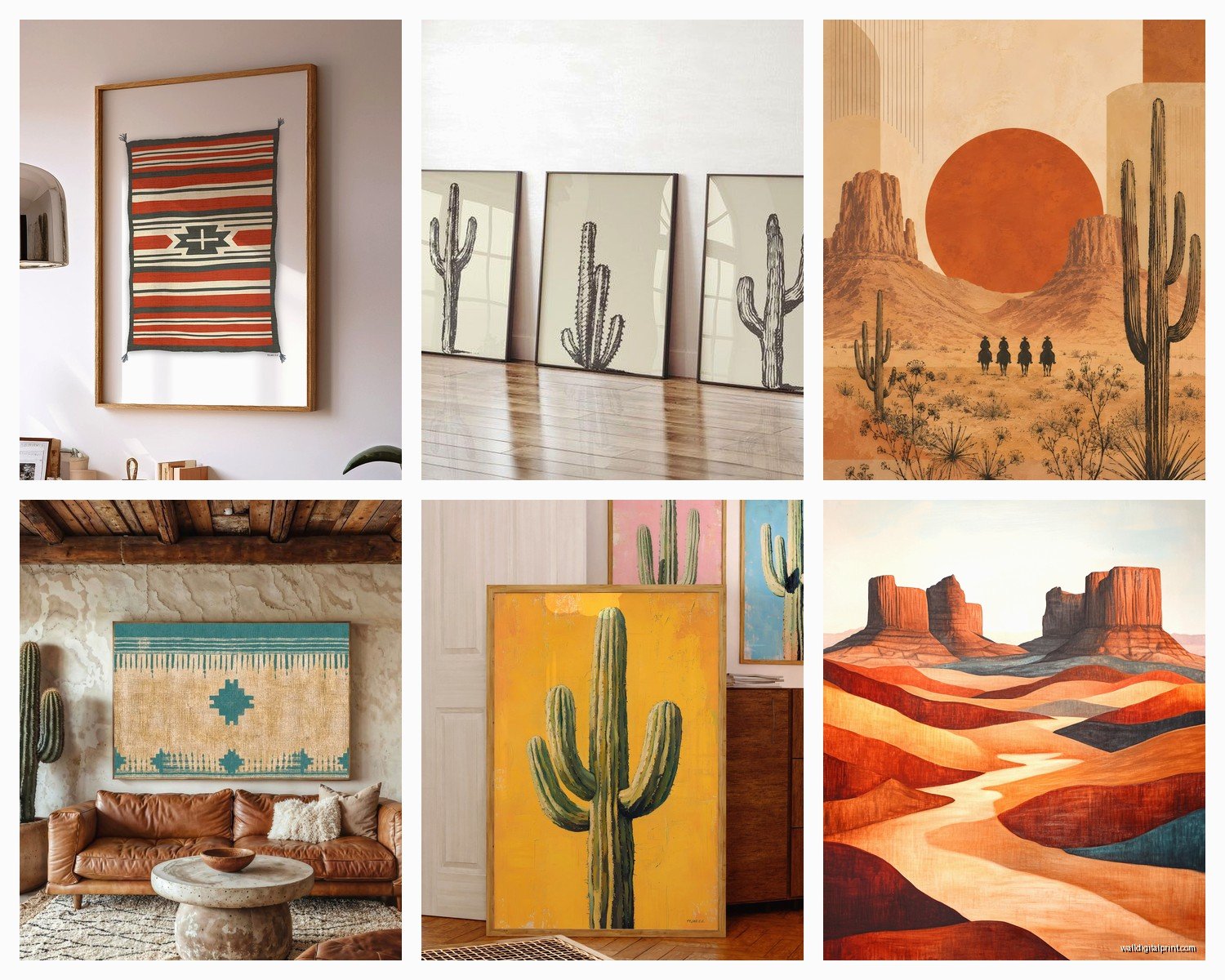
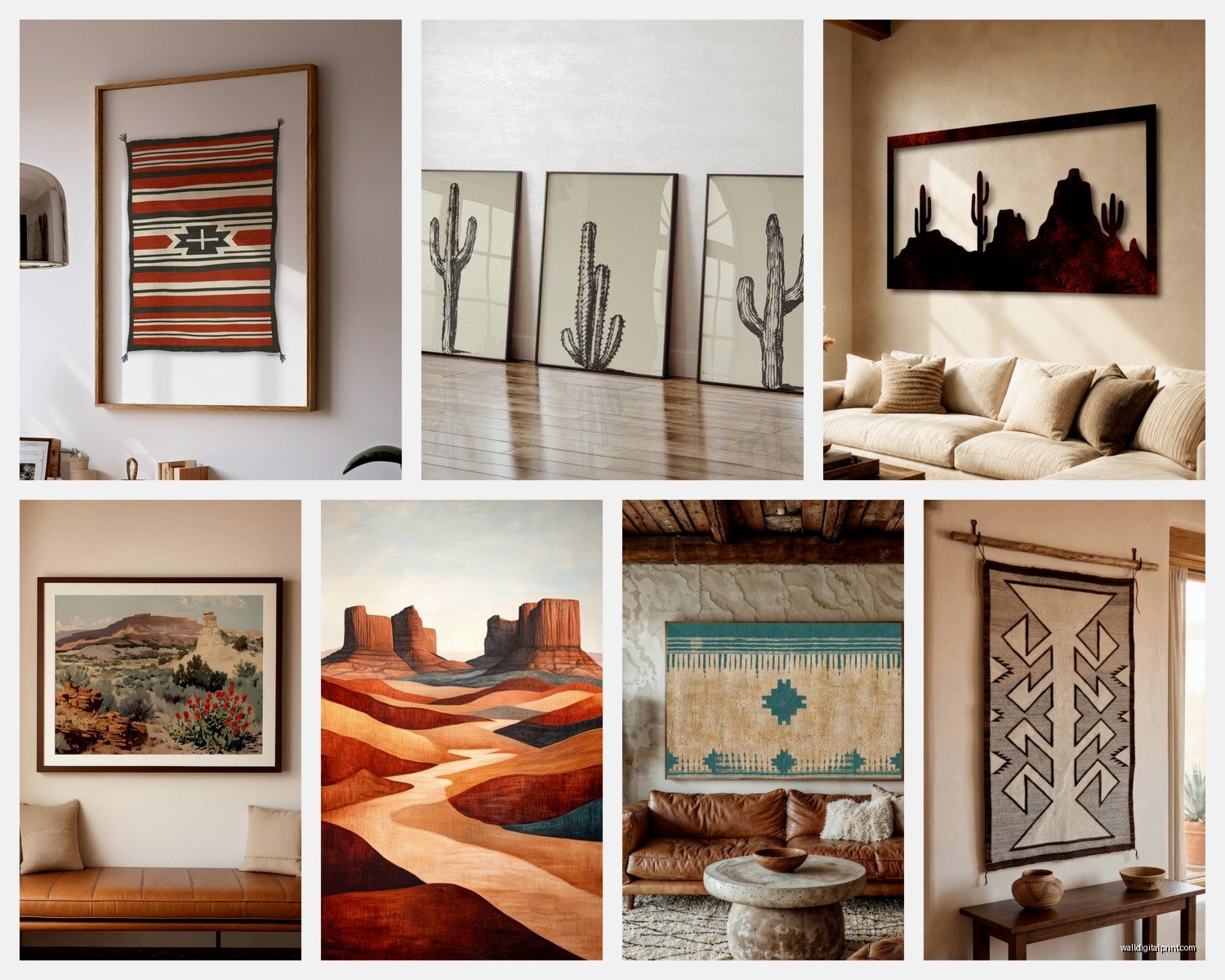
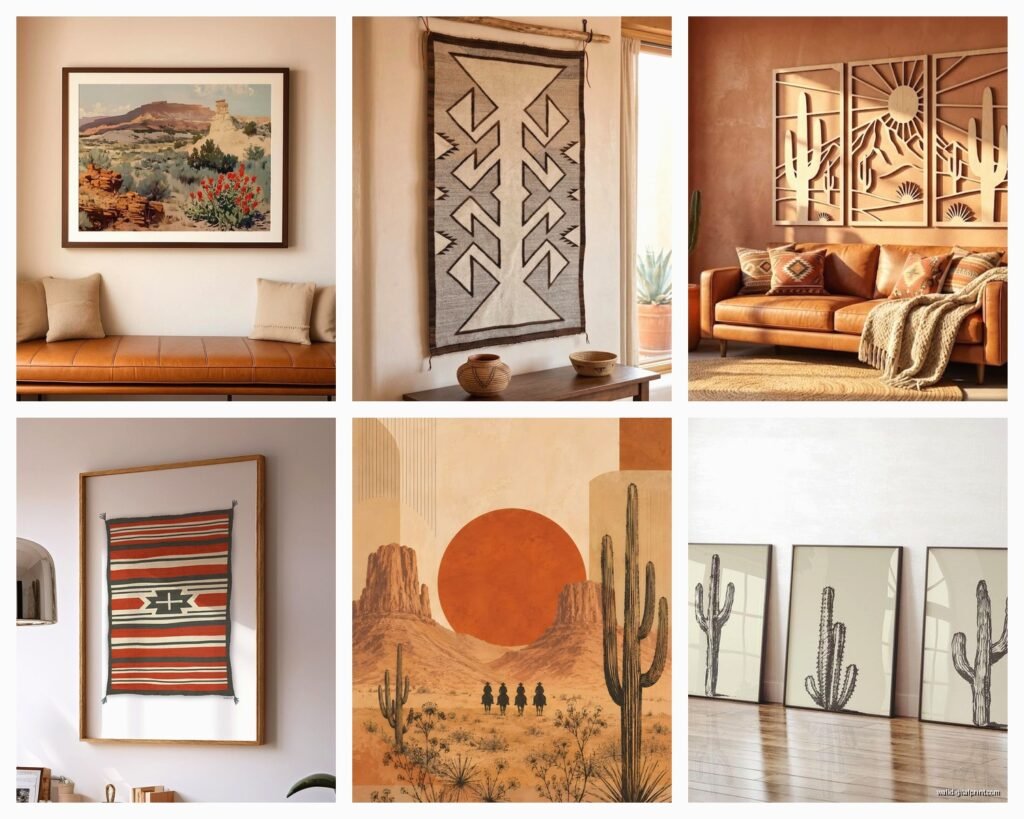
These are probably the easiest to incorporate without going overboard. I found this amazing canvas print with Navajo-inspired diamond patterns in terracotta, turquoise, and cream that I used above a console table and it totally anchored the whole space. The thing with these is you want to make sure you’re buying from artists who are actually connected to the culture or at least respectful reproductions, not just someone slapping “tribal patterns” on stuff in Photoshop.
What works: Look for pieces that use authentic color palettes. Real Southwestern colors are more muted than you’d think—burnt orange, dusty turquoise, deep rust, cream, black. Not like bright orange and electric blue.
Size matters here too. A small geometric print is gonna look lost on a big wall. I usually go for at least 24×36 inches if it’s the main focal point, or do a series of three smaller ones in a horizontal line.
Desert Landscape Art
This is where people either nail it or make it look like a doctors office waiting room. The difference is in the details and the style you choose. I’ve tested probably a dozen different landscape pieces at this point because my dog ate the corner of one (long story, he’s fine, the art was not) and I had to find replacements.
You’ve got options here:
- Realistic oil or acrylic paintings of saguaro cacti and mesas
- More abstract interpretations with bold color blocking
- Vintage-style travel poster designs
- Black and white photography of desert scenes
The abstract ones are actually my favorite lately? There’s something about a painting that captures the feeling of the desert heat without being too literal. I hung this piece in my own hallway that’s basically just blocks of pink, orange, and purple that suggest a sunset over desert hills and people always ask about it.
For realistic landscapes, avoid anything that looks too glossy or digitally enhanced. You want brushstrokes you can see, texture, something that feels handmade. And honestly the black and white photography route is super underrated—it gives you that Southwestern feel without adding more color to compete with your other decor.
Materials That Actually Matter
Okay so funny story, I bought this “reclaimed wood” piece online that arrived and was clearly just new pine stained to look old. Returned it immediately. When you’re shopping for Southwestern wall art, the materials are kinda the whole point of the aesthetic.
Canvas is fine for prints but make sure it’s gallery-wrapped (where the image continues around the edges) so you don’t need a frame. Frames can make Southwestern art look too formal unless you go with weathered wood frames.
Actual wood pieces are where it’s at though. Look for carved wooden art, burned designs, or those multi-panel installations made from reclaimed barn wood or pallets. I have this three-panel piece where each panel is a different desert plant silhouette cut from wood and it adds so much dimension to the wall.
Metal art is huge in this style too. Wrought iron, copper, rustic steel. There’s this whole category of laser-cut metal art featuring desert scenes, cactus silhouettes, kokopelli figures. Just make sure it has a protective coating if you’re in a humid area or it’ll rust in ways you don’t want.
Woven textiles as wall hangings are super authentic. Actual woven pieces from Zapotec or Navajo weavers are investments (like several hundred dollars minimum) but worth it if you want something genuine. There are also more affordable machine-woven versions that still look good—just don’t try to pass them off as the real thing.
Color Schemes That Won’t Drive You Crazy
This is where I see people mess up constantly. They think Southwestern means BRIGHT and then they end up with a space that feels like a pinata exploded. The real Santa Fe palette is way more sophisticated.
Start with a neutral base on your walls—warm white, cream, tan, even a soft terracotta if you’re brave. Then your wall art should incorporate:
- Terracotta and rust tones
- Dusty turquoise (not bright teal)
- Warm creams and ivories
- Deep browns and blacks
- Muted sage greens
- Sunset colors but desaturated—think dusty pink and soft coral
You can have one or two pops of brighter color but they should be accent moments, not the whole piece. I hung this painting last month that’s mostly neutrals with one streak of bright turquoise and it’s perfect—catches your eye without overwhelming.
Mixing Metals and Tones
Oh and another thing, don’t be afraid to mix copper, iron, and natural wood tones in the same space. Southwestern style is rustic and eclectic by nature. I’ve got a copper sun sculpture, a wrought iron cactus piece, and wooden carved art all on the same wall and they work together because they’re all in that earthy, handcrafted vibe.
Size and Placement Strategy
Okay so this is gonna sound weird but I literally use painters tape on the wall before I commit to hanging anything. Cut pieces the size of your art and stick them up to see how the scale feels. Saved me so many unnecessary holes in the wall.
For a standard living room with 8-foot ceilings, you want your main piece to be pretty substantial—think 30×40 inches minimum or a multi-panel arrangement that fills similar space. The center of the artwork should be at eye level, which is usually around 57-60 inches from the floor.
Above a sofa, the art should be about two-thirds to three-quarters the width of the furniture. I see people hang tiny art above big sectionals all the time and it just looks lost.
Gallery walls are great for Southwestern style because you can mix different types—a woven piece, a metal cactus, a framed print, maybe a small wooden shelf with a pottery piece. Just keep everything within the same color family so it feels cohesive.
Where to Actually Buy This Stuff
Real talk, Etsy is probably your best bet for unique pieces at decent prices. Search for terms like “Southwestern canvas art,” “desert wall decor,” “Santa Fe style art.” Read the reviews and check if items are made to order or print on demand—the quality varies wildly.
I’ve also found amazing stuff at:
- Local art fairs if you’re anywhere near the Southwest
- West Elm and CB2 have some good options that aren’t too expensive
- Society6 and Minted for prints from independent artists
- Actual galleries in Santa Fe, Taos, Sedona if you want investment pieces
- Even Target sometimes has decent Southwestern-ish decor in their Opalhouse line
For authentic Native American art, look for pieces marked with the artist’s name and tribal affiliation. There are online galleries that specialize in this—Palms Trading Company is one I’ve ordered from. Yes it’s more expensive but you’re supporting actual indigenous artists.
Wait I forgot to mention—estate sales and antique shops in the Southwest are goldmines. I found a vintage painting of Monument Valley for like forty bucks that would’ve been $300 in a gallery.
Common Mistakes to Avoid
Don’t buy everything at once from the same place. Your wall art should look collected over time, not like you bought a matching set. Mix old and new, expensive and affordable, different mediums.
Avoid anything with those inspirational quotes in desert fonts. Just no. Unless you’re decorating a yoga studio maybe.
Don’t ignore the power of negative space. Southwestern style works because of the breathing room—it’s inspired by vast desert landscapes. If you cram too much art on every wall it loses that open, airy feeling.
Be careful with the cow skull thing. One cow skull can be iconic. Multiple cow skulls starts getting weird unless you’re going for full Georgia O’Keeffe museum vibes.
Lighting Considerations
This actually matters more than you’d think. Southwestern art looks best in warm lighting—cool white LEDs will make the colors look off. I use soft white bulbs (2700-3000K) and if you really want to highlight a special piece, get a picture light or track lighting in brass or bronze finish.
Natural light is obviously ideal but watch out for direct sun on certain pieces, especially textiles and original paintings. UV damage is real and I’ve seen some beautiful woven pieces get totally faded because they were in a south-facing window.
DIY Options If You’re On a Budget
Okay so my client canceled last week so I spent an hour comparing DIY tutorials and honestly some of them are super doable. You can make your own geometric art with canvas, painters tape, and acrylic paints in Southwestern colors. It’s basically paint by sections—tape off your design, paint each section, peel the tape. Takes an afternoon.
Wood burning is another option if you’re crafty. Get a wood burning tool (like $20), some wood plaques or rounds, and look up simple desert designs to trace and burn. Seal it with polyurethane and boom, custom art.
For the least effort, you can buy Southwestern fabric (check Spoonflower or even fabric stores) and stretch it over canvas frames. Instant textile art for like $30.
I’ve also seen people frame sections of vintage Southwestern blankets or rugs that are too damaged to use. Hit up thrift stores for these—even a small piece framed looks intentional and authentic.
Mixing Southwestern with Other Styles
The cool thing about Southwestern wall art is it actually plays well with other aesthetics if you’re thoughtful about it. I’ve mixed it with:
Modern minimalist: Keep your Southwestern pieces simple—geometric patterns, black and white desert photography, clean-lined metal art. Stick to a restricted color palette.
Bohemian: This is probably the easiest mix. Add macrame, plants, rattan, global textiles. The eclectic nature of boho loves Southwestern elements.
Rustic farmhouse: Focus on wood and metal Southwestern pieces, skip the bright colors, go for more vintage and weathered looks.
Mid-century modern: Actually works great? The clean lines of MCM furniture with abstract Southwestern art in sunset colors is chef’s kiss. I did a whole living room this way last year.
What doesn’t really work is mixing Southwestern with super traditional or formal styles. Like don’t put a cactus painting in a room with Victorian furniture and heavy drapes. Just trust me on that one.
Maintaining and Caring for Your Art
Most canvas and print art just needs occasional dusting. Use a microfiber cloth or a soft brush attachment on your vacuum on low power.
Metal art can be wiped down with a slightly damp cloth. If it’s unfinished metal and starts looking dull, you can use metal polish specific to the type—copper polish for copper, etc.
Woven textiles are trickier. Don’t hang them where they’ll get touched a lot because oils from hands will damage the fibers over time. For cleaning, honestly I just use a vacuum with a brush attachment on the lowest setting. For valuable pieces, take them to a textile conservator.
Wood art might need occasional conditioning depending on the finish. If it’s sealed you’re good, if it’s raw wood you might wanna hit it with some furniture oil once a year.
Pottery and ceramic wall pieces are pretty low maintenance—just dust them and make sure they’re securely mounted because they’re heavy and you don’t want them falling.
Final Thoughts on Making It Feel Authentic
The key to good Southwestern wall art that doesn’t feel like a theme restaurant is restraint and authenticity. Choose pieces that speak to you personally rather than just checking boxes. Mix in some unexpected elements—maybe a vintage map of the Southwest, or a collection of old horseshoes arranged artistically, or even a single stunning photograph you took on a desert road trip.
Pay attention to texture and dimension. Flat prints are fine but the style really shines when you’ve got depth—carved wood, hammered metal, thick woven fibers. Layer different pieces at slightly different depths if you’re doing a gallery wall.
And honestly, if you’re not sure about something, live with it for a week before permanently hanging it. I’ve talked clients out of so many impulse purchases by suggesting they lean a piece against the wall where they think they want it and see how they feel after a few days. Sometimes what looks perfect in the store or online doesn’t work in your actual space, and that’s fine.
The goal is to create a space that feels like the desert—open, warm, full of natural beauty and handcrafted elements. Not a souvenir shop. Start with one or two pieces you really love and build from there. Your wall art should feel collected and personal, not like you ordered a complete set from a catalog.