Wall Art Guide, Wall Art Tutoriels
Stone Wall Art: Rock Natural Material Textured Designs
Aug
So I’ve been totally obsessed with stone wall art lately and honestly it started because this client wanted something “organic but not boring” in her hallway and I went down this whole rabbit hole. Let me tell you what I’ve figured out because there’s actually a lot more to this than just slapping some rocks on your wall.
Understanding What You’re Actually Working With
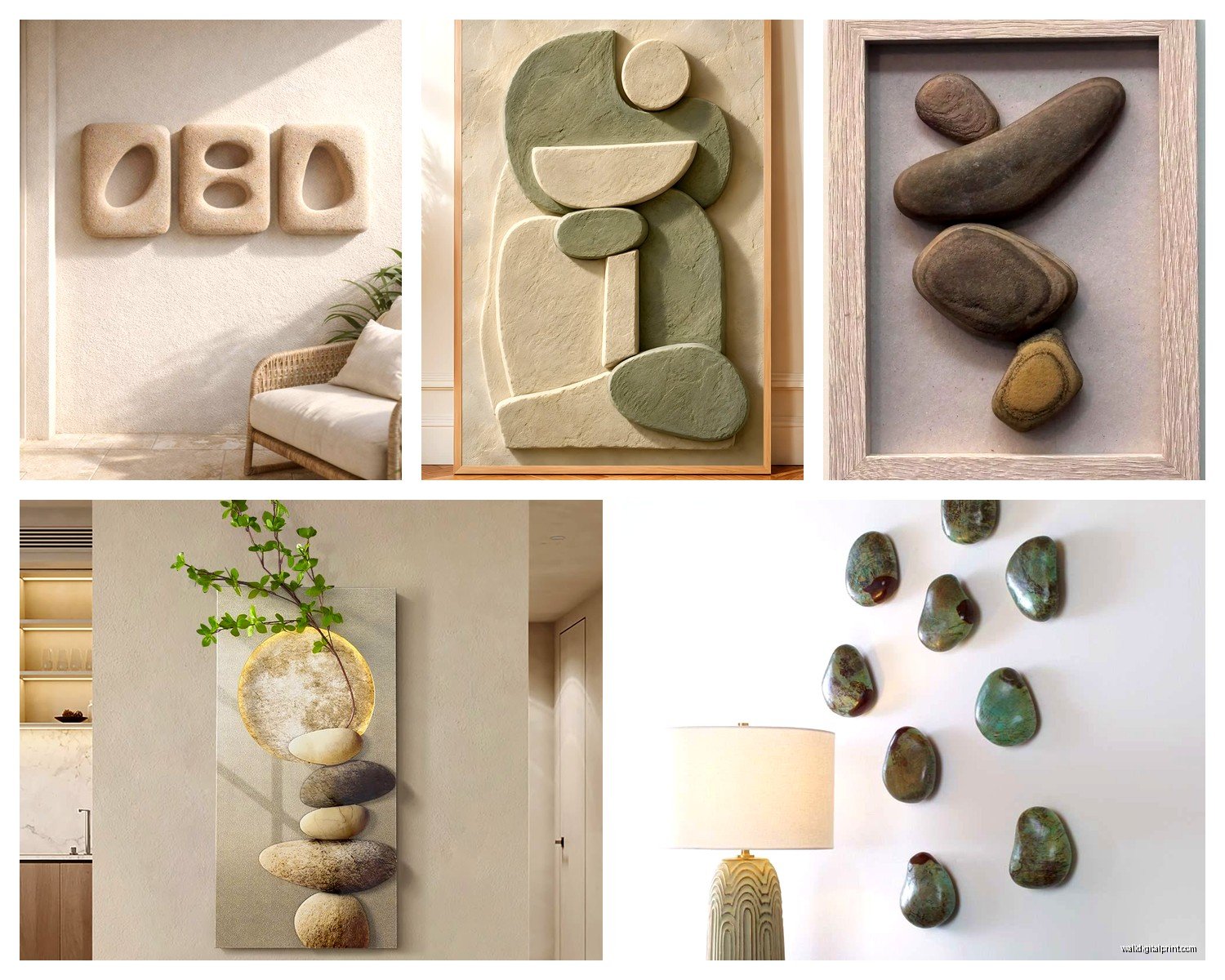
Okay so first thing – stone wall art isn’t just one thing. You’ve got actual stone slices mounted on backing, you’ve got textured panels that mimic stone, there’s carved relief stuff, and then there’s like… assembled pebble art. They’re completely different animals and I learned this the hard way when I ordered what I thought was real slate and got basically fancy cardboard with a photo printed on it.
Real stone pieces are gonna be heavy. Like really heavy. I’m talking you need proper wall anchors and maybe even a stud finder situation. The lightweight versions are usually resin composite or some kind of molded material with stone dust mixed in. Not necessarily bad, just different, and you gotta know what you’re buying.
The Weight Issue Nobody Talks About
My friend Sarah bought this gorgeous large-scale stone piece – real marble I think – and her drywall literally couldn’t handle it. She needed to get her super involved and add extra support behind the wall. So before you fall in love with something, check the weight specs. Anything over 20 pounds and you’re gonna need more than those basic picture hangers.
I usually tell people if you’re renting or don’t wanna deal with major installation, stick with pieces under 15 pounds or go for the composite materials. They’ve gotten really good actually – some of them you can’t tell aren’t real stone unless you touch them.
Types of Stone Wall Art That Actually Work
Stacked Stone Panels – these are the ones that look like a section of a stone wall, usually rectangular. They work amazing as a focal point behind a bed or in an entryway. The texture catches light in this really subtle way throughout the day which is cool. You can get them in slate, limestone, quartzite… my personal favorite is the split-face travertine because it has this warmth to it.
Stone Slice Art – thin cuts of agate, marble, or other stones backlit or mounted on canvas. These are having a moment right now. The translucent ones are gorgeous but also kinda pricey. I found some decent ones on Etsy that were way cheaper than the fancy gallery versions.
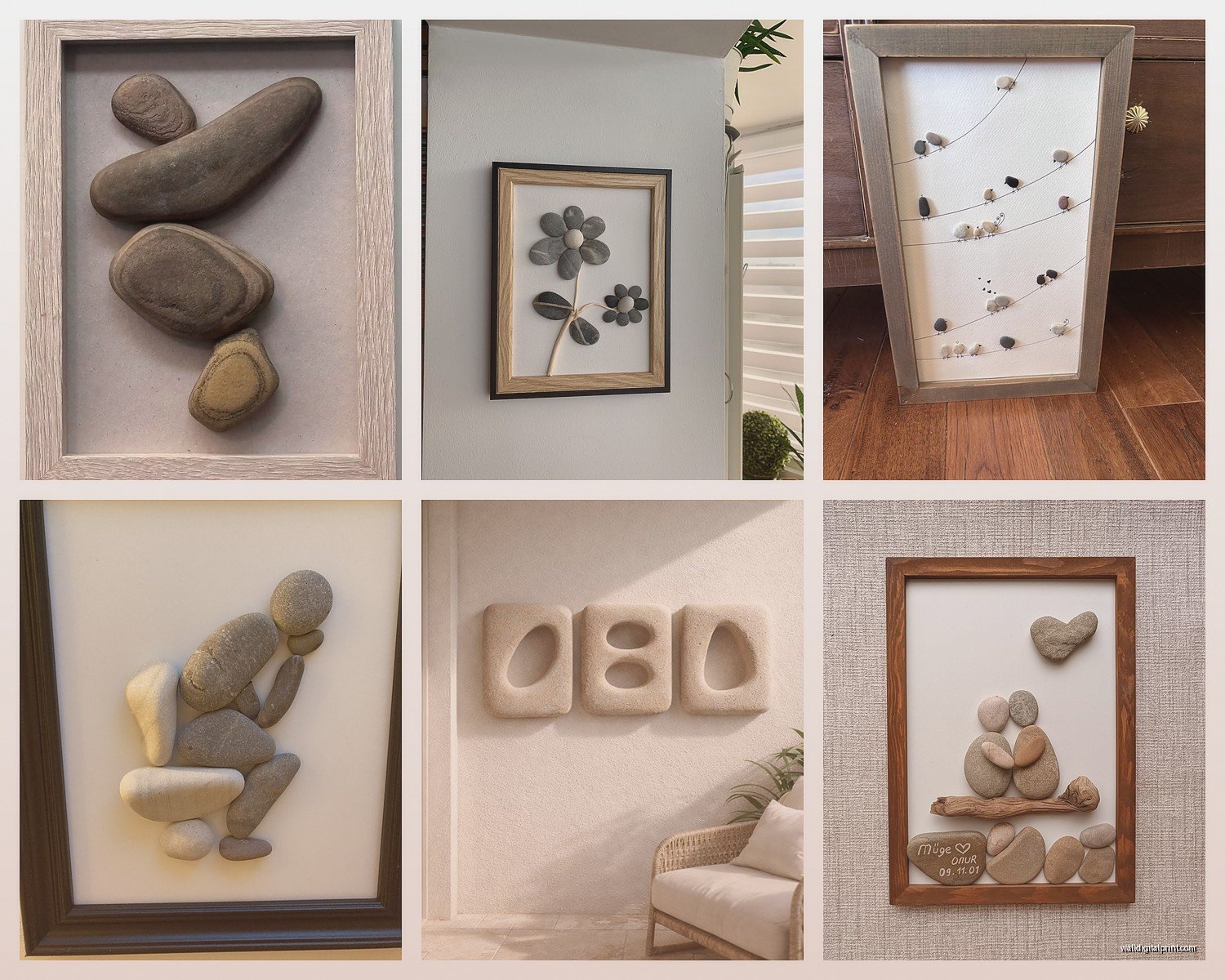
River Rock Mosaics – okay these can go wrong fast and look very 2005 spa bathroom, but when done right they’re actually stunning. The key is scale and color palette. Don’t get the mixed rainbow ones unless you’re going for that specific vibe.
Carved Stone Relief – more traditional but really beautiful if your space skews classic or eclectic. Think botanical designs or geometric patterns carved into limestone or sandstone.
How to Actually Choose the Right Piece
This is gonna sound weird but I always think about the light first. Stone changes so much depending on lighting. That slate that looks moody and dramatic in the store might just look dark and flat in your north-facing living room.
I made this mistake in my own apartment – bought this beautiful dark basalt piece and it just disappeared on my wall because I don’t get great natural light. Ended up moving it to my office where I have better overhead lighting and it’s perfect there.
For rooms with lots of natural light, you can go darker or more textured. The shadows create interest. For dimmer spaces, lighter stones like limestone or white marble work better, or go for something with metallic veining that’ll catch whatever light you do have.
Size and Scale Considerations
Everyone thinks bigger is better but honestly… it depends. I’ve seen small stone pieces make huge impact. My client’s hallway that I mentioned? We ended up doing a collection of smaller stone slices in different shapes instead of one big piece and it’s way more interesting.
General rule though – if you’re doing a single piece, it should take up about 2/3 to 3/4 of the width of the furniture below it. So like over a console table or sofa. Too small and it looks like it’s floating in space awkwardly.
Oh and another thing – think about the room’s architecture. High ceilings can handle vertical pieces. Long horizontal walls obviously want horizontal orientation. But sometimes breaking that rule creates the most interesting look.
Installation Without Losing Your Mind
Okay so this is where people usually mess up. The installation method depends entirely on what type of stone art you bought.
Heavy pieces (over 20 lbs): You absolutely need to hit studs or use heavy-duty toggle bolts rated for the weight. I use these snap toggle bolts that are rated for like 100+ pounds in drywall. Get a stud finder – the cheap ones work fine, you don’t need the $100 version. My cat keeps knocking mine off the shelf which is annoying but whatever.
Medium weight (10-20 lbs): Picture hanging hooks designed for heavy frames usually work. The ones with multiple nails that go in at an angle. Use at least two for anything over 12 pounds.
Lightweight composite: Command strips actually work great for these. The large picture hanging strips can hold up to 16 pounds if you use multiple sets. Just make sure your wall is clean before applying.
For stone panels that cover larger areas, you’re looking at adhesive installation usually. This is more permanent so make sure you’re committed. The panels usually come with specific adhesive recommendations – don’t skip this and use whatever you have lying around.
The Level Situation
Use a level. I know it seems obvious but I cannot tell you how many times I’ve eyeballed it and then stepped back and it’s crooked. Even slightly off-level bothers people subconsciously. Get one of those small torpedo levels, they’re like $8 and worth it.
Also – measure from the ceiling down, not from the floor up. Floors are rarely level but ceilings usually are. Mark your spot lightly with pencil first.
Mixing Stone Art With Your Existing Decor
This is where it gets fun. Stone has this neutrality that actually works with almost anything if you’re thoughtful about it. I’ve put stone pieces in ultra-modern spaces, traditional homes, boho rooms… it adapts.
In modern spaces, go for clean geometric stone pieces or single large slabs with minimal veining. Keep the colors monochromatic.
Traditional spaces can handle more ornate carved pieces or stone with lots of natural variation and color.
For boho or eclectic, mix different stone types – like a gallery wall with various stone slices, maybe throw in some agate, some marble, different colors and textures.
Wait I forgot to mention – stone pairs beautifully with plants. Like the organic texture thing works together. I almost always style stone art with some greenery nearby. Even fake plants work if you’re like me and kill everything.
Color and Texture Matching
Stone comes in way more colors than people realize. You’ve got your grays and blacks obviously, but also creams, tans, rusts, even blues and greens if you get into certain minerals.
I try to pull colors from existing elements in the room. If you have warm wood tones, limestone or travertine with those warm beige tones works great. Cool gray furniture? Slate or basalt. Lots of white? White marble or light quartzite.
The texture is what makes stone art special though. It adds this physical dimension that prints or paintings can’t. In minimalist spaces where everything’s smooth and clean, that texture becomes a focal point. In already-textured spaces, you gotta be careful it doesn’t compete too much – maybe go for smoother stone with interesting veining instead of heavily textured pieces.
Where to Actually Buy This Stuff
Okay so I’ve bought stone art from all over and here’s what I’ve learned. High-end galleries are gorgeous but insanely expensive. For real stone pieces, sometimes they’re worth it if you want museum-quality stuff, but usually you’re paying for the gallery markup.
Online retailers like Wayfair and Overstock have tons of options and you can filter by size and price which is helpful. The quality is hit or miss though – read reviews carefully. Look for mentions of actual weight and material composition.
Etsy is actually amazing for stone slice art and smaller pieces. You’re buying from artists directly usually and can get custom sizes. I’ve had really good luck there.
Home improvement stores carry stone panels if you’re going that route – they’re meant for accent walls but work as art too. Cheaper than buying from decor stores usually.
Estate sales and antique shops sometimes have incredible stone pieces for nothing. Found a carved marble panel at an estate sale for $40 that would’ve been hundreds retail.
What to Look For When Shopping Online
Always check dimensions – both the actual stone and the overall mounted size if it comes with a frame or backing. I’ve ordered things that looked huge in photos and arrived tiny.
Material specifications – is it real stone or composite? What type of stone? How thick?
Weight – for shipping costs and installation planning.
Mounting hardware – does it come with hanging systems or do you need to figure that out?
Return policy – stone is tricky to return because of weight and fragility but make sure you have that option if it arrives damaged.
Maintenance and Care
Stone is pretty low maintenance which is nice. Most pieces you just dust occasionally. If you have something porous like limestone or travertine, you might wanna seal it if it’s in a humid environment like a bathroom. But for most living spaces, not necessary.
Don’t use harsh cleaners – just damp cloth for most stone. Some stones like marble can etch from acidic cleaners so just… don’t.
If you have backlit stone pieces, the bulbs will eventually need replacing. LED ones last forever basically but still, something to keep in mind.
Common Mistakes I See People Make
Buying stone art that’s the wrong scale for the space – this is the biggest one. That massive piece that looked perfect in the store overwhelms your actual wall.
Not considering the weight and ending up with installation issues. Measure twice, install once or whatever.
Choosing stone colors that clash with undertones in the room. Stone has undertones just like paint – warm vs cool matters.
Hanging it too high – art should generally be at eye level, which is around 57-60 inches from the floor to the center of the piece. People always hang stuff too high.
Over-styling around it – stone is a statement on its own, you don’t need to surround it with a bunch of other stuff usually.
Getting Creative With Stone Wall Art
Oh and here’s something I’ve been experimenting with – layering stone pieces with other materials. Like a stone panel behind a floating shelf with plants and books. Or stone slices arranged with metal geometric pieces.
You can also commission custom work if you have a specific vision. I worked with a stone artist who created this incredible piece using stones from a client’s family property – way more meaningful than anything store-bought.
DIY is possible too if you’re handy. You can buy stone tiles or slices and mount them yourself on wood backing or in shadow boxes. It’s time-consuming but you get exactly what you want.
I was watching this show the other night – totally unrelated but it reminded me – where they used pebbles in resin to create custom wall art. Similar vibe to stone art but more crafty. Could be a cheaper option if you’re into that.
Anyway, the main thing with stone wall art is just being intentional about what you choose and where you put it. It’s an investment usually so take your time deciding. I spent like three weeks going back and forth on a piece for above my couch before finally pulling the trigger, and I’m so glad I waited for the right one instead of just getting whatever.
The texture and natural quality of stone adds something you really can’t replicate with other art forms. When it works, it works really well. Just gotta do your homework on installation and make sure it fits your space properly.