Wall Art Guide, Wall Art Tutoriels
Teak Wall Art: Tropical Wood Luxury Natural Material
Aug
So I’ve been obsessing over teak wall art lately and honestly it started because this client wanted something that screamed “luxury but not trying too hard” and I fell down this whole rabbit hole about tropical wood.
Why Teak Actually Makes Sense for Wall Art
Okay so first thing, teak isn’t just expensive because it sounds fancy. The wood has natural oils that make it ridiculously durable, which means you’re not gonna have issues with warping or cracking like you would with pine or even oak sometimes. I tested this myself when I left a small teak panel in my bathroom (the one with terrible ventilation) for like three months and it looked exactly the same. My cat knocked over a plant on it twice and still perfect.
The grain patterns are insane too. Each piece looks completely different, these gorgeous golden-brown tones with darker streaks running through. You literally cannot replicate that manufactured look even if you tried.
The Price Thing Nobody Talks About
Look, teak wall art is expensive. I’m not gonna sugarcoat it. You’re looking at anywhere from $150 for a small piece to like $800+ for those big statement walls. But here’s what I figured out after buying way too many pieces: the cost per year is actually reasonable if you think about it that way.
I bought this carved teak mandala thing four years ago for $320 and it still looks brand new. Meanwhile I’ve replaced three canvas prints in that same timeframe because they faded or the corners got damaged or whatever. So yeah, upfront cost sucks but you’re basically buying something once.
Types of Teak Wall Art You’ll Actually Find
Carved Panels
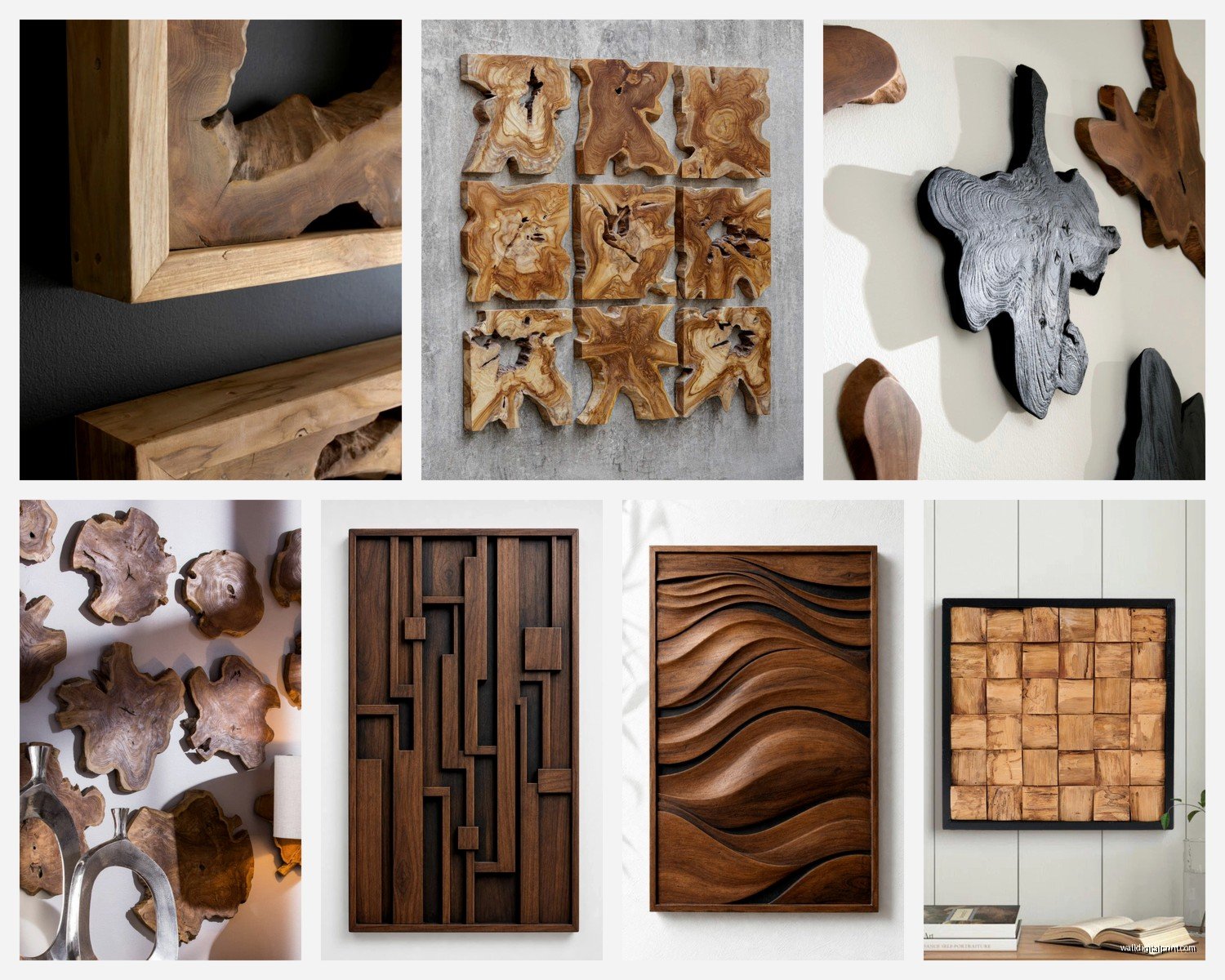
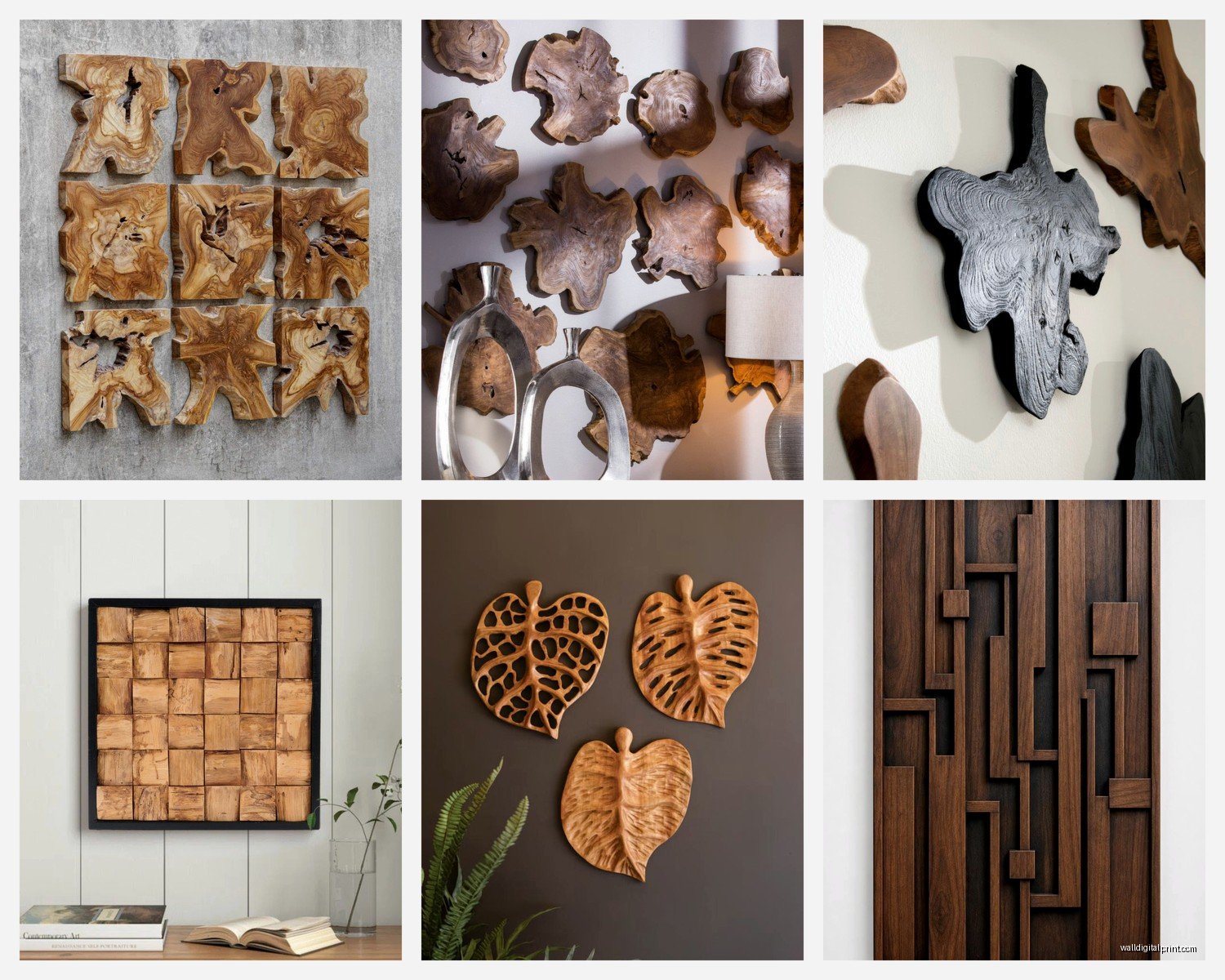
These are probably the most common and honestly my favorite. You’ve got everything from geometric patterns to those intricate Balinese-style florals. The depth you get from hand-carved teak is just different than anything else.
What to look for: make sure the carving actually goes deep into the wood. I’ve seen some cheap versions where they basically just scratch the surface. Run your finger across it, you should feel real dimension.
Natural Edge Slabs
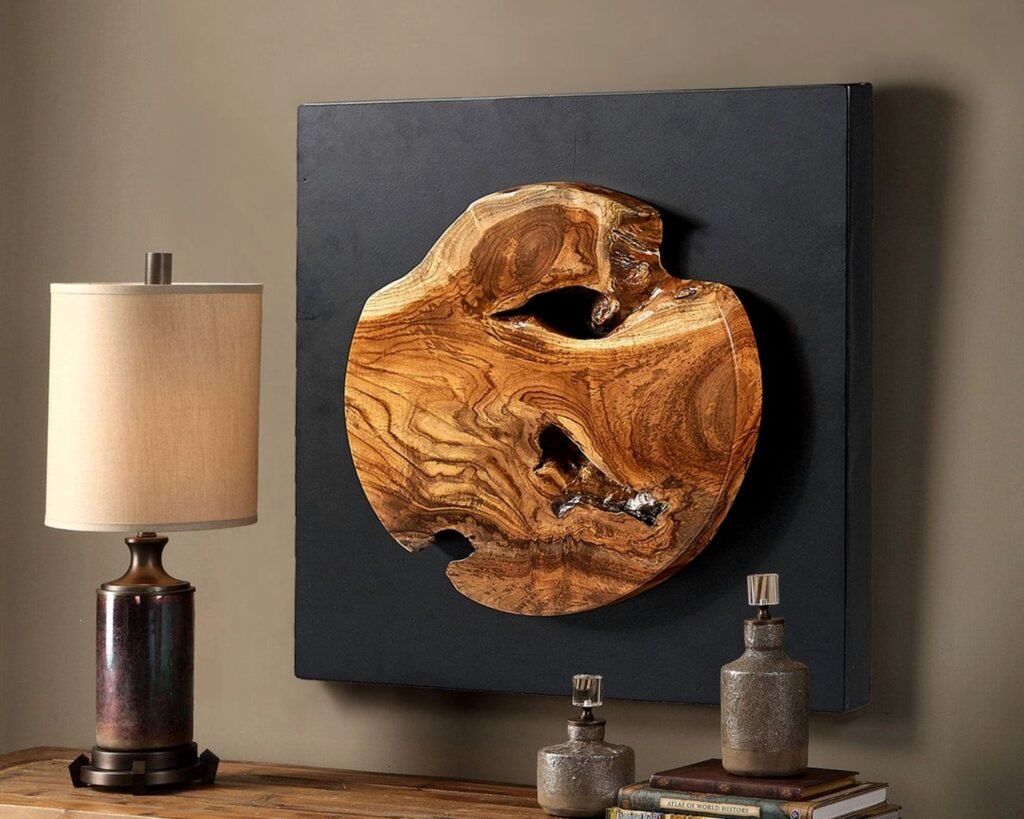
This is where they keep the natural edge of the wood and maybe just sand it down, sometimes add some resin. Very trendy right now, kinda that organic modern vibe. I used one as a headboard alternative for a client and it completely transformed the room.
The thing with these is they’re heavy. Like really heavy. Make sure your wall can handle it and use proper anchors, not just the little plastic ones that come in the package.
3D Wall Sculptures
Okay so these are multiple pieces of teak arranged to create dimension and shadow play. Usually geometric or abstract. They’re cool but placement is tricky because the lighting has to be right or they just look flat.
Reclaimed Teak Art
This is old teak from boats or buildings, repurposed into wall art. The weathered look is gorgeous, all these silver-grey tones. More eco-friendly too if that matters to you. Just check that it’s been properly treated because old boat wood can sometimes have salt damage or other issues.
How to Actually Choose a Piece
I spent an entire Saturday comparing pieces online when I should’ve been watching that new show everyone’s talking about, and here’s what actually matters:
Size and scale: This is where everyone messes up. Your wall art should take up about two-thirds to three-quarters of the space you’re filling. So if you have a 6-foot wide wall section, you want something around 4-5 feet wide. Too small just looks sad and awkward.
Color tone: Teak ranges from honey gold to deep brown. The lighter stuff feels more modern and beachy, darker pieces read more traditional and formal. Hold up paint samples next to it if you’re ordering online, or better yet, get samples sent to you. Some companies do this, some don’t.
Finish: You’ve got natural oil finish, which keeps that raw wood look, or polyurethane, which adds shine and extra protection. I prefer oil finish for bedrooms and living spaces because it feels warmer, but poly is better for bathrooms or kitchens where there’s more moisture.
Where to Buy Without Getting Screwed
I’ve ordered from probably fifteen different places at this point and here’s the honest breakdown:
Etsy: Hit or miss but you can find amazing artisans, especially from Indonesia and Thailand. Read reviews carefully and look at actual customer photos, not just the listing pics. Message the seller with questions, if they respond quickly and thoroughly that’s usually a good sign.
West Elm, CB2, those places: You’re paying for the convenience and return policy. The pieces are nice but marked up like crazy. I only go this route for clients who want zero risk.
Local import stores: If you have any furniture stores that specialize in Asian imports, go look in person. You can see the actual grain, check the quality, and usually negotiate a bit on price.
Direct from Bali: There are companies that ship directly from Indonesian workshops. This is where you get the best prices but shipping takes forever (like 6-8 weeks) and returns are basically impossible. Only do this if you’re sure about what you want.
Installation Because This Part Is Important
Okay so funny story, I hung my first teak piece using regular picture hangers and it literally fell off the wall at 2am and scared me so badly I thought someone broke in. Don’t be me.
What You Actually Need
- Stud finder – not optional
- Heavy-duty wall anchors if you can’t hit studs (the toggle bolt kind, not those ribbed plastic disasters)
- Level – use your phone app if you want but a real level is better
- Drill with appropriate bits
- Someone to help you hold it up while you mark placement
Most teak art comes with D-rings or sawtooth hangers already attached. D-rings are better for heavier pieces because the weight distributes more evenly.
The Actual Process
Hold the piece up where you want it. Have your friend/partner/whoever hold it while you stand back and look. Move it around until it feels right. Mark the top corners with painter’s tape.
Measure from the top of the piece down to where the hanging hardware is. Transfer that measurement to your wall from your tape marks. This is where you’ll drill.
Use your stud finder. If you can hit at least one stud, do it. If not, those toggle bolts that expand behind the drywall work pretty well. I’ve had pieces up for years with just anchors.
Drill your holes, install your screws or anchors, hang the piece, step back, adjust if it’s not level, then leave it alone and stop fussing with it.
Taking Care of It So It Lasts
Teak is low maintenance but not NO maintenance. Here’s what I actually do:
Dusting: Just use a dry microfiber cloth every couple weeks. Don’t use those feather dusters, they just move dust around and can catch on carved details.
Cleaning: If it gets actually dirty (which is rare for wall art), use a barely damp cloth with a tiny bit of mild soap. Dry it immediately. Like immediately immediately.
Oil treatment: Maybe once a year, use teak oil or even just food-grade mineral oil. Rub it in with a soft cloth, let it sit for 20 minutes, wipe off excess. This keeps the color rich and prevents drying out. I usually do this when I’m already cleaning everything else for the holidays.
Sunlight: Teak will fade in direct sunlight over time. Not gonna lie about this. If your piece is in a spot that gets blasted by sun all day, it’ll turn more silvery-grey. Some people like that weathered look, but if you don’t, keep it out of direct sun or use UV-filtering window film.
Styling It With Other Stuff
This is where it gets fun. Teak is warm-toned and has a lot of visual texture, so you gotta balance it.
I usually pair it with neutral walls – white, cream, light grey. If you put teak against a busy wallpaper or dark wall, it just gets lost. You want it to be the statement.
For surrounding decor, cooler metals work great. Brass is too much warmth-on-warmth, but black metal or even chrome creates nice contrast. I did this whole living room with a massive teak carved panel and black iron sconces on either side and it looked so good.
Plants, obviously. Teak and greenery is like peanut butter and jelly. Fiddle leaf figs, monstera, even just some eucalyptus in a vase nearby. The natural wood plus living plants just works.
What Not to Do
Don’t put a bunch of other wooden art pieces right next to your teak. It’s too much wood, everything competes. I see this mistake constantly and it always looks cluttered.
Don’t hang it too high. The center of the piece should be at eye level, which is usually around 57-60 inches from the floor. Unless you have super high ceilings, then you can go a bit higher but still keep it in the sightline.
Don’t buy a tiny piece for a massive wall thinking you’ll add more later. You probably won’t, and it’ll just look unfinished forever. Ask me how I know.
The Sustainability Question
Real talk, teak plantation farming is a thing now and it’s actually pretty well-regulated in most places. Look for FSC certification if you care about this. Reclaimed teak is obviously the most eco-friendly option since it’s repurposed wood.
Avoid anything that doesn’t specify where the wood comes from. If a listing is super vague about origin, that’s a red flag. Responsible sellers are proud of their sourcing and will tell you about it.
What If You Hate It After You Buy It
This happened to me with this geometric piece I was SURE would be perfect. Got it home, hung it up, hated it. The scale was wrong for the space and it just felt off.
I ended up moving it to a different room and it worked way better there. Teak is versatile enough that if it doesn’t work in one spot, try another before you give up on it.
If you really can’t make it work, these pieces hold their value pretty well. I sold mine on Facebook Marketplace for almost what I paid. People search specifically for teak art because they know it’s quality.
Wait I forgot to mention – some pieces come unfinished or with just a basic oil coat. If you’re handy, you can add your own finish or even paint parts of it. I’ve seen people do like a two-tone thing where they paint the background white and leave the carved design natural wood. Not my style but it looked cool.
Just make sure you’re using the right products for teak specifically, not just whatever stain you have in the garage, because the natural oils in the wood can make some finishes not adhere properly.