Wall Art Guide, Wall Art Tutoriels
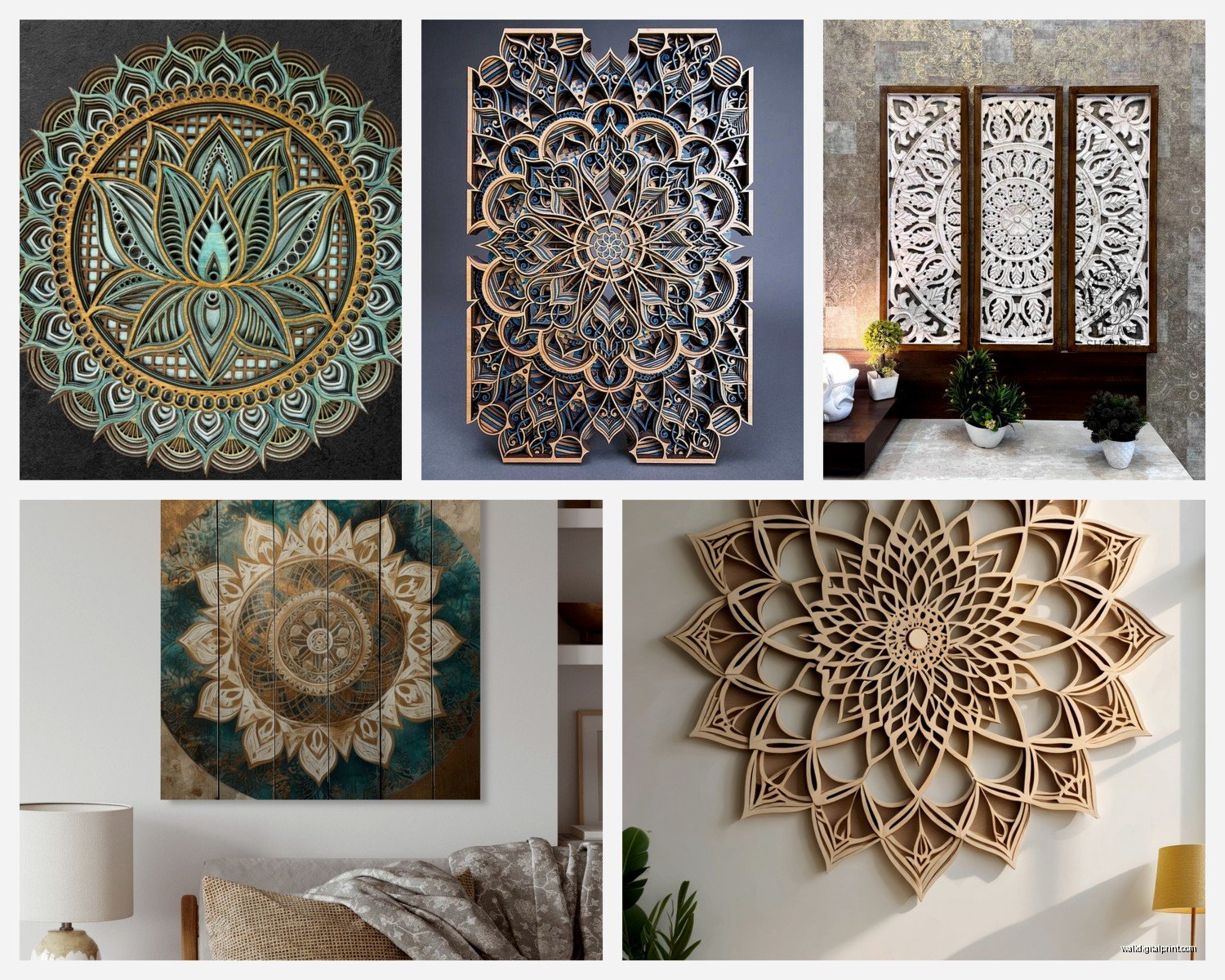
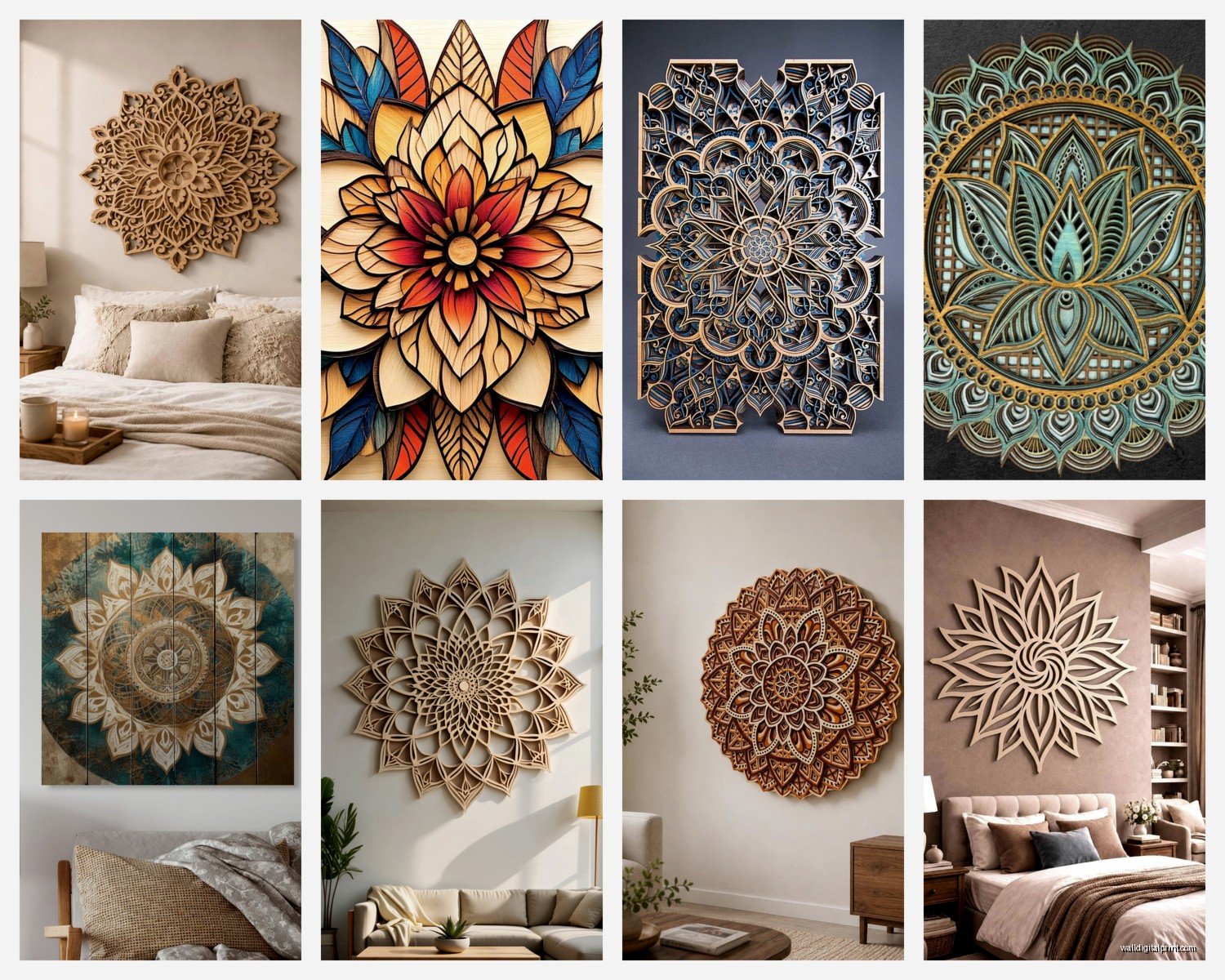
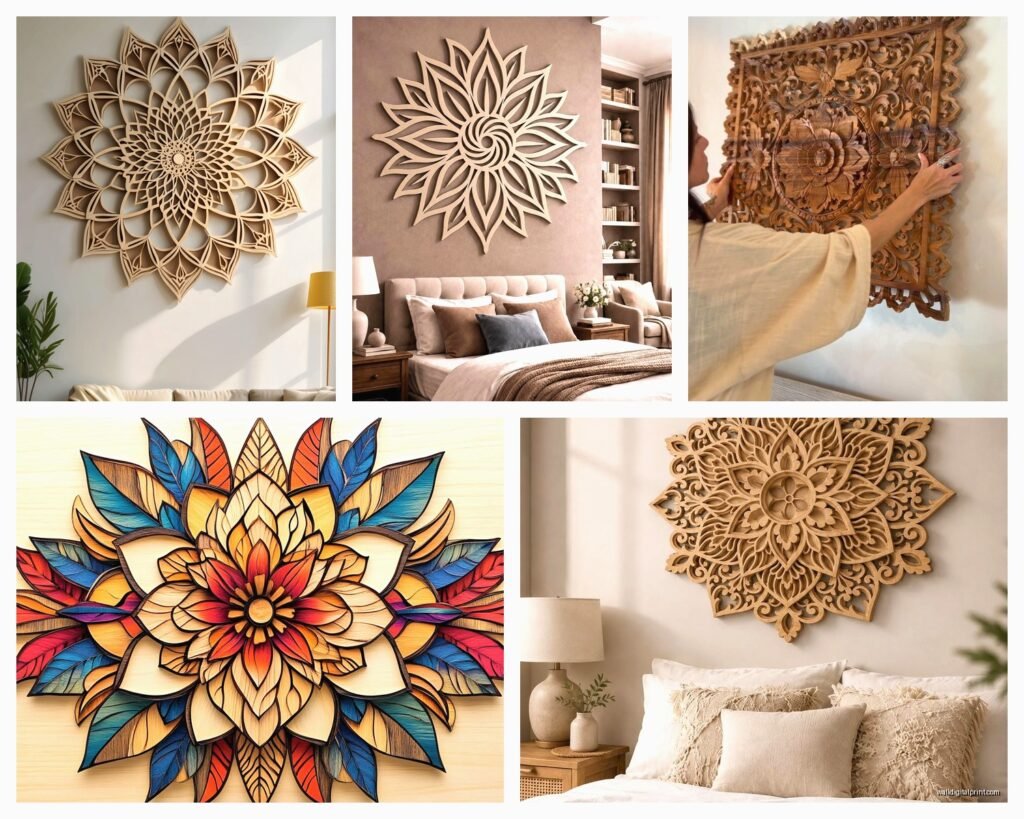
Wooden Mandala Wall Art: Carved Circular Sacred Geometry
Aug
So I’ve been absolutely obsessed with wooden mandala wall art lately and honestly it started because a client wanted something “spiritual but not too woo-woo” for their meditation corner and I fell down this rabbit hole of carved sacred geometry that I’m still not out of.
What You’re Actually Looking At When You Shop
Okay so first thing – not all wooden mandalas are created equal and I learned this the hard way. You’ve got your laser-cut ones which are super precise and clean, then hand-carved which have way more character but can be pricey, and then there’s CNC carved which is like the middle ground. I spent like three hours one night (my dog was giving me serious side-eye) comparing these and here’s what actually matters:
The laser-cut ones are usually thinner, like 1/4 inch plywood or MDF. They’re lightweight which is great for renters who can’t put big holes in walls, but they can look a bit flat. The detail is insane though – you can get these super intricate patterns with tiny cutouts that would be impossible by hand.
Hand-carved are typically thicker, you’re looking at 3/4 inch to 2 inches of solid wood. They have this depth and texture that catches light differently throughout the day which is actually gorgeous. But yeah, they’re heavier and more expensive. I have one in my office that’s teak and it was like $200 but I still stare at it during Zoom calls.
CNC carved is where I usually point people because you get machine precision with actual depth. The router carves into solid wood so you get those shadow lines and dimension without the hand-carved price tag.
Wood Types Matter More Than You’d Think
This is gonna sound weird but I can now identify wood types from across a room and I’m not sure if that’s a flex or just sad. Anyway:
Birch plywood – super common for laser cuts, takes stain well, affordable. It’s light colored so it works in basically any space. Nothing special but totally reliable.
Walnut – dark and dramatic, doesn’t even need stain. I used a walnut mandala in a client’s bedroom with white walls and it was like *chef’s kiss*. Pricey though, like 2-3x more than birch.
Teak – my personal favorite for hand-carved pieces. It’s got natural oils so it ages really well and that golden-brown color is just warm without being orange-y. Also it’s durable as hell.
Mango wood – you’ll see this a lot in imported pieces, especially from India. It’s sustainable which is cool, has nice grain variation, but it can be softer so check that the carving is deep enough that it won’t chip easily.
MDF – okay so everyone’s gonna hate me for this but some MDF mandalas are actually fine if they’re well-made and finished properly. They’re cheap, they won’t warp, and if you’re just testing out the look before committing, why not? Just make sure it’s sealed because MDF and humidity are enemies.
Size Is Tricky and I Keep Getting It Wrong
Real talk – I have returned SO many pieces because they looked way different in my head. That “24 inch diameter” mandala? It sounds big but it’s actually pretty modest on a large wall.
Here’s what I tell people: measure your wall space, then subtract like 8 inches from what you think you want. Most people go too small. A 36-inch mandala sounds massive but on a king-sized bed headboard wall it’s actually perfectly proportioned.
I did a 48-inch one in my living room and my sister was like “that’s too much” but now she wants one for her place so. The bigger pieces have more impact and honestly the intricate patterns need that size to really show the detail.
For small spaces like entryways or bathrooms, the 18-24 inch range works. I have a tiny carved mandala in my powder room that’s maybe 16 inches and it’s a nice little moment without overwhelming the space.
Placement Ideas That Actually Work
Above the bed is obvious but try going off-center if you have asymmetrical nightstands – it looks more intentional and less hotel-room.
Behind a dining table on the long wall creates this cool focal point. I did this with a gold-leafed mandala and people always ask about it.
In corners – wait this sounds random but if you have an awkward corner, a mandala draws the eye up and makes it feel purposeful instead of like you didn’t know what to do with the space.
Layered with other art – okay so funny story, I accidentally leaned a mandala against the wall on a console table behind some other frames and it looked so good I just left it there. Sometimes not hanging it is the move.
Finishes and Colors Because Natural Isn’t Your Only Option
Natural wood is beautiful and safe but there’s so much more you can do. I’ve been experimenting with:
White-washed or limewashed – gives you that boho beachy vibe, softens the geometry a bit. Works really well in all-white or neutral spaces where natural wood might feel too heavy.
Black stain – modern and graphic, especially good with lighter woods where you still see the grain through the black. Very different energy than natural.
Metallic paints – gold, copper, bronze. I was skeptical but a copper-painted mandala in a navy blue room is stunning. Just make sure it’s actual metallic paint not just spray paint because the quality difference is huge.
Ombre effects – seen these going from dark to light and it adds movement to the piece. More artistic than traditional but if that’s your vibe.
Partially painted – like natural wood with just the outer ring painted, or alternating sections. Creates more visual interest than solid color.
How to Actually Hang These Things
This is where people mess up including me the first time. These aren’t regular frames.
For lightweight laser-cut pieces under 2 pounds, command strips work fine. I use the large picture hanging strips, usually two sets for anything over 12 inches. They’re great for renters and actually hold really well.
Medium weight stuff needs proper picture hangers. The ones rated for 20-30 pounds are your friend. Most carved mandalas come with a sawtooth hanger on the back but I usually add D-rings because they’re more secure and you can adjust level easier.
Heavy hand-carved pieces – you’re using wall anchors or finding studs. I have a 3-inch thick carved mandala that weighs like 15 pounds and it’s going into studs with proper screws, no shortcuts.
The leveling trick nobody tells you: these are circles so your eye catches if they’re off even slightly. I use a laser level now (like $20 on Amazon) because trying to level a circle with a regular level is gonna make you crazy. Or have someone stand back and tell you when it looks right.
Some pieces look better slightly off-center or hung higher than standard art height. The sacred geometry thing means they don’t follow normal rules – trust your eye more than measurements.
Where to Actually Buy Them
Etsy is honestly the best for variety and you can find both mass-produced and artisan pieces. Search for “wooden mandala wall art” but also try “carved wood mandala” or “sacred geometry wood art” because sellers tag stuff differently. Read the reviews and check if they show the mounting hardware.
I’ve found really good pieces on Wayfair and Overstock, especially if you want something quick with free returns. Their photos are usually pretty accurate size-wise.
Local art fairs and craft markets – if you want hand-carved, this is where you’ll find artisans who actually make them. Yeah it’s more expensive but you can see the piece in person and talk to the maker about custom sizes or woods.
Import stores and world market type places often have mango wood mandalas from India that are hand-carved and way more affordable than US-made. Quality varies but I’ve gotten some winners.
Instagram and small business websites – there are woodworkers who specialize in this stuff and their work is incredible. More expensive but if you want something really special or custom.
Custom vs Ready-Made
I’ve done both and here’s my thing – ready-made is fine for most people. You get it faster, it’s cheaper, and there are tons of beautiful options.
But custom is worth it if you have specific requirements like weird size constraints, want particular wood to match existing furniture, or need specific sacred geometry patterns. I had a client who wanted a mandala that incorporated specific symbols and we found an artist who designed it custom – took 6 weeks and cost like $400 but it’s literally one of a kind.
Custom also makes sense if you want a really large piece. Most ready-made tops out around 48 inches but I’ve seen custom ones up to 6 feet that are absolutely stunning as statement pieces.
Caring for Wood Mandalas
They’re pretty low maintenance honestly. Dust them like regular art – I use a soft brush or microfiber cloth. For deeper cleaning maybe twice a year, barely damp cloth and dry immediately.
If it’s unsealed wood, you can oil it occasionally with furniture oil or even food-grade mineral oil. Makes the grain pop and keeps the wood from drying out. I do this with my teak piece maybe once a year.
Keep them out of direct sunlight if possible because wood can fade or darken unevenly. Also not in super humid spaces like right above a shower – the wood can warp.
If you painted or stained yours, just treat it like painted wood furniture. No special care needed beyond dusting.
Mixing Mandalas with Other Decor
This is where it gets fun – mandalas don’t have to be the only thing on your wall. I’ve created gallery walls with a mandala as the centerpiece and smaller frames around it. Works surprisingly well if you keep a consistent color palette.
They also layer great with mirrors, especially round mirrors. I did a mandala with a convex mirror in front of it at different depths and the reflection creates this cool infinity effect.
With plants – hanging or placing a mandala near large leafy plants emphasizes both the natural wood and the organic patterns. My monstera is like right next to my living room mandala and it just works.
In minimalist spaces they provide that one decorative element you need without cluttering things up. The geometry is interesting enough to carry a whole wall.
In bohemian or maximalist spaces they fit right in obviously but try going bigger than you think – a small mandala gets lost among all the other stuff.
Common Mistakes I’ve Seen
Going too matchy-matchy with wood tones – your mandala doesn’t need to exactly match your furniture wood. Actually contrast often looks better.
Hanging it too high – these aren’t meant to be up at the ceiling line. Eye level or slightly above works for most spaces.
Buying really intricate patterns in dark wood for dark walls – you lose all the detail. Either go lighter wood, lighter walls, or simpler patterns.
Not considering the room’s existing geometry – if you have a lot of geometric patterns already (tile, rugs, artwork), adding a complex mandala might be too much. Sometimes a simpler design works better.
Forgetting about lighting – these pieces need light to show the carved depth and shadows. In a dim corner they just look flat. Consider adding a picture light or placing them where natural light hits.
Oh and another thing – some people worry they’re too trendy or will look dated. Honestly sacred geometry has been around for thousands of years so I’m not worried about a mandala looking dated the way like a 2015 farmhouse sign does. The design is pretty timeless if you choose a quality piece.
Anyway that’s basically everything I’ve learned through trial and error and probably too many late-night Etsy browsing sessions. They’re really versatile pieces once you figure out what works for your space and honestly they add this contemplative quality that regular art doesn’t quite achieve. My meditation corner is never gonna be complete but the mandala definitely helps.