Wall Art Guide, Wall Art Tutoriels
Extra Large Wall Art: Oversized Statement Pieces Guide

May
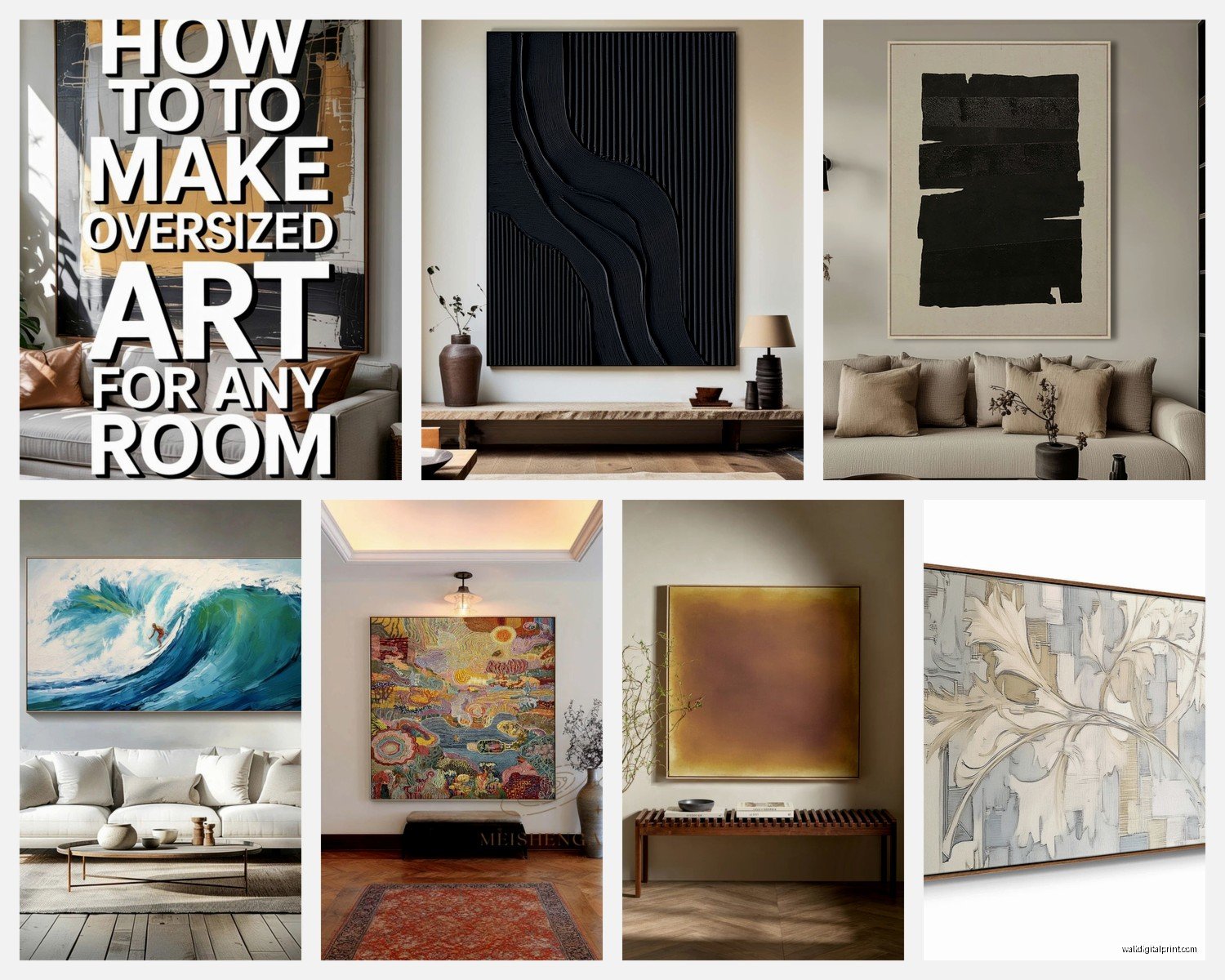
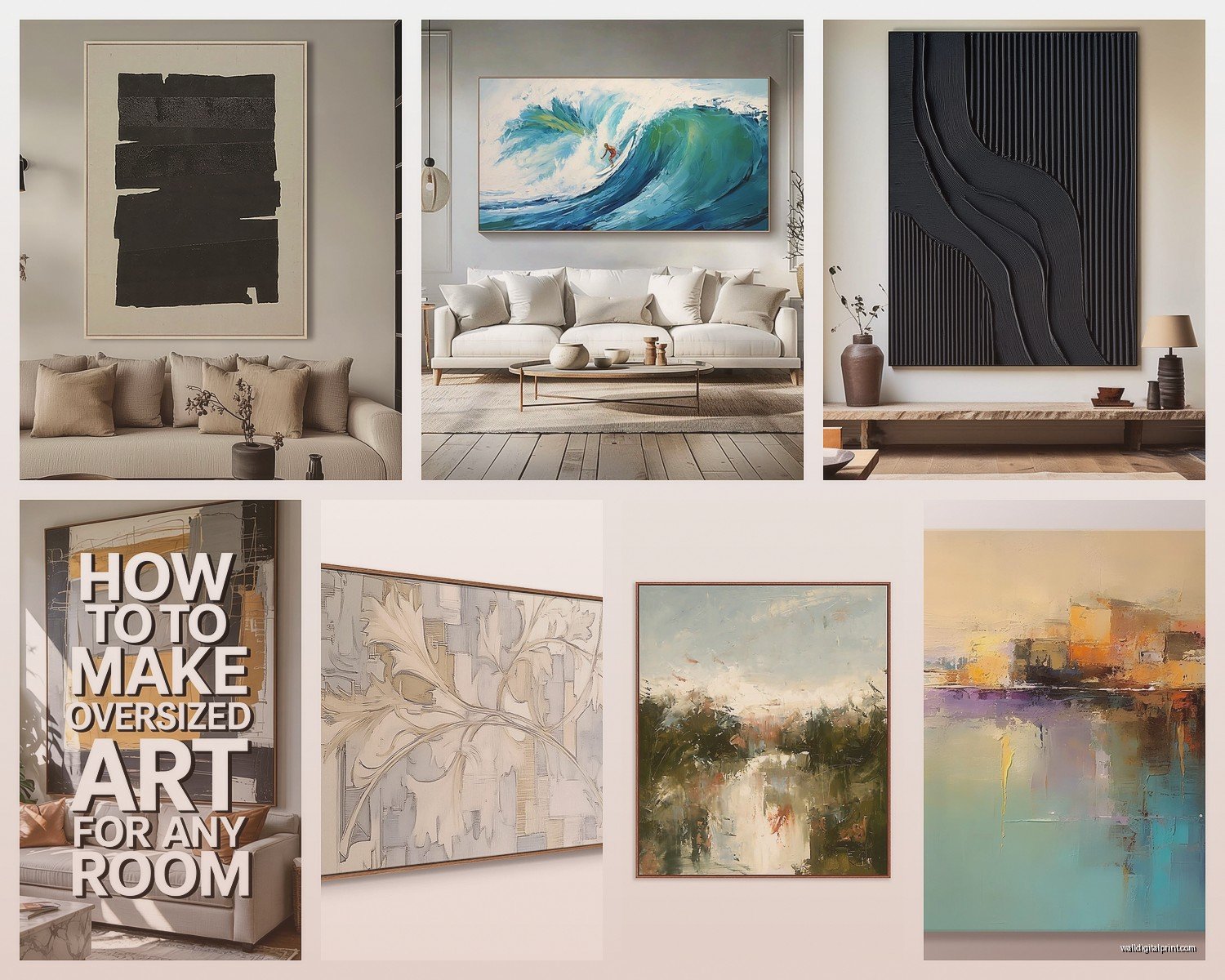
So I just hung this absolutely massive 6-foot canvas in my living room last week and honestly? It completely changed everything I thought I knew about decorating with oversized art. Like, I’ve been doing this for years but there’s something about going REALLY big that just hits different.
The Whole “How Big is Too Big” Question
Okay so first thing everyone asks me is how do you even know what size to get. And look, the traditional rule is your art should be like 2/3 to 3/4 the width of your furniture piece, right? But with extra large wall art we’re talking about pieces that are 40+ inches in ANY direction, and honestly sometimes you just gotta throw the rulebook out. I had a client who was SO worried about a 72×48 inch piece being too big for her dining room and once we hung it she literally texted me at like 11pm being like “why didn’t we go bigger” so.
For reference, I’m talking about pieces that are:
- 40-60 inches on the smaller end of “extra large”
- 60-80 inches for truly oversized
- 80+ inches for the “holy crap” category
The trick I use now is I tape out the dimensions on the wall with painter’s tape before ordering ANYTHING. Sounds obvious but you’d be shocked how many people skip this step and then panic when the delivery arrives.
Where These Actually Work Best
Living rooms are the obvious choice but wait I forgot to mention – high ceilings change everything. If you’ve got 9+ foot ceilings you can go absolutely massive and it’ll look intentional rather than overwhelming. My own living room has 10-foot ceilings and that 6-foot piece I mentioned? Could’ve honestly gone bigger.
Bedrooms are tricky because you’re viewing the art while lying down half the time which is a completely different angle. I learned this the hard way when I hung a 60-inch abstract piece above my bed and kept feeling like it was gonna fall on me at night. Had to move it to the wall opposite the bed and THEN it worked perfectly.
Dining rooms are actually my favorite spot for oversized art because you’re sitting at the table for extended periods looking at it. That’s prime art-viewing real estate. Plus something about a huge statement piece makes dinner parties feel more… I dunno, intentional? My friend has this enormous botanical print in her dining room and everyone always comments on it.
The Entryway Power Move
Oh and another thing – entryways or foyers with that one big blank wall? That’s where you can go absolutely wild with scale. It’s the first thing people see and it sets the tone for your entire house. I recently did a 70×50 inch piece in a client’s entryway and it’s literally all anyone talks about when they visit.
What Actually Looks Good at This Scale
So abstract art is kind of the safe bet for oversized pieces because there’s no “wrong” way to view it from a distance. Large color field paintings, geometric designs, that sort of thing. I’ve been obsessed with minimalist line drawings lately – when they’re huge they have this incredible impact without being overwhelming.
Photography can be amazing at large scale but you gotta make sure the resolution is there. Nothing worse than a pixelated giant photo. I always ask about the source file if I’m commissioning something.
Bold text or typography pieces work surprisingly well when they’re massive. Like a single word or short phrase blown up huge. Saw one that just said “BREATHE” in 80-inch letters and honestly it was perfect for a yoga studio I was styling.
Landscapes and nature scenes – okay this is gonna sound weird but – they need to be either REALLY detailed or very minimalist. The in-between doesn’t work as well at large scale. Either give me every single leaf in that forest or give me three brush strokes suggesting a mountain range.
The Actual Hanging Process (This is Important)
Right so my cat knocked over my drill case while I was writing this but anyway – hanging these monsters is not a one-person job. Trust me I tried with a 65-inch canvas and nearly put a hole in my wall in the wrong spot.
Hardware You Actually Need
- Heavy duty wall anchors if you’re not hitting studs (and you probably won’t be hitting them exactly where you need them)
- Multiple D-rings on the back of the frame – one wire is NOT enough for pieces over 50 inches
- French cleats for anything over 60 inches – seriously just do it
- A laser level because eyeballing it at this scale is a recipe for disaster
- An extra set of hands or three
I cannot stress the French cleat thing enough. It’s basically two pieces of wood or metal with angled edges – one mounts to the wall, one mounts to your art, and they lock together. SO much more secure than wire and hooks. My biggest pieces all use them now.
Weight distribution matters way more than you think. A 70-inch canvas might only weigh 25 pounds but that weight distributed across 6 feet of wall space creates different stress points than a small heavy frame. Physics is weird.
The Height Thing Everyone Gets Wrong
Standard rule is center the art at 57-60 inches from the floor which is like… gallery height or whatever. But with extra large pieces this can look weird because the bottom edge ends up too low or the top edge feels like it’s floating into the ceiling.
What I do now is I measure so the piece feels balanced in the wall space rather than following that center-point rule religiously. If you’ve got a 9-foot wall and a 6-foot piece of art, you want roughly even negative space top and bottom, not mathematical perfection.
Also consider your furniture. If you’re hanging above a sofa, leave 6-10 inches between the top of the sofa and the bottom of your art. With huge pieces this sometimes means hanging higher than the traditional 57-inch center point and that’s totally fine.
The Money Talk Nobody Wants to Have
Look, oversized art is expensive. There’s no way around it. Original pieces from established artists at this scale can run thousands to tens of thousands. Even prints get pricey because of materials and shipping costs.
But here’s what I’ve figured out after styling like 40+ homes – you have options:
Commission emerging artists – I’ve found amazing people on Instagram who’ll do custom 60-inch pieces for $800-1500. Way cheaper than galleries and you get exactly what you want.
Print shops that do large format – If you have a digital file or high-res photo you love, places like print-on-demand services can do museum-quality prints up to 80+ inches. The print itself might be $200-400 but then you gotta frame it which adds cost.
DIY canvas painting – Okay so funny story, my client canceled last month so I spent an afternoon at an art supply store and made my own 60×40 inch abstract piece for like $150 in materials. It’s not gallery-quality but it’s in my guest room and people always assume it’s expensive.
Textile wall hangings – Woven pieces, tapestries, macramé – these can be huge and often cost less than framed art. Plus they add texture which I’m really into right now.
Framing Considerations That’ll Save You Headaches
Most extra large pieces come on stretched canvas which means no frame needed – the edges are part of the art. This is actually ideal because framing something 70 inches wide gets crazy expensive and heavy.
If you DO want a frame, float frames are your friend. They sit around the canvas edge without adding much weight. But honestly at this scale I usually skip frames entirely unless it’s photography or a print that needs protection.
Acrylic face mounting is this thing where the print gets mounted behind clear acrylic – looks super modern and the acrylic protects the art. Works great for large format but adds significant cost and weight.
Shipping and Delivery Reality Check
Nobody warns you about this but shipping oversized art is A THING. It’s expensive and risky and you need to be home to receive it because these boxes are massive. I once had a 72-inch piece delivered and the box was literally too big to fit through my front door at an angle – had to unwrap it on the porch.
Always get insurance on shipping. Always. A $1200 canvas that arrives damaged is a nightmare.
Some artists ship pieces rolled in tubes if they’re not pre-stretched, then you get them stretched locally. Usually cheaper for shipping but then you’re paying for stretching which can run $200-500 depending on size.
Styling Around Oversized Art
The whole point of a statement piece is that it’s THE focal point, so you gotta let it breathe. This means:
Don’t cluster a bunch of small art around it – that defeats the purpose. Let the big piece anchor the wall solo.
Keep furniture relatively simple near it. If your art is super colorful and busy, maybe don’t put it behind your maximalist bookshelf situation.
Lighting matters SO much at this scale. I always add picture lights or position floor lamps to highlight large pieces. The shadows and depth make such a difference.
That said, you can totally layer if you do it right. A large piece with a small sculptural element on a console below it? That works. Just maintain visual hierarchy.
What If You Hate It After Hanging It
This happens more than people admit. Sometimes a piece that looked perfect in your mind just… doesn’t work once it’s up. The colors are wrong or the scale is actually too big or it clashes with something.
Give it a week before you panic. Seriously. Your eye needs to adjust to major changes. That piece I mentioned in my living room? I wasn’t sure about it for the first three days and now I can’t imagine the room without it.
If you still hate it, try moving it to a different room. Different lighting and surrounding colors can completely change how art reads.
Or embrace the gallery wall approach and surround it with medium pieces to reduce its dominance – though this kinda defeats the oversized statement vibe you were going for.
Reselling large art is honestly tough because shipping costs kill deals. Local pickup only listings are your best bet if you need to rehome something.
The Technical Stuff About Walls
Drywall can support surprisingly heavy pieces IF you use proper anchors. Toggle bolts or molly bolts rated for 50+ pounds each. Use multiple points of contact – like four anchors for a 40-pound piece rather than two.
Plaster walls are trickier and you might need a professional. Old plaster can crumble and doesn’t always hold anchors well.
Brick or concrete walls – you’re drilling with masonry bits and using concrete anchors. It’s doable but more labor intensive.
Studs are the gold standard but again, they’re never quite where you need them. If you can hit even one stud out of four mounting points, do it.
Mistakes I’ve Made So You Don’t Have To
Hung a massive piece without considering the door swing – the corner of the frame was literally in the way when the door opened fully. Had to move it 8 inches over.
Bought a piece online without checking dimensions carefully and ended up with something in centimeters that was WAY bigger than I thought. Read the specs twice.
Tried to hang a 65-inch piece by myself using a wire and two hooks. The wire snapped during installation and I almost lost a toe. Get proper hardware.
Didn’t account for vaulted ceilings making the piece look smaller than expected. Angles are weird.
Put a dark moody piece in a room with no natural light and it just disappeared into the wall. Lighting is not optional with art this size.
Oh and I once forgot to measure my stairwell before ordering a huge piece for the wall going upstairs – couldn’t get it around the corner without risking damage. Had to return it. Measure your pathways, not just your walls.
The piece I hung last week? Took 90 minutes with two people and we still had to adjust it three times to get it level. It’s worth the effort though because when you nail it, oversized art is literally the easiest way to make a space feel expensive and curated without doing much else.