Wall Art Guide, Wall Art Tutoriels
Contemporary Metal Wall Art: Modern Sculptural Designs
May
So I’ve been completely obsessed with metal wall art lately and honestly it started because I walked into this client’s house and they had the most boring beige walls and I was like…we need something with actual dimension here. Not another canvas print, you know?
Why Metal Wall Art Actually Works When Other Stuff Doesn’t
Okay so here’s the thing about metal pieces that nobody really talks about. They catch light differently throughout the day and that’s like…free decor changes? My own living room has this copper geometric piece and in the morning it’s basically glowing, then by afternoon it’s completely different. You’re getting like three looks for one purchase which my budget-conscious brain loves.
The sculptural aspect is huge too. Flat art just sits there but metal work comes OFF the wall and creates actual shadows. I did a whole bedroom makeover last month where we used this abstract wave design in brushed steel and the shadows it threw on the wall were honestly better than the piece itself.
What Actually Looks Good vs What Looks Cheap
Not gonna lie, there’s SO much terrible metal art out there. Like those mass-produced tree silhouettes that every HomeGoods has? Skip those. Here’s what I look for:
- Actual depth and layering – multiple metal sheets at different distances from the wall
- Hand-finished edges, not just laser-cut and done
- Weight – if it feels flimsy in your hands it’ll look flimsy on your wall
- Intentional patina or finish, not just sprayed one color
The best pieces I’ve found are usually from smaller makers on Etsy or local metal workers. Yeah they cost more but like…you’re putting this on your wall for years hopefully. I bought a cheap one from Target once (we’ve all been there) and returned it the same day because it looked like a craft project gone wrong.
Sizing is Gonna Make or Break This
Oh man I’ve made this mistake so many times. Everyone goes too small. Your wall can handle WAY more scale than you think.
For above a sofa, you want something that’s roughly 2/3 the width of the sofa. I know that sounds huge but trust me. I just installed a 48-inch wide metal sunburst thing above my client’s couch and she was nervous about the size but now she’s like “why didn’t we go bigger” which…I tried to tell her.
If you’re doing a gallery wall situation with multiple metal pieces, leave like 3-4 inches between them. Metal needs breathing room more than framed art does because of those shadows I mentioned. Too close together and it just looks cluttered and the sculptural effect gets lost.
Where to Actually Put These Things
Living room is obvious but here’s where metal art really shines that people don’t think about:
Dining rooms: The reflective quality makes candlelight dinners actually magical. I put this bronze abstract piece in my own dining area and when we have people over everyone comments on how the candlelight bounces off it.
Entryways: You want something that makes an immediate impression and metal does that. Plus it’s durable if you’ve got kids throwing backpacks around or whatever.
Bathrooms: Wait hear me out. If you get powder-coated or sealed metal it’s totally fine with humidity. I have a small copper piece in my bathroom and it’s held up perfectly for two years.
Outdoor spaces: Covered patios and stuff. Just make sure it’s specifically rated for outdoor use. Corten steel is great for this because it develops that rusty patina that’s actually protective.
The Style Thing Everyone Overthinks
Okay so you’re probably wondering what style even works with your existing furniture and honestly? Metal is weirdly versatile. I’ve put modern geometric pieces in traditional spaces and it works because the contrast is interesting.
Geometric and Abstract Designs
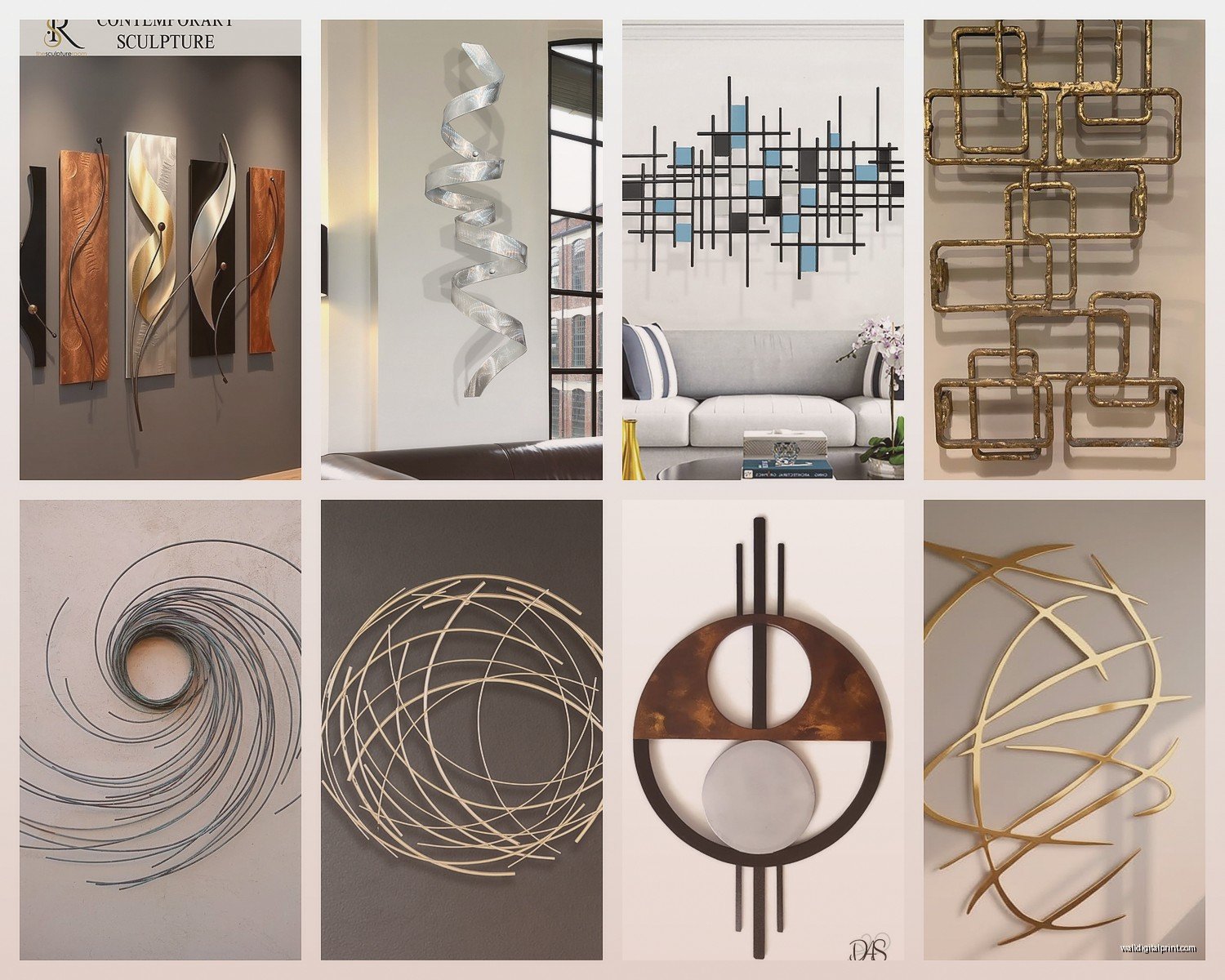
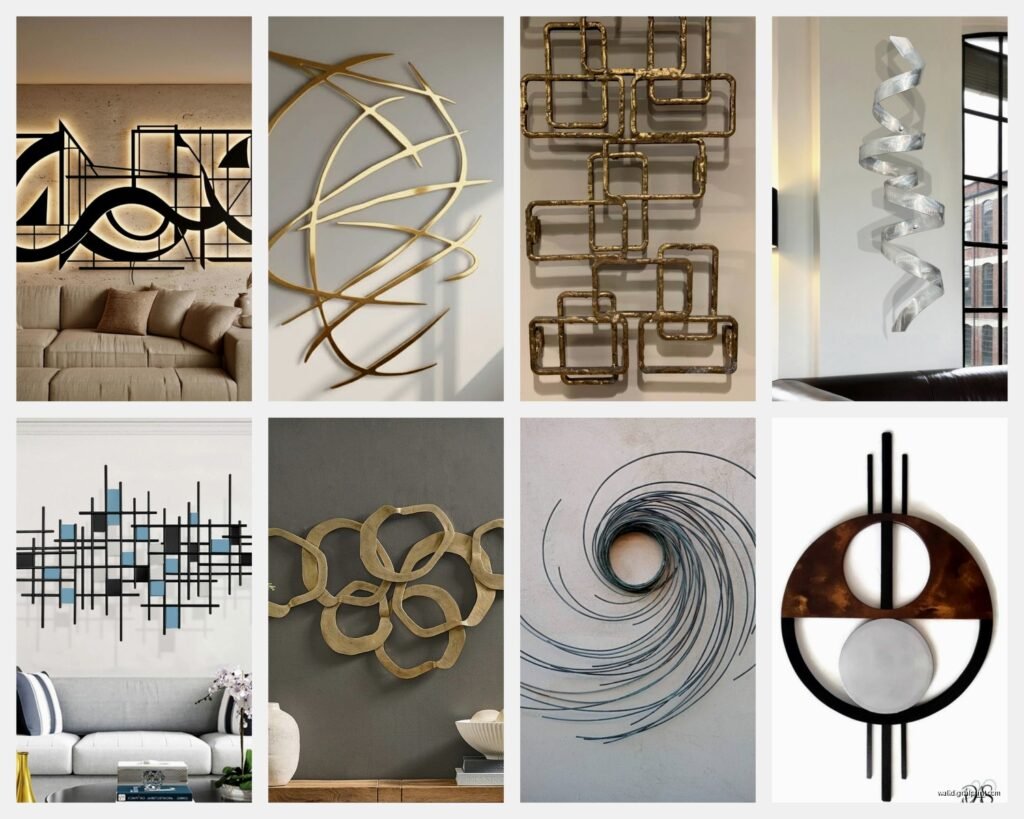
These are my go-to for modern and contemporary spaces obviously. Think circles, hexagons, intersecting lines. The key is picking something that has visual movement even though it’s static. I’m really into pieces that look different from different angles right now.
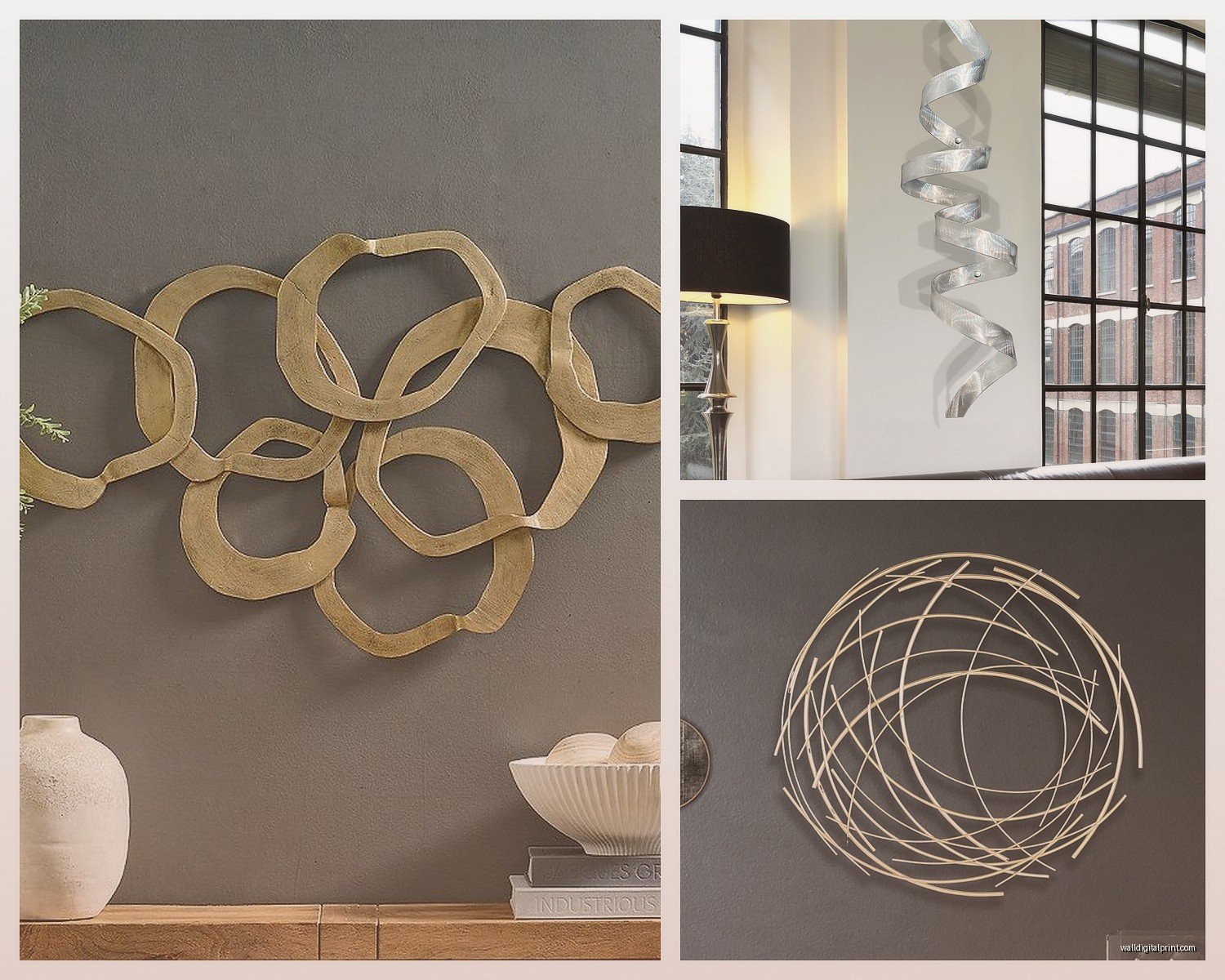
There’s this one designer…I’m blanking on the name but they do these layered circle designs where each ring is a different metal finish. Brass, copper, steel all together. It sounds like it would be too much but it’s actually really sophisticated.
Nature-Inspired Stuff That Doesn’t Look Cheesy
The trick with botanical metal art is going abstract enough that it doesn’t look like you’re trying to bring the outdoors in or whatever. Avoid anything too literal. I like pieces that suggest leaves or branches without actually being recognizable as specific plants.
Metal feathers can be gorgeous if they’re done with enough detail and texture. I used a set of three oversized metal feathers in a bedroom last year and the client still sends me photos of how they look in different lighting.
Industrial and Minimalist Pieces
If you’re into the industrial look (exposed brick, concrete, that whole vibe), raw steel or iron pieces with minimal finishing are perfect. Don’t overthink it. Sometimes it’s just interesting shapes in bare metal and that’s enough.
I’m watching this show about furniture restoration right now and it’s making me want everything to look more industrial but anyway…
Installation Reality Check
This is where people mess up the most. Metal art is HEAVY. Like actually heavy. You can’t just use a regular nail.
What You Actually Need
- Heavy-duty wall anchors if you’re not hitting studs
- A level (sounds basic but I’ve seen so many crooked installations)
- Painter’s tape for marking placement before you commit
- Somebody to help you hold it while you check the positioning
For anything over 15 pounds you really should be using wall anchors rated for at least double the weight. I use these toggle bolt anchors that can hold like 50 pounds in drywall and they’ve never failed me.
My cat knocked over my coffee while I was installing a piece last week and I had to clean that up before finishing but the point is…take your time with this part. Rushing installation is how you end up with holes you need to patch.
The Hanging Hardware Situation
Most metal art comes with D-rings or sawtooth hangers on the back. D-rings are better for heavier pieces because the weight distributes more evenly. If it comes with sawtooth hangers and it’s heavy, I literally remove them and install D-rings myself.
For really large pieces, consider using two hanging points instead of one centered point. It keeps the piece more stable and prevents tilting over time.
Mixing Metals Without Looking Confused
Okay so this is actually fine to do but there’s a method. You can totally have copper, brass, and steel in the same room but you need to repeat each finish at least twice. So if you have a copper metal wall piece, maybe your lamp base is copper too. Or your cabinet hardware. Something.
The worst thing you can do is have one random metal finish that appears nowhere else. It just looks like you didn’t plan it which…maybe you didn’t but we don’t need to advertise that.
Finishes That Work Together
Warm metals: Copper, brass, gold, bronze. These all play nice together and create a cohesive warm tone.
Cool metals: Steel, silver, chrome, iron. Same deal, they work as a family.
Mixed: You can bridge warm and cool with pieces that incorporate both, like that designer I mentioned earlier with the multi-metal rings.
Maintenance is Actually Super Easy
This is gonna sound weird but metal art is way easier to care for than framed prints or canvas. No glass to clean constantly, no worry about fading from sunlight.
For most finishes you just dust it occasionally with a microfiber cloth. If it gets actually dirty (like in a kitchen where grease happens), warm water and mild soap on a soft cloth works fine. Just dry it completely after.
If you have raw or unsealed metal that’s developing patina and you LIKE that look, leave it alone. If you don’t like it, there are metal polishes but honestly I think the patina adds character. I have this iron piece that’s gotten darker and more textured over time and I love it more now than when I bought it.
Budget Reality
Let’s talk money because this stuff ranges from like $30 to thousands. You don’t need to spend a fortune but you do need to spend enough to get quality.
Under $100: Look for smaller pieces (under 24 inches), probably from larger retailers. Quality will be hit or miss. Good for testing the look before committing to something bigger.
$100-300: This is the sweet spot honestly. You can get really nice pieces from independent artists, good size, quality materials and finishing.
$300+: Custom work, large scale installations, really intricate designs. Worth it if you have the budget and it’s going in a prominent spot.
I’ve found amazing deals at local art fairs and studio sales. Sometimes artists have pieces they made for shows that didn’t sell and they’ll discount them. My favorite piece in my house was $150 marked down from $400 because it had been in the artist’s studio for a year.
Where to Actually Shop
- Etsy for supporting independent makers and custom sizing
- West Elm and CB2 have decent modern options, a bit pricey but good quality
- Local metal workers if you have fabrication studios near you
- Art fairs and craft markets for unique pieces
- Even some pieces on Amazon are okay if you read reviews carefully
Avoid those websites that are basically just dropshipping from alibaba. You can usually tell because the same image shows up on multiple sites with different prices.
Color and Finish Choices
Natural metal finishes are having a moment right now and I’m here for it. Brushed brass, aged copper, raw steel…they all add warmth without being too shiny or formal.
Painted metal can work too but make sure the paint is actually well-applied. Powder coating is more durable than spray paint. I’ve seen too many painted pieces where the paint chips off within months.
Black metal is super versatile and works with literally everything. It’s a safe choice if you’re nervous about committing to a specific metal tone. I probably use matte black metal art more than any other finish just because it’s that reliable.
Oh and another thing, some pieces have LED backlighting now which sounds gimmicky but can actually be really cool in the right space. I used one in a media room and the ambient glow behind the metal created this whole moody atmosphere.
Common Mistakes I See Constantly
Hanging it too high. The center of the piece should be at eye level, which is usually around 57-60 inches from the floor. Unless you’re putting it above furniture, then different rules apply.
Choosing something too trendy. Metal art is an investment so pick something you’ll still like in five years. That trendy arrow design everyone had in 2018? Nobody wants those anymore.
Not considering the wall color. Dark metal on dark walls can disappear. Light metal on light walls same problem. You need contrast or the piece gets lost. I learned this the hard way with a steel piece on a gray wall that basically vanished.
Forgetting about the surrounding space. Your metal art needs empty wall space around it to breathe and cast those shadows properly. Don’t crowd it with other decor.
Anyway I think that’s everything I’ve learned from installing probably hundreds of these at this point. The main thing is just getting something with actual substance and quality, sizing up more than you think you should, and installing it properly so it doesn’t fall on anyone’s head. You’re gonna love how it transforms your space.