Wall Art Guide, Wall Art Tutoriels
Vintage Wall Art: Retro Antique Nostalgic Classic Designs
Jun
So I’ve been kinda obsessed with vintage wall art lately and honestly it started because I walked into this estate sale last month while my dog was at the groomer and found this insane collection of old travel posters from the 1950s. Changed my whole perspective on how to make a room feel like it has actual history without looking like a grandma’s attic exploded everywhere.
Finding the Right Pieces Without Getting Scammed
Okay first thing – you gotta know what you’re actually looking for because “vintage” means different things to different sellers. True vintage is usually 20+ years old, antique is 100+ years. But here’s the thing nobody tells you: most of what you’ll find online marketed as “vintage wall art” is just reproduction prints made to look old. Which is FINE if that’s what you want and the price reflects it, but don’t pay $200 for something that was printed last week in a warehouse in New Jersey.
I always check a few things when I’m hunting:
- The backing and frame condition – real vintage pieces have old hardware, maybe some dust buildup in corners that looks undisturbed
- Paper quality if it’s a print – genuinely old paper has this specific feel and sometimes slight yellowing that’s hard to fake convincingly
- Printing techniques – look for things like letterpress marks, halftone dot patterns from old printing methods
- Provenance if possible – any story about where it came from
Estate sales and actual antique shops are gonna be more reliable than Etsy for authentic stuff, though I’ve found some legit pieces on Etsy too from sellers who clearly know what they have. Just read those descriptions really carefully.
What Actually Works on Modern Walls
Here’s where I see people mess up constantly – they find gorgeous vintage pieces but don’t think about scale or how they’ll work with contemporary furniture. I had a client who bought this beautiful set of botanical prints from the 1920s but they were tiny, like 8×10, and she wanted to hang them in this massive living room with 12-foot ceilings and it just… didn’t work until we reframed them with substantial mats and grouped them in a grid.
The styles that I keep coming back to:
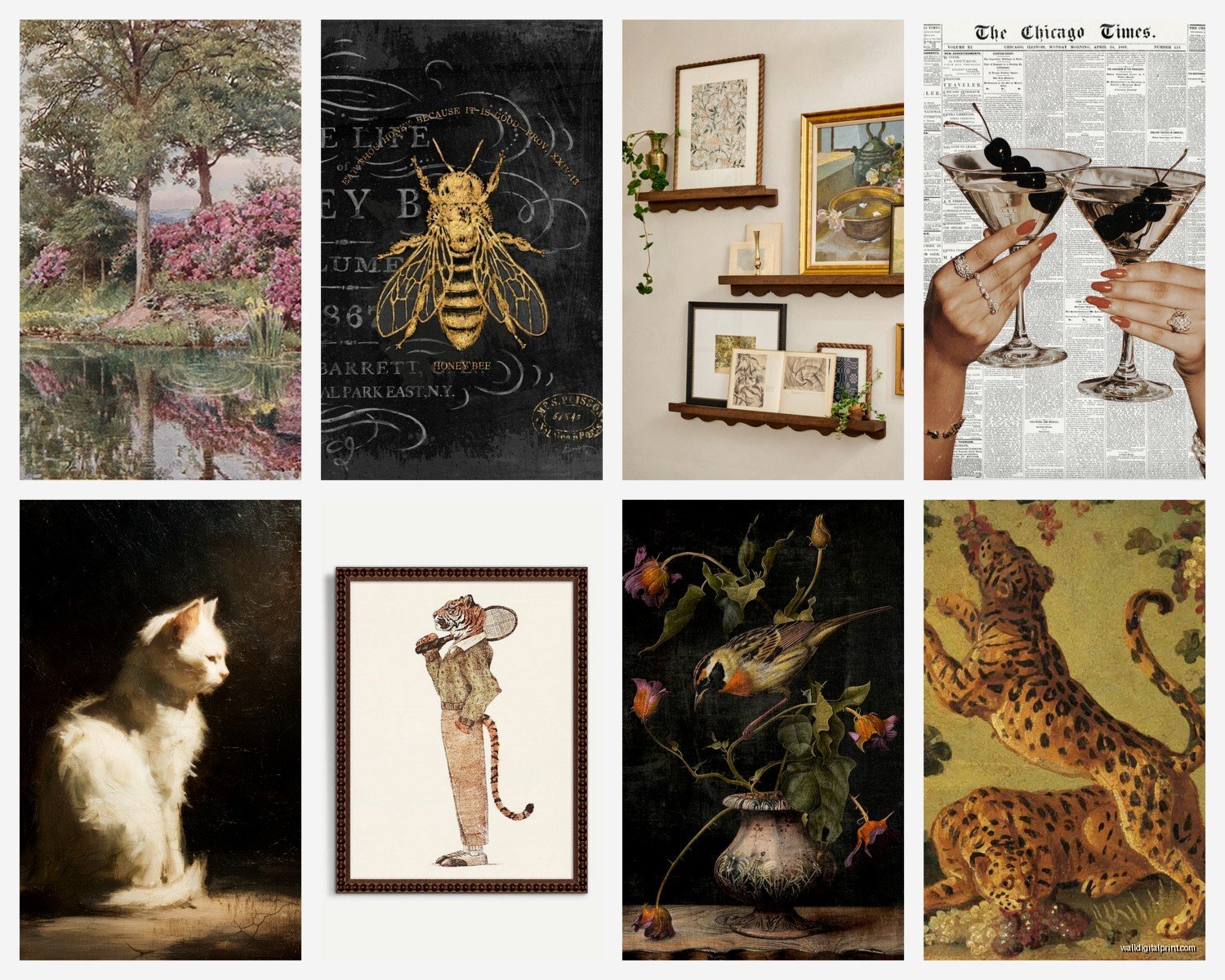
Mid-century travel posters – These are probably my favorite because they have this optimistic, colorful vibe that somehow works in almost any room. Think old airline advertisements, national park posters, cruise line stuff. The colors are usually still vibrant enough that they don’t feel drab. I used a vintage “Visit Switzerland” poster in a client’s home office and it completely transformed the space without requiring any other changes.
Architectural drawings and blueprints – Super versatile, work in modern or traditional spaces. The neutral tones mean they won’t clash with your existing color scheme. I’ve got a set of 1940s architectural renderings in my own hallway and people always ask about them.
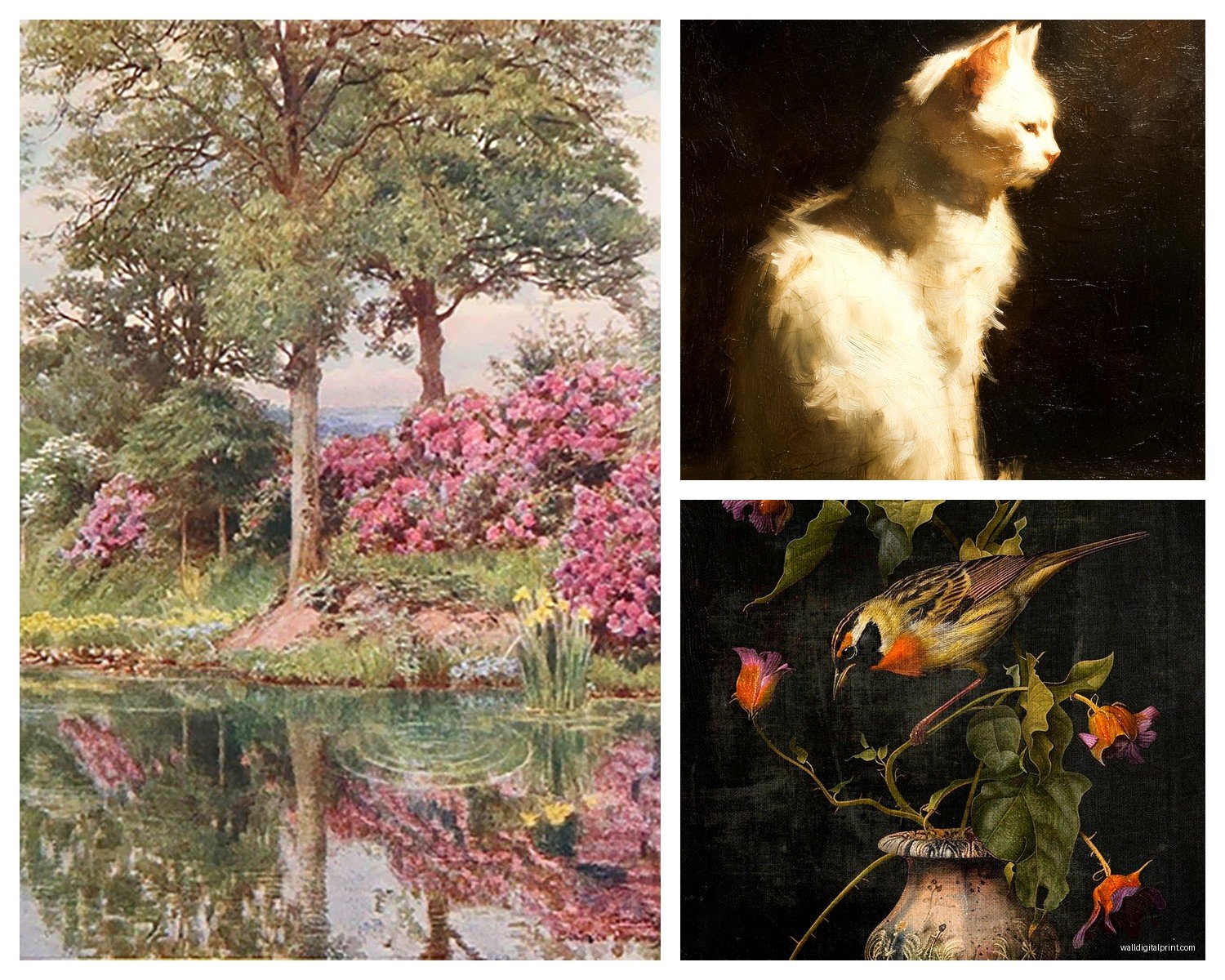
Botanical and natural history prints – Classic for a reason. Victorian-era botanical illustrations especially have this precise, scientific quality that feels both vintage and weirdly contemporary. They work great in kitchens, bathrooms, bedrooms.
Old advertising and product posters – This is gonna sound weird but vintage Coca-Cola or automobile advertisements can be really cool if you don’t go overboard. Like one statement piece, not a whole wall of them unless you’re actually trying to create a diner aesthetic.
Maps and nautical charts – Always a winner. Old maps have this instant sophistication thing going on. Just make sure they’re maps of places that have some meaning to you or your space, not just random because it looked cool.
The Framing Situation
Oh and another thing – framing is where you’ll probably spend the most money and it matters SO much. I learned this the hard way when I bought this gorgeous 1960s abstract lithograph at a flea market for $35 and then spent $180 getting it properly framed. But it was worth it because the frame makes or breaks how vintage art reads in a space.
You’ve got a few options:
Keep original frames if they’re in decent shape – sometimes that aged wood or tarnished gilt adds to the authenticity. I usually clean them up, make sure they’re stable, maybe touch up obvious damage. But if the frame is falling apart or has that orange-y varnish from the 80s that’s just ugly, replace it.
Use simple modern frames for a cleaner look – this is what I do most often honestly. A simple black or natural wood frame lets the vintage artwork be the star without competing. It also helps the piece feel more intentional and less “I just hung up my grandmother’s leftovers.”
Museum-style matting – if you’re working with smaller prints, substantial mats (like 3-4 inches) make them feel more important and easier to see from across a room.
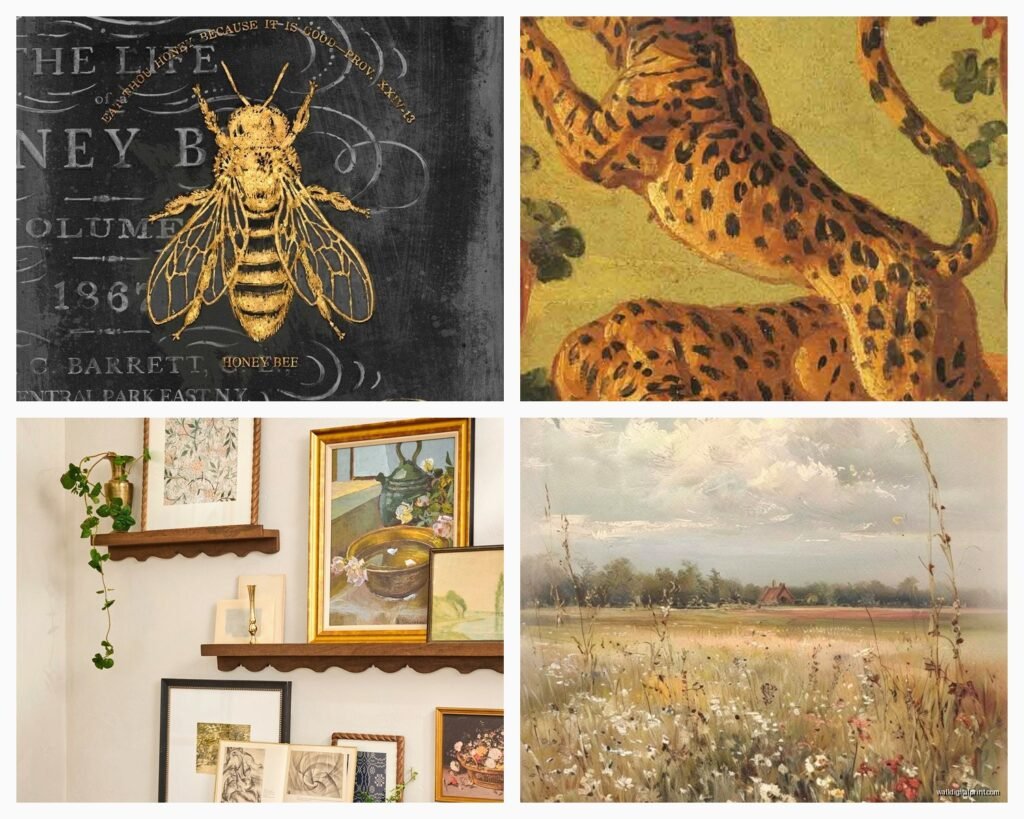
Gallery walls with mixed frames – this can work but you gotta have a good eye for it. I usually keep all the frames in the same color family even if the styles vary.
Where to Actually Hang This Stuff
Okay so placement is everything. I’ve been binge-watching this restoration show on Netflix while working on layouts and it reminded me how much location affects preservation too, not just aesthetics.
Living rooms – Above the sofa is obvious but make sure whatever you hang there is substantial enough. A single large vintage poster (like 24×36 or bigger) or a curated grouping of smaller pieces. I love doing a horizontal arrangement of three similar pieces – like three vintage national park posters in a row.
Dining rooms – This is where food and beverage advertising posters work great, or botanical prints. Keep them high enough that they’re not in the splash zone if you’re messy eaters. The wall across from where you sit is usually the focal point.
Bedrooms – More subtle vintage art works better here usually. Soft landscapes, botanical prints, abstract pieces from the 50s-70s. I avoid anything too stimulating or with jarring colors because bedrooms should be restful and all that.
Hallways and stairs – Perfect for collections or gallery walls. This is where you can go a bit more experimental because people are just passing through. I did a whole stairwell with vintage black and white photography from different decades and it’s become this cool timeline effect.
Bathrooms – Smaller vintage prints work great, just be aware of humidity. I usually frame bathroom art with glass and make sure there’s decent ventilation. Nautical stuff, vintage soap advertisements, botanical prints of plants that like moisture.
Home offices – Vintage maps, architectural drawings, old patent illustrations, retro typography posters. Stuff that’s interesting to look at during Zoom calls but not distracting.
Mixing Vintage Art with Your Existing Style
Wait I forgot to mention – you don’t need to commit to a fully vintage aesthetic for this to work. Actually some of the best interiors I’ve styled mix vintage art with contemporary furniture and it creates this layered, collected-over-time feeling that you just can’t get from buying everything new.
If your space is very modern and minimal, vintage art adds warmth and personality. Go for pieces with cleaner lines – mid-century modern posters, abstract art from the 60s-70s, simple botanical prints. Avoid anything too ornate or fussy.
If your space is already traditional, you can push it more interesting with unexpected vintage pieces. Like instead of the predictable landscape painting, try a vintage advertising poster or abstract lithograph from the 70s.
Scandinavian/minimalist spaces look amazing with vintage botanical prints or architectural drawings – the neutral tones and precise lines complement that aesthetic perfectly.
Bohemian or eclectic spaces can handle more variety – mix different eras, styles, colors. This is where you can get away with that collection of mismatched vintage finds and make it look intentional.
Color Coordination Without Being Matchy-Matchy
I’m not big on everything matching perfectly because that feels staged and boring. But there should be some color conversation happening between your vintage art and the room.
Pull one accent color from the artwork and repeat it somewhere in the space – a throw pillow, a vase, whatever. This creates cohesion without being obvious about it. I had this vintage French aperitif poster with this amazing teal color and we brought in teal velvet curtains and suddenly the whole room felt intentional.
Or go the opposite direction and use vintage art to introduce a pop of color in an otherwise neutral space. A vibrant travel poster on a white wall with neutral furniture can be really striking.
Caring for Actual Vintage Pieces
If you’re investing in real vintage or antique art, you gotta take care of it properly. Direct sunlight is the enemy – it’ll fade colors and damage paper over time. I learned this when a client’s beautiful 1940s poster got completely washed out in like six months because it was opposite a west-facing window. Now I always recommend UV-protective glass if the piece is valuable or irreplaceable.
Keep them away from heat sources and humid areas. That bathroom art I mentioned earlier? Use reproductions or less valuable pieces, not your rare finds.
Dust frames regularly but gently – microfiber cloths work great. Don’t use cleaning products directly on vintage frames, especially if they’re gilt or have delicate finishes.
If something needs restoration, find a professional. I tried to “fix” a torn corner on a vintage map once with regular tape and… yeah, don’t do that. There are paper conservators who can do actual proper repairs.
Budget-Friendly Ways to Get the Look
Okay real talk – not everyone wants to spend hundreds on original vintage pieces and that’s totally fine. There are ways to get that nostalgic aesthetic without breaking the bank.
High-quality reproductions from museum shops or sites like Library of Congress have tons of vintage images you can download and print. Get them printed on good paper at a local print shop and frame them nicely – it’ll look way better than those cheap canvas prints everyone has.
Thrift stores and flea markets are goldmines if you’re patient. I probably find something good maybe one out of every five times I go, but when you score, you SCORE. Last month I found a set of 1950s bird prints for $12 total.
Estate sales on the last day when they’re trying to clear stuff out – this is when you can negotiate. I got a whole box of vintage postcards and small prints for $20 once because it was the final hour and they didn’t wanna pack it up.
Facebook Marketplace and Craigslist can be surprisingly good, especially if you search terms like “old paintings” or “vintage frames” – sometimes people don’t know what they have.
Print your own from vintage sources – there are entire archives online of public domain vintage art. Rawpixel, Smithsonian Open Access, NYPL Digital Collections. Download high-res images and get them printed professionally.
Common Mistakes to Avoid
Hanging things too high – the center of your artwork should generally be at eye level, which is around 57-60 inches from the floor. I see people hang stuff way too high all the time and it throws off the whole room.
Buying something just because it’s old – not everything vintage is worth displaying. Be selective and choose pieces you actually connect with, not just because they have a good patina.
Overcrowding – especially with gallery walls, give pieces room to breathe. I usually keep 2-3 inches between frames minimum.
Ignoring the undertones – if your space has warm undertones (yellows, oranges, reds in the wood, fabrics, etc.), vintage art with cool undertones might feel off and vice versa. Not a hard rule but something to consider.
Forgetting about proportion – that tiny print is gonna disappear on your massive wall. Scale matters more than people think.
Mixed lighting that doesn’t work – vintage art often looks best with warm, soft lighting. Harsh overhead lights or cool-toned LEDs can make old paper look dingy. I usually recommend picture lights or adjustable track lighting if the piece is a focal point.
Oh and another thing – don’t feel like you need to fill every wall immediately. I’d rather see one or two really great vintage pieces displayed well than a bunch of mediocre stuff crammed everywhere. Collections can grow over time and that actually makes them more interesting, like you’ve been curating them for years which… you have.
The whole point of vintage wall art is that it should feel personal and collected, not like you ordered a “vintage gallery wall set” from some big box store. Take your time finding pieces that actually mean something to you or at least make you happy when you look at them. That’s what makes a space feel like yours.