
Wall Art Guide, Wall Art Tutoriels
Tree of Life Metal Wall Art: Symbolic Sculptures & Designs
Jun
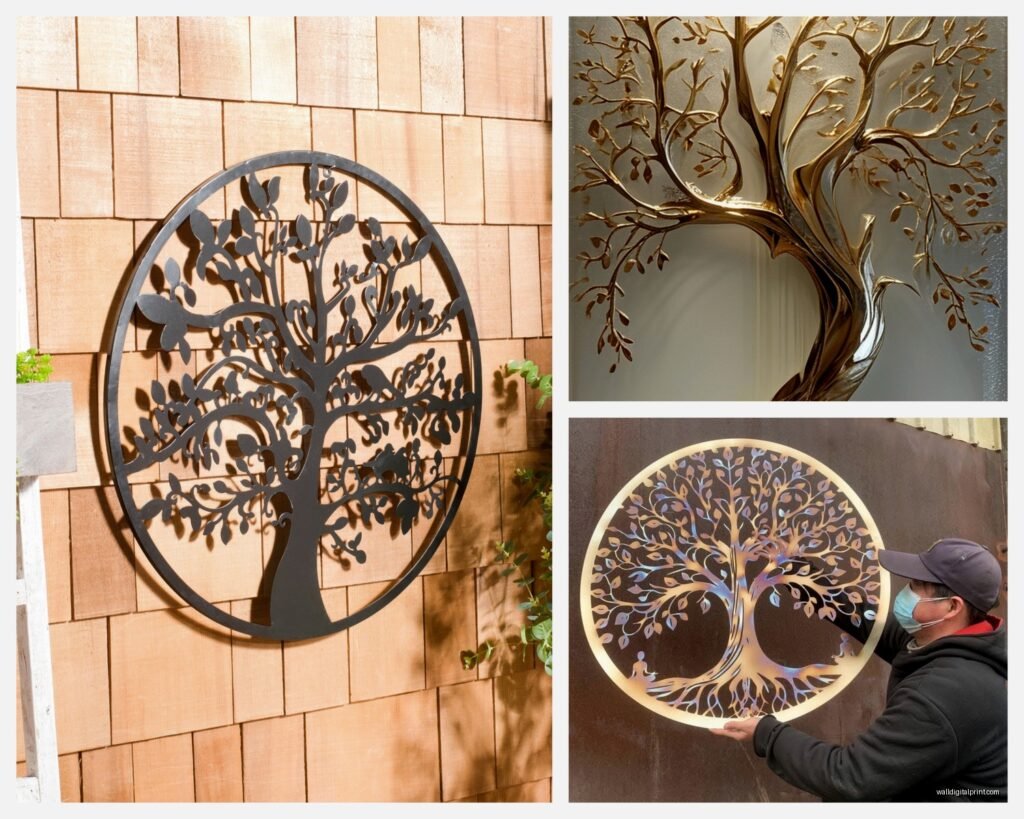
So I’ve been obsessing over tree of life metal wall art lately and honestly it started because a client asked me to find something for this weird blank wall in her hallway and I went down this whole rabbit hole. Let me tell you what I actually learned because there’s SO much to consider.
Sizing This Thing Without Making Your Room Look Ridiculous
Okay so the biggest mistake everyone makes is going too small. I did this in my own living room like three years ago and it just looked sad, like a little decorative afterthought floating on this massive wall. Here’s what actually works:
For above a couch or bed, you want your metal tree to be about two-thirds the width of your furniture. So if your sofa is 90 inches, you’re looking at something around 60 inches wide. I know that sounds huge but trust me. I tested this with painters tape first (game changer, do this before you buy anything) and the bigger size just reads better from across the room.
Hallways are trickier because they’re narrow. You don’t want something that sticks out more than like 2-3 inches from the wall or people will bump into it. The flat laser-cut designs work better here than the 3D sculptural ones. I found this out the hard way when my dog’s tail kept hitting this elaborate bronze piece I hung near our kitchen entrance and it made this annoying rattling sound every single time.
Material Differences That Actually Matter
This is gonna sound boring but the metal type changes everything about how it looks in different lighting. I’ve worked with most of them at this point:
Wrought iron pieces are heavy and traditional-looking. They photograph really dark, almost black, but in person they have this subtle texture that catches light. Good for farmhouse or rustic spaces. Bad for modern minimalist rooms where they just look clunky.
Brushed steel or aluminum stays lighter and has that contemporary vibe. These are what I use most often because they work in more settings. The finish doesn’t show fingerprints as much which matters if you have kids who touch everything. My niece literally touched every part of my wall art last Christmas and the brushed finish hid it completely.
Copper or bronze with patina develops this gorgeous aged look over time. Some pieces come pre-aged which I actually prefer because then you know what you’re getting. The natural aging process is unpredictable and depends on your humidity levels. I had one client whose copper tree turned this amazing green-blue color in her bathroom from all the steam, but another client’s stayed pretty much the same for two years in a dry climate.
Powder-coated options let you get basically any color. I used a teal one in a coastal-themed bedroom and it was perfect. The coating protects against rust too which is important for outdoor installations or humid rooms.
Design Styles and What They Actually Communicate
The symbolism is beautiful and all that but practically speaking, different tree designs fit different room personalities:
Celtic knotwork trees have all these intricate interwoven branches and roots. They’re busy visually, so they need breathing room. Don’t put them on a gallery wall with tons of other stuff. I learned this when I tried to incorporate one into a photo wall and it just competed with everything else. These work best as solo statement pieces on a single-color wall.
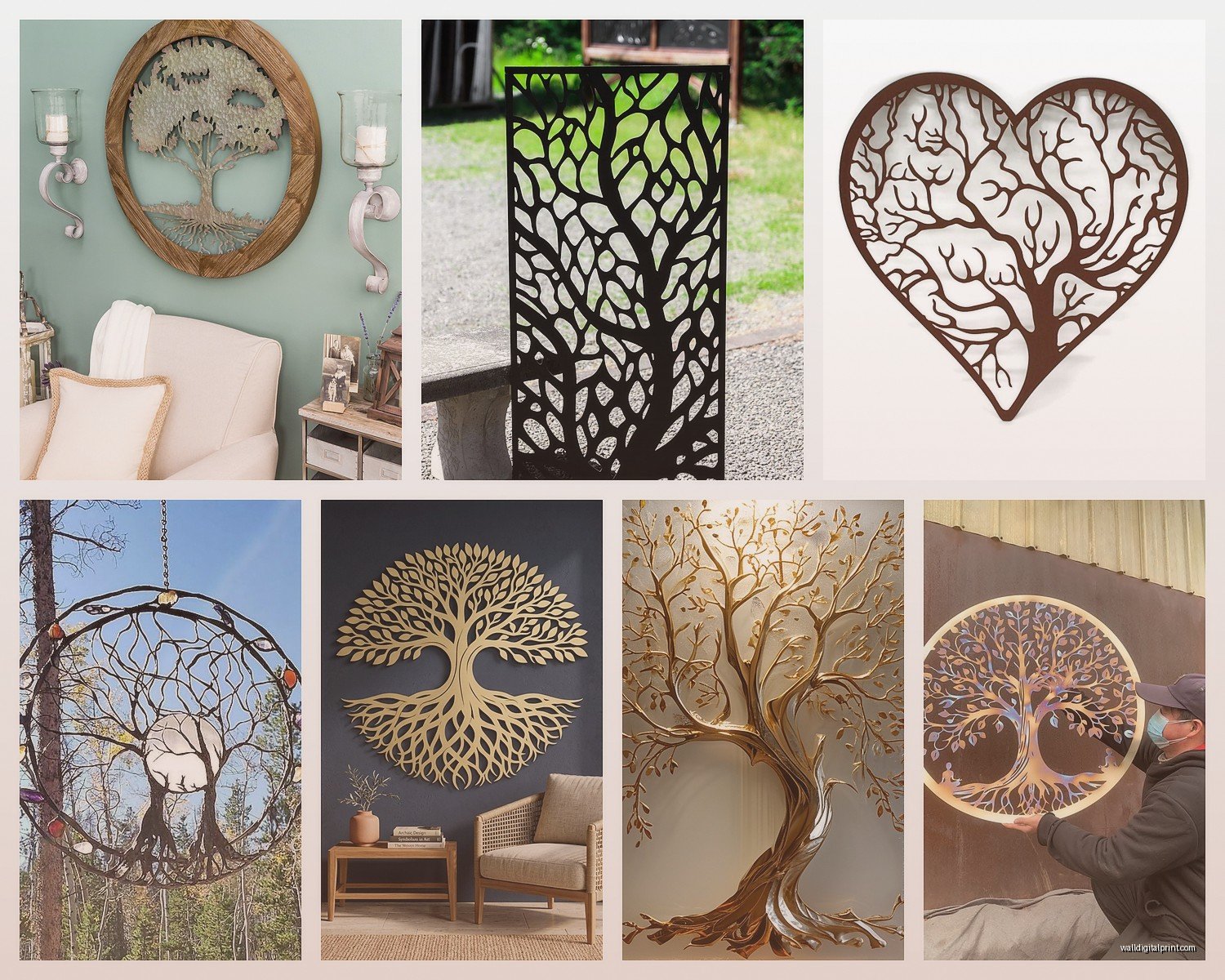
The minimalist silhouette trees are just the outline, super simple. These are versatile as hell. You can layer them over wallpaper, put them on textured walls, group multiples together. I have three small ones in my office arranged in a cluster and it looks way more interesting than one large piece would have.
Abstract geometric trees made from metal shapes and lines read as modern art. They’re good conversation starters. I used one in a lawyer’s office and clients always asked about it. If you want something that looks expensive and curated, go this route.
Traditional realistic trees with detailed leaves and branches can look either really elegant or kinda cheesy depending on the execution. The handmade ones with individually attached leaves are stunning but cost way more. The mass-produced stamped versions… I mean they’re fine for a rental or temporary space but they don’t have the same impact.
Color and Finish Combos I’ve Tested
Wait I forgot to mention this earlier but the color of your wall makes a HUGE difference. Like, massive.
Dark walls (navy, charcoal, forest green) need lighter metal finishes or you lose all the detail. I used a black tree on a dark gray wall once and you literally couldn’t see it until you were like three feet away. Total fail. Go with silver, gold, copper, or white powder-coat on dark walls.
Light walls (white, cream, light gray) can handle darker metals. This is where wrought iron really shines. The contrast is dramatic without being harsh.
Colored walls are where it gets fun. I did a burnt orange wall with an oil-rubbed bronze tree and it was *chef’s kiss*. Complementary colors work better than matching exactly. So a blue-green wall with a copper tree, or a warm beige with a dark bronze.
Lighting Considerations Nobody Talks About
Oh and another thing – where your light sources are positioned changes how the tree looks throughout the day. Metal is reflective so:
If you have a window to the left of your tree, the right side will be in shadow and create this cool dimensional effect. I actually position pieces specifically for this sometimes.
Overhead lighting flattens everything out. You want side lighting or adjustable spotlights if you’re serious about showcasing the piece. I installed two small picture lights angled at a tree in my dining room and it completely transformed it.
Backlighting is trendy right now, putting LED strips behind the metal so it glows around the edges. It looks amazing in photos but honestly it’s a pain to install and the LEDs need replacing eventually. Only do this if you’re committed to the maintenance.
Installation Tips From Someone Who’s Hung Like 50 of These
Okay so funny story, the first tree I ever hung fell off the wall at 2am and scared me so badly I thought someone broke in. Turns out I used regular drywall anchors for a 15-pound piece. Don’t do that.
For anything over 10 pounds, you need to hit studs or use heavy-duty anchors. I use the toggle bolt kind that expand behind the drywall. Most tree designs have multiple hanging points which is good for weight distribution but annoying because you gotta get them all level.
Here’s my actual process:
- Hold the piece against the wall and have someone else stand back to confirm the position looks right
- Mark the top hanging point with pencil
- Use a level to mark the other hanging points – this takes forever but it’s worth it
- Drill pilot holes and install anchors or locate studs with a stud finder
- Hang the piece and step back to check it from multiple angles
The checking from multiple angles thing is crucial. Something can look level when you’re standing directly in front of it but wonky from the doorway where most people will actually see it.
For outdoor installations, you need rust-resistant hardware. Stainless steel screws and anchors. And honestly, bring outdoor pieces in during winter if you live somewhere with harsh weather. The freeze-thaw cycle is brutal on metal art.
Styling Around the Tree Without Overdoing It
This is where people get weird and add too much stuff. The tree of life is already symbolic and meaningful and visually complex, so you don’t need to go crazy with the surrounding decor.
I usually keep it simple:
A console table underneath with maybe a plant and one or two objects. Not a whole forest of plants, just one substantial one. I like snake plants or fiddle leaf figs because they echo the organic tree shape without being too literal.
If you’re doing a gallery wall situation, the tree should be the largest piece and everything else should be smaller and simpler. Mostly black and white photos or simple line drawings. Let the tree be the star.
For mantels, I’ll put a tree above and keep the mantel styling minimal. Candles, maybe some books, but not tons of knickknacks competing for attention.
In bedrooms, a tree above the bed works great with simple bedding. Like solid colors or subtle textures. Busy patterned comforters clash with the intricate metalwork.
Room-Specific Applications That Actually Work
Living rooms are obvious but I’ve used these successfully in:
Bathrooms – smaller pieces in powder-coated finishes that won’t rust. Above the toilet or on a large empty wall. Adds visual interest without taking up floor space.
Home offices – behind your desk for Zoom backgrounds. I cannot tell you how many compliments I get on mine during video calls. It looks professional but personal.
Entryways – first impression piece. Medium-sized works best, you want people to notice it but not feel overwhelmed the second they walk in.
Dining rooms – on the wall opposite windows so it catches natural light during meals. Creates a focal point that’s more interesting than the standard mirror or painting.
Outdoor patios – this is underutilized. A weather-resistant tree on an exterior wall turns a boring patio into an actual designed space. Just make sure it’s rated for outdoor use.
Price Ranges and What You Actually Get
I’ve bought these from like $40 to $800 and there’s definitely a difference:
Under $100 pieces are usually mass-produced, thinner gauge metal, simpler designs. They’re fine for rentals or if you’re just testing out the look. The finishes can be uneven and they’re lighter weight which sometimes looks cheaper in person.
$100-300 range is the sweet spot for most people. Better craftsmanship, more design options, thicker metal that feels substantial. This is what I recommend for main living spaces.
$300-600 gets you handmade or limited edition pieces. The detail work is noticeably better. Individually welded branches, hand-applied patinas, unique designs you won’t see everywhere.
Over $600 is custom or artist-made. Only worth it if you’re really committed to having something one-of-a-kind or supporting a specific artist. I have one client who commissioned a custom piece incorporating her family tree dates and names worked into the branches – that was like $1200 but it’s an heirloom now.
Maintenance Because Yes These Need Some Care
Metal art collects dust like crazy. I dust mine every couple weeks with a microfiber cloth or a soft brush attachment on the vacuum. For intricate designs with lots of small branches, compressed air works great.
If the finish starts looking dull, you can use furniture polish on most finishes. Test a small hidden area first though. Some patinas are meant to look matte and polish will ruin the effect.
For outdoor pieces, I spray them down with a hose seasonally and check for rust spots. If you catch rust early, you can sand it lightly and touch up with a matching spray paint or clear sealant.
Wall discoloration can happen behind metal art, especially if it’s close to the wall surface. Every year or so when I’m deep cleaning, I take mine down and check the wall behind it. Usually just needs a quick wipe down but sometimes there’s a faint outline from dust buildup.
Where to Actually Buy Quality Pieces
I’ve had good luck with Etsy for unique handmade options. You can message sellers directly about custom sizing or finishes which is super helpful. Read reviews carefully and look at customer photos not just the listing photos.
Wayfair and Overstock have tons of options in the mid-price range. The descriptions are usually detailed about dimensions and weight which helps. Return policies are decent if something doesn’t work out.
Local metal artists and craft fairs are underrated sources. The quality is usually excellent and you can see pieces in person before buying. Plus you’re supporting local makers which feels good.
Home goods stores like Kirkland’s, HomeGoods, and Hobby Lobby rotate their inventory constantly. I’ve found amazing deals on clearance but you gotta act fast because once it’s gone, it’s gone.
For outdoor-rated pieces, specialty garden stores have better selections than general home decor places. They understand weather resistance and can give actual advice about what holds up.
Honestly I’m still finding new sources all the time. My latest obsession is this metalworker in Arizona who does these incredible minimalist designs but her wait list is like 6 months… might be worth it though.
Anyway, that’s basically everything I wish someone had told me before I started working with tree of life metal art. It’s one of those decor elements that can either elevate a space completely or just look like you bought something trendy without thinking it through. The key is really just being intentional about size, placement, and not overdoing the surrounding decor.
