Wall Art Guide, Wall Art Tutoriels
Coastal Metal Wall Art: Beach-Inspired Sculptures
Jun
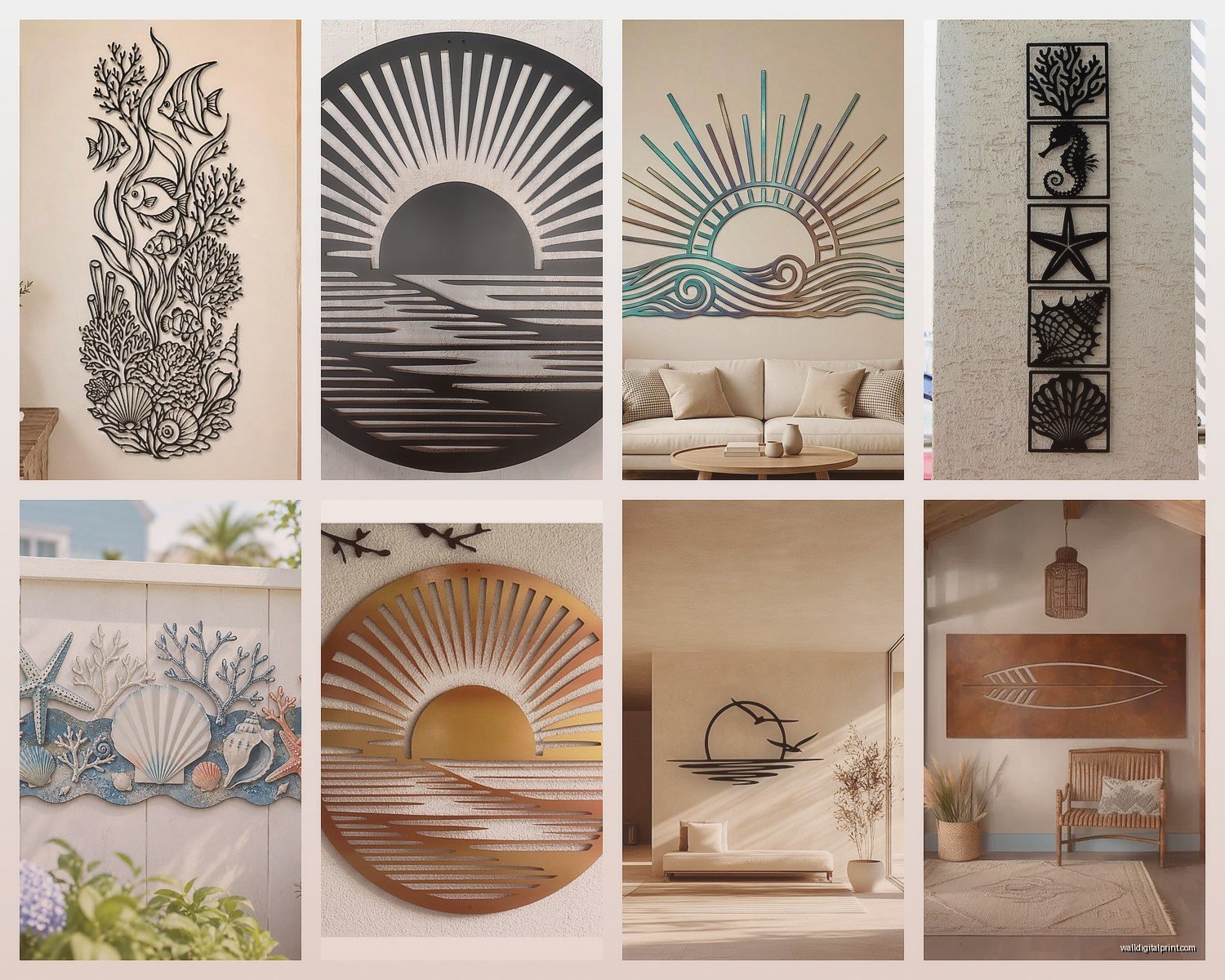
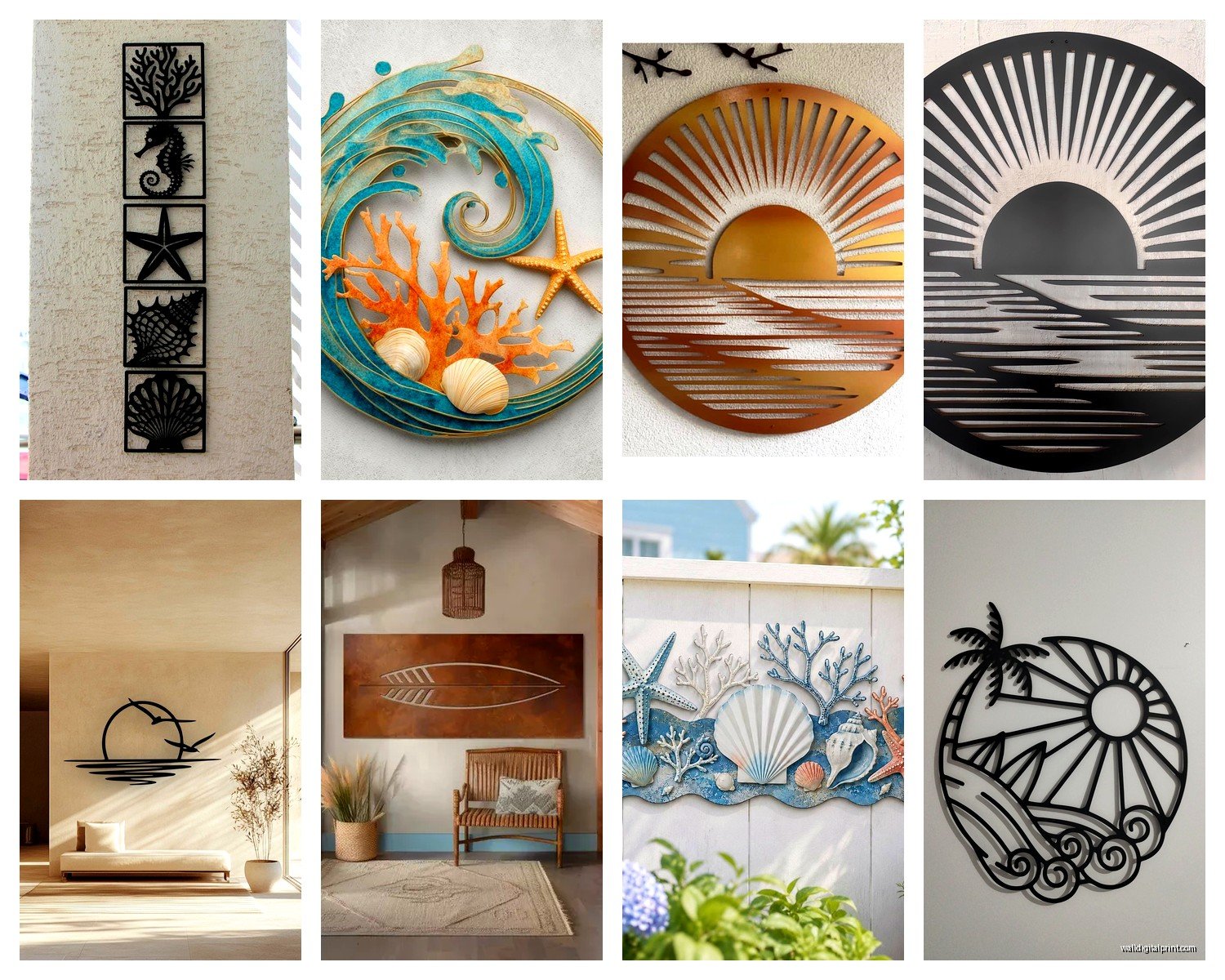
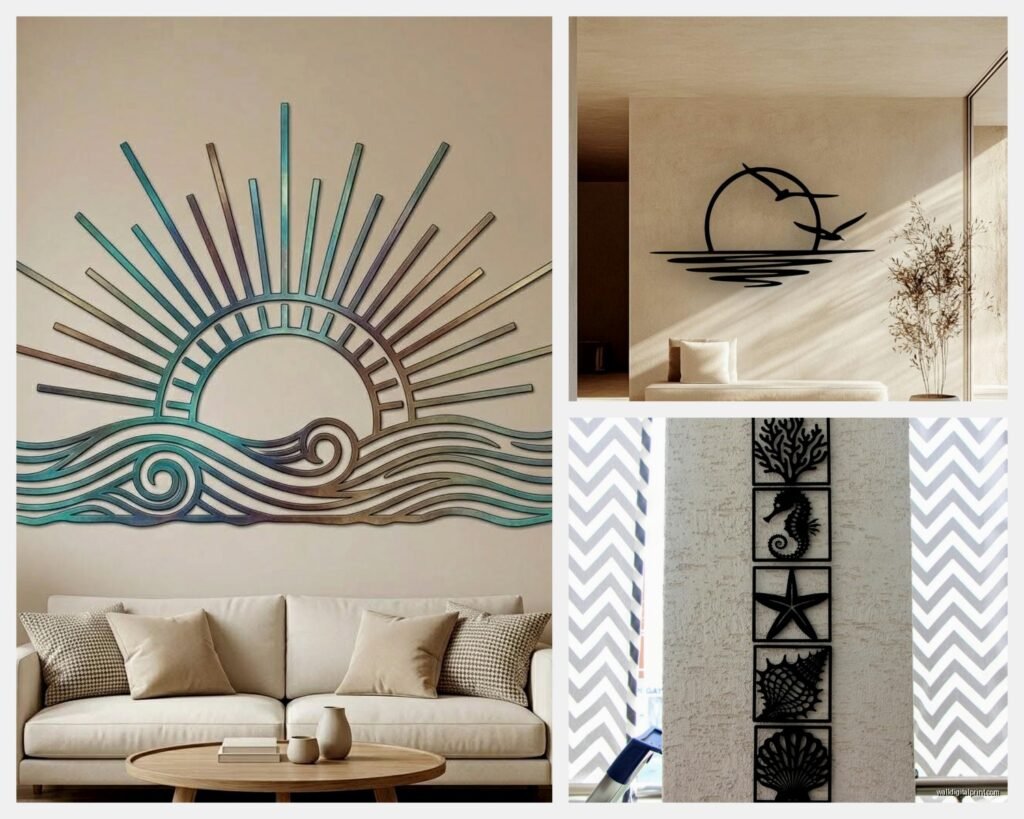
So I’ve been absolutely obsessed with coastal metal wall art lately and honestly it started because a client wanted to redo their beach house but didn’t want the whole “live laugh love by the sea” vibe, you know? Like they wanted something with actual edge but still felt beachy and that’s when I fell down this whole metal sculpture rabbit hole.
Why Metal Actually Works Better Than You’d Think
Okay so here’s the thing about metal wall art for coastal spaces – it sounds counterintuitive right? Like shouldn’t we be doing driftwood and rope and all that? But metal has this industrial weathered thing going on that actually complements the whole beach aesthetic way better than you’d expect. Plus it doesn’t get all gross and musty like fabric or wood can in humid coastal areas. I learned this the hard way when my sister’s canvas beach print literally grew mold in her Outer Banks rental.
The patina on aged metal pieces especially… it mimics that weathered beach fence look or old boat hardware. I’ve got this copper jellyfish piece in my own hallway (nowhere near a beach but whatever) and it’s developed this gorgeous green-blue oxidation that looks like sea glass.
What Actually Looks Good vs What Looks Like A TJ Maxx Clearance Section
Not gonna lie, there’s SO much terrible coastal metal art out there. Like those flat cutout anchors that look like someone traced a clip art image? Hard pass. Here’s what I’ve found actually works:
Dimensional Pieces Are Everything
You want sculptures that have actual depth and shadow play. Flat cutouts just look cheap no matter how much you spend on them. Look for pieces where the metal is bent, layered, or has different planes. I found this amazing sea turtle at a local artist’s studio where the shell segments were all at slightly different angles and it catches light completely differently throughout the day.
Mixed Metals Can Be Incredible
Don’t be scared of combining like copper with steel or brass accents. There’s this octopus piece I keep recommending (I think it’s from a company called Hestia Creations or something similar?) that has copper tentacles with steel suction cups and it’s just *chef’s kiss*. The different metals age at different rates too which adds more visual interest over time.
Scale Matters More Than You Think
This is where everyone messes up including me initially. That piece that looks substantial in the store photos? It’s gonna look like a postage stamp on your actual wall. For a main focal point you want something at least 30-36 inches in one direction. I usually tell people to cut out paper templates before buying which sounds annoying but I’ve saved myself from so many returns doing this.
Placement That Doesn’t Look Staged
Okay so funny story – I was watching this design show while eating leftover thai food at like 11pm and they were doing this whole segment on gallery walls and I realized everyone does coastal art wrong. They center everything perfectly and it looks like a hotel lobby.
The Off-Center Thing
Try hanging your main metal piece off-center above a console table or sofa. Like if your couch is 84 inches, hang the sculpture so it’s centered over just one cushion section. Sounds weird but it creates this relaxed asymmetry that feels more collected than decorated.
Unexpected Rooms
Everyone puts beach stuff in living rooms and bedrooms but I’ve been putting metal coastal pieces in bathrooms and it’s *transformative*. The humidity actually helps develop that patina faster and there’s something about a sculptural metal fish in a powder room that feels gallery-like. Just make sure it’s actually sealed metal not painted – learned that when a client’s “metal” seahorse started flaking after three months of shower steam.
Layering With Other Textures
Don’t do all metal – that’s too much. I like pairing one statement metal piece with natural fiber elements. Like a big metal wave sculpture above a jute-wrapped lamp or next to some bleached coral (fake coral obviously, we’re not monsters). The contrast between industrial metal and organic textures is what makes it work.
Specific Pieces I Actually Recommend
Alright so you probably want actual suggestions not just theory…
For Large Walls
There’s this schooling fish piece – it’s like five or seven individual metal fish that you arrange yourself. I love it because you can customize the pattern and it fills a ton of space without being one massive heavy thing to hang. Plus if you move you can reconfigure it. The one I use is brushed aluminum with copper fins and it’s like $200ish? Which for the amount of wall it covers is actually reasonable.
Wait I forgot to mention – when you’re hanging multiple pieces like this, lay them out on the floor first and take a photo from above. Then you can reference the photo while hanging and you won’t end up with that thing where you put 47 nail holes in the wall trying to get it right. My cat always tries to lay on whatever I’m arranging on the floor which is super helpful as you can imagine.
For Smaller Spaces
Single medallion-style pieces work great. There’s this sand dollar design that’s like 18 inches across with cutout details that create these amazing shadow patterns. It’s three-dimensional enough to have presence but not so bulky it overwhelms a small entryway or bathroom.
Starfish sculptures can go either way – I’ve seen gorgeous abstract ones and terrible literal ones. Look for interpretive designs rather than exact replicas. The exact replicas always look like bathroom accessories somehow.
The Splurge Option
If you’ve got budget there are these incredible wave sculptures where the metal is actually shaped into a curling wave with like dimensionality and movement. They’re usually 400-800 dollars but they’re legitimate art pieces. I curated one for a client’s dining room and people literally gasp when they see it. It’s oil-rubbed bronze and catches candlelight during dinners and creates this whole moody ocean vibe.
What To Avoid Because I’ve Made These Mistakes
- Those word art pieces that say BEACH or OCEAN in metal letters – just no
- Anything with attached shells or stones – they fall off and it ends up looking janky
- Painted metal that’s trying to look realistic – the paint always looks cheap and it’ll chip
- Pieces with too many attached parts – I had a client buy this elaborate ship wheel thing and parts kept falling off
- Sets of three identical pieces in graduating sizes – this isn’t 2005
The Actual Hanging Process
Okay this is gonna sound obvious but metal is heavy and people don’t account for this. You need actual wall anchors not just nails unless you’re going into a stud.
What You Actually Need
Get a stud finder that works – mine cost like thirty bucks and I use it constantly. If you can’t hit a stud you need toggle bolts or those ribbed plastic anchors rated for at least 50 pounds even if your piece is lighter. Metal is dense and the weight distribution is different than a framed print.
Also get a level that’s at least 24 inches long. Those tiny keychain levels are useless for anything bigger than a picture frame. I’ve got one that has a laser line and yeah I felt ridiculous buying it but it’s made my life so much easier.
The Two-Person Job Thing
Don’t try to hang large metal pieces alone. I know you’re gonna try anyway but seriously – the pieces are awkward and heavy and you can’t hold it AND mark where the hanger should go AND check if it’s level. I’ve dropped two pieces trying to solo this and one left a dent in my floor that I covered with a plant.
Mixing Styles Without Looking Confused
So you can totally mix your metal coastal art with other styles – it doesn’t have to be a themed beach house situation. I’ve got metal sea-inspired pieces in spaces that are otherwise pretty modern minimalist and it works because metal itself is already kind of industrial.
The trick is keeping your color palette cohesive. If your metal pieces are warm tones like copper or bronze, echo those warmth in your other decor through cognac leather or warm wood tones. If you’re going with silver or galvanized steel looks, keep things cooler with grays and blues.
Contemporary Coastal
This is my favorite direction honestly. Clean-lined furniture, neutral colors, then like one dramatic metal octopus or abstract wave as the sculptural moment. It’s coastal but it’s also just… good design? Not theme-y at all.
Rustic Industrial Beach
Okay this sounds like word salad but hear me out – weathered wood furniture, metal sculptures, vintage glass floats, maybe some Edison bulbs. It’s like if a beach shack and a Brooklyn loft had a baby. The metal art bridges the industrial and coastal elements.
Maintenance Real Talk
Metal wall art is pretty low maintenance but there’s some stuff you should know. If you want to preserve the original finish, you can seal it with a clear coat – there’s this Renaissance Wax that museums use and it works great on metal. But honestly? I kind of love letting coastal metal pieces develop natural patina.
If you’re near actual ocean the salt air will age your metal faster which can look amazing or terrible depending on the piece. Copper and brass develop gorgeous patinas. Plain steel might just rust in an ugly way. Stainless steel and aluminum stay pretty stable.
Dust them occasionally with a microfiber cloth. Don’t use any harsh cleaners unless you actually want to strip the finish. If something gets a weird spot you can use a tiny bit of olive oil on a cloth to condition it – sounds weird but it works on darker metals.
Where To Actually Buy This Stuff
Etsy is honestly great for finding independent metal artists. You can search by size and style and actually message the artist about custom work. I’ve commissioned three pieces through Etsy and they all turned out better than mass-produced options.
Local art fairs and coastal town galleries obviously but you’re gonna pay more. Sometimes worth it though because you can see the actual piece and judge the quality. Photos can be really misleading with metal because they don’t show you the depth and texture.
Home goods stores have options but they’re usually pretty basic. I’ve found decent stuff at World Market and occasionally HomeGoods has gems but you gotta hunt. My client canceled last week so I spent an hour in HomeGoods comparing fish sculptures and the quality variation even within the same display was wild.
Online places like Wayfair have massive selection but the reviews are crucial – read them specifically for comments about size and quality. People will straight up say “looked substantial online but it’s flimsy” and that’s the info you need.
Custom Work Is More Accessible Than You Think
If you’ve got a specific vision, finding a local metal artist or welder isn’t as hard or expensive as you’d imagine. I worked with a guy who usually makes railings and he created this incredible abstract wave piece for like $350 including materials. He was thrilled to do something creative instead of another deck railing.
You can bring reference images, specify size and finish, and get something actually unique. Plus supporting local artists and all that good stuff.
Just make sure you see examples of their work first and get everything in writing – dimensions, finish, timeline, price. I learned this after a miscommunication about patina resulted in something way darker than I expected.
The nice thing about metal sculpture is it ages well and doesn’t go out of style the way some decor trends do. That copper jellyfish I mentioned? Had it for six years and still love it just as much. Maybe more actually because it’s developed character.