
Wall Art Guide, Wall Art Tutoriels
Portrait Wall Art: People & Face Photography Art
Jun
So I’ve been hanging portrait art in homes for like 15 years now and honestly the face photography thing has gotten SO much easier to work with than it used to be. People always think it’s gonna be creepy or too intense but if you get the sizing right and actually think about the mood you want, it’s probably one of the most impactful things you can do to a blank wall.
The Size Thing Nobody Tells You About
Okay so here’s what I learned the hard way – portrait photography needs to be either really big or in a tight grouping. That medium size like 16×20? It just floats there looking awkward unless you frame it really intentionally. I did this whole gallery wall last month for a client and we had this gorgeous black and white face portrait, super moody, and she wanted it centered above her console table. It was 16×20 and it looked like a postage stamp even though the console was only 48 inches wide.
We ended up going with a 30×40 print instead and the whole room shifted. Like the portrait became the anchor instead of this thing you had to squint at. For faces specifically, you want people to connect with the eyes or the expression, and if it’s too small, you lose that emotional pull entirely.
When Small Actually Works
The exception is when you’re doing a grid or salon-style grouping. I have four 8×10 portrait prints in my own hallway – all different people, different eras, some vintage some contemporary – and because they’re clustered tight (like 2 inches apart) they read as one installation. My dog keeps barking at the one on the bottom left for some reason but whatever.
Color vs Black and White (This Matters More Than You Think)
Color portraits need really careful placement because they’re gonna interact with everything else in your room. I had this situation where a client bought this stunning portrait with deep red lipstick and a teal background… her couch was burgundy and suddenly the whole room felt like it was vibrating. Not in a good way.
Black and white is obviously more versatile but here’s the thing – it can also flatten out a space if you’re not careful. If your walls are white or light gray and you add a black and white portrait, you need some other element in the room with depth or texture. Wood tones work, metallics work, even a really plush rug helps.
What I usually recommend:
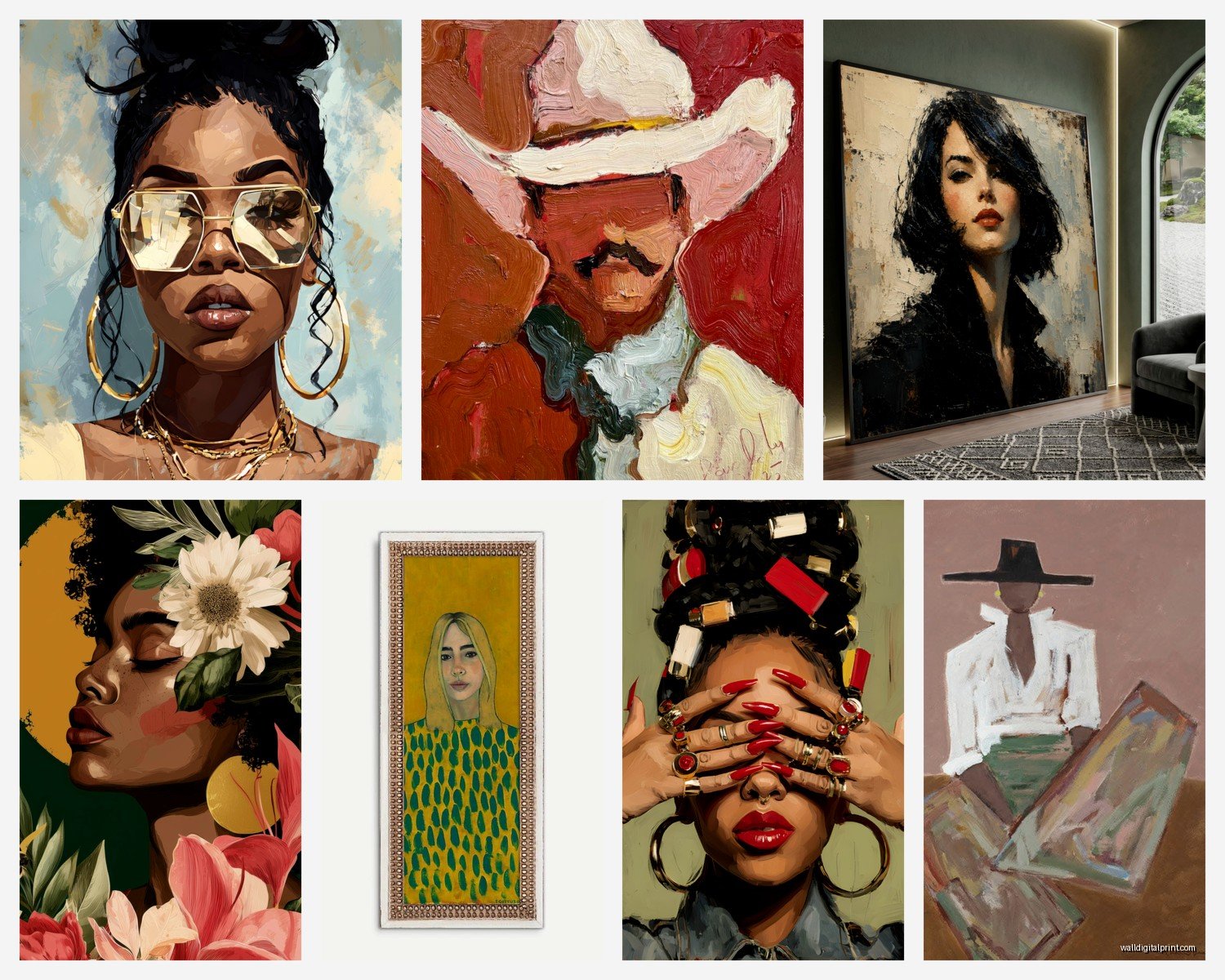
- Color portraits when the rest of your room is pretty neutral or when you’re pulling specific accent colors from the image
- Black and white when you want the portrait to feel timeless or when your room already has a lot going on pattern-wise
- Sepia or muted tones when you’re going for that vintage collected-over-time vibe
The Framing Situation
Oh and another thing – the frame literally makes or breaks portrait photography. I’m not even exaggerating. A thin black metal frame keeps things modern and lets the image do the talking. Thick ornate frames can make portraits feel really classical or even a bit Victorian if that’s your thing.
I’ve been obsessed with natural wood frames lately for portrait work. There’s something about pairing a human face with that organic texture that just works. My friend has this incredible close-up portrait of someone laughing, printed huge, in a light oak float frame and every single person who visits comments on it.
Mat or No Mat
Mats create distance which can be good or bad depending on the portrait. For really intimate close-up faces, I usually skip the mat because you want that immediacy. For environmental portraits where the person is in a setting, a mat can actually help frame the story and give your eye a place to rest.
White mats feel crisp and gallery-like. Cream or off-white feels softer and more collected. Black mats are dramatic but they need a bold portrait to stand up to them – don’t use a black mat on a subtle or light image because it’ll just create this heavy border that eats the photo.
Placement Rules I Actually Follow
Eye level is the standard advice everyone gives but honestly for portrait art specifically, I think about it differently. If it’s a face looking straight out at you, yeah, hang it so the eyes are roughly at standing eye level (like 57-60 inches from the floor to the center of the image). But if it’s a profile or the person is looking down or away, you have more flexibility.
I just finished this project where we hung a large portrait of someone looking downward above a reading chair, and we actually hung it lower than usual so when you’re sitting, you’re almost at eye level with the subject. Created this really intimate moment in the corner of the room.
Above Furniture
The portrait should be about 2/3 the width of whatever furniture is below it. So if you have a 60-inch sofa, you’re looking at a 40-inch wide portrait or grouping. And leave like 6-8 inches between the top of the furniture and the bottom of the frame. Less than that and it looks cramped, more than that and they feel disconnected.
The Mood Thing You Gotta Consider
This is gonna sound weird but I literally ask clients what emotion they want to feel in the room before we pick portrait art. A laughing face creates totally different energy than a contemplative profile shot.
For bedrooms, I tend to go with softer, more peaceful portraits. Close-ups with gentle expressions or people looking away from camera. Nobody wants intense eye contact staring at them while they’re trying to sleep.
Living rooms can handle more energy – portraits with movement, bright expressions, even multiple faces in conversation. I hung this series of three portraits last year, all different people mid-laugh, and it made the whole space feel like a dinner party in the best way.
Dining rooms are interesting because you’re gonna be sitting there for extended periods having conversations. I like profile shots or environmental portraits here – images that tell a story you can keep discovering.
Bathrooms and Hallways
Wait I forgot to mention – hallways are actually perfect for portrait photography because you’re moving past them, not sitting with them for hours. You can go bolder, weirder, more experimental. I have this hallway client who collected vintage portrait photography from flea markets and hung like 20 different faces in all different sizes and frames. Sounds chaotic but it’s actually amazing because you’re just walking through.
Bathrooms… okay this is personal preference but I avoid portraits in bathrooms unless they’re vintage or abstract enough that you’re not making eye contact with a stranger while you’re brushing your teeth.
Mixing Portrait Styles
You don’t have to commit to one type of portrait photography. I’m actually working on a gallery wall right now that mixes contemporary color portraits with vintage black and whites, and the key is finding a common thread. In this case, they’re all profile shots or three-quarter views – nobody’s looking directly at camera. That consistency in perspective makes totally different styles work together.
Other ways to mix:
- All close-ups of faces but different eras and styles
- All environmental portraits (people in settings) with varied color treatments
- Different subjects but same color palette
- Same framing style even if the photography is different
My client canceled this morning so I spent an hour comparing different portrait groupings on Canva and honestly the same-frame-different-images approach is probably the easiest if you’re not confident about mixing.
Lighting Considerations
Portrait photography needs good lighting but not direct sunlight. UV rays will fade prints over time, especially color ones. If you’re hanging near a window, get UV-protective glass or acrylic – it costs more but it’s worth it for pieces you actually care about.
I love adding picture lights above large portraits. Creates this gallery moment and also solves the problem of portraits feeling flat in dim corners. Those battery-operated LED picture lights have gotten really good if you don’t want to deal with wiring.
Ambient lighting matters too. A portrait in a room with warm Edison bulbs is gonna feel completely different than the same portrait under cool white LEDs. I always bring portrait options to the actual space and look at them in morning light, afternoon light, and evening artificial light before deciding.
The Creepy Factor (Let’s Address It)
People worry that portrait art, especially faces looking at camera, will feel creepy. Sometimes it does, not gonna lie. Here’s when it usually goes wrong:
- The portrait is too small so the eyes look beady and intense
- It’s the only art in the room so it feels like surveillance
- The expression is ambiguous in an unsettling way
- The lighting in the photo is harsh or creates weird shadows
- You hung it in a weird spot like directly across from the toilet
The fix is usually going bigger, adding other art nearby, or switching to a profile/looking-away pose. I had someone return a portrait once because it “watched her eat” and honestly after seeing the placement I totally got it – it was this intense close-up hung directly across from her dining chair at perfect eye level.
Where to Actually Buy Portrait Photography Art
I source from all over depending on budget and vibe:
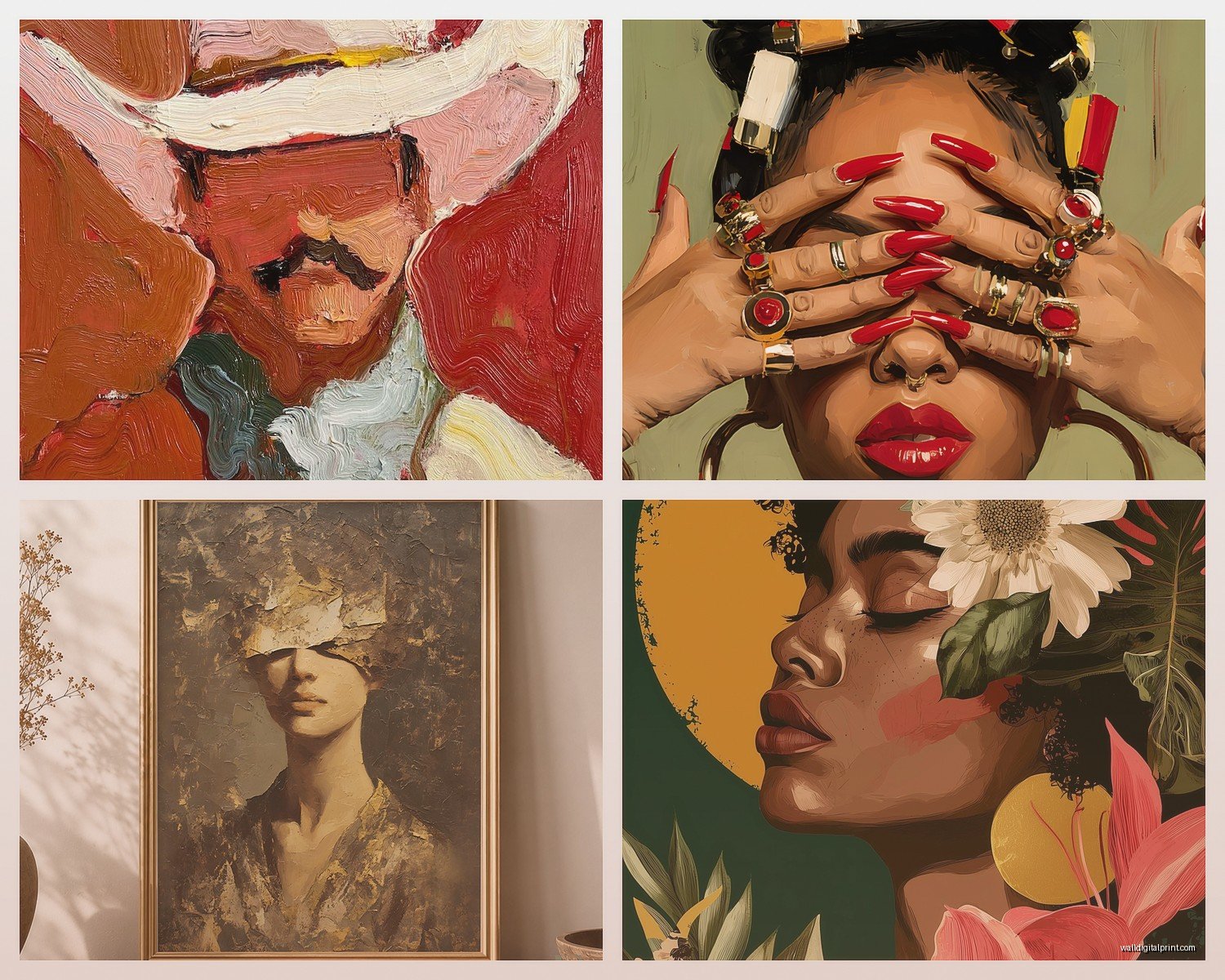
- Etsy for vintage portrait photography – you can find incredible prints from the early 1900s for like $20-40
- Minted and Artifact Uprising for contemporary portrait photography, good quality prints
- Local art fairs and photography shows – you’d be surprised what you can negotiate
- Society6 or Redbubble if you want affordable options and don’t mind that other people might have the same piece
- Fine art photography galleries if you’re investing in something significant
I also tell people to check out photography students’ thesis shows. You can get original prints for reasonable prices and the quality is usually amazing because they’re trying to build portfolios.
Printing Your Own
If you have portrait photos you love – maybe from a professional shoot or even really good candids – printing them large-scale as wall art is totally valid. I use Mpix or Nations Photo Lab for client projects. The quality is consistent and they have good framing options.
Just make sure your image resolution is high enough. For a 24×36 print you need at least 2700×4050 pixels at 300 DPI or it’ll look pixelated. Your phone photos might not be big enough for really large prints depending on your phone.
Styling Around Portrait Art
Once the portrait is up, you gotta style around it or it’ll look like you just slapped art on a wall and called it done. I’m watching this design show right now and they literally never style around the art and it drives me crazy.
Add a console table or shelf below with objects that echo the mood. For a vintage portrait, maybe old books and a brass candlestick. For contemporary portrait photography, clean-lined objects in complementary colors.
Plants work with almost any portrait style. Something about pairing human faces with living greenery just makes spaces feel more collected and intentional.
If you’re doing a large statement portrait, you can flank it with sconces or smaller art pieces, but leave breathing room. Portrait photography needs space around it to have impact.
The Multiple-Portrait Situation
Okay so funny story – I once did a client’s bedroom with five different portraits, all strangers, all vintage black and whites, and her husband was convinced it was weird to have “other people” in their bedroom. Three years later it’s still up and they love it. The key was that none of the portraits were looking at the camera so it felt more like glimpses of moments than people staring.
If you’re doing multiple portraits, decide if you want them to feel like a collection (varied subjects, frames, styles) or a series (consistent treatment, maybe same photographer or era). Both work but they create different vibes.
Series feels more curated and modern. Collection feels more gathered-over-time and personal. I don’t think one is better than the other but you gotta commit to the approach.
For groupings, try these layouts:
- Grid – same size frames, equal spacing, very organized
- Salon style – different sizes, tight spacing, organic arrangement
- Linear – all in a row, same height, varied or same widths
- Asymmetric – larger anchor piece with smaller portraits clustered around it
I always lay groupings out on the floor first and take a photo from above. Helps you see the overall shape before you start putting holes in walls.
The tape-on-the-wall trick works too – use painter’s tape to map out where frames will go. Leave it up for a day or two and see if the arrangement feels right before committing.
