Wall Art Guide, Wall Art Tutoriels
Donkey Wall Art: Farm Animal Rustic Country Decor
Jul
So I’ve been down this donkey wall art rabbit hole lately because a client wanted to do this whole rustic farmhouse thing but didn’t want the usual cows and chickens everywhere, and honestly? Donkeys are having a moment right now.
Why Donkey Art Actually Works
Okay so here’s the thing about donkey wall art that I didn’t expect – it’s weirdly versatile. Like you’d think it’s super niche but it works in way more spaces than you’d imagine. I’ve used it in modern farmhouse kitchens, kids’ rooms, home offices that need something quirky, even a really minimal Scandinavian-style bedroom where we needed just ONE statement piece.
The key is donkeys have this personality to them, you know? They’re not as serious as horses but not as cutesy as some farm animals. There’s something kinda stubborn and authentic about them that reads as genuine rustic instead of trying-too-hard country.
Types You’ll Actually Find Shopping
Vintage-Style Prints and Reproductions
These are probably gonna be your easiest starting point. I’m talking about those prints that look like they came from old farm encyclopedias or children’s books from the 1940s. You can find them on Etsy, obviously, but also places like Rejuvenation and even Target sometimes has decent ones.
What I look for: actual texture in the print, not just flat digital. The good ones have that slightly faded look or visible paper grain. Frame these in weathered wood or simple black frames – don’t overthink it.
Price range is like $15-60 for prints depending on size. I usually go 16×20 or bigger because small donkey art just looks odd somehow.
Canvas Prints and Giclee
My cat just knocked over my coffee cup but anyway – canvas prints are everywhere right now. The thing with donkey canvas art is you want to avoid the super glossy, obviously digital ones. They look cheap and ruin the whole rustic vibe you’re going for.
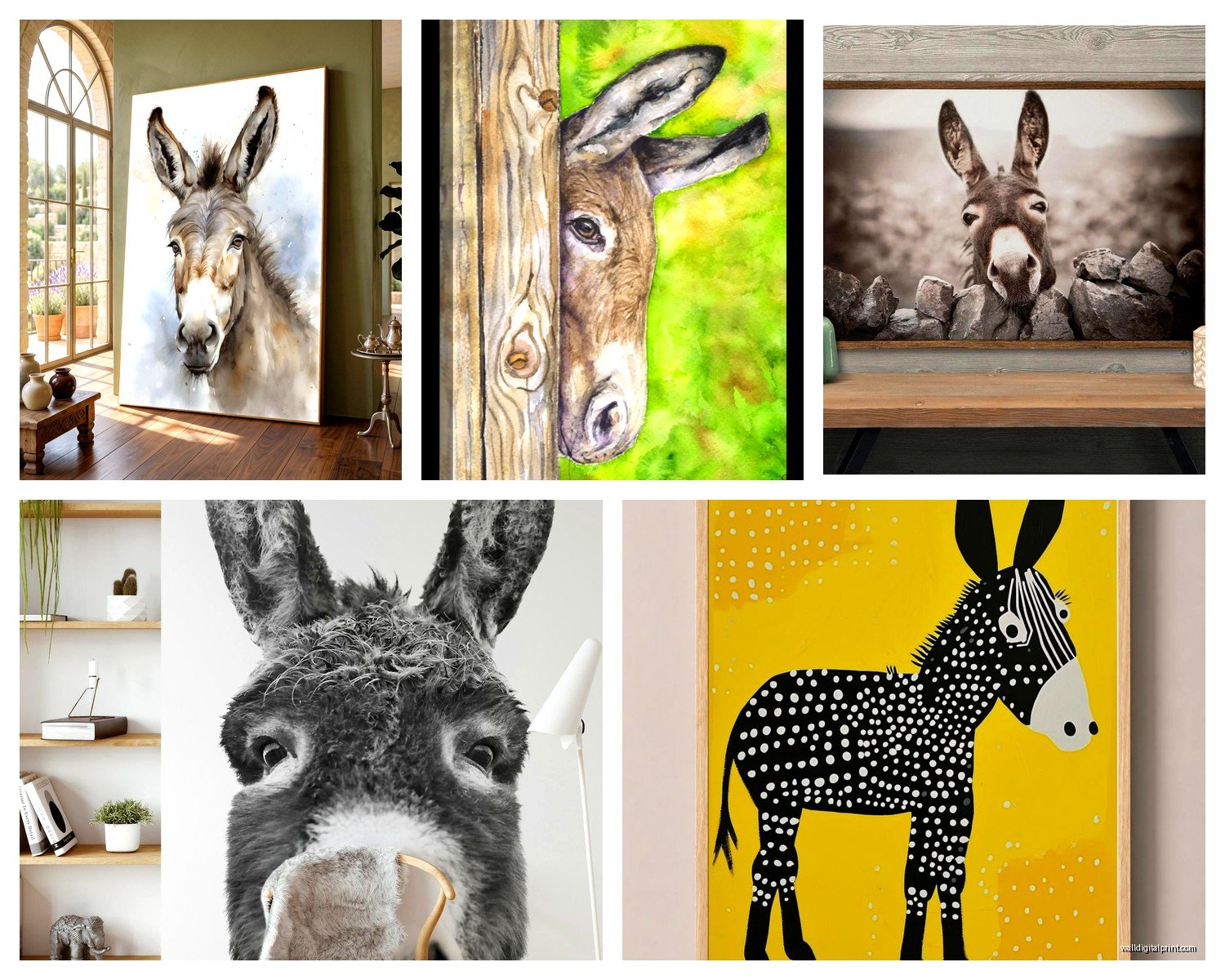
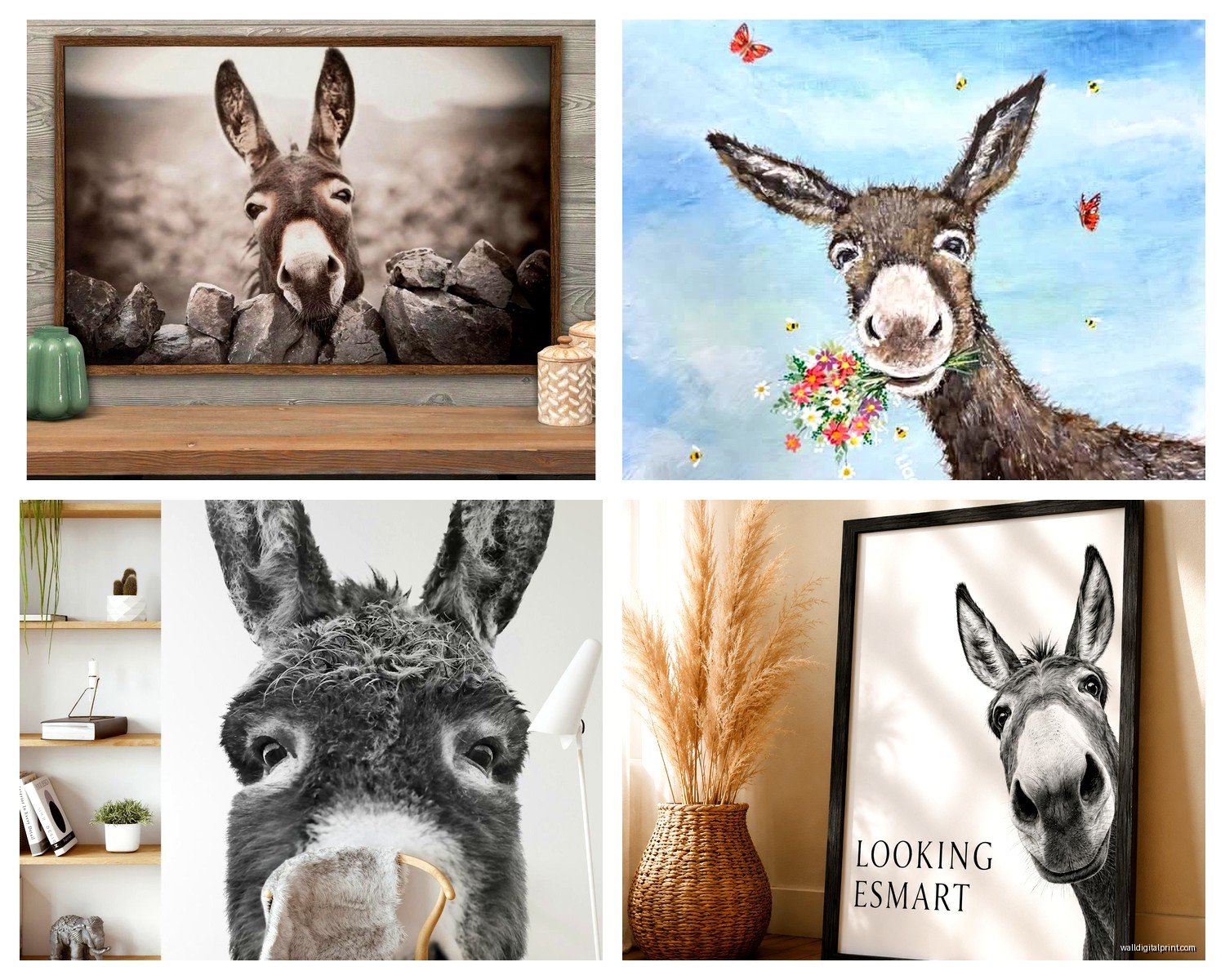
Look for matte finish or ones that specifically say “giclee” which is just fancy printing on canvas that actually looks like brush strokes. I found this amazing one last month that’s just a donkey’s face in black and white, super close up, and it’s on a gallery-wrapped canvas so you don’t even need a frame.
These run $40-200 depending on size and quality. Worth spending more here because a cheap canvas just screams cheap.
Metal Signs and Tin Art
Oh and another thing – if you’re doing a actual barn conversion or mudroom or covered porch situation, metal donkey signs are perfect. They can handle humidity and temperature changes better than paper prints.
The vintage reproduction tin signs work really well. Look for ones with distressed edges or that weathered look already built in. I’ve seen cute ones that say stuff like “Donkey Crossing” or just have a silhouette with the farm name.
Just don’t go overboard with the cutesy sayings. Like if it says “I’m not stubborn, I’m determined” with a cartoon donkey… maybe skip that one unless it’s for a kid’s space.
Original Art and Paintings
This is gonna sound weird but I’ve had the most luck finding cool original donkey paintings at local art fairs and small galleries, not online. There’s something about donkeys that attracts a certain type of artist – usually people who actually have land or grew up rural.
If you’re shopping online for originals, Saatchi Art and Artfinder have good selections. Expect $200-1000+ for real paintings. I know that’s a jump but if you’ve got the budget and a prominent wall, an actual oil painting of a donkey is such a conversation starter.
Where to Actually Put This Stuff
Kitchen and Dining Areas
Kitchens are honestly perfect for donkey art because there’s something humble and homey about them. I usually put them near eating areas – above a breakfast nook bench, on the wall across from the dining table, or in that weird space above the fridge that’s always awkward.
Size matters here. For above a table, you want something substantial – at least 24×36 or a grouping of smaller pieces. One mistake I see is people putting tiny 8×10 prints in big open wall spaces and it just floats there looking sad.
Pro tip: if your kitchen has white or cream cabinets, a donkey print with warm brown and gray tones adds depth without adding color chaos. Pairs well with copper accents and brass hardware.
Mudrooms and Entry Spaces
This is like donkey art’s natural habitat honestly. Mudrooms are where you can lean into the full farm aesthetic without it overwhelming your whole house. I did one last year where we put a large metal donkey silhouette on the wall and added hooks shaped like horseshoes below it.
The vibe you’re going for here is “functional but charming.” So think about pairing the art with practical stuff – coat hooks, a bench, maybe some vintage-looking storage baskets.
Bedrooms
Wait I forgot to mention – donkey art in bedrooms is trickier but totally doable. I’ve done it successfully in guest rooms and kids’ rooms more than master bedrooms. For guest rooms, it gives that cozy cottage feel without being too precious.
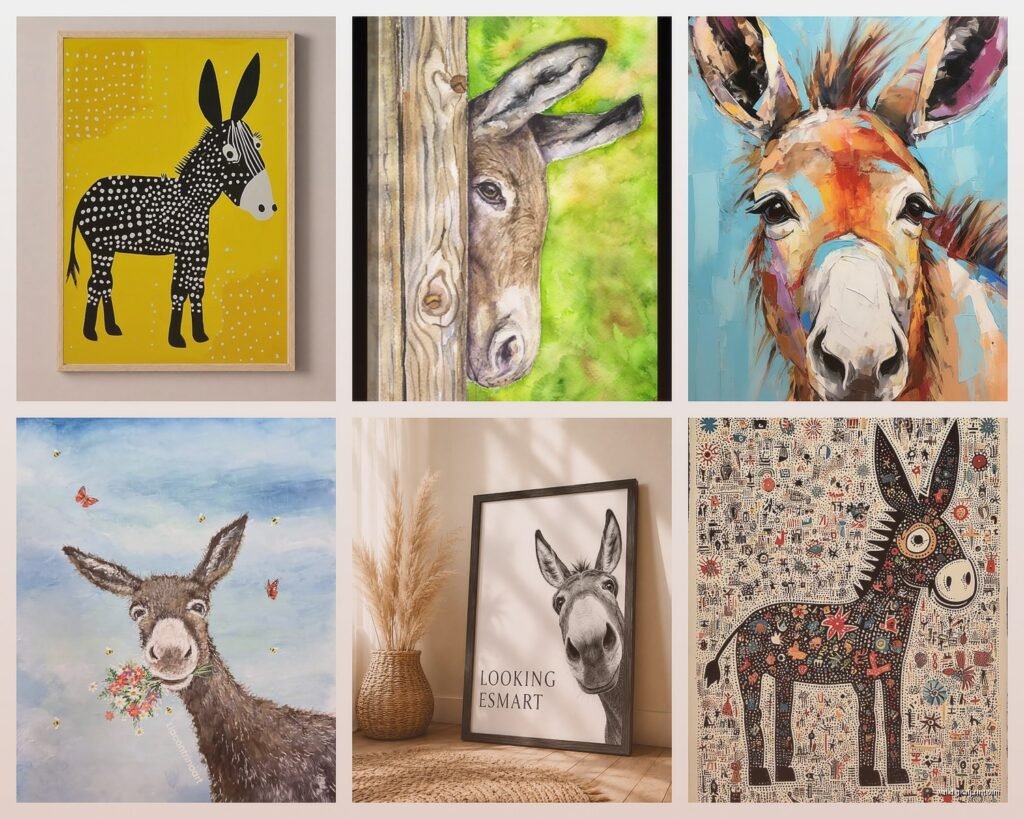
For kids’ rooms, go for the softer, more illustrated versions. There are these really sweet watercolor donkey prints that work great for nurseries. Not too babyish but still gentle.
In a master bedroom, you’d want to keep it sophisticated. Maybe a black and white photograph-style print in a sleek frame, or a really artistic interpretation rather than a literal farm scene.
Styling Tips That Actually Matter
Mixing With Other Farm Animals
So you’re probably wondering if you can mix donkey art with other animals or if that’s too much. Short answer: yes but be strategic about it.
I usually stick to one or two other animals max. Donkeys pair really well with chickens (different enough visually) and sheep (similar color palettes). Avoid mixing with horses unless they’re in the same piece because they compete for the same visual space if that makes sense.
Also consider scale and style consistency. If your donkey is a realistic painting, your chicken art should also be realistic. Don’t mix cartoon with photorealistic – it looks disjointed.
Color Palettes That Work
Donkeys are naturally gray and brown, which is actually great because those are super versatile neutrals. They work with:
- White and cream (classic farmhouse)
- Sage green and dusty blue (softer country)
- Rust and terracotta (warmer southwestern vibe)
- Navy and charcoal (more modern take)
- Natural wood tones obviously
What I avoid: bright primary colors usually clash unless you’re specifically doing a kids’ room. Also all-gray rooms can make gray donkey art disappear, so add some warmth with wood or textiles.
Frame Choices
Okay so funny story, I once spent like $200 on this gorgeous reclaimed barn wood frame for a donkey print and my client’s husband said it looked like we found it in their actual barn. Which… was kinda the point? But he didn’t mean it as a compliment.
Anyway. Frame choices:
Weathered wood frames are the obvious choice and usually work great. Look for actual texture and variation in the wood, not that fake distressed look from craft stores.
Simple black frames work surprisingly well if you want the rustic vibe but cleaner lines. This is what I do when mixing country elements into a more modern space.
No frame at all for canvas or metal pieces. Gallery-wrapped canvas edges should be finished nicely so you can skip the frame entirely.
White frames can work for more illustrative or watercolor donkey art, especially in lighter spaces. But they need to be matte white, not glossy.
Shopping Strategy
Online Sources
Places I actually buy from:
- Etsy for vintage prints and unique original pieces
- Society6 for affordable modern interpretations
- Rejuvenation and Ballard Designs for higher-end curated stuff
- Amazon honestly has some decent canvas options if you read reviews carefully
- Local artist websites – just Google “donkey art” plus your state
What to Avoid
Red flags when shopping online:
- Super low prices with no reviews (print quality will be garbage)
- Stock photo looking images with watermarks barely removed
- Anything described as “HD print” – that’s usually code for cheap digital print
- Sellers with no other products or brand presence
- Canvas prints under $30 for large sizes – the canvas will be thin and flimsy
DIY Options If You’re Crafty
I’m not super into DIY usually but there are some easy donkey art projects that actually turn out well. My client canceled last week so I spent an hour comparing different transfer methods and here’s what works:
Vintage book page prints: You can find old farm animal books at thrift stores, carefully remove pages with donkey illustrations, and frame them. Super cheap and they have authentic age to them.
Photo transfers onto wood: If you have a decent printer, you can transfer donkey images onto wood planks. There are tons of tutorials online. The rustic nature of donkeys actually hides imperfections in the transfer really well.
Stencil projects: Donkey silhouette stencils on reclaimed wood or canvas. Keep it simple – just the outline in black or dark brown on natural wood looks surprisingly good.
Sizing Guidelines
This trips people up constantly. Here’s my general rules:
Above a sofa or bed: 2/3 the width of the furniture piece, or a grouping that totals that width
Above a console table or dresser: 1/2 to 2/3 the furniture width
Standalone wall: at least 24×36 for a single piece, or a gallery wall that spans 36-48 inches minimum
Small walls like bathrooms or narrow hallways: 11×14 to 16×20 works
When in doubt, go bigger. Small art in big spaces is the most common mistake I see.
Making It Not Look Too Themed
The thing about farm animal decor is it can tip into theme-park territory real fast. Here’s how to keep it sophisticated:
Limit your donkey pieces to 1-2 per room max. More than that and you’re entering petting zoo territory.
Mix in non-animal elements. Pair your donkey art with botanical prints, landscapes, or abstract pieces.
Keep the rest of the decor understated. If you’ve got donkey art, maybe skip the rooster-shaped soap dispenser and the cow-print throw pillows.
Choose quality over quantity always. One beautiful donkey painting beats five cheap prints scattered around.
Consider the context. Donkey art in a mudroom or kitchen reads as charming. Donkey art in your formal living room needs to be museum-quality to work.
Seasonal Rotation
Something I started doing that clients love – rotating art seasonally. Your donkey pieces can be your spring/summer/fall art, then swap in something else for winter if you want. Or leave them year-round because honestly they work in all seasons.
If you do rotate, store prints flat in a portfolio case or between cardboard sheets. Don’t roll them if you can avoid it.
The nice thing about donkey art specifically is it doesn’t read as seasonal the way like pumpkins or beach scenes do, so you can actually leave it up all year without it feeling off.
Just make sure you’re not overthinking this whole thing. At the end of the day, if you like looking at donkeys and it makes your space feel more like you, that’s literally all that matters. I’ve seen people stress about whether donkey art is “too country” or “on trend” and like… it’s your wall, put what makes you happy on it.