Wall Art Guide, Wall Art Tutoriels
Large Tree of Life Wall Art: Oversized Symbolic Designs
Jul
So I just spent like three hours yesterday hanging this massive tree of life piece in a client’s living room and honestly, the whole process reminded me why I’m obsessed with these things but also why you gotta be really careful about which one you pick.
First thing – and I cannot stress this enough – measure your actual wall space before you do ANYTHING else. I know it sounds obvious but last month I ordered this gorgeous 60-inch metal tree design and when it arrived my client’s wall could technically fit it but with their vaulted ceiling it looked weirdly small? Like the proportions were completely off. Generally you want your tree of life piece to take up about 60-75% of your wall width if it’s the focal point. Less than that and it floats awkwardly, more and it’s gonna feel cramped.
The material thing is huge and nobody really talks about this honestly. Metal tree of life designs are probably the most popular right now – they’ve got that contemporary gallery vibe and they create these amazing shadows on the wall when light hits them. I’ve worked with powder-coated steel ones, brushed bronze, even some copper finishes. The metal ones are surprisingly lightweight for their size which makes installation easier, but here’s the catch… if you have a very traditional or rustic space, metal can read too industrial. I had this farmhouse project where we tried a sleek black metal tree and it just fought with everything else in the room.
Wood versions are gorgeous but way heavier than you’d think. There’s this carved mango wood piece I used in a bohemian-style bedroom that was like 48 inches across and we needed serious anchoring. The depth and texture you get with carved wood though? Can’t replicate it with anything else. The shadows are softer, more organic. And if you’ve got a Scandinavian or japandi aesthetic going, a light wood tree of life in birch or ash is *chef’s kiss*.
Oh and another thing – canvas prints of tree of life designs are the budget-friendly option but they lack dimension. They work great in bedrooms or home offices where you want something softer and less statement-y, but in a main living area they can feel a bit… flat? Like you’re trying but not committing. If you go canvas, get a multi-panel setup at least. Those three or five-panel arrangements where the tree spreads across separate canvases create visual interest and make it feel more intentional.
Metal vs wood durability is interesting because I’ve noticed the metal pieces hold up better in humid environments. Had a client in Florida and their wood piece started warping after like eight months even with proper sealing. Meanwhile metal just needs occasional dusting and maybe a wipe-down if you’re near the kitchen and grease gets everywhere.
Size-wise, here’s my actual breakdown from projects I’ve done:
For walls 8-10 feet wide, you want 48-60 inch diameter pieces. Anything smaller looks tentative. I did a 36-inch tree on a 10-foot wall once and we ended up returning it because it looked like we were afraid to commit to the design.
Walls 10-14 feet can handle 60-72 inch pieces easily. This is that sweet spot where oversized tree of life art really shines. You can go dramatic without overwhelming.
Anything over 14 feet and you might wanna consider a multi-piece installation or go custom. I’ve seen 80+ inch pieces but they’re rare and usually need to be commissioned.
The symbolism aspect is something people ask me about constantly and honestly it depends on your personal connection to it. Traditional tree of life represents interconnectedness, growth, strength, family roots… all that. But I’ve had clients choose it purely for aesthetic reasons and that’s totally valid too. Don’t feel like you need some deep spiritual connection to hang one in your house. My sister has one in her dining room because she liked the circular shape and how it balanced her rectangular table – that’s reason enough.
Installation is where things get real and I’m gonna save you some frustration here. Most oversized pieces come with hanging hardware but it’s often inadequate. For anything over 40 inches or 15 pounds, ignore the sawtooth hangers they include. You need:
Wall anchors rated for at least 3x the weight of your piece. Drywall alone won’t cut it for these big pieces. I use toggle bolts or if you can hit studs even better. French cleats are honestly the best system for really heavy pieces – they distribute weight evenly and the piece sits flush against the wall.
A level that’s at least 24 inches long. Those little torpedo levels? Useless for large-scale work. You’ll think it’s straight and then step back and realize it’s tilted.
Painter’s tape to mark your placement before you commit to drilling. I do this weird thing where I tape up paper templates or just outline where the piece will sit with tape, then live with it for a day. Sometimes what you thought would work doesn’t actually work with the natural light and furniture placement.
Oh wait I forgot to mention – consider what’s BELOW your tree of life piece. I see so many installations where someone hangs this beautiful symbolic tree and then shoves a console table underneath it with a bunch of random clutter. The space below matters just as much. I usually style with either:
A low-profile credenza or console with minimal decor – maybe a sculptural vase or a couple of books
A bench with textured pillows if it’s an entryway
Nothing at all if the piece is really large – let it breathe
Color coordination is something I obsess over probably too much but it makes such a difference. If you’re getting a metal piece, think about your existing metal finishes. Mixing metals is fine but you want some cohesion. Like if all your light fixtures are matte black, a gold tree might feel random unless you’ve got other gold accents throughout the space.
For wood pieces, match your undertones. Cool-toned grays and whites pair better with ash or whitewashed wood. Warm beiges and creams want walnut or natural oak. I did this project last year where we used a dark espresso wood tree in a room with all light pine furniture and it looked like we grabbed it from a different house.
This is gonna sound weird but lighting makes or breaks these pieces. Tree of life designs are inherently sculptural so they need proper lighting to show off that dimension. I almost always add:
Picture lights if it’s a refined, gallery-style space
Wall washers if we want dramatic shadows
Even just adjusting existing recessed lights to graze the wall
My dog knocked over my coffee while I was researching pieces for this client last week and I discovered this whole category of LED tree of life designs that I’d been sleeping on. They have integrated lighting that makes the tree glow – very contemporary, works amazing in modern spaces but definitely not for everyone. If you like ambiance lighting they’re worth considering though.
Style-wise, here’s where different tree designs work best:
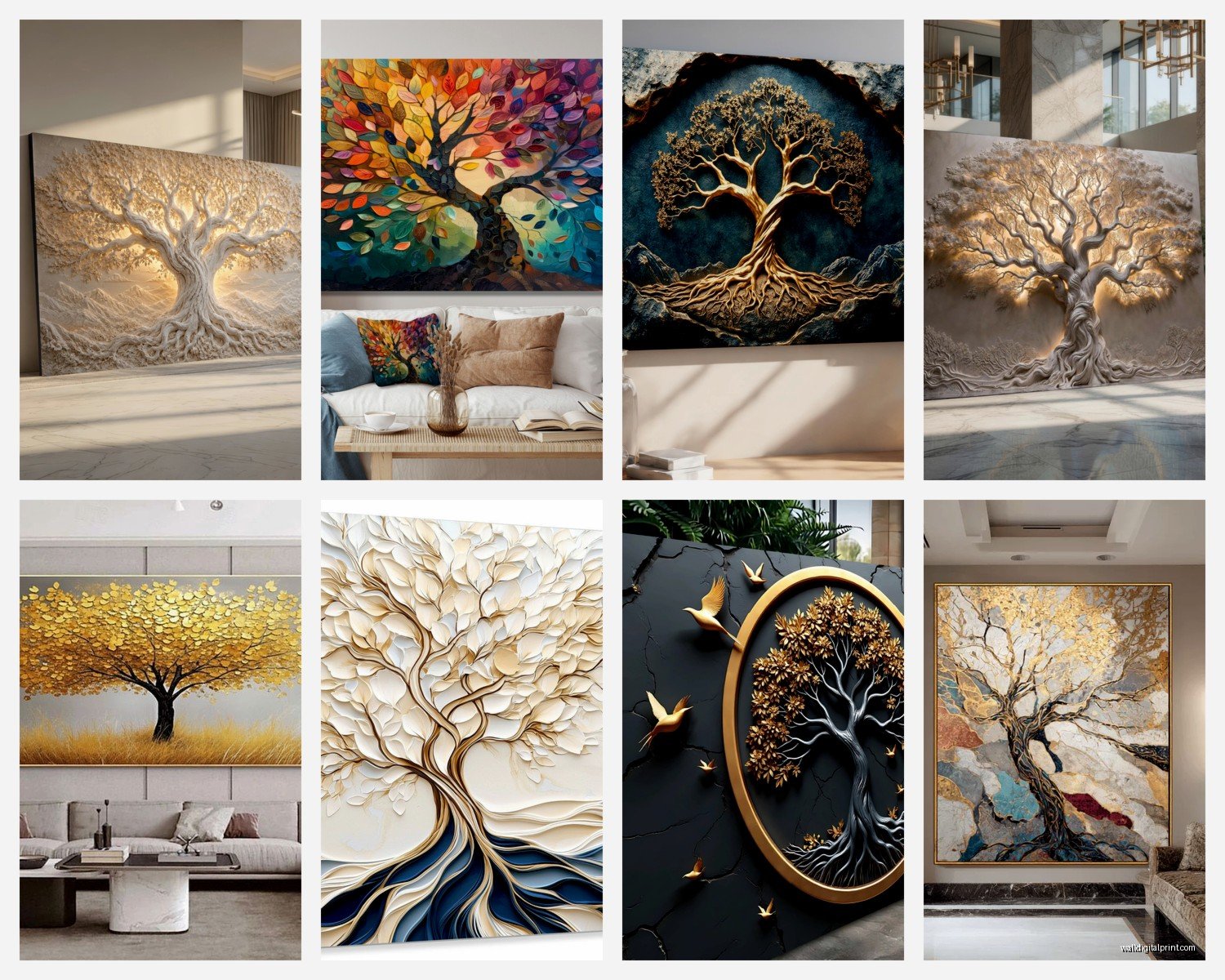
Celtic knotwork trees – traditional, farmhouse, cottagecore vibes. These have intricate interwoven branches and roots. They’re detailed and ornate so they need simpler surroundings or they compete with everything.
Minimalist silhouette trees – Scandinavian, modern, contemporary spaces. Clean lines, usually single-tone. These are super versatile actually and easier to work with than you’d think.
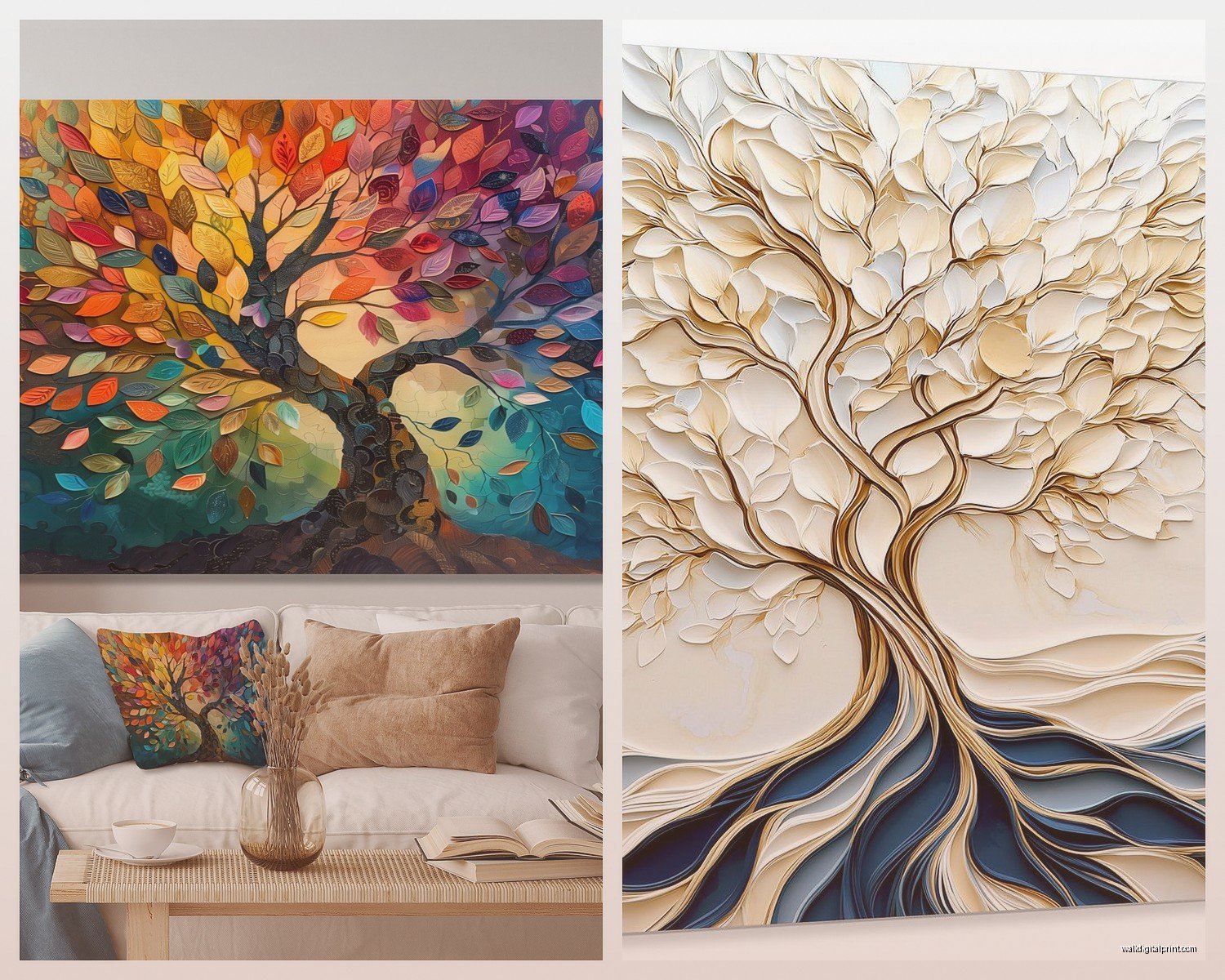
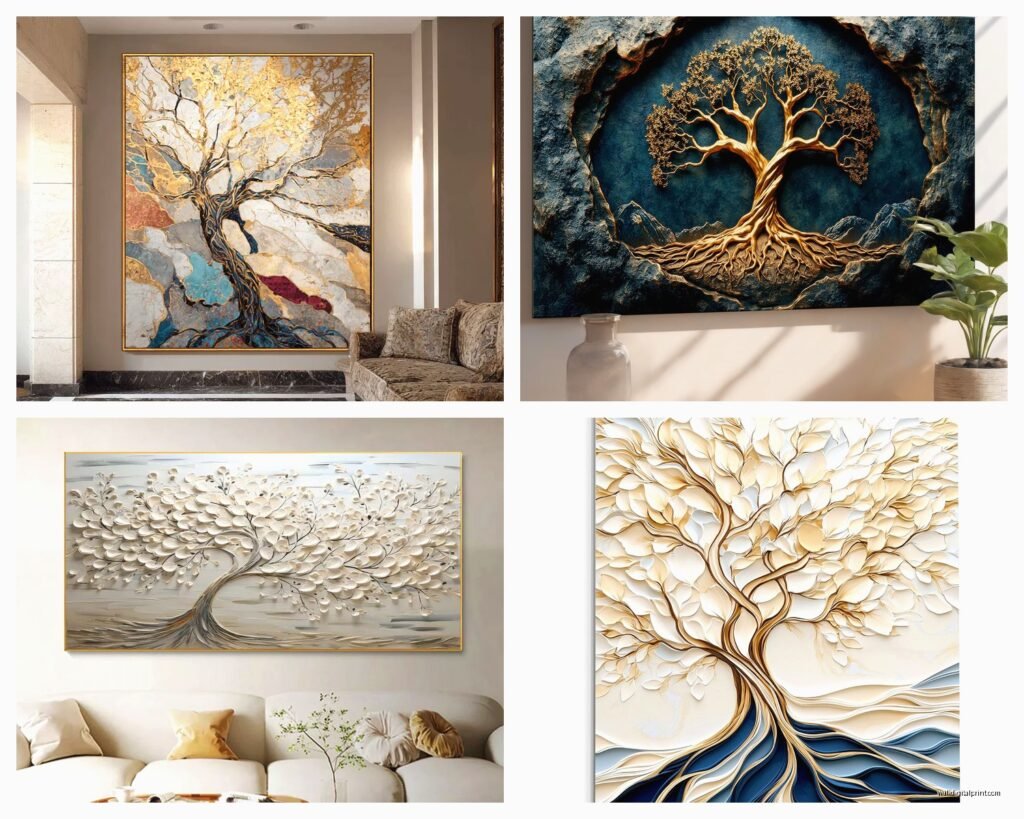
Colorful mosaic or painted trees – bohemian, eclectic, maximalist spaces. These are statement pieces that need to be THE focal point. Don’t try to make them share attention with other bold art.
Realistic trees with leaves and texture – transitional spaces, nature-inspired rooms, organic modern. These bridge the gap between traditional and contemporary nicely.
Budget real talk because I know this matters – you can find decent metal tree of life pieces starting around $80-150 for smaller sizes. Once you hit that 48+ inch range, expect $200-500 for quality pieces. Custom or artist-made installations can run $800-2000+ but the craftsmanship difference is noticeable.
I’ve bought from HomeGoods, Wayfair, Amazon (hit or miss on quality), Etsy (best for unique handmade pieces), and local metal artists. The Etsy route takes longer but you get something more unique. Mass-market pieces from big retailers are fine if you style them well – most people won’t know the difference once it’s on your wall surrounded by your furniture and decor.
One mistake I see constantly – hanging it too high. The center of your tree should be roughly 57-60 inches from the floor, which is standard gallery height. People panic with large pieces and hang them way too high thinking it makes ceilings look taller but it just makes the room feel disconnected.
Another thing – if you’re renting, look for pieces that come in sections or have command strip compatibility. Some manufacturers are finally catching on that not everyone can drill massive holes in walls. There are some clever magnetic mounting systems now too.
Maintenance is pretty minimal honestly. Metal needs dusting every couple weeks – I use a microfiber cloth or those Swiffer dusters. Wood might need occasional conditioning depending on the finish. Canvas you can vacuum gently with a brush attachment.
The room placement matters more than people think. I’ve installed these in:
Living rooms above sofas – classic choice, works great
Entryways – makes a strong first impression
Master bedrooms – adds that symbolic grounding energy people want in sleeping spaces
Dining rooms – the circular shape echoes round tables nicely
Home offices – that growth and connection symbolism appeals to people apparently
Skip bathrooms and kitchens unless you get something specifically rated for humidity and heat. I tried a metal tree in a large master bath once and even with ventilation the finish degraded faster than expected.
Okay so lastly, the “does it look trendy or timeless” question. Tree of life imagery has been around for literally thousands of years across cultures so the symbol itself is timeless. The execution can read trendy though – like those super geometric, angular interpretations feel very 2020s. If you want longevity, stick with more classic interpretations that have organic, flowing branches.
Also consider your longterm plans. These pieces are investment-level decor that you’re probably not switching out seasonally. Make sure you actually love it and it fits your overall design direction. I’ve had clients impulse-buy oversized art and then realize six months later it doesn’t fit where they’re taking their style.
That’s pretty much everything I’ve learned from installing like dozens of these at this point… the main thing is just making sure the scale is right for your space and the style actually matches your aesthetic rather than fighting it.