Wall Art Guide, Wall Art Tutoriels
Seahorse Wall Art: Ocean Marine Coastal Creature Decor
Jul
So I’ve been completely obsessed with seahorse wall art lately and honestly it started because this client wanted a coastal vibe without doing the whole starfish-and-rope thing that everyone does. Spent like three weeks testing different pieces in various rooms and I gotta say, seahorses are actually way more versatile than you’d think.
Why Seahorse Art Actually Works Better Than Generic Ocean Stuff
Okay so here’s the thing about seahorses versus like, regular fish or wave prints. They’re vertical. Which sounds stupid but think about it – most wall spaces are vertical rectangles, right? A seahorse naturally fills that space without looking stretched or awkward. I put a three-foot metal seahorse piece in a narrow hallway last month and it completely transformed the space in a way that a horizontal fish would’ve just…not.
Plus they’ve got this elegant curvy silhouette that reads as sophisticated instead of beach-house-kitsch. My sister has the typical seashell shadowbox situation and it’s fine but it screams “I went to HomeGoods in 2015” whereas a good seahorse piece feels more curated.
Material Options That Don’t Look Cheap
I’ve tested a bunch of materials and here’s what actually holds up:
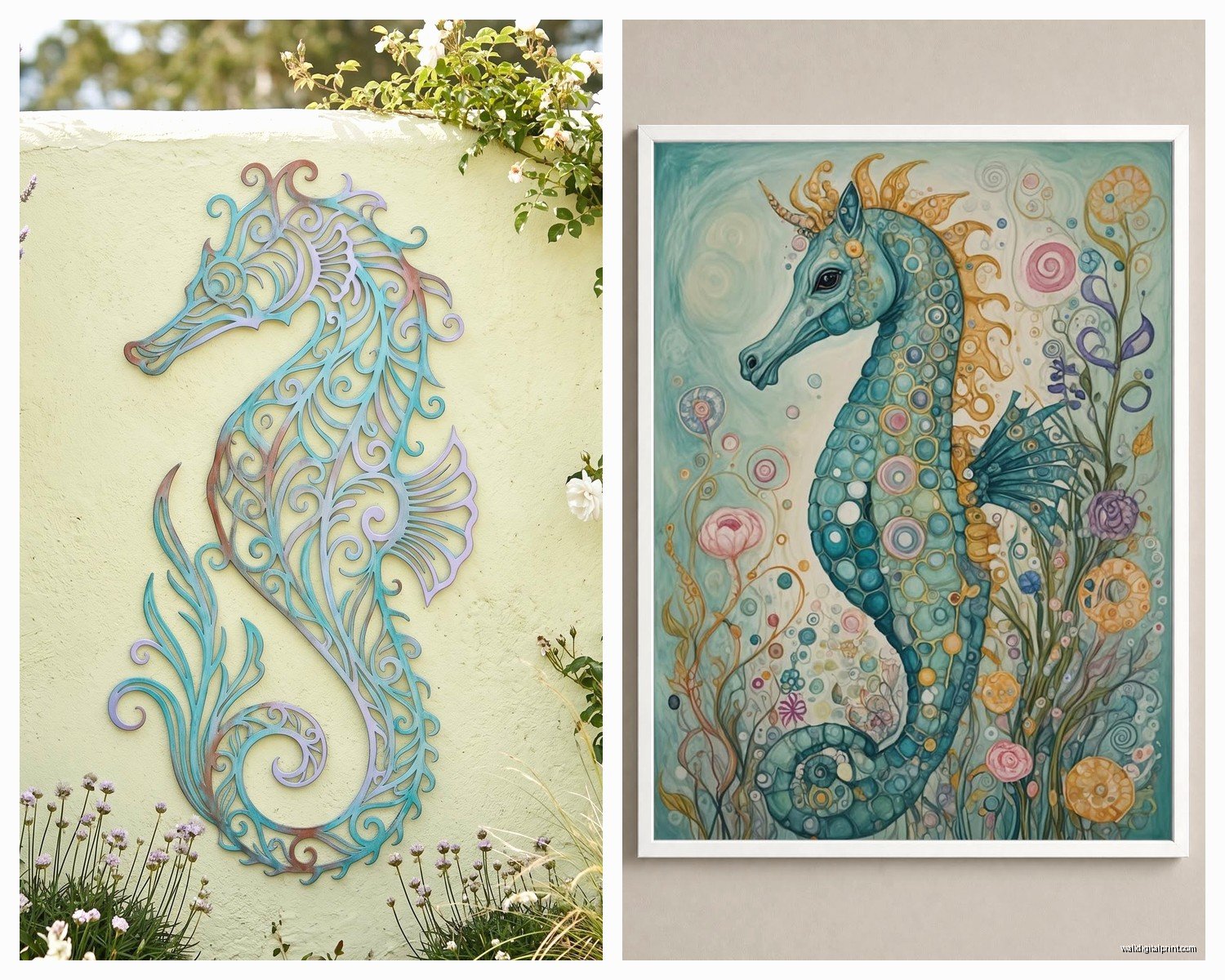
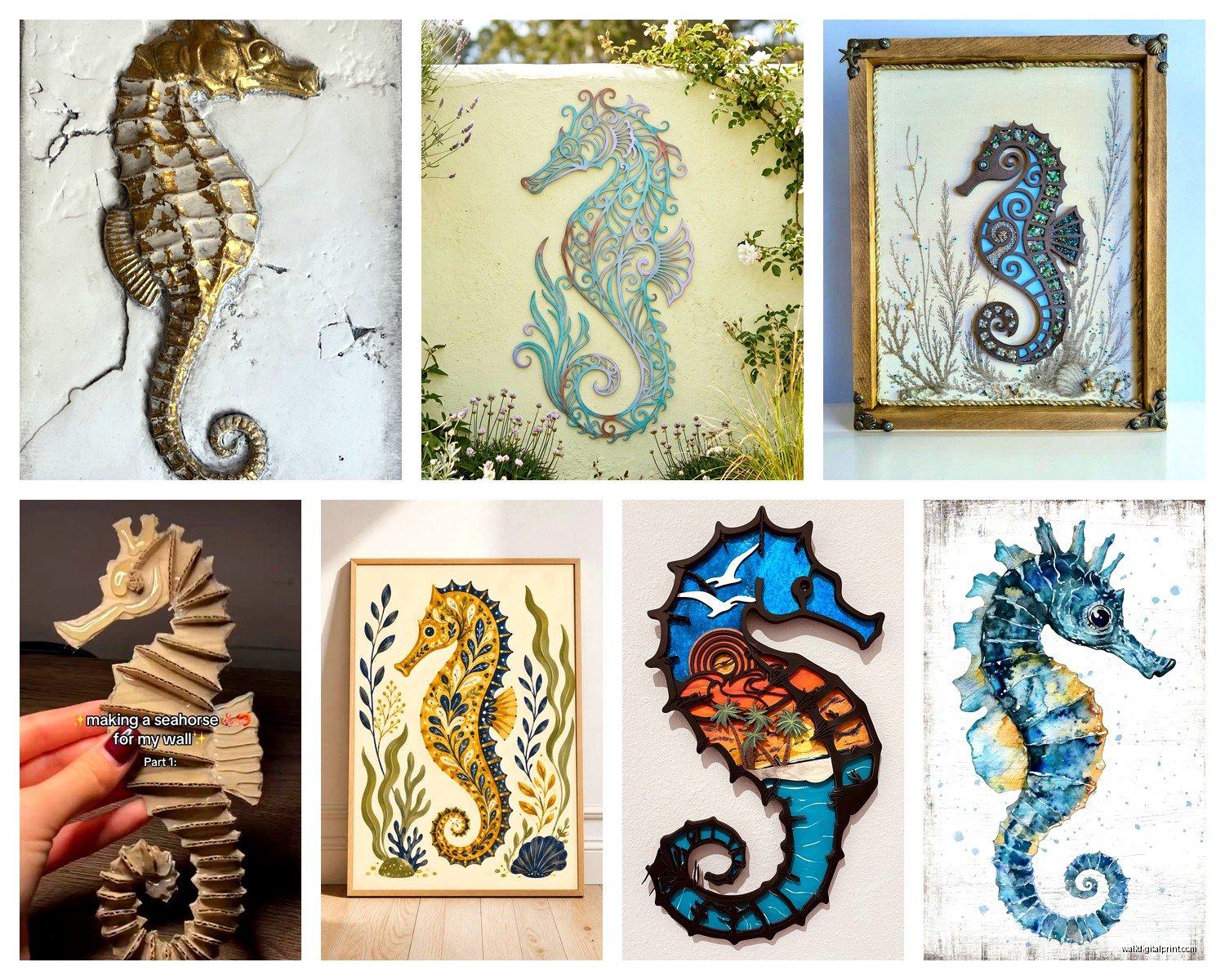
Metal wall sculptures are probably my top pick. The ones with that antiqued bronze or brushed silver finish work in both modern and traditional spaces. I found this one on Etsy that’s made from recycled steel and it’s got this gorgeous patina – looks expensive, wasn’t actually that bad. Around $120 for a 24-inch piece. The key is making sure the metal has some dimension to it, not just flat cutout shapes. You want shadows and depth.
Wooden pieces can go either way honestly. I got burned by one that looked amazing online but arrived looking like someone’s high school shop project. The good ones are usually carved or have multiple layers. There’s this reclaimed wood seahorse I used in a beach house renovation that had three different shades of weathered wood – that one was worth it. Cost more though, like $200ish.
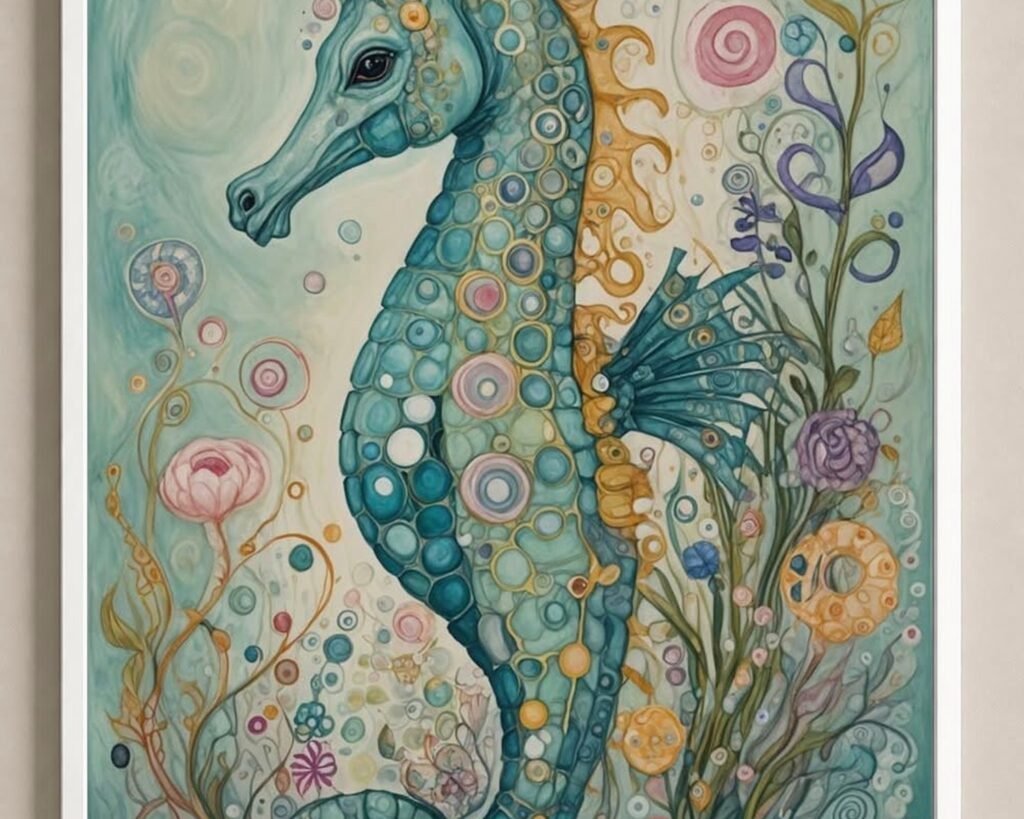
Canvas prints are tricky because they can look really generic really fast. If you’re gonna do canvas, go for something with texture or mixed media. I found one that combined photography with gold leaf accents and it actually worked because it wasn’t trying to be realistic. The super photographic ones of actual seahorses tend to look like you printed out a nature documentary screenshot.
Size and Placement Without Making It Weird
This is where people mess up constantly. They either go too small and it looks like an afterthought, or too big and suddenly their living room is a seahorse shrine.
For a standard 8-foot wall, you want something in the 24 to 36-inch range. I learned this the hard way when I ordered an 18-inch piece for a client’s dining room and it just…disappeared. Had to return it and size up. The visual weight needs to anchor the space.
If you’ve got a really tall wall – like in a foyer or above a staircase – you can actually go bigger. I did a 48-inch metal seahorse in a two-story entryway and it was perfect. Would’ve looked insane in a regular room though.
Gallery Wall Situations
Oh and another thing, seahorses work great in gallery walls but you gotta balance them out. I did one last fall where the seahorse was the largest piece (maybe 20 inches) and then surrounded it with smaller frames of coral, shells, abstract ocean colors. The trick is not making everything literal – like don’t do seahorse plus octopus plus fish plus crab. Pick ONE creature and make it the star.
My cat knocked over one of the frames while I was arranging it and I actually liked the asymmetrical layout better so…sometimes chaos works?
Color Schemes That Don’t Scream Tourist Trap
Okay so you’d think ocean stuff means blue and white and you’re done. And yeah, that works, but it’s kinda boring at this point.
Neutrals with one pop color: I’m doing a lot of cream, taupe, soft gray rooms with like a turquoise or teal seahorse as the accent piece. It brings in the ocean vibe without making the whole room themed. Used this approach in a nursery recently and the parents loved it because it felt coastal but not aggressively so.
Metallics are your friend: Gold, brass, copper seahorses look incredible in modern spaces. I have a brass one in my own bathroom (which is all white subway tile and marble) and people always ask where it’s from. It’s coastal without being beachy, if that makes sense.
Black and white: Sounds weird but a black metal seahorse on a white wall is super graphic and modern. Did this in a minimalist condo and it was the only “decorative” piece in the whole room but it worked because it had that sculptural quality.
The colors to avoid – and I’m gonna sound like a snob here – are the really bright Caribbean blues and greens. They read as very literal and kinda dated. Unless you’re going for full-on tropical maximalism, which is its own thing and can be cool, but that’s not what most people want.
Mixing Seahorse Art with Other Decor
You don’t have to commit to a whole ocean theme just because you have a seahorse. I’ve mixed them into:
- Botanical rooms with lots of plants and green tones
- Art deco spaces because of their curved elegant shape
- Modern farmhouse (controversial but it worked with the right piece)
- Vintage eclectic rooms where it becomes one interesting object among many
The key is treating the seahorse as a sculptural object first, ocean reference second. If you wouldn’t put a decorative “BEACH” sign in the room, you can probably still put a seahorse.
Where to Actually Buy Decent Pieces
So this is gonna sound scattered but I’ve found good stuff in weird places.
Etsy obviously has tons but you gotta wade through a lot of mass-produced stuff. Search for “handmade metal seahorse” or “reclaimed wood seahorse” and filter by shops that actually make things. I’ve found some amazing artists who do custom sizing which is clutch when you have a weird space.
HomeGoods and TJ Maxx can be hit or miss but when you find something good it’s usually cheap. I got a really nice wooden seahorse pair for like $35 total. You just have to go regularly because their inventory changes constantly. It’s like treasure hunting but in a fluorescent-lit warehouse.
West Elm and CB2 have some nice modern options if you want something more curated and don’t mind spending a bit more. Their stuff tends to be less literal and more abstract which I appreciate.
Local artists at coastal markets – if you live near the coast or are visiting, check out art markets. I found an incredible metal sculptor in South Carolina who makes seahorses from old boat parts. That’s the kind of piece that becomes a conversation starter.
Avoid Amazon unless you really know what you’re looking for because the photos are so misleading. I ordered what looked like a substantial metal piece and it arrived basically being tin foil thickness. Returned it immediately.
Styling Around the Seahorse
Wait I forgot to mention – once you have your seahorse, you need to think about what goes around it.
Lighting matters more than you think: If you have a sculptural piece with dimension, put a picture light on it or position it where natural light hits it during the day. The shadows are half the appeal. I installed a simple LED picture light above one installation and it completely elevated the whole situation.
Don’t clutter around it: Seahorses have such a distinct silhouette that they need breathing room. I see people put them on shelves with a million other objects and the seahorse gets lost. Give it space. If it’s on a wall, let it be the focal point of that wall.
Pair with simple textures: Natural fiber baskets, linen throws, simple ceramics. The seahorse is ornate enough on its own – you don’t need to compete with it.
Rooms Where Seahorses Work Best
Bathrooms are obvious but actually work great, especially powder rooms where you can be more decorative. I’ve done seahorse art in probably ten bathrooms and it always feels appropriate.
Bedrooms work if you’re going for a serene vibe. I prefer them in guest rooms over primary bedrooms just because they do read as decorative rather than personal, but that’s totally preference.
Living rooms and dining rooms – yes, but you need the right style. Modern or eclectic spaces can pull it off. Traditional spaces…maybe? Depends on the piece.
Offices and studies are underrated for seahorse art. There’s something about that vertical elegant shape that works in professional spaces without being corporate art boring.
DIY and Budget Options That Don’t Look DIY
Okay so funny story, I tried to make my own seahorse art by decoupaging book pages onto a wooden cutout and it looked…not good. But I have found some DIY approaches that actually work:
You can buy unfinished wooden seahorse cutouts and paint them yourself with metallics or high-quality acrylics. If you use good paint and seal it properly, it can look professional. The key is the finishing – sand it smooth, multiple thin coats, proper sealing.
Framing seahorse prints in really nice frames elevates them significantly. I took some vintage seahorse illustrations from an old biology book (found it at an estate sale), had them professionally matted, put them in simple black frames. Total cost maybe $60 for three frames but they look like I spent way more.
You can also do the frame-a-fabric thing with seahorse-patterned fabric or wallpaper. Stretch it over foam board, frame it, done. Works best with subtle patterns not cartoon seahorses.
What Actually Makes Seahorse Art Feel Expensive
This is gonna sound weird but there’s a difference between seahorse decor and seahorse art, and it comes down to a few things:
Abstraction over realism: The more abstract and stylized, the more sophisticated it reads. Super realistic seahorses can look educational rather than decorative.
Quality of finish: Whether it’s wood, metal, or canvas, the finish needs to be smooth and professional. Any rough edges, visible glue, uneven paint – that screams cheap.
Appropriate scale: Too small looks like you grabbed it from the clearance section. The right size for your space makes it look intentional.
Simplicity: One beautiful seahorse beats three mediocre ones every time. I used to over-decorate spaces and now I’m all about that one statement piece and letting it breathe.
There’s this metal seahorse I keep coming back to in my mind from a project last spring – it was simple, substantial, had this gorgeous aged copper finish. It cost more than the client wanted to spend initially but when we installed it, she immediately got why it was worth it. Sometimes you just gotta invest in the right piece.
Anyway I’m realizing I’ve been typing for like way too long but hopefully this helps? The main thing is don’t overthink it – if you find a seahorse piece you love and it fits your space and budget, just go for it. Worst case you return it, but I’ve found that when you really love a piece, you can usually make it work in your space somewhere.