Wall Art Guide, Wall Art Tutoriels
Jungle Wall Art: Tropical Rainforest Wildlife Decor
Jul
So I’ve been completely obsessed with jungle wall art lately and honestly it started because a client asked me to help with their living room and they wanted “tropical vibes but not like… beach tropical?” which sent me down this whole rabbit hole of rainforest imagery and wildlife prints.
The Different Types You’ll Actually Find
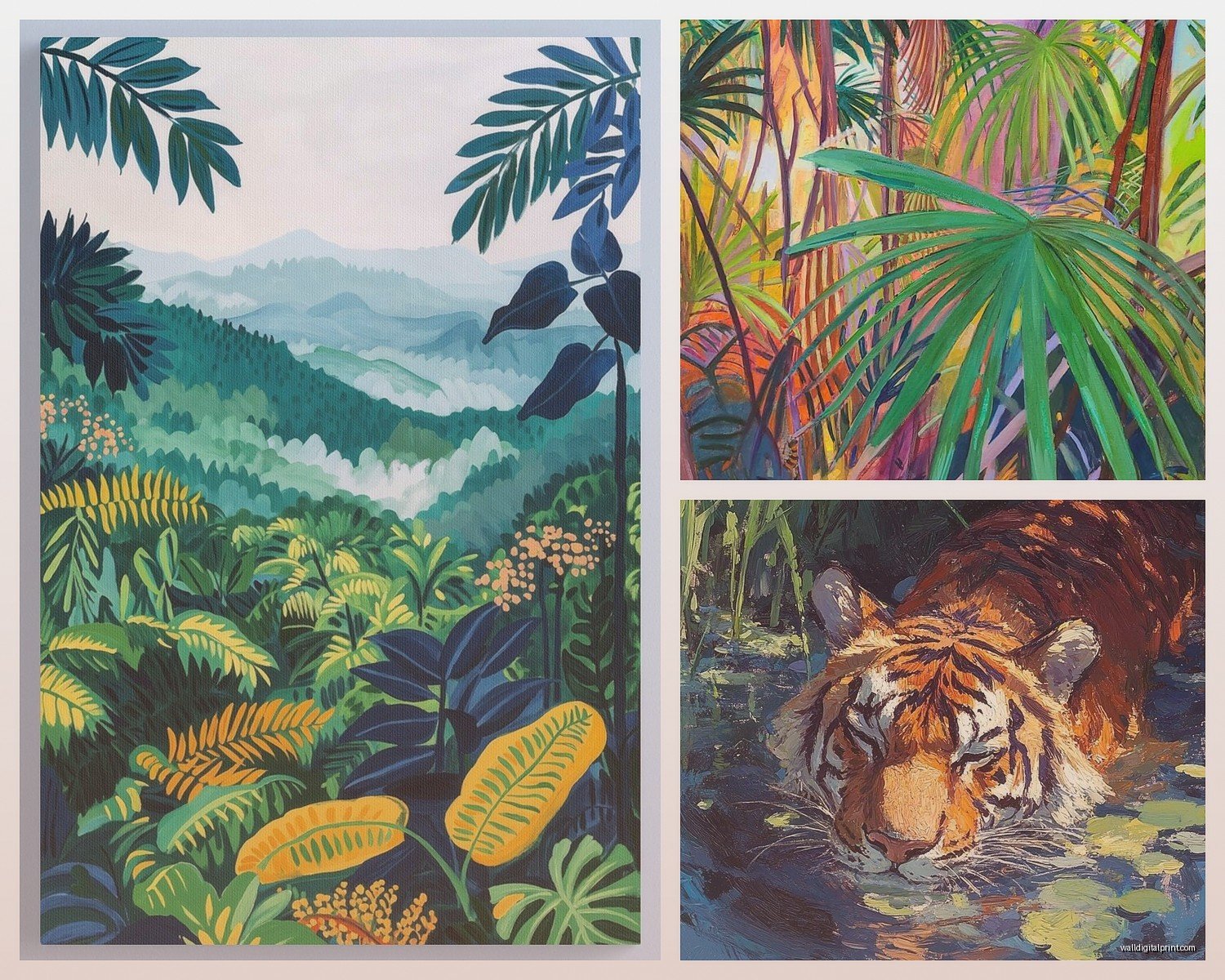
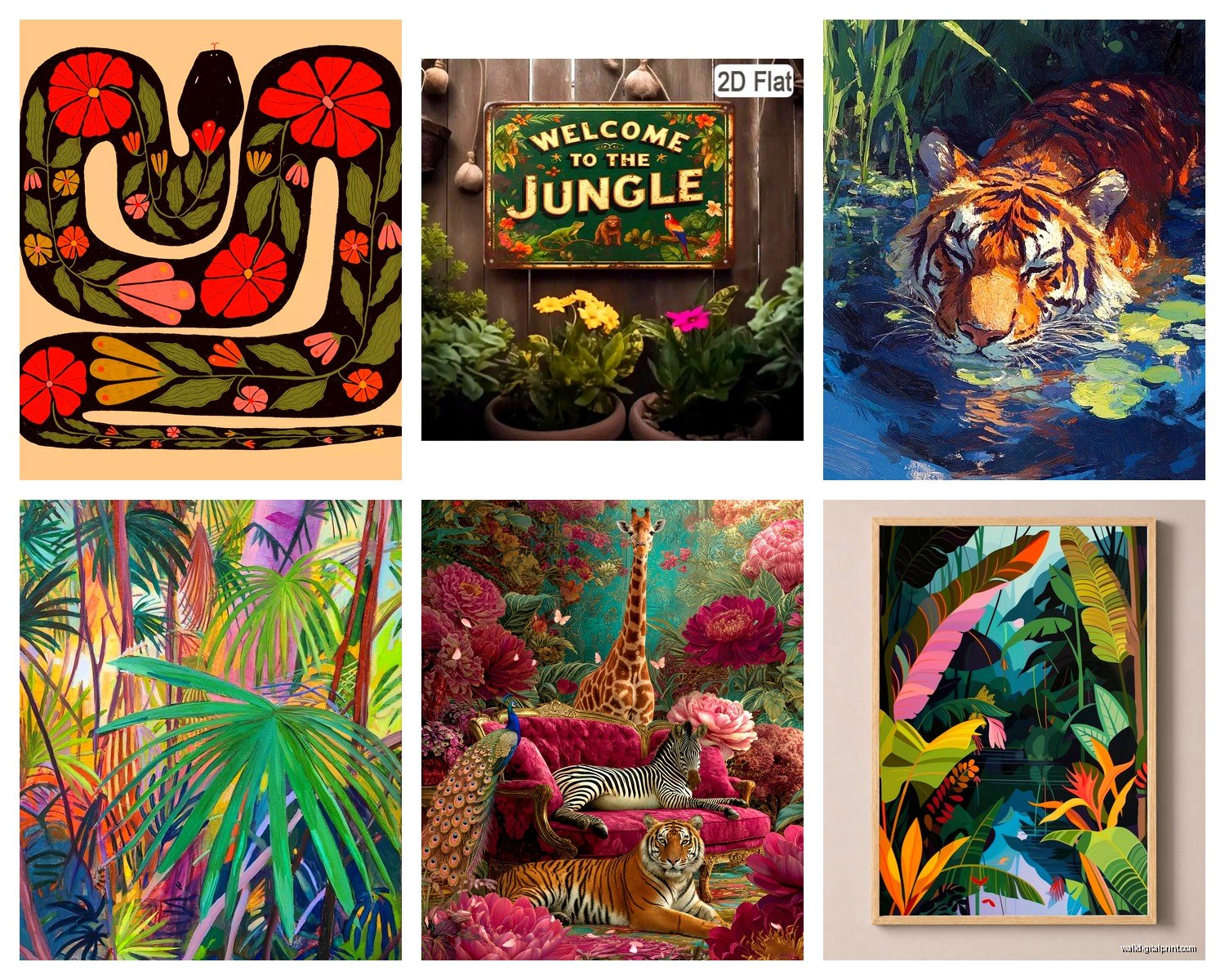
Okay so first thing – jungle wall art isn’t just one thing. There’s like several categories and they give totally different vibes. You’ve got your botanical prints which are basically leaves and plants, then there’s the wildlife stuff with actual animals, and then there’s abstract interpretations that are more about color and feeling than realistic depictions.
The botanical ones are easiest to work with honestly. Think monstera leaves, banana leaf prints, palm fronds – that kind of thing. They’re everywhere right now and range from like $15 poster prints on Etsy to $300 framed pieces from actual artists. I’ve bought both ends of that spectrum and here’s the thing… the cheap ones can look amazing if you frame them properly. Got this $18 monstera print from Society6 last month, put it in a $45 black frame from Target, and it looks like I spent way more.
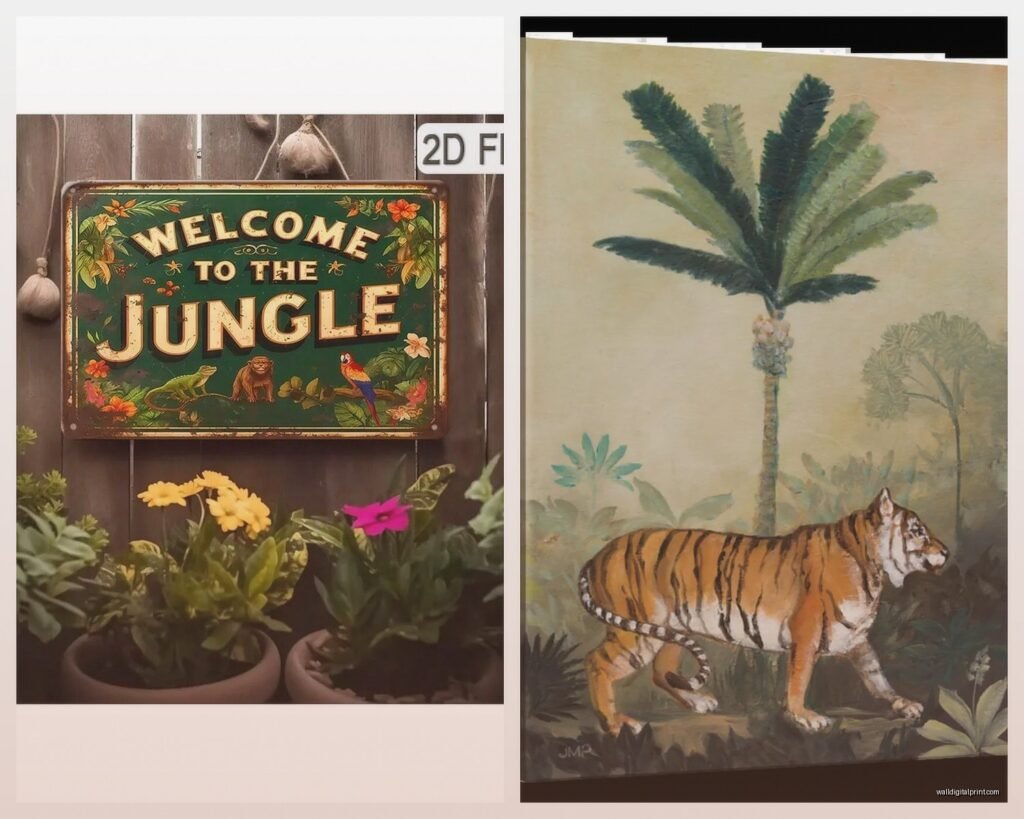
Wildlife prints are trickier because they can go kitschy really fast. Like you don’t want your living room looking like a dentist’s office, you know? The key is choosing either really realistic photography-style prints or going the opposite direction with stylized, almost graphic design versions of animals. The middle ground is where it gets weird.
What Actually Works in Real Spaces
I tested this in my own place first before suggesting it to anyone. My bedroom was boring and I wanted something that felt alive but wouldn’t keep me awake at night (tried a really intense tiger print once and it was like… too much energy for a sleep space).
Went with a three-panel set of green tree frogs on different leaves. Each panel is like 12×16 inches and they’re arranged in a row above my dresser. The frogs are bright but the backgrounds are muted greens and browns so it doesn’t feel overwhelming. Found them on Wayfair for around $120 for all three which felt reasonable.
For living rooms you can go bigger and bolder. One of my favorite installations I did was this massive canvas – like 48×36 inches – of a jaguar face. Just the face, really close up, with these incredible eyes. The client was nervous it would be too intense but we put it on the wall opposite their sofa so you’re not staring directly at it when you sit down, and it became this amazing conversation piece. That one was pricier, around $280 from a seller on Minted who does wildlife photography.
Size and Placement Things I Learned the Hard Way
This is gonna sound obvious but measure your wall before you buy anything. I cannot tell you how many times I’ve eyeballed it and been completely wrong. That jaguar print I mentioned? Almost didn’t fit because I thought the wall was bigger than it was.
For standard living room walls (like 10-12 feet wide), you want your main piece or arrangement to take up roughly 2/3 to 3/4 of the width. Anything smaller looks like it’s floating awkwardly. I usually aim for 60-75 inches of total width whether that’s one piece or multiple pieces grouped together.
Height-wise, center your art at eye level which is typically 57-60 inches from the floor to the center of the piece. But if you’re hanging above furniture, leave 6-8 inches of space between the furniture and the bottom of the frame. Less than that and it looks cramped, more than that and they feel disconnected.
Gallery Wall Situations
Oh and another thing – gallery walls with jungle themes can look incredible but they need planning. Don’t just buy a bunch of random jungle prints and throw them up. I learned this when I tried to create one in my hallway and it looked chaotic in the bad way.
What worked better was choosing a color palette first. I went with greens, deep blues, and touches of orange and yellow. Then collected prints that fit those colors – a toucan (orange beak), some blue morpho butterflies, tropical leaves, a green tree python. Got frames in three finishes: black, natural wood, and white. Mixed sizes but kept them to 8×10, 11×14, and 16×20 so there was some consistency.
Laid everything out on the floor first which is tedious but necessary. Took a photo of the arrangement so I could reference it while hanging. Used those 3M command strips for the smaller frames because drilling 9 holes seemed like a lot and honestly the command strips have held fine for like 8 months now.
The Color Scheme Problem
Here’s something nobody tells you – jungle art can clash with your existing decor really easily. All that green and those bright animal colors don’t automatically work with everything.
If your space is mostly neutrals (grays, whites, beiges), jungle art actually pops beautifully. The colors become the focal point. I have a client with an all-gray living room – gray sofa, white walls, gray rug – and we added this vibrant parrot print and it completely transformed the space without requiring any other changes.
But if you already have colorful furniture or patterned textiles, you gotta be more careful. Had a situation where someone had a teal velvet sofa and wanted jungle art and we had to really hunt for pieces that complemented rather than competed with that teal. Ended up going with black and white jungle photography which sounds boring but looked sophisticated.
My cat keeps trying to attack the butterfly print in my hallway which is annoying but also kinda funny because I guess it’s realistic enough to fool him?
Mixing Styles Within the Theme
You can totally mix photography with illustrations with abstract pieces as long as they share color tones or subject matter. In my office I have a photographic print of a sloth, an illustrated map of the Amazon rainforest, and an abstract painting that’s basically just layers of green brushstrokes. They work together because the greens are similar and they’re all in simple black frames.
The frame thing is actually super important for cohesion. When in doubt, use the same frame style for everything in a room. I default to simple black frames for almost everything because they’re versatile and make the art itself the focus.
Where to Actually Buy This Stuff
Okay so I’ve bought from probably 20 different places at this point and here’s my honest breakdown:
Etsy is hit or miss. You can find amazing original pieces from actual artists but you can also find a lot of dropshipped prints that you could get cheaper elsewhere. Always check if the seller has reviews and look at their other listings – if they have like 500 completely different products, they’re probably just reselling. The artists who specialize in nature or wildlife art are worth supporting though.
Society6 and Redbubble are good for affordable prints and they have sales constantly. Quality is decent for the price. I wouldn’t put their canvas prints in a formal living room but for a bedroom or office they’re fine. Their paper prints are actually pretty good if you frame them under glass.
Minted has higher quality stuff and they often have real photographers and artists. More expensive but you can tell the difference. Their framing options are good too if you don’t wanna deal with framing yourself.
Anthropologie has really unique jungle art but you’re paying for the brand. I’ve gotten some great pieces there during sales though. They had this incredible embroidered textile piece with tropical birds that I grabbed for 40% off and it’s one of my favorite things.
Wait I forgot to mention Desenio – they’re a European company but ship to the US. Really affordable, good quality prints, tons of botanical and animal options. Their stuff leans more minimalist and graphic which I love.
For higher-end original art, Saatchi Art has actual paintings and limited edition prints. We’re talking $500+ but if you want something nobody else has, that’s where I look. Found an amazing acrylic painting of a rainforest canopy there for a client who had a serious budget.
The Canvas vs Frame Debate
Canvas prints are popular because they’re ready to hang and look finished without framing. They work well for contemporary spaces. But honestly they can look cheap if the print quality isn’t great. You can see the texture of the canvas interfering with the image sometimes.
I usually prefer paper prints in frames because you have more control over the final look and the image quality tends to be sharper. Plus you can change frames later if your style evolves. Glass or acrylic glazing protects the print better too.
That said, I have a few canvas pieces that I love. There’s a stretched canvas print of a red-eyed tree frog in my bathroom that handles the humidity better than a paper print would.
Dealing With Different Room Types
Living rooms can handle bold, large-scale pieces. This is where you put the dramatic stuff – big cat faces, colorful bird compositions, oversized leaf prints. You’re not sleeping there so intense imagery is fine.
Bedrooms need calmer energy. I stick with softer colors, smaller scales, more peaceful subjects. Instead of a roaring monkey, maybe a sleepy sloth. Instead of bright tropical birds, maybe some subtle fern prints. My bedroom has those tree frogs I mentioned and a simple eucalyptus print and it feels serene.
Bathrooms are actually perfect for jungle themes because they’re often humid like rainforests anyway. Tropical leaf prints work great here. Just make sure if you’re using paper prints that they’re properly sealed or use canvas instead. The moisture can warp paper over time.
Offices can go either way. I have bolder stuff in mine because I want energy while I’m working. But if your office is also where you decompress, maybe tone it down.
Kids rooms are fun because you can get more playful with it. Those cute illustrated animals, brighter colors, maybe even some educational prints about rainforest layers or animal species. Got my friend’s kid a set of prints with different rainforest animals and their names and he’s obsessed with them.
The Lighting Factor Nobody Talks About
This is gonna sound weird but lighting changes everything with jungle art. Those greens and deep colors can look muddy in dim lighting. If you have a darker room, you might need to go with brighter, more vibrant pieces to compensate.
I added a picture light above that jaguar print I mentioned and it made such a difference. You could suddenly see all the detail in the fur and the eyes really popped. They make battery-operated ones now so you don’t need an electrician which is great.
Natural light is tricky because it can fade prints over time. UV-protective glass or acrylic helps but it’s more expensive. I rotate my art sometimes – keeping more valuable pieces away from windows and putting the cheaper prints where the sun hits.
Combining Jungle Art With Other Decor Styles
You’d think jungle art only works with tropical or bohemian decor but that’s not true. I’ve made it work with modern, traditional, even industrial spaces.
In modern spaces, go with graphic, simplified versions of jungle imagery. Clean lines, limited color palettes, geometric compositions. Black and white photography of rainforest scenes looks super sleek and contemporary.
Traditional spaces can handle more classical botanical prints – the kind that look like vintage scientific illustrations. Those old-school drawings of plants and butterflies with Latin names fit perfectly with traditional furniture.
Industrial spaces benefit from the contrast actually. All those hard surfaces and metal elements get softened by organic jungle imagery. Had a client with an exposed brick loft and we did a whole wall of rainforest canopy photos and it was stunning.
DIY Options If You’re Crafty
Okay so funny story – I tried painting my own jungle mural once and it was a disaster. Turns out I cannot paint realistically to save my life. But there are DIY options that actually work.
You can buy high-resolution images from stock photo sites and print them yourself at places like FedEx or Costco. Way cheaper than buying pre-made prints. Just make sure you’re getting images that are high enough resolution for your desired print size. At least 300 DPI.
Pressed leaves and fronds can look amazing if you frame them right. Collected some interesting leaves, pressed them between heavy books for a couple weeks, then mounted them on cream-colored cardstock and framed them. Looks legit botanical and cost maybe $20 total.
There are also peel-and-stick wall decals if you’re renting or don’t want permanence. Got some monstera leaf decals for a client’s rental and they looked surprisingly good. Easy to remove too when she moved out.
Common Mistakes I See People Make
Going too literal with the theme. Like… you don’t need monkey print throw pillows AND monkey art AND banana leaf curtains. Pick one or two jungle elements and keep the rest neutral.
Buying everything from the same collection. It ends up looking too matchy and designed. Mix sources and styles for a more collected, interesting look.
Ignoring scale. One tiny print on a huge wall looks lost. Multiple huge prints in a small room feels claotic and overwhelming. Consider your space.
Not thinking about the whole room. That parrot print might be gorgeous but if it clashes with your existing color scheme you’re gonna hate it after a week.
Forgetting about negative space. Your walls don’t need to be completely covered. Sometimes less is more and the art you do have makes more impact when it has room to breathe.
The thing is jungle wall art can completely transform a space if you do it thoughtfully. Start with one piece you really love and build from there rather than trying to do everything at once. I’ve been adding to my collection gradually for like two years now and that’s been way more satisfying than if I’d just bought everything in one shopping spree.
And don’t stress too much about getting it perfect – you can always move things around or swap pieces out. That’s the beauty of wall art versus like… permanent wallpaper or something.