Wall Art Guide, Wall Art Tutoriels
Metal Garden Wall Art: Outdoor Yard Sculpture Decor
Jul
So I’ve been obsessing over metal garden wall art lately because honestly, bare fences and walls in outdoor spaces just look so sad and unfinished. Like, you spend all this money on plants and furniture but then there’s this huge blank vertical space doing nothing.
The first thing you gotta know is that not all metal is created equal for outdoor use. I learned this the hard way when I bought this gorgeous copper piece for a client’s courtyard and within like three months it had this weird green patina that they hated. Some people love that aged look but if you don’t, you need powder-coated steel or aluminum. Powder coating is basically this process where they electrostatically apply dry powder and then bake it on, and it creates this super durable finish that actually holds up to rain and sun.
Aluminum is lighter which sounds like whatever but trust me when you’re trying to hang a 3-foot metal sunburst on your fence by yourself it matters SO much. Steel looks more substantial though and has better longevity if it’s treated right. I usually tell people to go steel for pieces they want to last decades and aluminum for stuff they might rotate out seasonally.
Size and Scale Is Where Everyone Messes Up
Okay so funny story, my neighbor asked me to help her pick something for her back fence and she was dead set on these delicate little butterflies. Her fence was like 8 feet tall and 20 feet long. I tried to explain that small pieces would just disappear but she didn’t listen and yeah… you literally can’t see them unless you’re standing right there.
The rule I use is measure your wall or fence section and go for art that takes up at least 1/3 to 1/2 of that space. If you have a 6-foot section, you want something that’s at least 2-3 feet in diameter or width. Bigger is almost always better outdoors because you’re viewing it from further away than indoor art, plus you’re competing with plants, sky, and all this other visual noise.
For really long fences I actually like doing groupings instead of one massive piece. Like three medium-sized pieces arranged in a cluster or a horizontal line. This is gonna sound weird but I think about it like gallery walls inside except you need way more breathing room between pieces. At least 12-18 inches between each piece or it starts looking cluttered.
Style Matching Without Being Boring
I’m gonna be real, you don’t have to match your metal art to your house style exactly but you should be in the same general vibe family. My own house is pretty modern farmhouse (I know, so original right?) and I mix rustic steel pieces with cleaner geometric designs. The metal itself ties them together even when the styles are different.
Some combos that actually work:
- Modern homes with geometric patterns, abstract shapes, or those minimalist line drawing styles
- Traditional or cottage gardens with botanical designs, birds, or vintage-inspired pieces
- Mediterranean or Spanish styles with wrought iron look pieces or sun/moon motifs
- Contemporary spaces with oversized single statement pieces or industrial-looking metal
The finish matters as much as the design. Matte black is having a huge moment and works with literally everything. Bronze or copper tones lean traditional. Raw steel or rusted finishes give you that industrial farmhouse thing. And painted colors… okay so I have opinions here. Most painted metal garden art looks cheap unless you’re spending serious money. The paint tends to fade or chip and then it just looks sad. If you want color, go for powder-coated in solid bold colors rather than hand-painted details.
Installation Without Destroying Your Fence
Wait I forgot to mention this earlier but figure out your mounting situation BEFORE you buy. Some pieces come with built-in hangers, some need you to drill into them, some are freestanding. Read the product details because I’ve had pieces show up with literally no hardware and no pre-drilled holes and that’s just annoying.
For wood fences the easiest method is outdoor-rated screws directly into the fence boards. Use stainless steel screws so they don’t rust and leave streaks. I usually do at least 2-3 mounting points for anything over 18 inches to keep it from twisting in wind.
Brick or stucco walls need masonry anchors. Get the kind that expand behind the wall as you tighten them. And honestly? If you’re mounting something heavy on brick or concrete, just hire someone unless you’re already comfortable with a hammer drill. I watched my client’s husband try to DIY it and he cracked two bricks before giving up.
Chain link fences are actually super easy, you can use zip ties or those metal wire ties. Just make sure you use a bunch of them because wind can really move lightweight pieces around on chain link.
Oh and another thing, consider the sun direction. Metal heats up like crazy in direct afternoon sun. I have this steel gecko on my west-facing fence and you literally cannot touch it between 2-5pm in summer. Not a huge deal unless you have little kids who touch everything.
Dealing With Wind
This is something nobody tells you until your beautiful new wall art is banging against your fence at 2am. Solid pieces catch more wind than openwork designs. If you live somewhere windy, look for pieces with cutout patterns or negative space that lets wind pass through.
I also add small rubber bumpers or felt pads on the back of pieces that sit flat against the fence. Keeps them from banging and also prevents the metal from leaving marks on the wood or paint. You can get these at any hardware store for like $3.
Themes That Actually Look Good
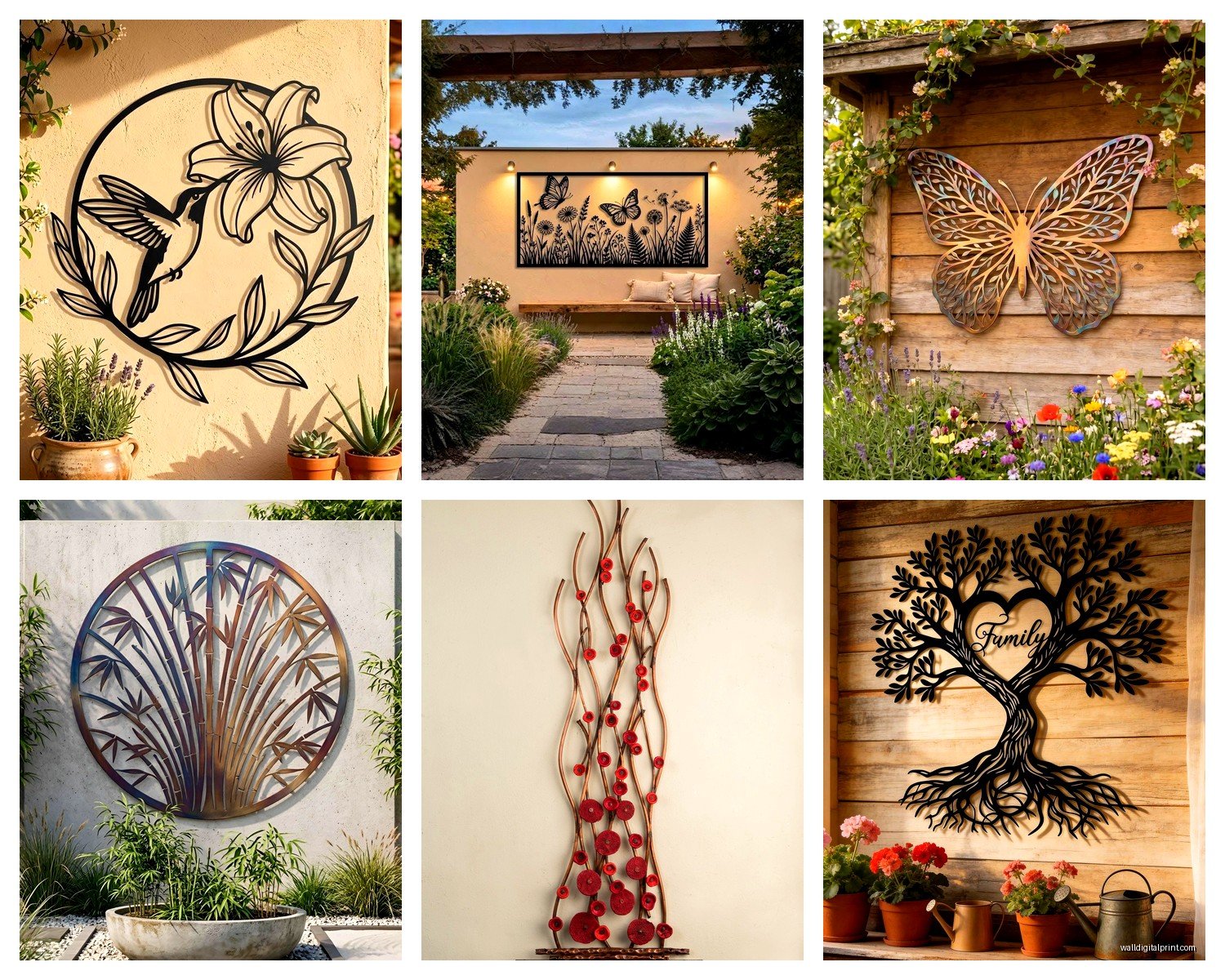
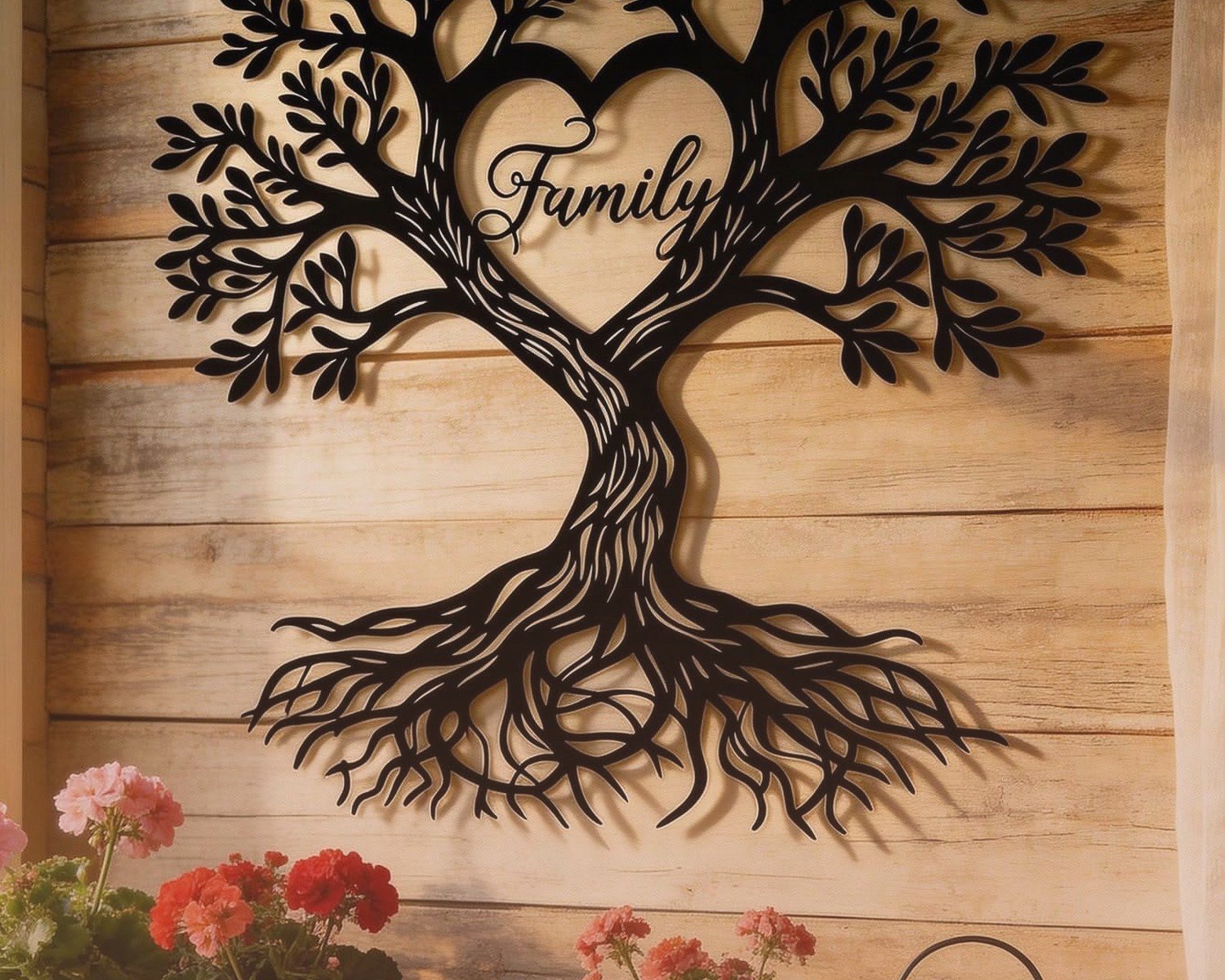
So everyone defaults to butterflies and dragonflies which, fine, they’re pretty, but there’s so much more out there. I’ve been really into tree of life designs lately because they work in almost any setting and they’re usually substantial enough to make an impact.
Celestial stuff – suns, moons, stars – is having a moment. My sister just put this giant compass rose on her patio wall and it’s become like the focal point of her whole outdoor space. Compasses and nautical themes work especially well if you’re anywhere near water but honestly they’re cool anywhere.
Geometric patterns and mandalas photograph really well if you care about that for like Instagram or whatever. They create these interesting shadow patterns throughout the day as the sun moves which adds this whole extra dimension you don’t get with solid designs.
I’m seeing more abstract and contemporary pieces that are just interesting shapes and lines. These are great if your garden is more modern or if you have a lot of busy plantings and need something that provides visual rest rather than more detail.
For kitchen gardens or vegetable plots, obviously botanical and herb designs make sense. But don’t be too literal about it. Like you don’t need metal tomatoes in your tomato garden, you know?
Mixing Materials
This might be controversial but I love mixing metal wall art with other elements. Hanging planters at different heights near metal pieces creates this layered look. Or mounting a metal piece on a wood board first and then hanging that on your fence adds dimension and makes the piece stand out more.
I did this thing where I mounted a metal tree design on a tall narrow board stained dark walnut and it looks like the tree is growing out of a trunk. My client cried when she saw it which was… a lot, but she loved it.
You can also lean large metal pieces against walls rather than hanging them if you have a covered patio or somewhere protected. This works especially well with really big statement pieces that would be too heavy to hang safely.
Lighting Considerations
Okay so this is extra but if you have outdoor lighting, think about how it’ll hit your metal art at night. Uplighting a textured metal piece creates amazing shadows. We put a solar spotlight at the base of this huge metal agave sculpture and at night it projects this crazy shadow pattern on the fence behind it.
Some metal art comes with integrated solar lights or LED elements. I’m kinda mixed on these? They can look cool but the solar ones are usually pretty dim and the battery-powered ones are a pain to maintain. If you want lit art, I think separate landscape lighting gives you more control.
Maintenance Real Talk
Most metal garden art is pretty low maintenance but it’s not zero maintenance. Once or twice a year I spray everything down with a hose to get dust and cobwebs off. If you have hard water, you might get mineral deposits that need scrubbing with a soft brush.
Powder-coated pieces can usually handle a gentle cleaner if they get really dirty. Just avoid abrasive scrubbers that’ll scratch the finish. Raw steel or rusted finishes actually get better with age in my opinion, but some people want to seal them to control the rust progression. There’s clear sealers made specifically for this.
Check your mounting hardware annually. Screws can work loose over time especially in wood that expands and contracts with weather. Takes like five minutes to tighten everything and prevents your art from ending up in your flower bed during a storm.
Where To Actually Buy This Stuff
Home improvement stores have basics but honestly the selection is pretty meh. Wayfair and Overstock have huge selections at decent prices. I’ve ordered probably 20 pieces from Wayfair for various projects and only had one arrive damaged and they replaced it no problem.
Etsy is amazing for unique handmade pieces but prices vary wildly. You can find local metal artists doing custom work which is cool if you want something specific. I worked with a guy who made a custom metal version of my client’s dog’s silhouette and it was honestly the coolest thing.
Amazon has everything obviously but quality is hit or miss. Read reviews carefully and look at customer photos not just the listing photos. If something has a ton of reviews saying it’s smaller than expected or looks cheap in person, believe them.
Local garden centers sometimes have curated selections of higher-end pieces. More expensive but you can see them in person which matters for checking quality and scale.
Estate sales and antique stores can be goldmines for vintage metal garden art. Older pieces are usually heavier gauge metal and have more character. Just check for rust stability, you want surface rust not structural deterioration.
Budget Breakdown
You can find small decorative pieces for $20-40 but they’re usually pretty flimsy. The sweet spot for quality pieces that’ll last is more like $60-150 for medium-sized art. Large statement pieces run $150-400 typically. Custom or artist-made stuff starts around $200 and goes up from there depending on size and complexity.
I tell people to buy one really good piece rather than multiple cheap ones. One substantial sculpture makes more impact than five small things scattered around. You can always add more later but starting with quality sets the tone.
Seasonal Rotation Strategy
Some people like to swap out their garden art seasonally which is totally extra but also kinda fun? I have a client who does spring butterflies, summer sun designs, fall leaves, and winter snowflakes. She stores them in her garage and honestly it gives her garden a different vibe throughout the year.
If you’re gonna do this, make sure your mounting system allows for easy swaps. Those removable picture hanging strips rated for outdoor use actually work pretty well for lighter pieces. Or use the same screw holes and just swap which piece is mounted there.
My cat just knocked over my coffee while I’m writing this so that’s fun… anyway
Common Mistakes To Avoid
Hanging stuff too high. Eye level or slightly below works better than way up high on a tall fence. You want to actually see the details.
Ignoring your viewing angles. Think about where you’ll actually see this from, your patio, through windows, from the yard. Mount it where it’ll be visible from your main sightlines.
Buying something you love without considering your space. That intricate mandala looks amazing online but if your fence is shaded by trees and covered in vines, you’ll never see the detail.
Not considering your neighbors if it’s on a shared fence line. Some HOAs have rules about this too so check before you mount something permanent on a fence you don’t fully own.
Choosing trendy over timeless if you don’t want to replace it in a few years. Geometric and nature motifs have staying power. That metal cactus wearing sunglasses might seem fun now but…
Going too matchy with multiple pieces. If you’re doing a grouping, vary the sizes and maybe the specific designs even if they’re all the same theme. Three identical pieces in a row looks more like a catalog display than a curated space.
I think that covers most of what I’ve learned through trial and error and client projects. The main thing is just go for it, outdoor walls need art just as much as indoor ones and metal holds up so much better than anything else you could put out there.