Wall Art Guide, Wall Art Tutoriels
Van Gogh Wall Art: Impressionist Starry Night Reproductions
Jul
So I’ve been completely obsessed with Van Gogh reproductions lately and honestly it started because a client wanted Starry Night in their living room but had NO idea what they were getting into. Like, there are literally hundreds of versions out there and they’re all so different it’s kinda wild.
The Quality Thing Nobody Talks About
Okay so first thing – and I wish someone had told me this years ago – not all reproductions are actually reproductions if that makes sense? Some are just poster prints that someone slapped a frame on and called it art. The actual good ones are either giclée prints or hand-painted oil reproductions, and the price difference is huge but so is the quality difference.
Giclée prints are basically super high-quality inkjet prints on canvas or fine art paper. They’re gonna run you anywhere from $80 to $300 depending on size and the company. I’ve tested like six different suppliers (my apartment looked insane for a month with all these Starry Nights everywhere, my cat knocked one over and I almost cried) and the ones from museum gift shops are honestly the most color-accurate. The MoMA one is ridiculously good but also ridiculously expensive at around $250 for a 24×30.
Hand-painted reproductions are a whole different beast. These are actual paintings where someone recreates the brushstrokes and everything. They range from $200 to over $1000 and here’s where it gets tricky – a lot of them come from studios in China or Eastern Europe and the quality is ALL over the place.
What to Actually Look For
The color accuracy thing is so important with Van Gogh because his blues and yellows were super specific. I put three different Starry Night prints next to each other once and they looked like different paintings. One had this greenish tint to the sky that made it look kinda sickly? Another one had the stars so bright they were almost white which completely missed the point.
If you’re going giclée, ask about:
- What kind of printer they use (12-color printers are better than 8-color)
- The paper or canvas weight (anything under 340gsm for paper or 400gsm for canvas feels cheap)
- UV coating because Van Gogh’s colors will fade like crazy in direct sunlight
- Whether it’s an authorized reproduction (MoMA and the Van Gogh Museum both license official ones)
For hand-painted, you gotta ask:
- How thick the paint application is (impasto technique is what Van Gogh used, should be textured)
- What kind of oils they’re using (student grade vs artist grade makes a difference)
- If you can see photos of the actual painting before they ship it
- Return policy because sometimes they look great in photos and weird in person
Size Matters More Than You Think
The original Starry Night is only 29 x 36 inches which surprises everyone. It’s at MoMA and when you see it in person it’s smaller than you expect but also MORE intense because those brushstrokes are so thick and wild up close.
I usually tell people to go bigger than the original for home display because we’re used to seeing it in textbooks and online where it fills our whole screen. A tiny 16×20 Starry Night on a big wall just looks sad and lost. But also don’t go massive unless you have the wall space and the right room vibe.
Best sizes I’ve found:
- 24×30 or 24×36 for bedroom walls or above a dresser
- 32×40 for living room statement pieces
- 40×50 if you have a really big wall and want it to be THE focal point
Anything bigger than 50 inches starts to look more like a mural than a painting and honestly the composition doesn’t hold up as well at that scale. Van Gogh painted it to be viewed from a certain distance.
Frame or No Frame (and Why It’s Complicated)
Okay so funny story – I ordered this gorgeous hand-painted reproduction last year and didn’t realize it would come unframed on just a stretched canvas. Had to scramble to find a frame and it was a whole thing because the depth was weird.
Canvas reproductions usually come in three formats:
- Rolled canvas (cheapest to ship, you gotta stretch and frame it yourself or pay someone)
- Stretched canvas (ready to hang, sides are usually painted or mirrored)
- Framed canvas (most expensive but ready to go)
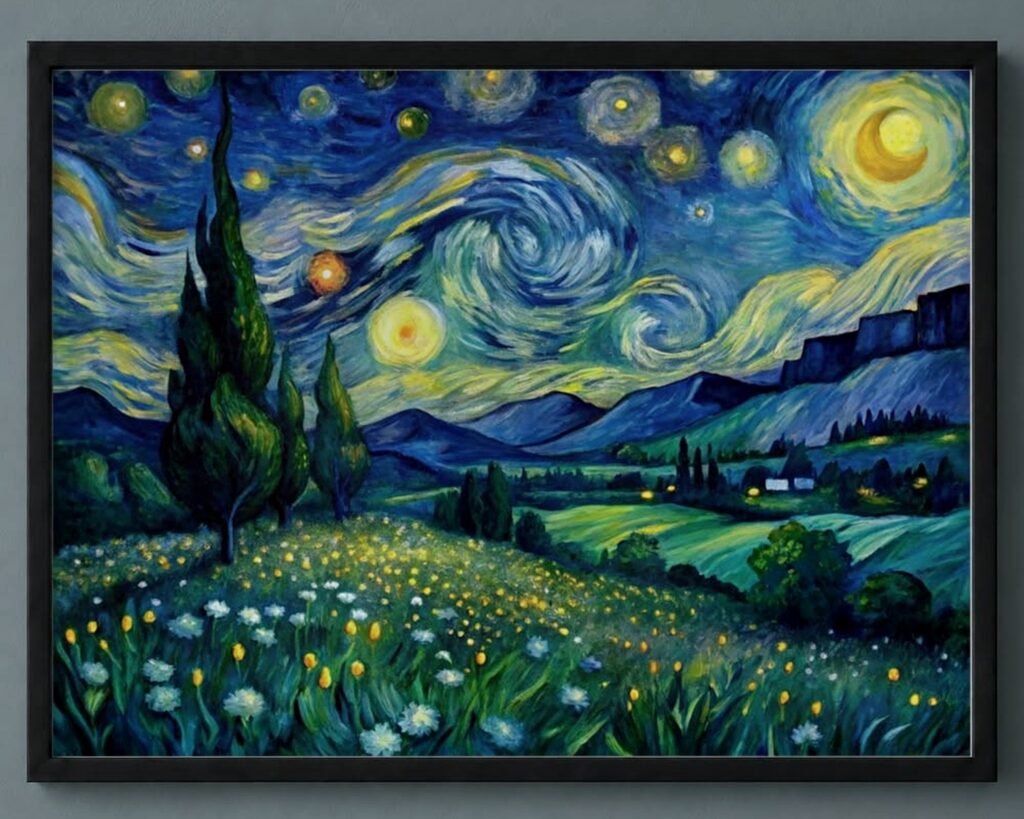
For Starry Night specifically, I actually think the gallery wrap look (stretched canvas with painted sides, no frame) works really well because it has this modern feel that keeps it from looking too much like you’re trying to recreate a museum. But if you’re going for a more traditional look, a simple dark wood or black frame is the move. Gold frames look weird with it unless you’re doing a whole vintage maximalist thing.
The Frame Width Thing
Thinner frames (like 1-2 inches) make the painting feel more contemporary. Wider frames (3-4 inches) give it more presence but can overwhelm smaller prints. I learned this the hard way when I put a massive ornate frame on a 20×24 print and it just looked like the frame ate the painting.
Where to Actually Buy Them
I’ve ordered from probably fifteen different places at this point (occupational hazard plus I’m just obsessive about this stuff) and here’s my honest breakdown:
Museum Shops – MoMA and Van Gogh Museum both sell licensed reproductions. They’re expensive but the color matching is chef’s kiss because they have access to the actual paintings. MoMA’s are giclée, Van Gogh Museum has both print and hand-painted options.
Etsy – Super hit or miss. I’ve gotten amazing hand-painted ones from shops in Ukraine and also received what was basically a poster print someone claimed was hand-painted. Always read reviews and ask for progress photos. Shops like “ArtStudioGallery” or “PaletteKnifeArtStudio” tend to be legit but do your homework.
overstockArt.com – They specialize in hand-painted reproductions and I’ve had good experiences with them. Their Van Gogh pieces run $300-600 usually and you can customize the size which is cool. The texture is really good on theirs.
Amazon – Gonna be real with you, most of the cheap ones on Amazon ($50-100 range) are just okay. They’re fine if you want something temporary or you’re on a tight budget but the colors are usually off and the canvas quality is meh. That said, I’ve seen some from “Wieco Art” that weren’t terrible for the price.
1stDibs and Chairish – If you want vintage reproductions (like actually old prints from the 60s or 70s) these sites have them. More expensive but there’s something cool about a reproduction that’s itself become vintage? I dunno, depends on your vibe.
The Color Problem Everyone Has
Okay wait I forgot to mention the biggest issue – your screen lies to you about colors. The Starry Night you see on your phone or computer is not the same as what you’ll get on your wall. The original has this really specific cobalt blue that a lot of reproductions make too bright or too dark.
Best thing I ever did was order color swatches from a couple places before committing to a big expensive piece. Some companies will send you a small sample for like $10-20. Totally worth it because I almost ordered this one that looked perfect online but the sample was so oversaturated it hurt to look at.
If you can’t get samples, at least look at the reproduction in multiple lighting conditions in photos. Ask the seller for photos in natural daylight, not just their professional studio shots with perfect lighting.
Placement and Lighting Tips
This is gonna sound weird but Starry Night is actually tricky to place because it’s so visually busy. It needs breathing room or it’ll compete with everything else in the space and just create visual chaos.
Works best:
- On a wall by itself with minimal other decor
- Above a bed with simple neutral bedding
- In a dining room or hallway where it can be a moment
- Opposite a seating area where you can actually look at it
Doesn’t work great:
- Surrounded by other busy artwork
- In small cramped spaces where you can’t step back and see it
- On a wall with lots of windows if it’s not UV protected (those blues will fade)
For lighting, you want it lit but not directly hit with spotlights if it’s a giclée print because that’ll fade it faster. If it’s hand-painted oil, a picture light or track lighting actually brings out the texture really nicely. I installed a small LED picture light on one for a client and it made such a difference, the brushstrokes just popped.
The Style Mixing Thing
People always ask me if Starry Night works in modern spaces and honestly yeah, it does? The swirly composition and bold colors actually read pretty contemporary. I’ve put it in mid-century modern rooms, minimalist spaces, even industrial lofts, and it works if you’re intentional about it.
The trick is balancing it with simpler pieces. Like if your furniture is clean-lined and neutral, Starry Night adds personality without making things feel cluttered. But if you already have a lot of pattern and color going on, it might be too much.
Also it’s become such an iconic image that it almost works as pop art now? I did a whole apartment last year where we treated it like we would a Warhol, just this bold graphic element in an otherwise minimal space, and it was really cool.
Other Van Gogh Pieces to Consider
If you love Van Gogh but Starry Night feels too obvious or overdone (which like, fair, it’s everywhere), there are other pieces that give similar vibes but feel fresher:
- Café Terrace at Night – same night sky energy, warmer colors, less common
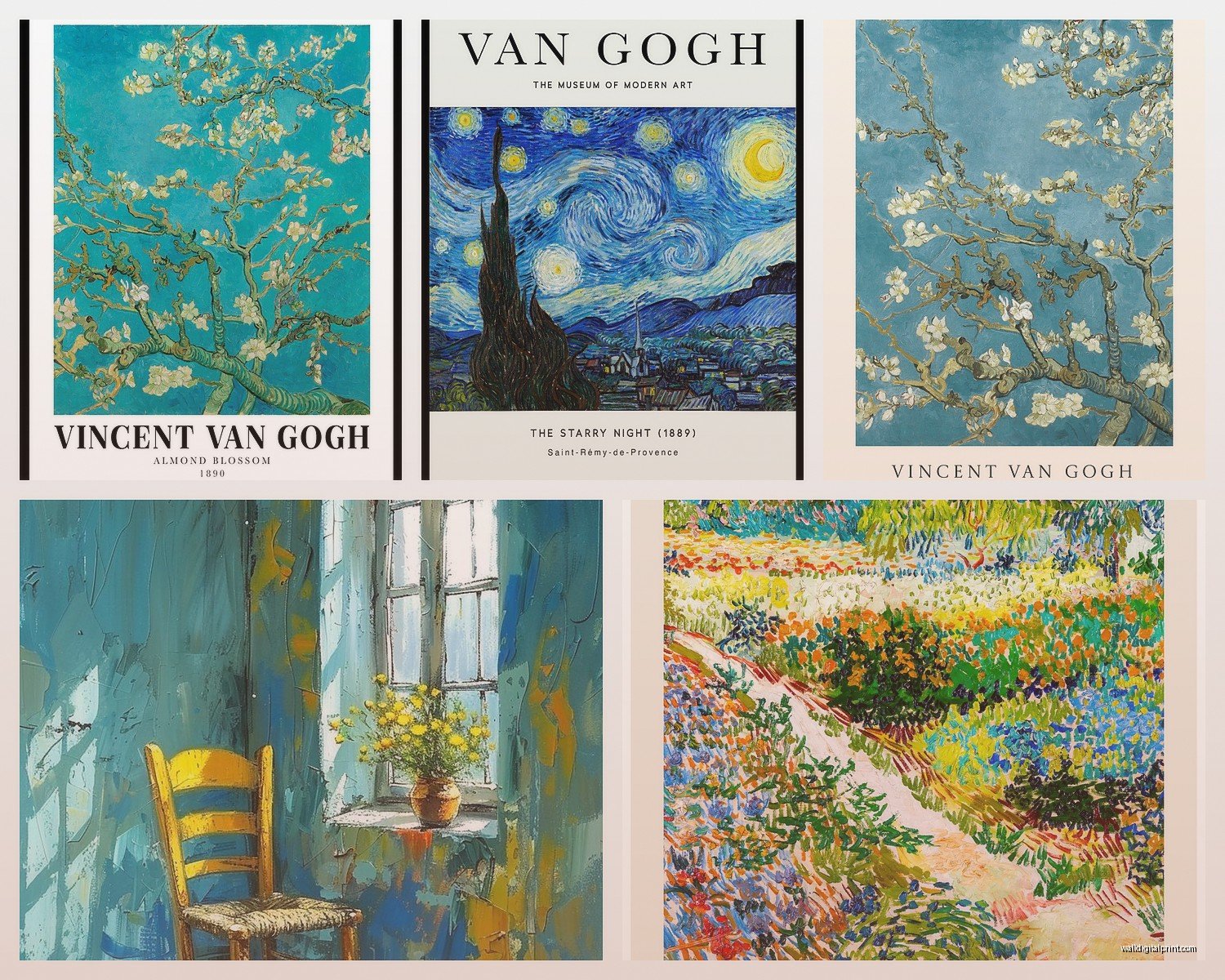
- Almond Blossoms – completely different vibe, softer and more peaceful
- Wheat Field with Cypresses – dramatic but in a different way
- Starry Night Over the Rhône – literally Starry Night’s chill cousin, so underrated
I actually put Almond Blossoms in a nursery once and it was perfection. Still Van Gogh, still beautiful, but not as intense as Starry Night.
The Price Reality Check
Real talk – you can spend anywhere from $30 to $3000 on a Starry Night reproduction and honestly there are good options at multiple price points, you just gotta know what you’re getting.
Under $100: You’re getting a poster print or basic canvas print. Fine for a dorm room or temporary situation but not heirloom quality.
$100-300: Decent giclée prints, some hand-painted options from less experienced artists. This is the sweet spot for most people honestly.
$300-800: Really good hand-painted reproductions with proper impasto technique, high-end giclée from museum shops.
$800+: Commission pieces, large-scale hand-painted works, vintage reproductions, or pieces with elaborate custom framing.
I usually recommend people spend at least $200 if they want something that’ll last and look good for years. But I’ve also seen $75 prints that looked fine in the right setting so like, it depends on your situation and expectations.
Caring for Your Reproduction
Oh and another thing – maintenance is different depending what you got. Giclée prints basically need nothing except keeping them out of direct sun and not touching the surface (oils from your hands can damage it over time).
Hand-painted oils need a bit more attention. Dust them gently with a soft brush every few months, keep them away from humidity (so not in bathrooms), and if you live somewhere with big temperature swings, try to keep them on interior walls.
I had a client whose hand-painted Van Gogh was over their fireplace and after a year the varnish started cracking from the heat. Had to move it which was a whole design thing to figure out. So yeah, think about your wall’s environment before you commit to placement.
Every few years, hand-painted pieces might need a cleaning or revarnishing if the colors look dull. You can do it yourself with special art cleaning solutions or hire someone, usually runs like $100-200 for a professional cleaning.
The canvas prints on stretcher bars sometimes need tightening after a few years, especially in humid climates. You can buy these little canvas keys (they’re like tiny wooden wedges) and tap them into the corners to tighten everything back up. Takes five minutes and makes a huge difference.