Wall Art Guide, Wall Art Tutoriels
Sacred Geometry Wall Art: Spiritual Mathematical Patterns
Jul
So I’ve been completely obsessed with sacred geometry wall art lately and honestly it started because a client wanted to do this whole “spiritual but make it design-forward” thing in her meditation room and I went down this massive rabbit hole. Like, I’m talking three weeks of researching the Flower of Life versus Metatron’s Cube at 2am while my cat knocked over my coffee.
First thing you gotta know is that not all sacred geometry pieces are created equal. I learned this the hard way when I ordered what I thought was a gorgeous Sri Yantra print and it showed up looking like someone traced it in MS Paint. The proportions were completely off, which defeats the entire purpose because these patterns are literally based on mathematical precision. If the angles aren’t right, you’re basically just hanging a pretty design that has none of the actual geometric significance.
The Main Patterns You’ll Actually See Everywhere
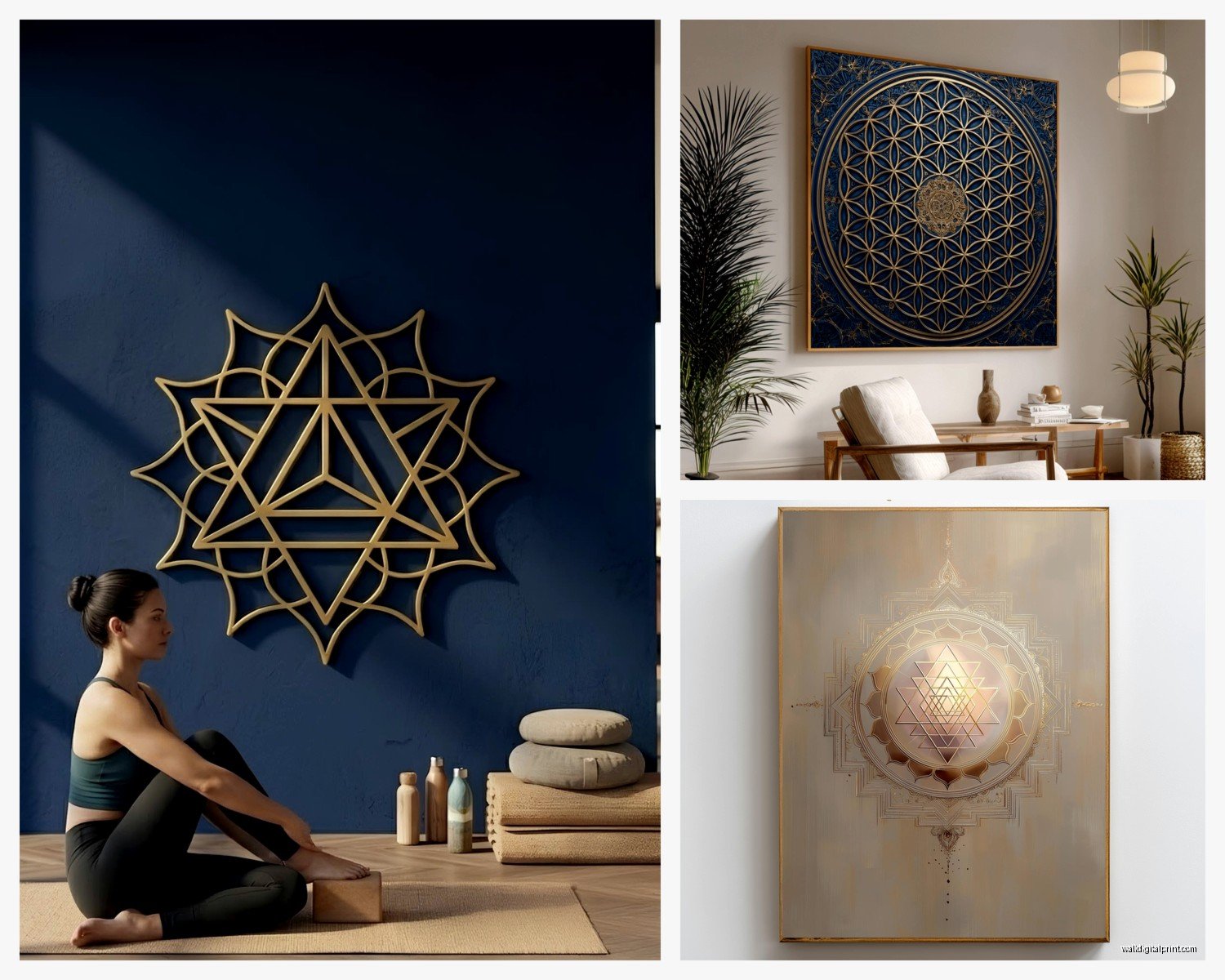
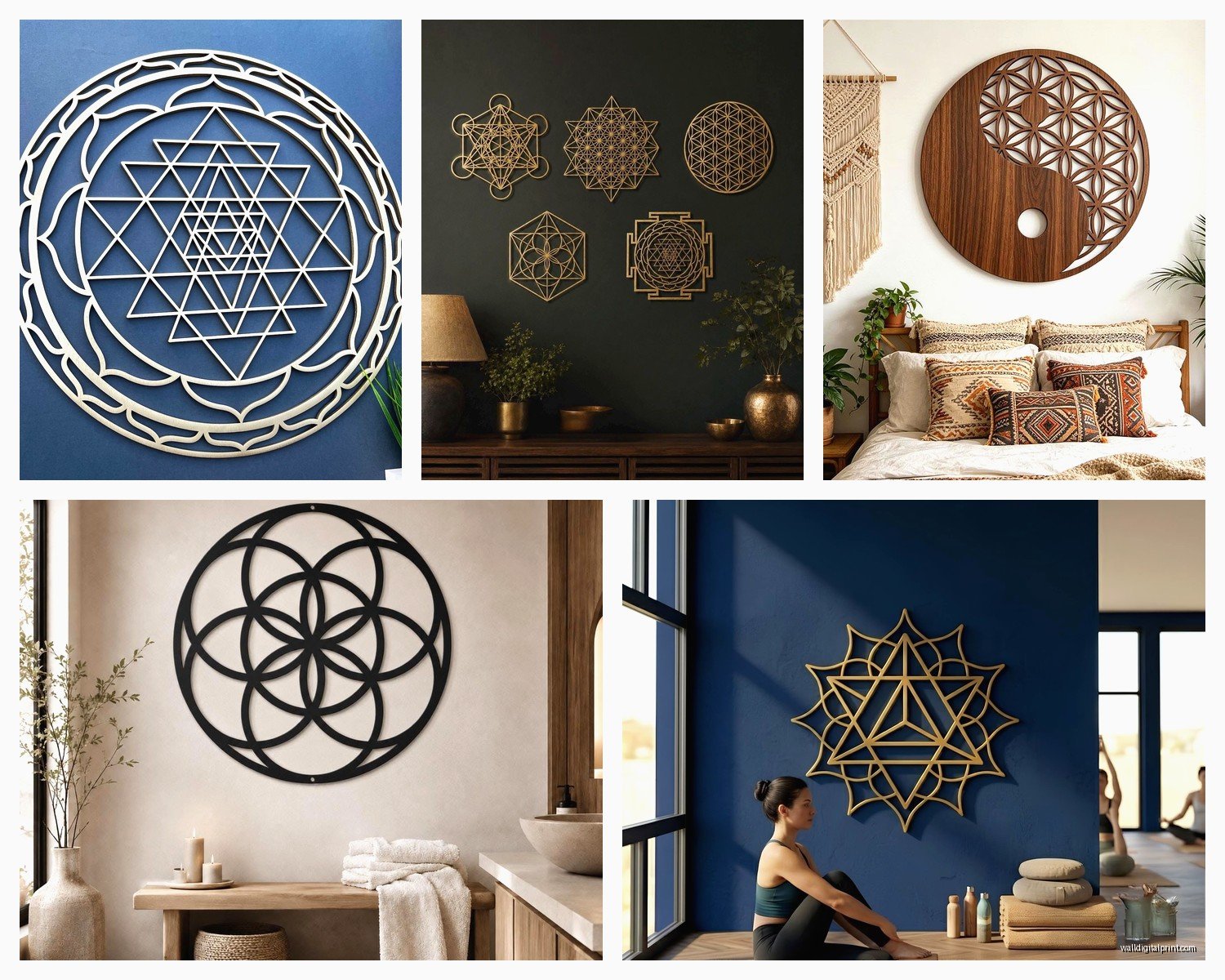
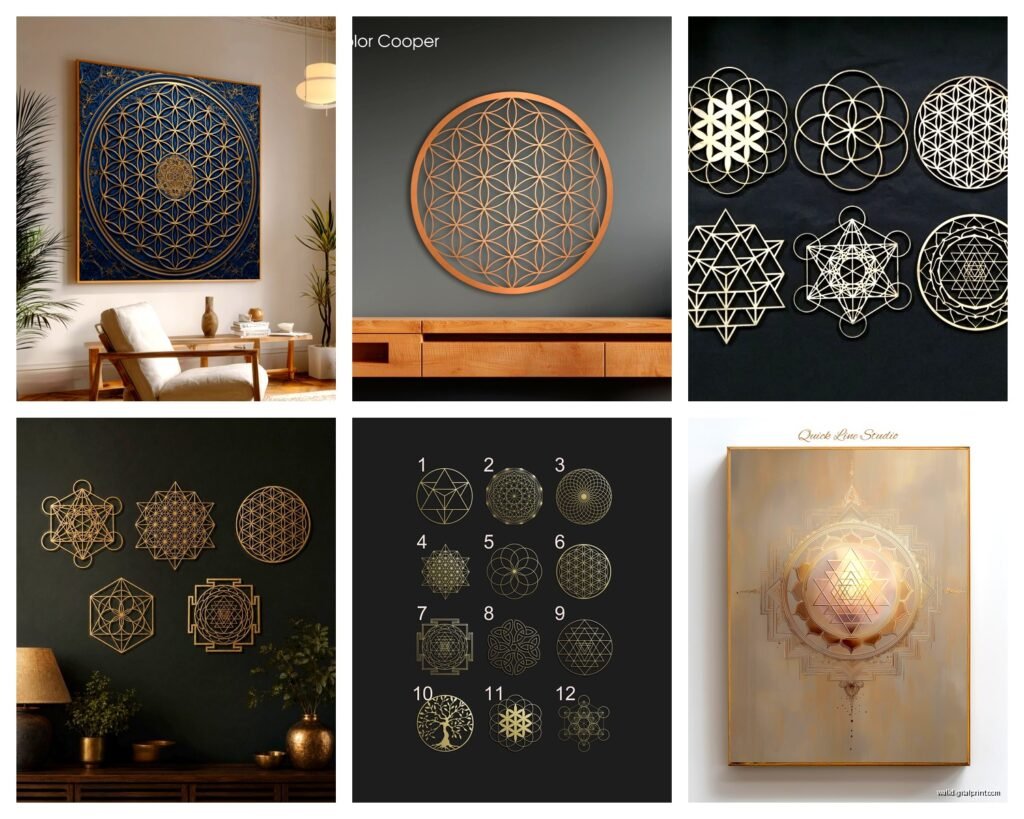
Okay so the Flower of Life is probably the most popular one. It’s those overlapping circles that form this petal-like pattern and honestly it works in almost any space because it’s symmetrical and calming without being too intense. I’ve used it in everything from minimalist Scandinavian bedrooms to maximalist bohemian living rooms. The key is the color scheme – black on white feels modern and clean, gold on navy feels luxurious, and anything with rainbow gradients is gonna read very “crystal shop” which is fine if that’s your vibe but harder to integrate into sophisticated spaces.
Metatron’s Cube is the one that looks like a bunch of lines connecting circles in this super complex way. It contains all five Platonic solids which is wild from a mathematical standpoint but design-wise it can read as busy. I usually recommend this one for office spaces or creative studios because it has this active, energetic feel. Not great for bedrooms unless you want your brain working overtime when you’re trying to sleep.
The Sri Yantra is my personal favorite even though it’s tricky to get right. It’s those interlocking triangles that form this central point and when it’s done correctly the precision is just… *chef’s kiss*. But I’ve seen SO many bad versions. You want clean lines and proper geometric construction. I found this artist on Etsy who actually uses mathematical software to create hers and the difference is noticeable.
Materials Matter More Than You’d Think
I’ve tested like every material option at this point because my home has basically become a sacred geometry showroom. Metal wall art is having a moment and for good reason – there’s something about sacred geometry rendered in brushed gold or copper that feels both ancient and contemporary. I got this massive Seed of Life piece in antique bronze for above my mantle and people literally stop mid-conversation to stare at it.
Wood is another great option, especially laser-cut pieces. The natural grain adds texture without competing with the geometric pattern. I did a whole gallery wall for a yoga studio using different sacred geometry symbols in light birch wood and the effect was stunning. Just make sure the laser cutting is precise because any wobbles in the lines are super obvious with geometric patterns.
Canvas prints are the most affordable option but you really gotta watch the quality. Cheap canvas prints of sacred geometry often have pixelation issues or the colors look muddy. I always zoom in like 500% on the product photos to check line quality. Also canvas gives you the most color options which is cool if you want something vibrant.
Wait I forgot to mention metal leaf application – this is newer but SO gorgeous. It’s basically sacred geometry patterns applied with gold or silver leaf on a painted background. Very high-end looking but also more expensive. I splurged on a gold leaf Flower of Life for my entryway and it catches the light in this amazing way throughout the day.
Size and Placement Strategy
This is where people mess up constantly. Sacred geometry is all about proportion and harmony so you can’t just slap a tiny 8×10 print on a huge empty wall and expect it to work. The patterns themselves are based on mathematical ratios so your sizing should respect that visual weight.
For statement pieces I usually go minimum 24×24 inches, and honestly 36×36 or larger works better in most spaces. These patterns have enough detail that they can handle being BIG without overwhelming. I did a 48-inch metal Metatron’s Cube in a double-height entryway and it’s perfect because the complexity of the pattern fills the scale.
Smaller pieces work better in groupings. Like I created this grid of nine different 12×12 sacred geometry symbols in matching black frames with white backgrounds for a minimalist bedroom and the repetition of the geometric theme across multiple pieces created enough visual impact.
Height-wise, center the piece at eye level (around 57-60 inches from floor to center) unless you’re doing something architectural. I broke this rule in my own meditation corner by hanging a large Sri Yantra lower, almost at seated eye level, because that’s how you actually view it when you’re using the space.
Color Psychology Meets Geometry
Okay so funny story, I initially thought sacred geometry should only be in neutral tones to keep it “spiritual” but then I worked with a color therapist on a project and realized I was being way too limited. Different colors interact with the geometric patterns to create totally different energies.
Black and white or metallic monochromes feel modern, meditative, focused. Great for minimalist spaces or anywhere you want calm concentration. This is my go-to for home offices and bedrooms.
Deep blues and purples with gold accents tap into that traditional spiritual aesthetic. Very cosmic, very “universe vibes.” I use this combination for meditation spaces, yoga rooms, or anywhere someone wants that explicitly spiritual feel.
Earth tones – terracotta, sage, warm browns – ground the mathematical precision in something organic. This works surprisingly well in bohemian or natural modern spaces. I did a whole desert-inspired living room with a rust-colored Flower of Life and it was *perfect*.
Rainbow or multi-color sacred geometry is polarizing. It can look incredible in eclectic or maximalist spaces, especially kids’ rooms or creative studios. But it can also look like a head shop poster real quick so you gotta be intentional about it. Quality of execution matters even more with colorful pieces.
Mixing Sacred Geometry with Other Art
You’d think geometric patterns would clash with other art styles but actually they’re super versatile if you’re thoughtful about it. The key is treating the sacred geometry piece as either the anchor or the accent, not trying to make everything equal.
I’ve successfully mixed sacred geometry with:
- Abstract expressionism – the organic chaos plays beautifully against geometric precision
- Landscape photography – creates interesting juxtaposition between natural and mathematical
- Minimalist line drawings – stays cohesive through simplicity
- Vintage botanical prints – surprisingly works because both deal with natural patterns
What doesn’t work well is mixing sacred geometry with busy representational art or loud graphic design posters. Too much competing for attention.
The Lighting Situation Nobody Talks About
This is gonna sound weird but lighting completely transforms sacred geometry wall art in ways that don’t happen with other art styles. Because these patterns are so precise and often have metallic or reflective elements, they interact with light sources dramatically.
I installed picture lights above my metal sacred geometry pieces and the shadows cast by the raised elements create this secondary pattern on the wall that changes throughout the day. Totally unintentional but amazing.
Natural light does interesting things too. I have a copper Flower of Life near a west-facing window and the way the afternoon sun hits it is like… it glows. Sounds cheesy but it’s true.
For meditation or yoga spaces, consider dimmable lighting so you can adjust the intensity. Sometimes you want the geometry to be a focal point with bright lighting, other times you want it to recede into softer ambiance.
Where to Actually Buy Quality Pieces
After ordering from like thirty different places (my credit card statement last month was embarrassing), here’s what I’ve learned:
Etsy has the most variety but quality is all over the place. Look for sellers who show close-up detail shots and have reviews mentioning precision and quality. I’ve found amazing artists who create museum-quality pieces but also received some disasters. Always read reviews carefully and don’t be afraid to message the seller with questions about their process.
Society6 and similar print-on-demand sites are hit or miss. The advantage is easy returns and standardized sizing, but you’re limited to whatever designs are uploaded and you can’t verify the geometric accuracy. I’ve gotten decent pieces here for temporary installations or rental properties.
Specialized sacred geometry artists – there are people who ONLY make sacred geometry art and study the mathematics behind it. These pieces cost more but the quality and accuracy are noticeably better. I follow several on Instagram and honestly their work is investment-level.
Local metaphysical shops sometimes have unique handmade pieces you won’t find online. I got this incredible hand-painted Seed of Life on reclaimed wood from a tiny shop in Sedona and it has so much more character than mass-produced stuff.
DIY Options If You’re Crafty
I’m not normally a DIY person but sacred geometry is actually kinda perfect for it if you have patience. You can find geometric stencils or use a compass and straightedge to create your own. I did a whole accent wall in my meditation corner using a projector to trace a massive Flower of Life pattern, then painted it in subtle tone-on-tone colors.
Vinyl decals are another option – less permanent, easy to apply, and you can find really precise geometric patterns. Great for renters or people who like to change things up frequently.
There are also apps and software that generate sacred geometry patterns that you can print yourself. Just make sure your printer quality is good enough because these patterns show every imperfection.
The Authenticity Question
Look, I gotta address this because it comes up. Some people are really precious about sacred geometry needing to be “authentic” or created with specific intentions or whatever. And I respect that for personal spiritual practice. But from a design perspective, what matters is mathematical accuracy and visual impact.
I’ve used sacred geometry in completely secular modern spaces and it works beautifully because the patterns themselves are inherently harmonious. You don’t need to burn sage over your Metatron’s Cube for it to be a stunning piece of wall art (though you can if that’s your thing, no judgment).
The mathematical precision is what creates the visual appeal. Whether you connect with it spiritually is personal, but the design benefits come from the geometric harmony regardless of your belief system.
Common Mistakes I See Constantly
Buying pieces where the geometry is off – seriously this ruins the whole point. If the circles aren’t perfectly round or the proportions are wrong, it’s just a drawing of sacred geometry, not actual sacred geometry.
Going too small – these patterns need space to breathe and for your eye to appreciate the complexity. Tiny sacred geometry art loses impact.
Mixing too many different geometric patterns in one space – pick one or two maximum. More than that and it starts feeling chaotic rather than harmonious.
Ignoring the existing style of your space – sacred geometry can work in many design styles but you need to choose the right material and color treatment. A rainbow resin Sri Yantra probably won’t work in your Scandinavian minimalist bedroom.
Not considering the energy of the space – and I don’t even mean this in a woo-woo way necessarily. Some patterns are visually active and stimulating (Metatron’s Cube) while others are calming and meditative (Flower of Life). Match the visual energy to the room’s function.
Anyway, I could literally talk about this for hours but my hands are cramping from typing. The main thing is just be intentional about quality and placement, and don’t overthink it too much. These patterns have been around for thousands of years because they’re mathematically beautiful – trust that and let them do their thing on your walls.