Wall Art Guide, Wall Art Tutoriels
Metal Guitar Wall Art: Music Instrument Rock Decor
Jul
So I’ve been obsessing over metal guitar wall art lately because my brother’s been bugging me about his music room looking like a sad basement, and honestly? This stuff has come so far from those cheesy neon signs everyone had in the 90s.
The Different Types You’ll Actually Find
Okay so there’s basically three main categories and they’re wildly different price points. You’ve got your flat metal silhouettes which are usually laser-cut steel, then there’s the 3D sculptural pieces that stick out from the wall, and finally the mixed media ones that combine metal with wood or LED lighting or whatever.
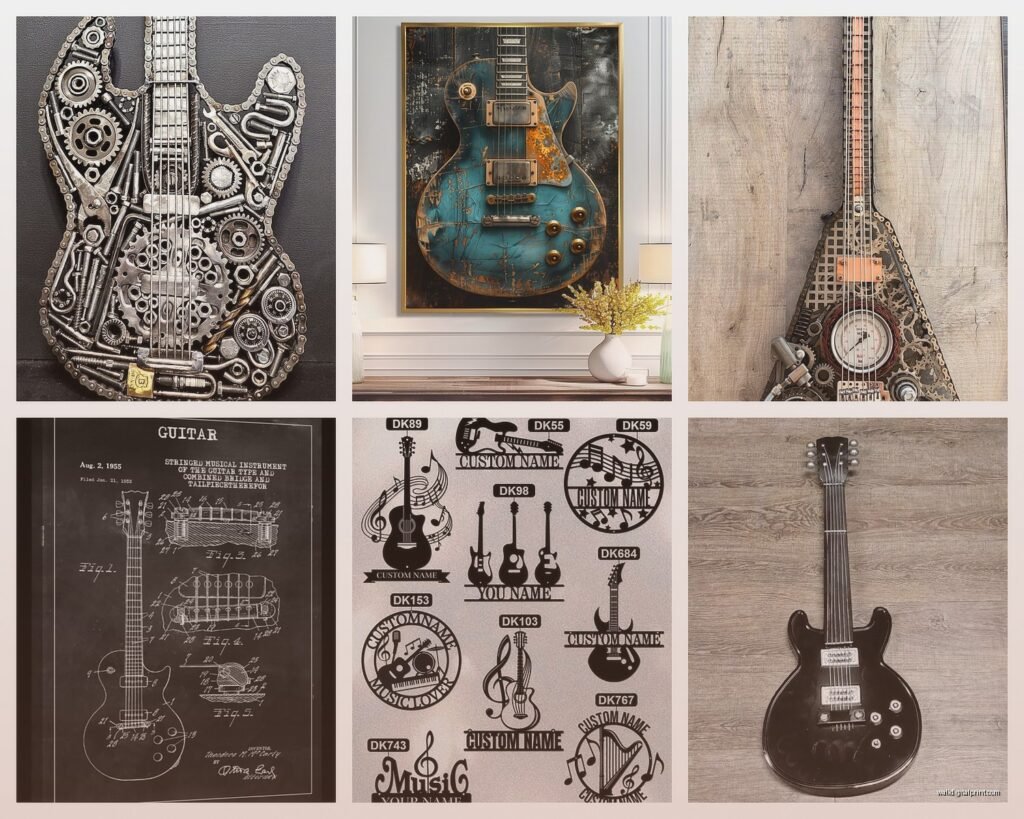
The flat silhouettes are gonna be your budget-friendly option, usually between $30-80 depending on size. I tested like six of these last month when a client canceled so I spent an hour comparing them all on my living room floor (my dog was SO confused). They’re lightweight, easy to hang, but here’s the thing – they can look really cheap if you don’t get the right finish. Matte black powder coating is your friend. The glossy ones catch light weird and look like someone’s high school metal shop project.
3D Sculptural Pieces
The 3D ones are where it gets interesting. These usually run $100-300 and they have actual depth to them. Like the guitar body might be 2-3 inches off the wall, some have strings made from actual wire, sometimes the tuning pegs are separate little pieces welded on. I have one in my studio that’s a Stratocaster style and it casts the coolest shadows when the afternoon light hits it.
But real talk – these are HEAVY. You can’t just use a command strip or whatever. I learned this the hard way when one fell off my client’s wall at 2am and scared the hell out of their cat. You need proper wall anchors, the heavy duty ones rated for at least 20 pounds even if the piece says it weighs less.
Size Actually Matters More Than You Think
This is gonna sound weird but I see people mess this up constantly. They order something online, think “24 inches sounds big” and then it arrives and looks like a toy on their massive blank wall.
For a focal point above a couch or bed, you want minimum 30 inches, preferably 36-48 inches. If you’re doing a gallery wall situation with multiple pieces, you can go smaller but the main guitar should still be at least 24 inches.
I made a sizing template once using painter’s tape on the wall before ordering and it saved me from a terrible purchase. Just tape out the dimensions and live with it for a day. You’ll know immediately if it’s too small or too big for the space.
Where to Actually Hang These Things
Music rooms are obvious but kinda boring honestly. I’ve hung guitar art in:
- Home bars and entertainment rooms
- Teen bedrooms (obviously)
- Man caves (hate that term but you know what I mean)
- Recording studios or practice spaces
- Restaurant and bar accent walls
- Office spaces for music industry people
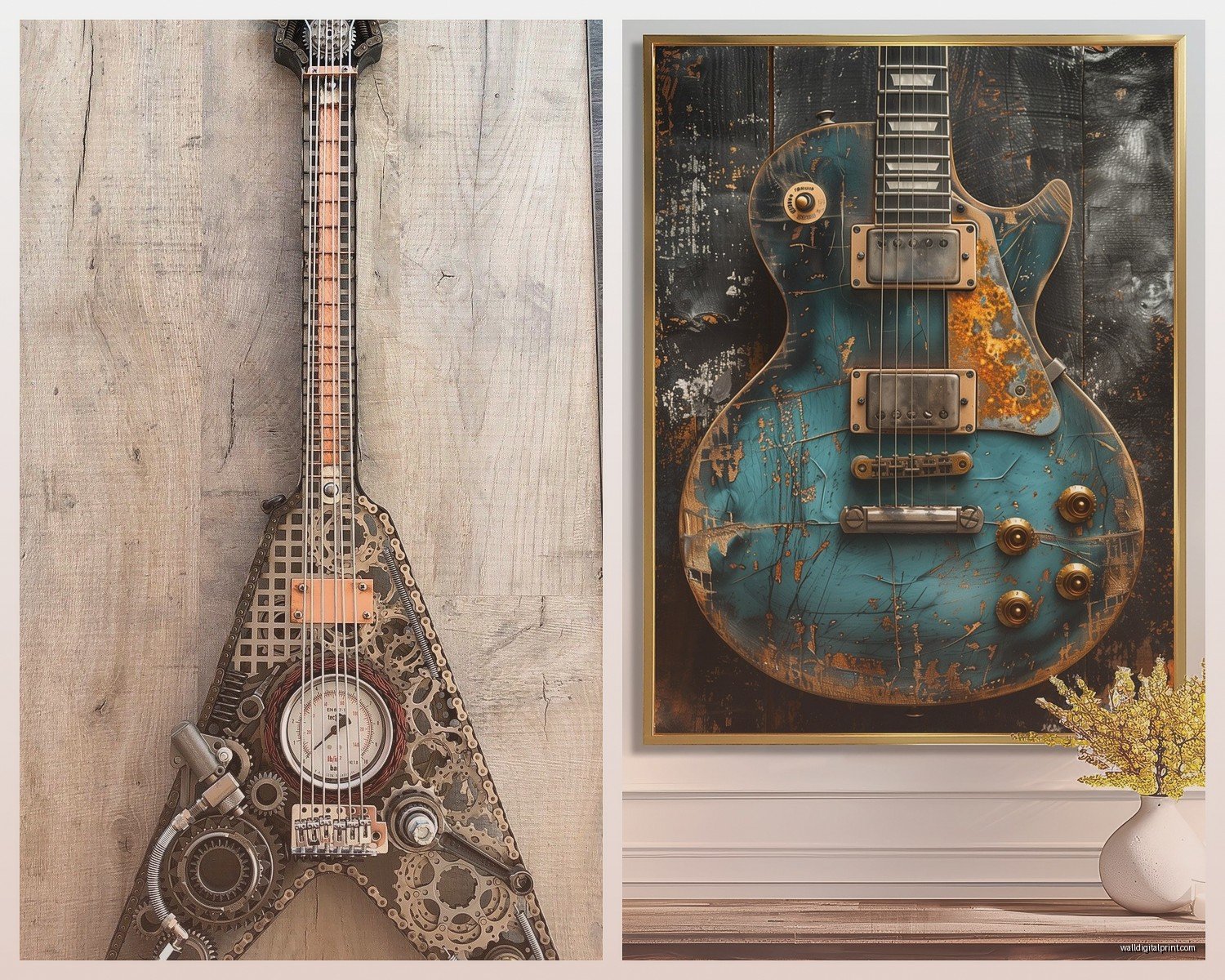
The coolest installation I did was in a dentist’s office actually. The dentist was a huge classic rock fan and we put a Flying V guitar silhouette in the waiting room with some vintage concert posters. Patients loved it, made the space feel less clinical.
Finishes and Colors That Don’t Look Ridiculous
Okay so most of these come in black which is safe but can be boring. Here’s what I’ve learned works:
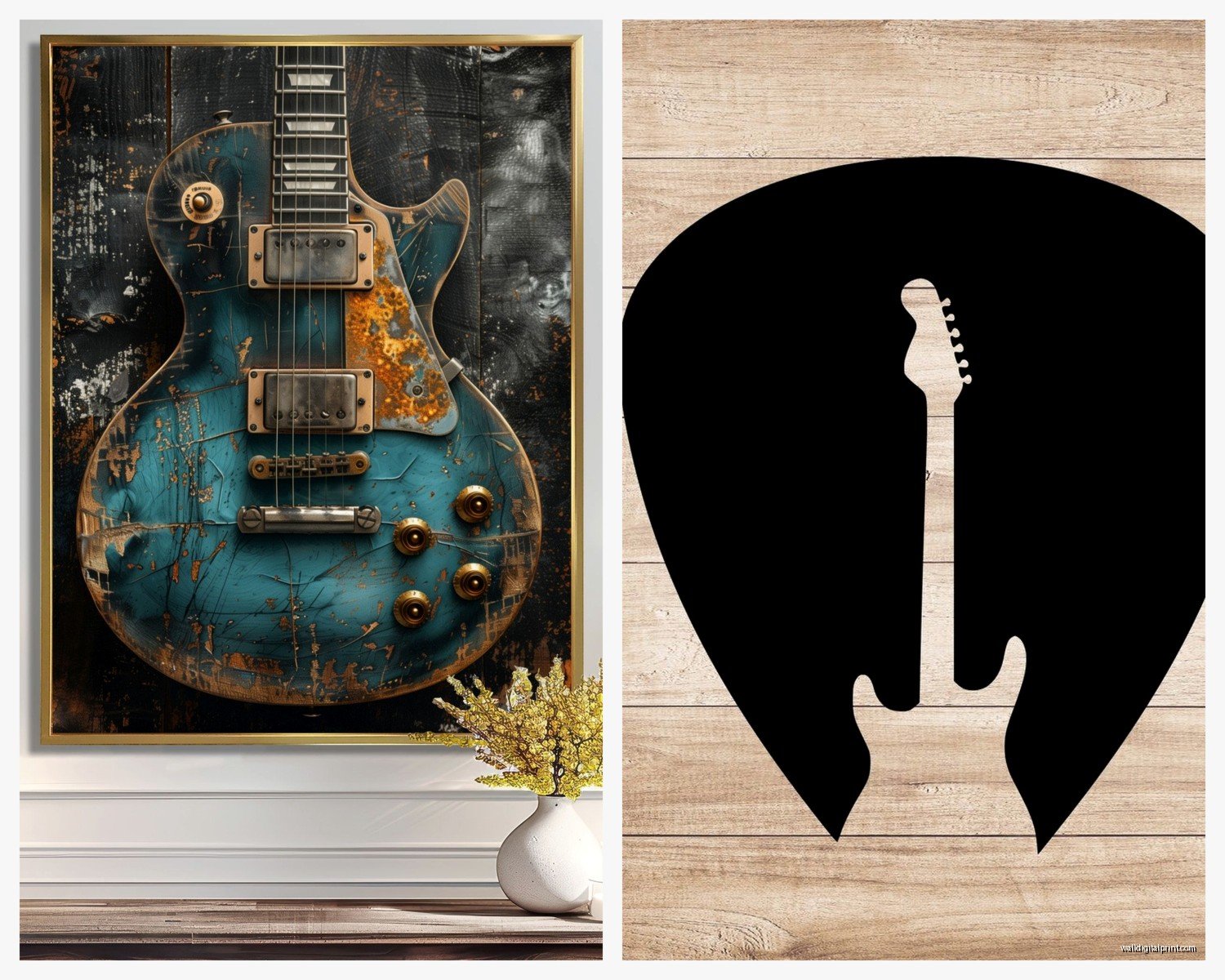
Rust patina or weathered steel looks AMAZING in industrial or farmhouse style spaces. It’s got this orange-brown color that feels vintage without trying too hard. But it will continue to rust slightly over time so don’t put it somewhere humid.
Brushed metal or raw steel gives you that modern minimalist vibe. Works great in contemporary spaces with lots of concrete, leather, and glass. My favorite is when they leave the mill marks visible so you can see the texture.
Copper or bronze finishes are having a moment right now. They’re warm toned which makes them easier to work with than you’d think. I used a copper guitar piece in a client’s office with navy walls and it was *chef’s kiss*.
Wait I forgot to mention – some companies offer custom colors with powder coating. You can literally get any Pantone color. I did a cobalt blue electric guitar for a kid’s room once and it was perfect against white walls.
The LED Backlit Situation
So there’s this whole category of guitar wall art with LED backlighting and I have… mixed feelings. When it’s done well it’s spectacular. When it’s done cheap it looks like a Spencer’s Gifts threw up on your wall.
The good ones have RGB color changing capability with a remote, and the LEDs are hidden behind the metal so you just see this glow around the silhouette. The cheap ones have visible LED strips and the light is uneven. You can usually tell from the photos – if the listing shows the lights but not the piece turned off, that’s a red flag.
I have one in my own home that’s just warm white LED (not color changing) and it’s subtle enough to use as a nightlight situation. Cost about $150 which felt steep but it’s held up for two years now.
Installation Tips Nobody Tells You
Alright so this is important. Most metal guitar art comes with either:
- Keyhole hangers on the back
- D-ring hangers
- Wire hanging systems
- Nothing at all (you’re on your own)
The keyhole hangers are easiest but they only work on drywall with the right anchors. For plaster walls or brick you’re gonna need a different approach. I always use wall anchors rated for double the weight of the piece because why risk it.
Oh and another thing – use a level. I know this sounds obvious but I cannot tell you how many photos clients send me where their guitar is listing to one side like it’s drunk. Get a small torpedo level, they’re like $5 and save so much headache.
For the really heavy 3D pieces, consider using two anchor points instead of one central point. It distributes the weight better and prevents that tilting-forward thing that happens over time.
Mixing Guitar Art with Other Decor
This is where people get nervous but honestly it’s pretty forgiving. Metal guitar art works with way more styles than you’d think.
Industrial/Modern: This is the no-brainer pairing. Exposed brick, metal shelving, Edison bulbs, leather furniture – guitar art fits right in. Use multiple pieces in different sizes for a gallery wall effect.
Farmhouse/Rustic: Go with rust patina or weathered finishes. Pair with reclaimed wood, vintage signs, and warm textiles. It adds an unexpected edge to the usually soft farmhouse aesthetic.
Minimalist/Scandinavian: Single statement piece in matte black or brushed steel. Keep it simple, let it be the focal point, surround it with lots of negative space.
Eclectic/Bohemian: Layer it with other art, textiles, plants. Don’t overthink it. The mix is the point.
I had a client who was worried her traditional furniture wouldn’t work with metal guitar art and we ended up doing this whole thing where we mixed classical oil paintings with a vintage guitar silhouette and it was surprisingly cohesive because we stuck to a consistent color palette.
Grouping Multiple Pieces
If you’re doing more than one guitar, odd numbers look better (design rule that actually holds up). Three or five pieces arranged asymmetrically beats two or four pieces every time.
You can mix guitar types too – acoustic with electric, bass guitar with regular, different eras and styles. I did a wall once with a classical guitar, a Les Paul, and a bass arranged in a diagonal line and it had this nice rhythm to it.
Keep consistent spacing between pieces though. I use 3-4 inches between items as a general rule. Tape them up with painter’s tape first to test the arrangement before you start putting holes in the wall.
Where to Buy and What to Avoid
Etsy has tons of custom makers and you can often get personalized sizing or finishes. Prices vary wildly but you’re supporting individual artists which is cool. Read reviews carefully though because quality control can be inconsistent.
Amazon has budget options but they’re hit or miss on quality. Check the weight specifications – if it seems too light for the size, it’s probably thin cheap metal that’ll look flimsy.
Specialty music decor sites usually have better quality but higher prices. You’re paying for thicker gauge metal, better finishes, and more detailed designs.
Local metal artists or fabricators can do custom work and honestly this is my favorite route if you have something specific in mind. I found a guy through Instagram who made me a custom Flying V with my client’s favorite band’s logo incorporated into the design and it was like $200 but absolutely worth it.
Red flags to watch for:
- Super cheap prices (under $25 for anything over 18 inches)
- No measurements listed
- Only renders shown, no photos of actual product
- No information about metal gauge or thickness
- Shipping from overseas with vague timelines
Maintenance and Longevity
Metal guitar art is pretty low maintenance but not zero maintenance. Dust it occasionally with a dry microfiber cloth. If it’s powder coated you can use a slightly damp cloth but dry it immediately.
Raw steel or rust patina finishes might continue to develop over time which some people like but if you wanna stop the process you can seal it with a clear matte sealer from the hardware store.
The LED ones need battery changes or the transformer can eventually die. Keep the receipt and warranty info because those electrical components are usually the first thing to go.
I’ve had pieces last 5+ years with zero issues so they’re definitely a worthwhile investment if you get decent quality.
The Sound Thing
Okay this is random but metal wall art can sometimes resonate or vibrate if you have loud bass-heavy music playing. I noticed this in my brother’s actual music room where he practices. The thinner pieces would literally buzz during certain bass frequencies. If you’re putting this in a space where you’ll be playing actual music loudly, go for thicker gauge metal or the 3D pieces that are more rigid.
Look, at the end of the day metal guitar wall art is one of those decor things that either speaks to you or it doesn’t. If you or someone in your household is into music it adds this personal touch that generic art just can’t match. I’m watching The Bear right now and totally distracted but yeah – measure twice, use proper anchors, don’t go too small, and you’ll be fine. The worst thing you can do is overthink it. Just pick one that makes you happy when you look at it.