Wall Art Guide, Wall Art Tutoriels
Ganesh Wall Art: Hindu Elephant God Remover of Obstacles
Jul
So I’ve been totally obsessed with Ganesh wall art lately and honestly it started because a client wanted to create this meditation corner in her apartment but didn’t want it to feel too serious or temple-like, you know? And we landed on this gorgeous Ganesh piece that just… worked. Now I can’t stop noticing them everywhere.
Why Ganesh Works in Modern Spaces (Even Non-Religious Ones)
Okay so here’s the thing about Ganesh art – yeah, he’s the remover of obstacles in Hindu tradition, which is beautiful and meaningful if you practice. But even if you don’t, there’s something about the elephant god imagery that just feels calming and intentional. I’ve used Ganesh pieces in probably a dozen client homes at this point, and maybe half were Hindu families wanting something devotional, and the other half just connected with the symbolism or aesthetic.
The elephant head, the multiple arms, the intricate details – it reads as art first, which makes it way easier to integrate into different design styles than you’d think. My friend Sarah has this minimalist scandi thing going on and she has a simple line-drawing Ganesh above her desk and it totally works.
Picking the Right Style for Your Space
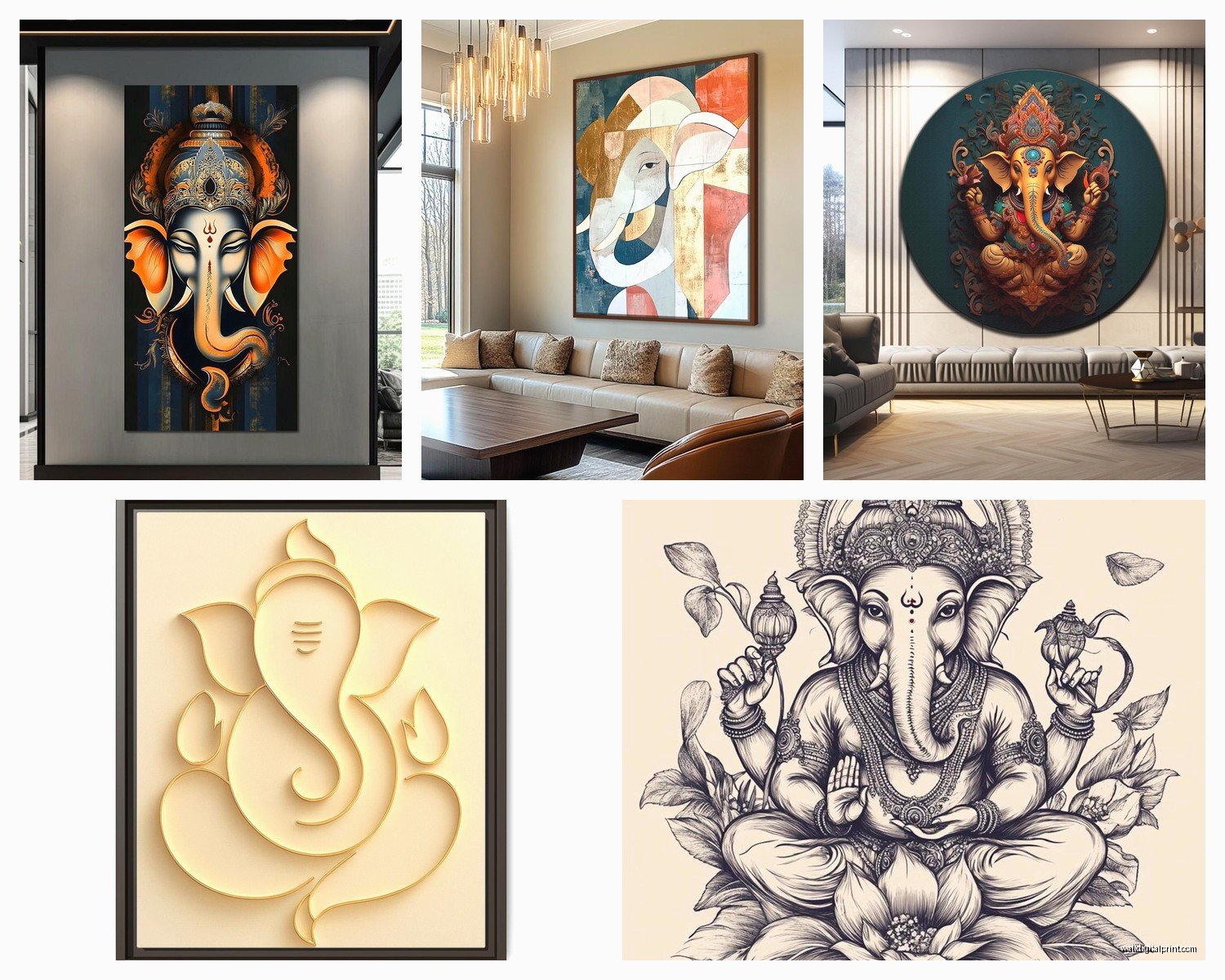
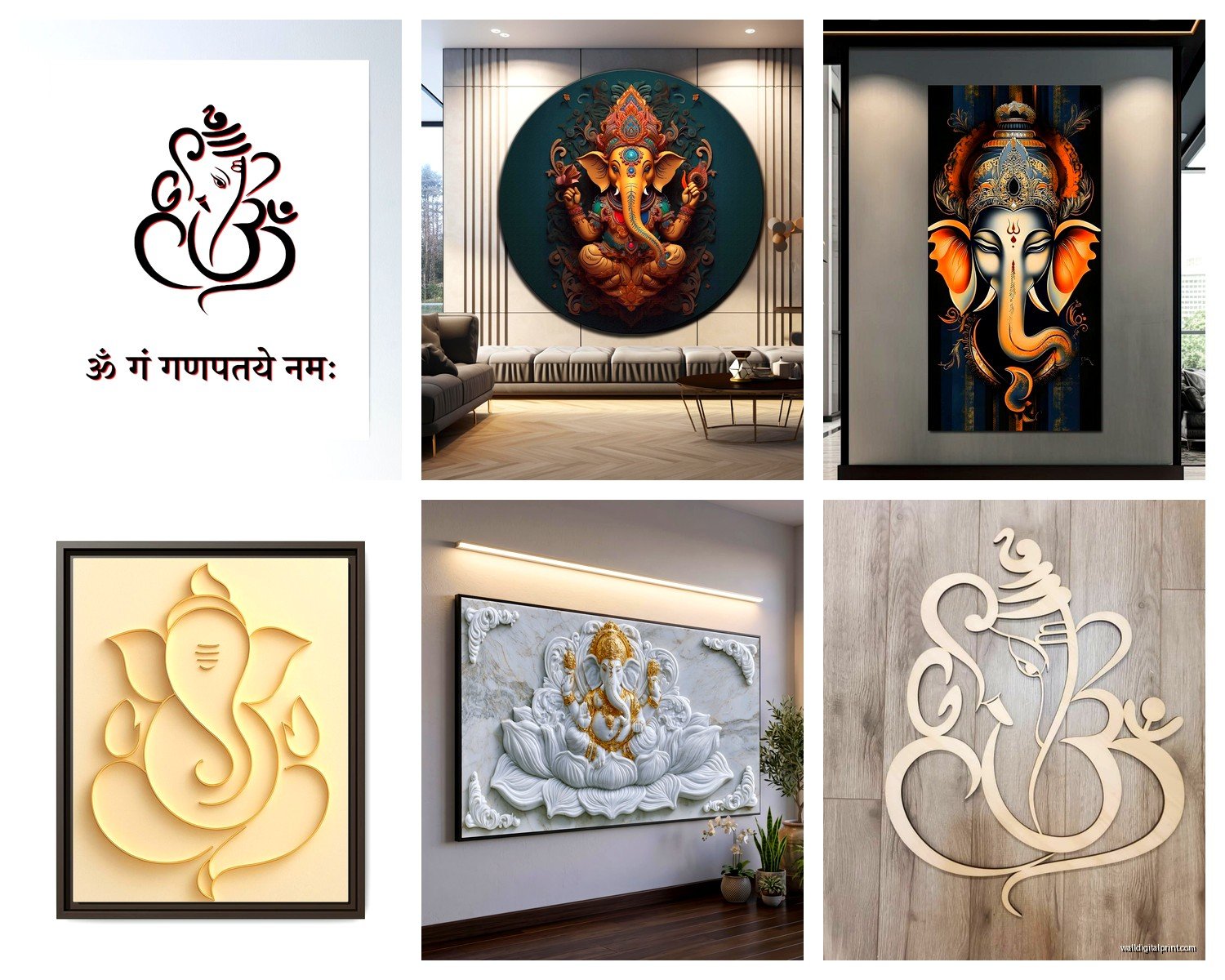
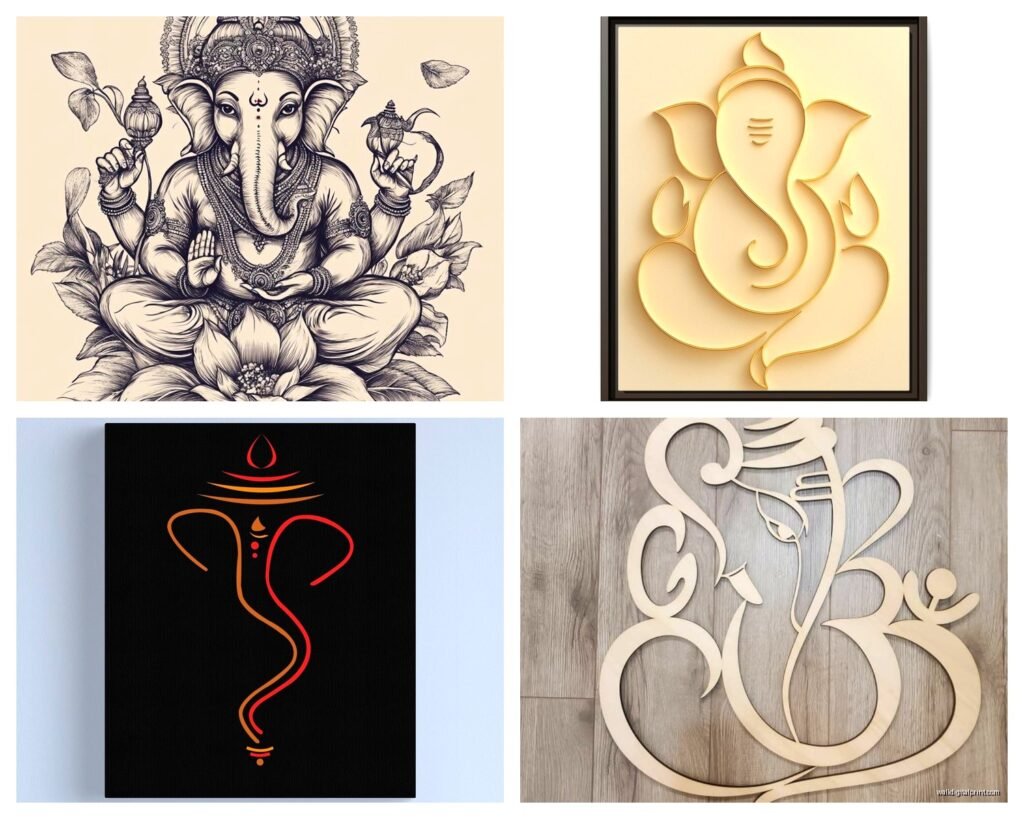
This is where it gets fun because there are SO many interpretations. Like, traditional Ganesh art is incredibly detailed – think bright colors, gold leaf, very ornate. That style works amazing in maximalist spaces, bohemian rooms, or if you’re going for that global eclectic vibe.
But then you’ve got modern interpretations that are basically line drawings or silhouettes. I found this one on Etsy (spent way too long browsing when I should’ve been working) that’s just a single continuous line forming Ganesh’s profile. Super minimal, works in literally any contemporary space.
Material Matters More Than You Think
Canvas prints are probably the most common and they’re fine, totally fine. But if you want something that feels more special or investment-piece worthy, consider:
- Metal wall art – there’s this copper/bronze finish trend happening and Ganesh in hammered metal looks INCREDIBLE. Catches light differently throughout the day
- Wood carved pieces – more traditional, heavier, but the texture adds so much dimension
- Brass or bronze sculptures that mount on the wall – not flat art but not fully 3D either, kind of the best of both
- Painted canvas (actual paint, not prints) – pricier but you can find emerging artists who do custom work
I made the mistake once of buying a really cheap printed canvas and you could see the pixels up close. It was embarrassing when my client noticed. Learned that lesson quick.
Size and Placement Strategy
Okay so this is gonna sound weird but I have a whole system for this now. Ganesh art tends to be pretty detailed and busy visually, which means size and placement need to balance that energy.
Small Spaces or Beginners
If you’re just testing this out or have a smaller wall, go for something in the 16×20 to 24×36 inch range. Perfect above a desk, in an entryway, or as part of a gallery wall. Actually wait – if you’re doing a gallery wall, Ganesh should probably be the focal point because of the visual complexity. Don’t try to compete with it.
I put an 18×24 Ganesh print above my workspace at home (my cat immediately tried to climb the wall to investigate it, super helpful) and it’s the perfect size to feel present without overwhelming my already-chaotic desk situation.
Statement Pieces
For larger walls – like above a sofa, bed, or in a meditation/yoga space – you can go bigger. 36×48 or even 40×60 if your wall can handle it. But here’s the trick: bigger Ganesh art works best when the rest of the wall is relatively calm. Don’t put a huge, colorful, detailed Ganesh piece on a wall that already has patterned wallpaper or tons of other stuff. It’ll be too much.
Color Coordination Without Making It Weird
Traditional Ganesh art often features really vibrant colors – reds, oranges, golds, deep blues. Which is beautiful but can be tricky if your whole color scheme is like, greige and white.
Few approaches that actually work:
Match one accent color: If your Ganesh art has orange in it, pull that orange into throw pillows, a small vase, maybe a blanket. You don’t need orange everywhere, just enough that the art doesn’t feel random.
Go monochromatic: Black and white or sepia-toned Ganesh art exists and it’s actually stunning. Works in literally any color scheme. I used a black ink Ganesh drawing in a client’s all-white bedroom and it was perfect – added visual interest without color chaos.
Embrace the contrast: Sometimes a pop of color is exactly what a neutral room needs. Don’t overthink it. I’ve seen bright traditional Ganesh art in super modern gray spaces and it works because it’s INTENTIONAL.
The Gold Leaf Situation
Oh and another thing – lots of Ganesh art incorporates gold leaf or gold paint, which can read really elegant or really tacky depending on execution. If you’re going for gold accents, make sure:
- The gold is actual metallic leaf or quality metallic paint, not just printed gold color (looks flat and cheap)
- You have other warm metals in the room – brass lamp, copper planter, gold-framed mirror
- The piece itself is well-made otherwise, gold can’t save a poorly executed design
Cultural Respect and Placement Considerations
Okay so this is important and I wish more designers talked about it. If you’re not Hindu but want Ganesh art, that’s generally considered okay – Ganesh is seen as auspicious and welcoming. But there are some guidelines:
Don’t place Ganesh art in bathrooms. Just don’t. It’s considered disrespectful.
Avoid bedrooms if possible, or at least not directly facing the bed. This is more traditional/religious guidance, but if you’re honoring the symbolism, honor the placement traditions too.
Best spots are entryways (he’s often placed near doorways in Hindu homes), living rooms, meditation spaces, or home offices. The idea is he removes obstacles and brings wisdom, so work spaces are actually perfect.
And obviously, don’t put Ganesh art where it might get damaged or dirty – kitchen walls near stoves, high-traffic areas where it might get bumped constantly, etc. Basic respect stuff.
Mixing Ganesh with Other Decor Styles
This is where I’ve experimented the most and honestly had the most fun. Ganesh art is surprisingly versatile.
Modern Minimalist
Use a simple line-drawing or silhouette version. Black on white or vice versa. Clean frame or no frame, just mounted canvas. Keep everything else super clean. It becomes this zen focal point.
Bohemian/Eclectic
Go traditional! Bright colors, ornate details, mix it with other global textiles and art. Layer it with macrame, plants, patterned rugs. This is probably the easiest style to incorporate Ganesh into because boho kinda welcomes everything.
Contemporary/Industrial
Metal wall art versions work amazing here. Think Ganesh in steel or iron against exposed brick or concrete walls. Keeps the industrial edge but adds that spiritual/artistic element.
Scandinavian
Okay this one’s trickier but doable. Stick with muted colors – maybe a blue-gray Ganesh or that black and white approach I mentioned. Natural wood frame. Keep it simple in design. Let it be the ONE decorative element in an otherwise minimal space.
Where to Actually Buy Good Pieces
I’ve wasted money on bad Ganesh art so let me save you the trouble.
Etsy: Honestly my go-to for unique pieces. You can find everything from digital prints to hand-painted canvases to carved wood. Read reviews, check if they show actual product photos not just mockups. I’ve found some amazing independent artists there.
Local Indian/South Asian markets: If you have these near you, GO. The quality is usually excellent and prices are often better than online. Plus you’re supporting local businesses.
Society6 and similar print-on-demand: Good for budget-friendly options and modern interpretations. Quality is decent, not amazing, but works if you’re renting or just want to try out the look.
Actual galleries: If you want an investment piece, some galleries carry contemporary South Asian artists who do incredible Ganesh interpretations. Pricey but worth it if you’re serious about art collecting.
Avoid: Amazon unless you really dig into reviews. So much dropshipped garbage with misleading photos. HomeGoods/TJ Maxx sometimes has decent pieces but it’s hit or miss.
DIY and Customization Ideas
Wait I forgot to mention – if you’re crafty or want something truly unique, there are options.
You can commission artists on Instagram or Etsy. I did this for a client who wanted Ganesh incorporated into a family portrait situation (sounds weird, turned out beautiful). Cost more but completely one-of-a-kind.
Or if you’re brave, paint your own. There are stencils available, or you could project an image and trace it. I tried this once while watching The Great British Bake Off and… it was fine. Not gallery-worthy but fine for my own space.
Framing and Presentation
Don’t sleep on the frame choice. A traditional ornate Ganesh print in a sleek modern frame can bridge styles really well. Or a modern interpretation in a vintage gold frame adds unexpected character.
For canvas prints, you can leave them unframed if they’re gallery-wrapped (image continues around edges). But a float frame adds polish and protection.
If you’re mounting metal or wood pieces, make sure you have the right hardware. Those suckers can be heavy. I learned this when a brass Ganesh I hung for a client nearly fell because I used regular picture hanging strips. Use proper wall anchors.
Creating a Meditation or Prayer Space
If you’re using Ganesh art as part of a devotional or meditation area, few extra thoughts:
The art should be at eye level when you’re seated if that’s how you’ll use the space. Sounds obvious but I’ve seen people hang it at standing eye level and then wonder why it feels off when they’re sitting on a cushion meditating.
Consider adding a small shelf below for offerings if that’s part of your practice – flowers, incense, small oil lamps. The art becomes part of a larger intentional setup.
Lighting matters. A small spotlight or even a strand of warm fairy lights can make the space feel more sacred and draw attention to the art without being over the top.
Common Mistakes I’ve Seen
Putting it in direct sunlight – colors will fade, especially prints
Going too matchy-matchy with other Indian/Hindu art – unless you’re creating a dedicated puja room, you don’t need Ganesh AND Krishna AND Lakshmi all on the same wall
Buying the cheapest option and being disappointed – sometimes spending $50 more gets you something significantly better
Ignoring scale – a tiny Ganesh print on a huge wall looks lost, a massive one in a small space feels overwhelming
Also, and this might just be me, but don’t put Ganesh art in rooms where you’re gonna be doing stuff that doesn’t vibe with the symbolism. Like my friend put one in her party room where she basically just drinks wine and gossips and it felt… off. Maybe that’s too much but consider the energy of the space.
The Symbolism If You Care About That
Quick rundown because it actually does inform design choices sometimes:
The elephant head represents wisdom and understanding. The large ears mean listen more. The small mouth means talk less. The trunk can move obstacles (hence “remover of obstacles”).
He often holds different objects in his multiple arms – an axe to cut attachments, a lotus for enlightenment, sweets because he loves them (honestly same), prayer beads, sometimes a broken tusk.
There’s usually a mouse near him, which represents desire that he’s overcome or controlled.
Knowing this stuff helps when you’re choosing between different Ganesh depictions. What resonates? What symbolism do you connect with?
Okay I think that’s everything I’ve learned from probably too much time thinking about Ganesh wall art. It’s such a beautiful addition to a space when done thoughtfully, and way more versatile than people expect. Just gotta find the right piece for YOUR space and style, not force something that doesn’t fit.