Wall Art Guide, Wall Art Tutoriels
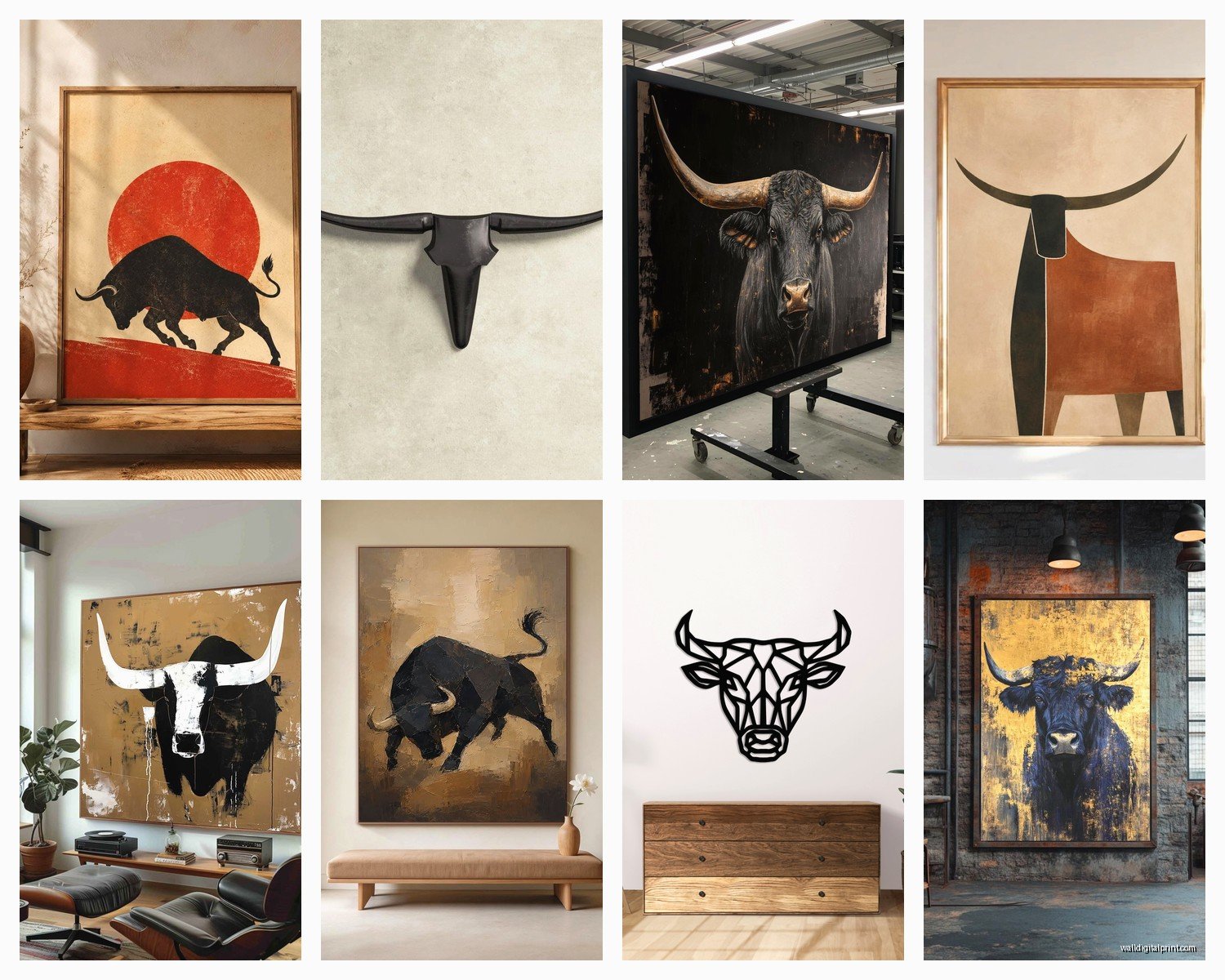
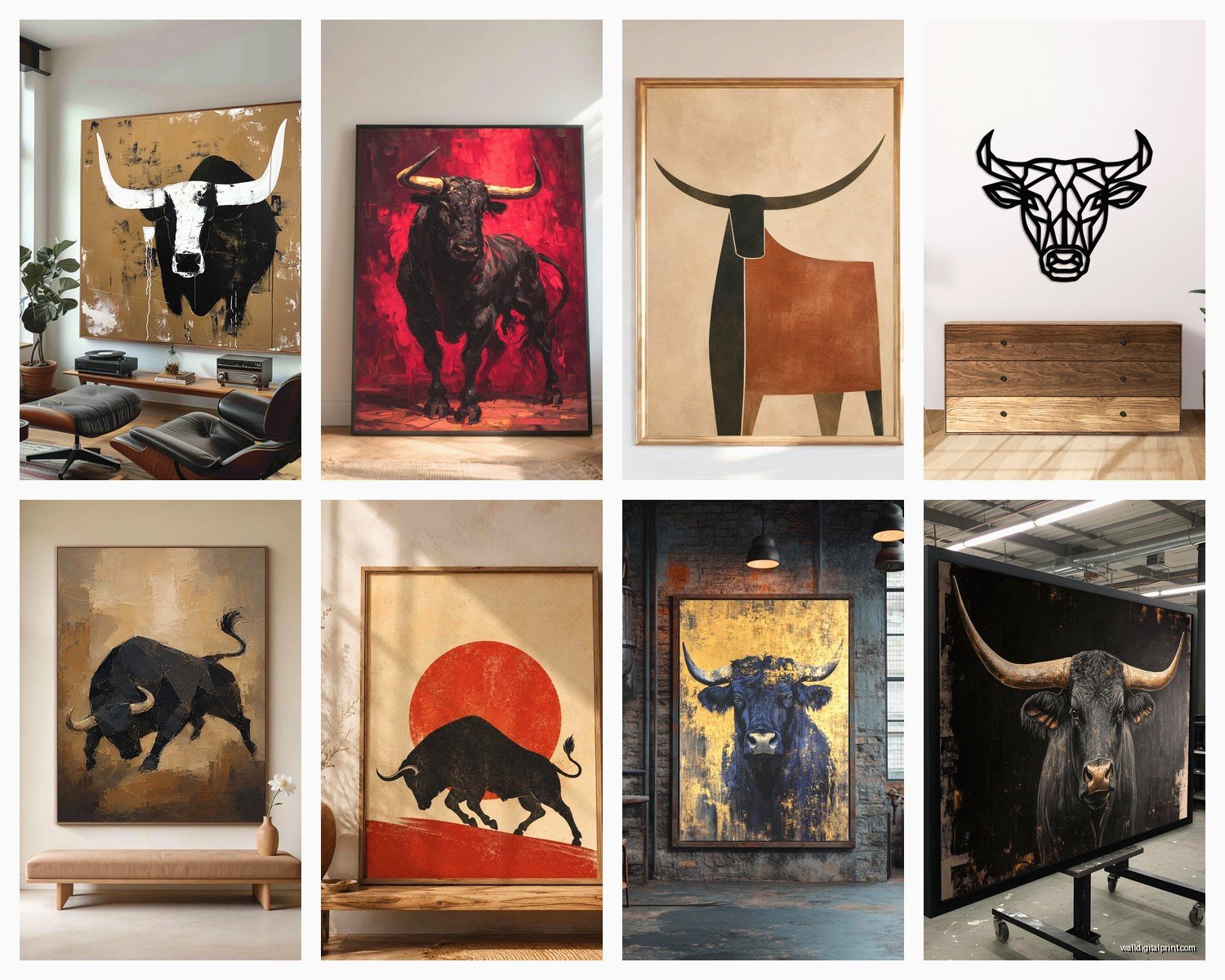
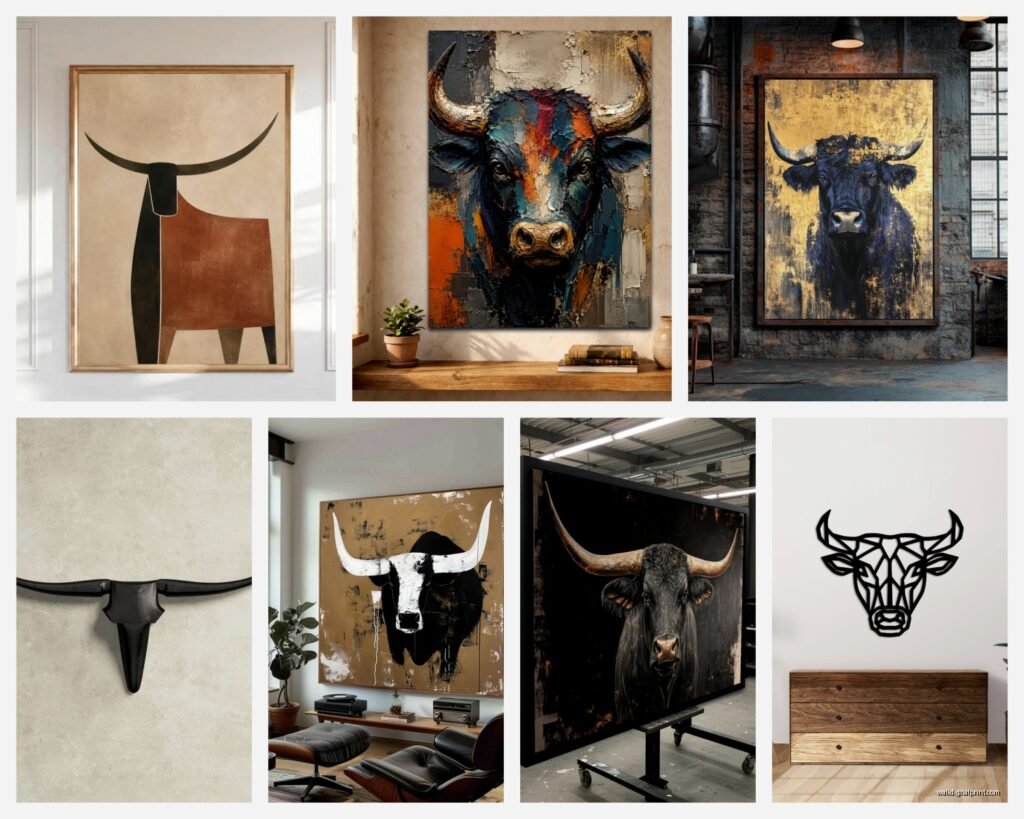
Bull Wall Art: Cattle Rodeo Strong Animal Symbol
Aug
So I’ve been working with bull wall art for like three years now and honestly it’s one of those things that sounds super specific but actually works in way more spaces than you’d think. My client last month wanted to add “masculine energy” to their home office and we ended up with this massive longhorn piece that completely transformed the room.
Why Bull Art Actually Works in Modern Spaces
Okay so here’s the thing about bull imagery – it’s not just for Texas ranch houses anymore. The symbolism is what makes it versatile. You’ve got strength, determination, that whole steadfast energy thing. I’ve placed bull art in minimalist lofts, industrial spaces, even this one really sleek contemporary home where the client was a stock trader and wanted that “charging bull” vibe without being too Wall Street bro about it.
The key is understanding what type of bull aesthetic you’re going for because there’s like a huge range. You’ve got:
- Realistic cattle portraits (super detailed, almost photographic)
- Rodeo action shots (dynamic, lots of movement)
- Minimalist line drawings (just the silhouette or outline)
- Vintage poster style (think old rodeo advertisements)
- Sculptural metal pieces (3D wall hangings)
- Abstract interpretations (just the essence of the form)
Matching Bull Art to Your Actual Space
I’m gonna be real with you – the biggest mistake people make is picking art they love without thinking about where it’s actually going. My dog knocked over my coffee while I was staging a client’s living room last week and it made me realize how important it is to think about the whole environment.
For Industrial or Loft Spaces
Metal bull sculptures are absolutely killer here. There’s this one piece I keep recommending – it’s a geometric bull head made from iron with this raw, unfinished look. Pairs perfectly with exposed brick and concrete. The scale matters though. If you’ve got high ceilings like 12+ feet, don’t be shy about going big. A 4-foot wide piece that would be absurd in a regular room suddenly looks perfectly proportioned.
Canvas prints with black and white photography work too, especially rodeo shots with lots of dust and motion blur. Creates this gritty, authentic vibe that complements the industrial aesthetic without trying too hard.
Modern Farmhouse Situations
This is probably the most obvious pairing but people still mess it up by going too literal. You don’t need a photorealistic Highland cow in a barn setting when you’re already living in a farmhouse-style space. That’s overkill.
Instead, try minimalist line art of bull horns or a simple cattle silhouette in black on white. It nods to the theme without beating you over the head with it. I did this home last year where we used a single-line continuous drawing of a bull – super elegant, worked perfectly above their reclaimed wood console table.
Contemporary and Minimalist Rooms
Wait I forgot to mention – this is actually where bull art can be most impactful because it’s unexpected. In a really clean, minimal space, a bold bull image becomes the focal point without competing with other elements.
Go for abstract interpretations or geometric designs. There’s this artist who does bulls using only triangles and it’s stunning in the right setting. Or consider a monochromatic approach – all black, all white, or even all navy. The form of the bull is strong enough that it doesn’t need color to make an impact.
Size and Placement Real Talk
Okay so funny story – I once hung a massive bull canvas too low in a client’s entryway and we had to redo it because everyone felt like they were about to get charged when they walked in. Height matters with aggressive animal imagery.
General Rules That Actually Work
For a bull head or portrait orientation, the center should be at eye level, which is typically 57-60 inches from the floor. But if your bull is in an action pose – like a rodeo scene or a charging stance – you might want it slightly higher so it feels like it’s moving through space rather than coming right at you.
Scale to your furniture. Above a sofa, your art should be about 2/3 to 3/4 the width of the sofa. I see people put these tiny 16×20 pieces above massive sectionals and it just looks lost.
Unexpected Placement Ideas
- Above a home bar – the bull’s association with strength and celebration works perfectly
- In a home gym – obvious motivation symbolism
- Office spaces – especially if you work in finance or competitive fields
- Dining rooms – there’s historical precedent for animal imagery in eating spaces, plus it’s a conversation starter
- Teenage boys’ rooms – way better than random sports posters
Color Schemes That Don’t Look Cheesy
This is gonna sound weird but the color palette you choose for bull art can make or break the whole vibe. Too much brown and tan and you’re in Western theme restaurant territory.
Neutral Approaches
Black and white is your safest bet. Works everywhere, never goes out of style. I’m obsessed with high-contrast black and white rodeo photography right now – super dramatic shadows, really captures the intensity.
Sepia or warm grays give you that vintage feel without being too precious about it. Good for spaces that already have warm wood tones.
When to Use Color
If your room is really neutral – like all grays and whites – a bull piece with rust orange or deep red can add warmth. There’s this one print I used with a bull silhouette filled with sunset colors that worked beautifully in an otherwise monochrome space.
Turquoise and brown is a classic Western combo but you gotta do it carefully. Works better in casual spaces like game rooms or covered patios.
Material Choices and What They Communicate
The material of your bull art says almost as much as the image itself.
Canvas prints are versatile and affordable. They work in most settings but can feel a bit basic if that’s all you’ve got going on. I usually recommend gallery-wrapped edges so you don’t need a frame.
Metal art – either printed on metal or sculptural pieces – adds instant edge. Perfect for modern or industrial spaces. The reflective quality changes depending on lighting which keeps it interesting.
Wood-burned or carved pieces bring in texture and craftsmanship. These work great in spaces that already incorporate natural materials. There’s an Etsy seller who does incredible wood-burned longhorn pieces that I’ve used multiple times.
Framed prints under glass are more traditional and formal. If you’re putting bull art in a professional office or a more classic interior, this is the way to go. The frame quality matters though – cheap frames make everything look cheap.
Combining Bull Art with Other Pieces
You don’t have to make bulls your whole personality. In fact, please don’t.
Gallery Wall Integration
A bull piece can anchor a gallery wall if you’re thoughtful about it. I did this cool arrangement where the bull was the largest central piece, then surrounded it with abstract shapes, vintage maps of cattle trails, and some black and white landscape photography. The bull provided focus but wasn’t overwhelming.
Keep the frames consistent if you’re mixing subjects. All black frames or all natural wood creates cohesion even when the imagery varies.
Pairing with Complementary Themes
Western landscapes obviously work but aren’t required. I’ve successfully paired bull art with:
- Geometric abstracts (the angular nature complements the bull’s form)
- Architectural photography (both have strong lines and structure)
- Vintage typography or numbers (creates an industrial vibe)
- Other animal portraits if done carefully – horses are the obvious choice but I’ve seen it work with eagles or bears in a “strength and nature” themed space
What to Avoid Because I’ve Seen It Go Wrong
Don’t mix realistic bull art with cartoon or whimsical styles in the same room. Pick a lane.
Avoid anything that feels too “man cave” unless that’s specifically what you’re going for – like those pieces with bulls, poker cards, and whiskey glasses all in one image. Just no.
Be careful with red bulls or pieces that emphasize aggression if you’re trying to create a calming space. The symbolism works against you.
The Rodeo Poster Problem
Vintage rodeo posters can be amazing but the reproduction quality matters so much. I see people buy these cheap prints that look pixelated and washed out. If you’re going vintage poster style, either invest in an actual vintage piece or get a high-quality reproduction. The difference is massive.
Budget Real Talk
You can absolutely do this on a budget. Society6 and Redbubble have tons of bull designs from independent artists, usually $30-100 for prints. Etsy is great for unique pieces and you’re supporting individual creators.
Mid-range options like Wayfair or Overstock have decent metal art pieces in the $100-300 range. I’ve used several of these for clients who wanted impact without investment.
If you’ve got more to spend, look at local artists or Western art galleries. Original paintings or limited edition prints start around $500 but you’re getting something nobody else has. There’s this gallery in Santa Fe that specializes in contemporary Western art and their bull pieces are incredible – definitely investment territory though.
DIY Options That Don’t Look DIY
If you’re crafty, there are ways to create custom bull art. I had a client who printed a huge black and white bull photograph through an engineering print service (like $8 for a 3×4 foot print), mounted it on foam board, and it looked legitimately good. Just needed the right image with high enough resolution.
Stenciling can work if you’ve got patience. Create a bull silhouette on a large canvas with painter’s tape and spray paint. Very graphic, very modern.
Lighting Considerations Nobody Talks About
Oh and another thing – how you light bull art changes everything. These pieces often have strong shadows and dramatic forms that respond really well to directional lighting.
Picture lights mounted above the frame work for traditional settings. Track lighting or adjustable spotlights are better for contemporary spaces where you want to highlight specific elements.
If your bull art has any metallic elements, consider how natural light hits it throughout the day. I’ve seen metal bull sculptures that looked completely different in morning versus evening light – sometimes that’s cool, sometimes it’s annoying.
Seasonal Flexibility
One thing I like about bull art is it doesn’t feel seasonal. Unlike some decor that screams fall or summer, bulls work year-round. You can style around them differently though – warmer textiles and darker accents in winter, lighter and airier in summer.
This is probably obvious but just gonna say it anyway – bull imagery leans masculine in most people’s perception, so if you’re trying to balance energy in a space, pair it with softer textures or more delicate accessories. Doesn’t have to be feminine necessarily, just something to create contrast.
Anyway, the main thing is to pick bull art that actually resonates with you rather than just following a theme. The symbolism is strong enough that it should mean something specific to your space and how you want to feel in it. Whether that’s determination, Western heritage, agricultural roots, or just appreciation for a powerful animal form.