
Wall Art Guide, Wall Art Tutoriels
Lotus Wall Art: Sacred Flower Buddhist Spiritual Symbol
Aug
So I’ve been totally obsessed with lotus wall art lately and honestly it started because this client wanted something “spiritual but not too obvious” for her meditation corner and I went down this whole rabbit hole of Buddhist symbolism and yeah, here we are.
Why the Lotus Actually Matters (Beyond Looking Pretty)
Okay so the lotus isn’t just another flower print situation. In Buddhist philosophy it literally represents rising above the murky water—like, the roots are in mud, the stem goes through dirty water, and the flower blooms clean and beautiful above the surface. It’s this whole metaphor for enlightenment and purity emerging from suffering which sounds heavy but visually it just reads as elegant and calming which is probably why everyone wants one now.
I’ve tested like fifteen different lotus pieces in various spaces over the past year and the symbolism actually does affect how a room feels? Not in a woo-woo way but more like… when you know what it represents, you interact with the space differently. My yoga instructor has this massive lotus mandala behind her and she said students are noticeably calmer in that room versus the other studio space.
The Different Styles You’ll Actually Find
Here’s where it gets interesting because lotus wall art isn’t just one thing:
- Traditional Thangka style – these are the detailed Buddhist paintings with gold leaf accents and super intricate patterns. They’re gorgeous but honestly pretty formal looking. Work best in dedicated meditation spaces or if you’ve got a really minimalist modern space where they become THE focal point.
- Watercolor lotus prints – way more versatile and this is what I recommend for most people starting out. Soft, feminine without being fussy, and they layer well with other art.
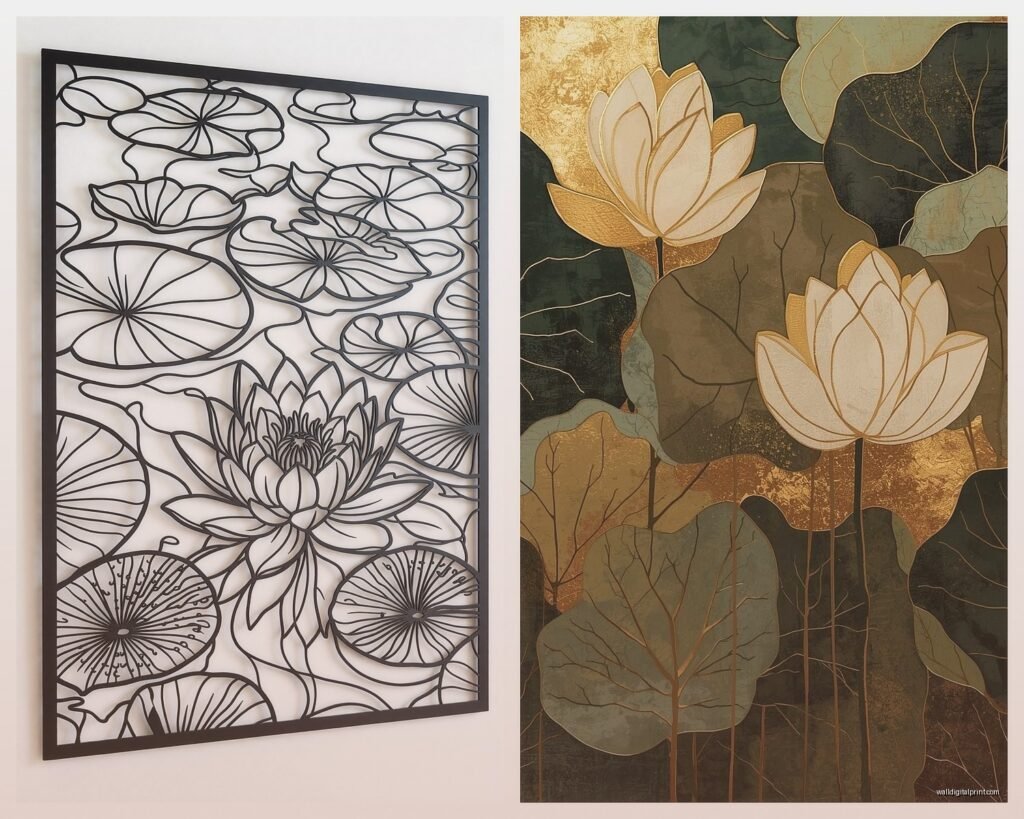
- Metal lotus sculptures – three dimensional wall hangings that cast shadows. I put one in my own bedroom and the morning light through it is… yeah. But they’re pricey.
- Minimalist line drawings – single continuous line or simple black outlines. Very Scandinavian vibes, works if you’re going for that clean aesthetic.
- Mandala lotus combinations – where the lotus is center of a geometric mandala pattern. These read more bohemian.
Size Matters More Than You Think
I made this mistake early on—bought this beautiful lotus print that was only 16×20 inches for a client’s living room wall and it just looked sad and lost. Lotus imagery actually benefits from going bigger than you think because there’s so much detail in the petals and the symbolic elements.
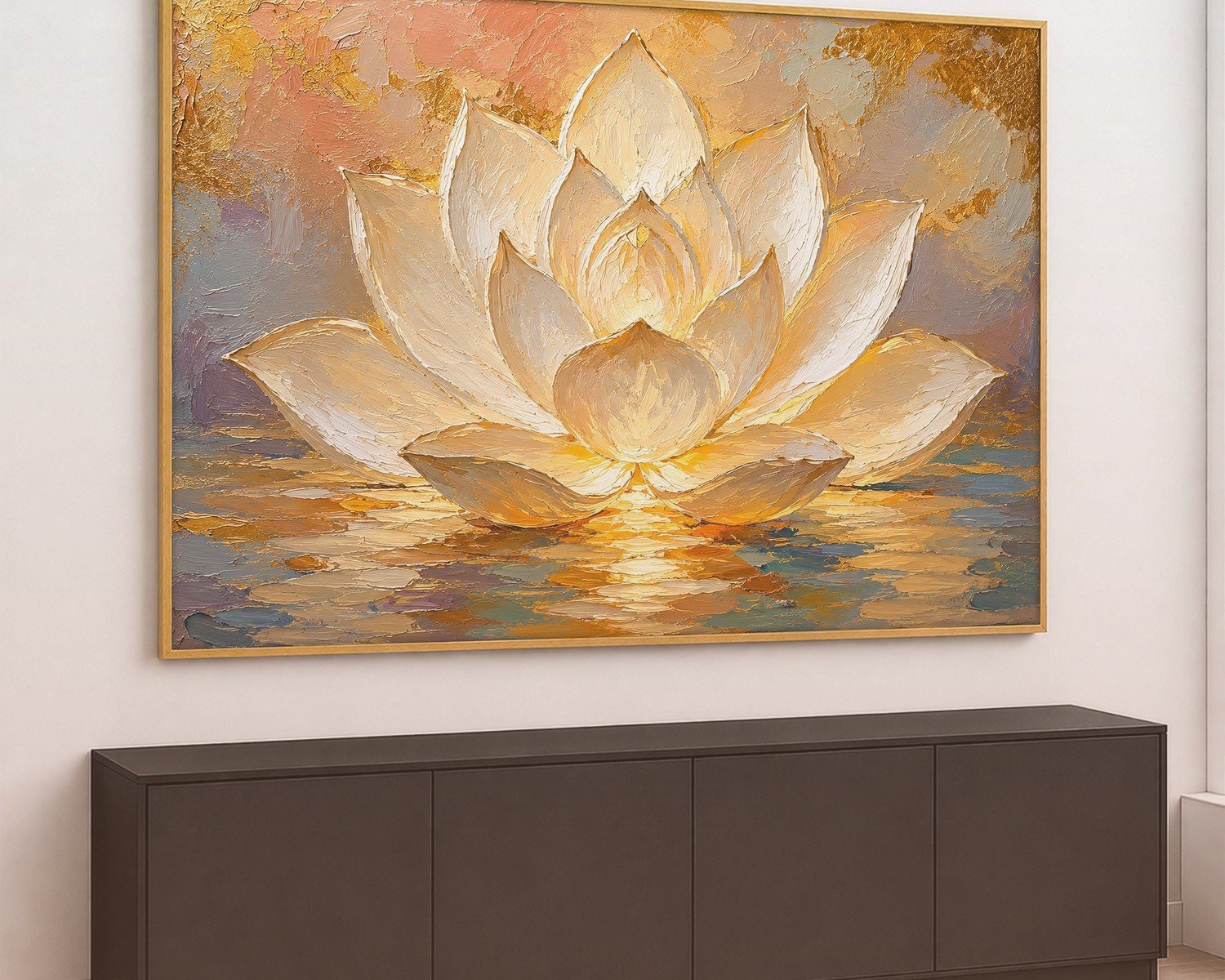
For above a bed or sofa, you want minimum 30×40 inches or do a triptych situation. For smaller spaces like bathrooms or narrow hallways, 16×20 works but you gotta frame it substantially or group it with other pieces.
Colors and What They Actually Mean
So in Buddhist tradition, different colored lotus flowers have different meanings and I’m gonna be honest, most Western manufacturers don’t care about this at all, but if you’re buying from Asian artists or want to be culturally respectful:
White lotus represents spiritual perfection and mental purity. It’s the most sacred color and honestly the most versatile for decor because it goes with everything. I probably specify white lotus art in 60% of projects.
Pink lotus is associated with Buddha himself and represents the supreme lotus. It’s the most common one you’ll see in traditional Buddhist art. Works really well in bedrooms or spaces where you want that gentle, peaceful energy.
Red lotus symbolizes compassion and love—more passionate energy. I used a red lotus piece in a client’s dining room and it actually made the space feel warmer and more convivial? Sounds weird but it worked.
Blue lotus represents wisdom and knowledge. Less common but really striking visually. Great for home offices or study spaces.
Purple lotus is mystical and spiritual, often associated with esoteric Buddhism. These pieces tend to be more decorative and less traditional.
Where to Actually Buy This Stuff
Okay so I’ve ordered from probably twenty different places at this point and here’s what I’ve learned:
Etsy is honestly your best bet for authentic pieces from Asian artists. Search specifically for “Buddhist lotus art” or “Thangka lotus painting” and filter for shops in Nepal, Tibet, or Thailand. The quality is usually excellent and you’re supporting actual artisans. Shipping takes forever though, like 3-4 weeks minimum.
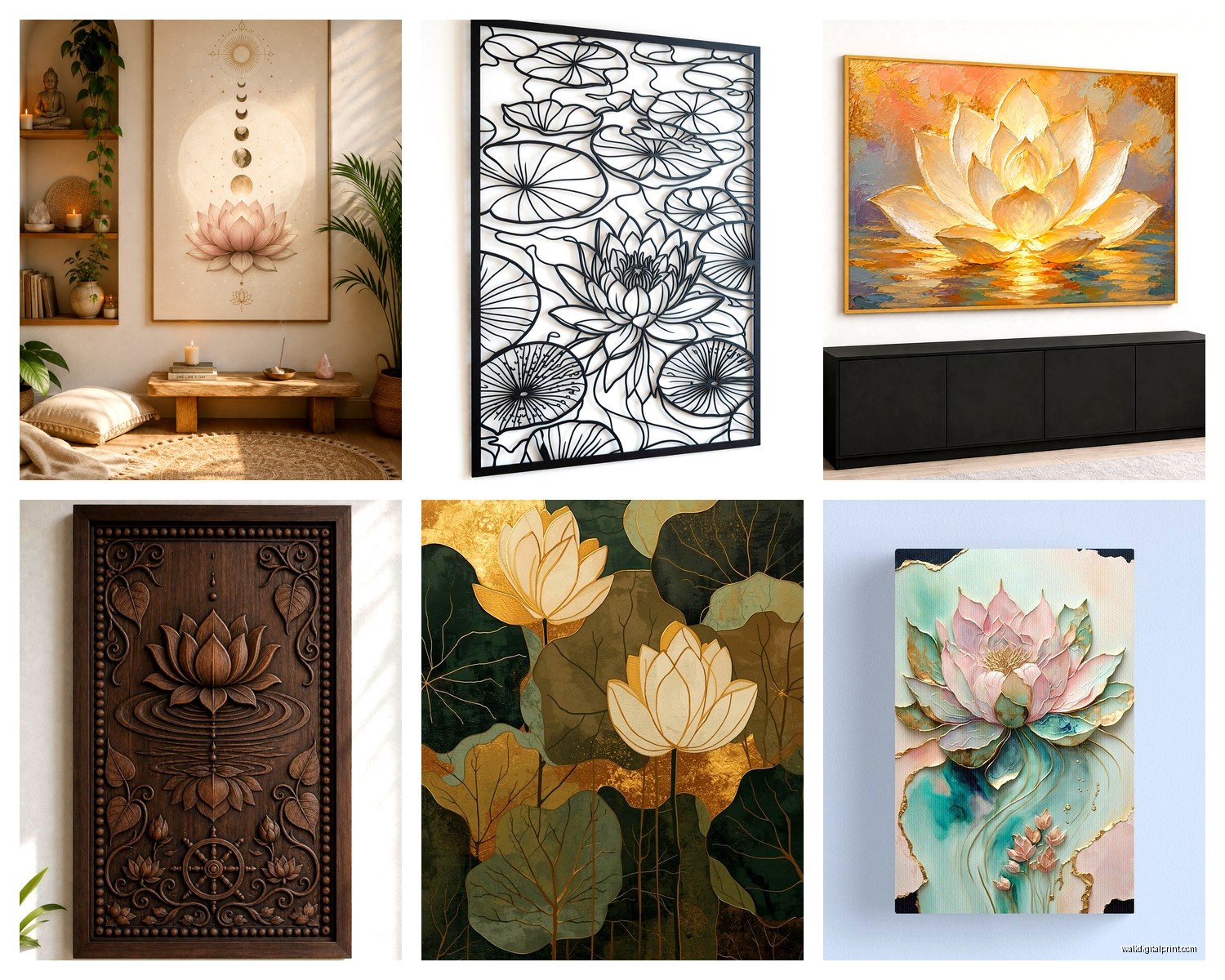
Society6 and Redbubble have tons of lotus designs and the print quality is decent for the price. This is where I go for clients on a budget or renters who might move soon. You can get the same design on canvas, framed print, tapestry, whatever. But it’s gonna be more generic Western interpretation of lotus imagery.
Local Asian import stores often have beautiful pieces you won’t find online. I found this stunning carved wooden lotus panel at a Vietnamese home goods store for like $45 that would’ve been $200+ online. Worth checking out if you have these in your area.
High-end galleries if you want original art or limited editions. I’m talking $500+ here but the pieces are investment quality. There’s this artist named Lotus Ahn who does mixed media lotus pieces with actual gold leaf and they’re stunning.
The Framing Situation
Don’t skip framing or mounting properly because it makes such a difference. For lotus art specifically:
Simple floating frames work great for minimalist lotus prints—lets the image breathe and keeps focus on the artwork itself. I use these thin black metal frames from Framebridge for most modern spaces.
Traditional Thangka paintings should ideally be mounted in silk brocade borders if you wanna go authentic. It’s expensive but it honors the art form. Otherwise a simple gold or dark wood frame works.
Canvas prints can be hung frameless if they’re gallery wrapped but honestly I think they look unfinished. Even a thin frame elevates them.
Placement Tips That Actually Work
So beyond just “put it on a wall” here’s what I’ve learned about where lotus art actually functions best:
Meditation or yoga spaces are obvious but the placement within those spaces matters. You want it at eye level when you’re seated on the floor, not standing height. I put one in my tiny meditation corner and initially hung it too high and it just felt… off. Lowered it by eight inches and suddenly the whole space clicked.
Bedrooms behind the bed work beautifully because the lotus energy is calming and promotes good sleep supposedly? I’m not super spiritual but I definitely sleep better since I put a white lotus print above my headboard. Could be placebo effect, don’t care, it works.
Entryways are underrated for lotus art. It sets this peaceful tone right when you come home. I have a metal lotus sculpture near my door and my dog always sits under it when she’s anxious during thunderstorms which is… actually really sweet now that I think about it.
Bathrooms might seem weird but water is a huge element in lotus symbolism so it actually makes sense. Just make sure it’s properly sealed if you’re doing prints, or go with metal art.
One place that doesn’t work as well—busy kitchens or dining rooms where there’s lots of visual clutter. The lotus needs some breathing room to have its calming effect. I tried putting a lotus piece in a client’s eclectic maximalist kitchen and it just got lost among all the other stuff.
Mixing Lotus Art with Other Decor Styles
You don’t need to go full Buddhist temple aesthetic to incorporate lotus art, which is something clients worry about constantly.
Modern minimalist actually pairs perfectly with simple line lotus drawings or photography of real lotus flowers. Keep the frame simple and the matting generous. I did an all-white room with just a single black line lotus drawing and it was *chef’s kiss*.
Bohemian spaces can handle the more colorful mandala lotus pieces. Layer with plants, textured textiles, warm wood tones. Just don’t go too matchy-matchy with the spiritual stuff or it gets theme-y.
Scandinavian hygge vibes work with watercolor lotus prints in soft colors. Think pale pinks and grays, simple wood frames, lots of negative space on the wall.
Industrial loft style surprisingly works with metal lotus sculptures. The material contrast against exposed brick or concrete is really striking. I did this in a converted warehouse apartment and people always comment on it.
DIY Options If You’re Crafty
I made my own lotus art for my office because I’m cheap and also couldn’t find exactly what I wanted. Got this gorgeous handmade paper from an art supply store, pressed real lotus petals between the sheets (you can buy dried ones online), and framed it between two pieces of glass. Cost maybe $30 total and looks way more expensive.
You can also do lotus flower photography if you have access to a botanical garden. There’s one near me that has a lotus pond in summer and I’ve taken probably 200 photos there. Print them large format at a local print shop, way cheaper than buying art.
Stenciling lotus designs on canvas is another option—get a lotus stencil from a craft store, use metallic paint, boom, custom art. I did this for a rental property where we needed something nice but temporary.
Common Mistakes I See People Make
Okay so after doing this for a while, here are the things that usually go wrong:
Going too literal with the Buddhism thing. You don’t need Buddha statues AND lotus art AND singing bowls AND incense holders all in one room unless you’re actually Buddhist or it’s a dedicated spiritual space. Pick your elements carefully.
Buying prints that are too small. Already mentioned this but seriously, size up. Lotus imagery has so much detail that shrinking it down loses impact.
Hanging it too high. The standard “57 inches to center” rule doesn’t always apply to spiritual art that you might be viewing while seated in meditation or yoga poses.
Ignoring the lighting. Lotus art really benefits from good lighting—either natural light during the day or a picture light. The petals and details get lost in dim corners.
Mixing too many different styles. A Thangka painting doesn’t really vibe with a minimalist line drawing in the same sightline. Pick a style lane and stay in it.
Caring for Your Lotus Art
Canvas and paper prints are pretty low maintenance—just dust occasionally with a soft brush and keep them out of direct harsh sunlight which will fade them over time. I learned this the hard way with a beautiful watercolor lotus that got completely washed out after two years in a south-facing window.
Metal lotus sculptures need occasional cleaning with a soft cloth. Some develop a patina over time which honestly I think looks better but if you want them shiny, there are specific metal polishes depending on the material.
Traditional Thangka paintings are delicate and should never be touched directly. If they need cleaning, take them to a professional. They’re often painted with natural pigments and gold leaf that can be damaged easily.
The Cultural Respect Thing
Look, I’m gonna address this because it comes up. Lotus imagery is sacred in Buddhism and Hinduism, so there’s a conversation to be had about cultural appreciation versus appropriation. My personal approach: if you’re drawn to lotus art because you find it beautiful and calming, that’s fine. If you’re genuinely interested in the symbolism and meaning, even better. But don’t like, put a lotus next to your wine bar as just a trendy decoration without any thought to what it represents, you know?
I always encourage clients to learn at least the basic meaning behind the lotus symbol. It adds depth to your space and shows respect for the tradition. Plus honestly it makes the art more meaningful to live with.
Also maybe don’t get a lotus tattoo or massive permanent installation unless you’ve really thought about it and it means something to you beyond aesthetics, but that’s just my opinion and I’m not the culture police.
Anyway, I’m realizing I’ve been typing for like forty minutes and my tea is cold, but hopefully this helps? The main thing is just start with one piece that speaks to you, place it thoughtfully, and see how it affects your space before going all in. I’ve got like six lotus pieces scattered throughout my apartment now and they all serve different purposes in different rooms. It’s become kind of my thing accidentally but I’m not mad about it.
