Wall Art Guide, Wall Art Tutoriels
Black Artist Wall Art: African American Creator Artwork

Aug
So I’ve been curating Black artist wall art for like five years now and honestly it’s become this whole thing where friends text me at midnight asking which prints to buy, so let me just dump everything I know here.
Where to Actually Find Quality Pieces
Okay so first thing – Etsy is honestly hit or miss but when you find the right shops it’s incredible. I spent like three hours last Tuesday (was supposed to be working but whatever) going through Black-owned art shops and the quality difference between mass-produced stuff and actual artist prints is wild. Look for sellers who show their process photos or have videos of them working. That’s usually a good sign it’s legit.
The Black Art In America website is where I found this amazing abstract piece for my dining room last year. They verify all their artists and you can actually read about each creator’s background which I love because then you can tell people the story when they ask about it. And trust me, people will ask.
Print Quality Actually Matters More Than You Think
Here’s something I learned the hard way – giclée prints are worth the extra money. I bought this gorgeous portrait from a talented artist but went with the cheaper poster print and it faded within like eight months near my window. Had to rebuy it as a giclée and the colors are still perfect two years later. Giclée uses archival inks and better paper so it’s actually an investment not just wall decoration.
Canvas prints can look amazing but make sure they’re gallery-wrapped (where the image continues around the edges) because regular wrapped canvas with white edges looks cheap no matter how good the art is.
Sizing is Where Everyone Messes Up
Okay this is gonna sound weird but I literally made a cardboard template after buying too many wrong-sized pieces. Cut out newspaper or tape together paper in the dimensions you’re considering and stick it on your wall with painter’s tape. Live with it for a day or two. I swear this saves so much hassle.
For above a couch you want the art to be roughly 2/3 the width of the furniture. Smaller looks awkward and floaty. I see this mistake constantly and it drives me nuts. If you’re doing a gallery wall though all bets are off – gonna talk about that in a sec.
Single statement pieces work best at:
- 24×36 inches or larger for living rooms
- 16×20 to 24×30 for bedrooms
- 11×14 to 16×20 for smaller spaces like bathrooms or hallways
But honestly these are just starting points because I’ve seen 48×60 inch pieces in small rooms that somehow work perfectly.
Supporting Artists Directly vs Retailers
So there’s this whole debate about buying direct from artists versus through galleries or online retailers. I do both depending on the situation. Direct from artists means they get more money obviously, and you can sometimes request custom sizes or colors. Instagram is actually amazing for finding Black artists – search hashtags like #blackartist #africanamericanart #blackartwork and you’ll fall down this incredible rabbit hole.
But galleries and curated sites like Saatchi Art or Artsy handle shipping better usually, and they have return policies which matters when you’re dropping serious money. I bought a $800 mixed media piece through a gallery last month and it arrived perfectly packaged with a certificate of authenticity. When I’ve bought direct the packaging is sometimes just okay.
Oh and another thing – some artists sell through Society6 or Redbubble where they upload designs and the company handles printing and shipping. The artist gets a smaller cut but you get more product options like different sizes, framed versions, whatever. It’s not my favorite way to support artists financially but sometimes it’s the only way to get a piece you love if the artist doesn’t do their own fulfillment.
Framing Will Make or Break the Whole Thing
Custom framing is expensive as hell. Like shockingly expensive. I spent $300 framing a $75 print once and my partner thought I’d lost my mind. But it looks absolutely incredible so no regrets.
If you’re on a budget, Michael’s and Hobby Lobby have decent ready-made frames and they run 50-60% off sales constantly. Just wait for the sale, trust me. For Black artist work I tend to go with:
- Simple black frames for colorful abstract pieces
- Natural wood frames for portraits and figurative work
- White or cream frames for minimalist or line art
- Gold or brass frames for vintage-style or classical pieces
Framebridge does this online custom framing thing where you upload a photo of your art and they send you a frame. I was skeptical but tried it for a client project and it turned out really good. Takes like 2-3 weeks though so plan ahead.
Gallery Walls Are Harder Than Pinterest Makes Them Look
Okay so funny story – I attempted my first gallery wall and had like 30 nail holes in my hallway before I figured out the system. Here’s what actually works:
Cut out paper templates of all your frames. Arrange them on the floor until you like the layout. Take a photo. Then tape the paper to the wall in that exact arrangement and nail through the paper where the hooks should go. Rip the paper down and hang the frames. This is the only method that works I don’t care what anyone says.
For a cohesive gallery wall with Black artist work, pick a theme:
- All portraits in different styles
- All abstract in a similar color palette
- Mix of styles but same frame color
- All pieces by artists from a specific region or movement
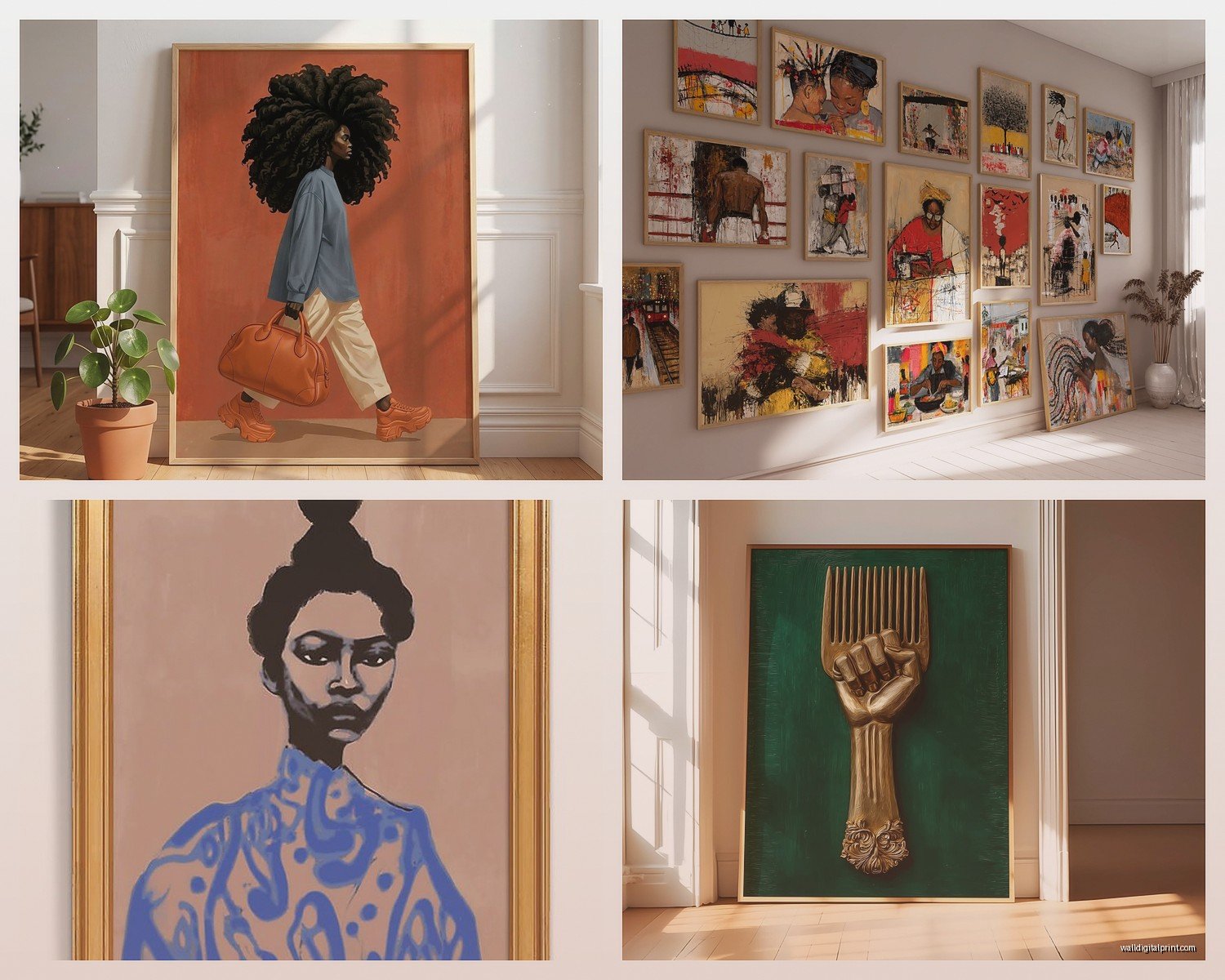
I’ve got a gallery wall in my office with all abstract work by Black women artists and it’s probably my favorite thing in my house. The colors don’t even match that well but something about it just works.
Color Coordination Without Being Boring
You don’t have to match your art to your throw pillows, please don’t do that. But pulling one or two colors from your existing room into the artwork helps it feel intentional. I have this emerald green velvet chair and specifically looked for art with green accents. Doesn’t mean the whole piece is green – just touches of it.
My dog literally just knocked over my coffee while I’m writing this, but anyway – when you’re looking at art online the colors can be super different in person. Most good artists will note if colors vary from screen to print but read reviews if available. I bought this beautiful piece with what looked like navy blue online and it was practically black in person. Still loved it but it went in a different room than planned.
Emerging Artists vs Established Names
Established Black artists like Kehinde Wiley, Mickalene Thomas, or Amy Sherald – you’re looking at thousands to millions for originals, obviously. But prints of their work exist and can be more affordable. The Brooklyn Museum shop and MoMA store carry prints from well-known artists sometimes.
Emerging artists though, that’s where it gets exciting. You can buy original work for like $200-$800 sometimes. I follow this artist on Instagram who does these incredible mixed media portraits and her originals are still under $500. In five years those might be worth significantly more, but also I just love supporting artists before they blow up.
Art fairs are great for discovering new artists too. Affordable Art Fair happens in different cities and has a ton of Black artists. I went to the one in Brooklyn last year and came home with two pieces and probably fifteen business cards.
What Styles Actually Work in Different Spaces
Living rooms can handle bold, large-scale work. Abstract expressionism, vibrant portraits, mixed media – go big or go home. This is where you make a statement.
Bedrooms I tend to go more calming. Still powerful work but maybe softer color palettes or more meditative subjects. I have this beautiful piece above my bed of a Black woman in profile, very serene, mostly blues and grays. It’s perfect for a bedroom vibe.
Kitchens and dining rooms are fun for food-related art or cultural celebration pieces. I hung a bright, energetic print of a fish fry scene in my kitchen and it makes me happy every time I see it.
Bathrooms are underrated for art, okay? Small spaces, usually good lighting, and people are in there alone so they actually look at stuff. Just make sure you’re not hanging valuable pieces in a super steamy bathroom because humidity damages art over time.
The Lighting Thing Nobody Talks About
Natural light will fade your art eventually, it just will. UV-protective glass helps a lot but it’s pricey. I use it on my most valuable pieces only. For everything else just don’t hang art in direct sunlight if you can avoid it.
Picture lights are those little lights that mount above frames and honestly they look fancy but can be annoying to install. Track lighting or strategically placed floor lamps work just as well for highlighting art.
Wait I forgot to mention – if you’re renting and can’t make a ton of holes, command strips actually work for lightweight frames. Not for anything heavy or valuable, but for prints under 5 pounds they’re fine. Also leaning art on shelves or mantles is totally valid and looks intentionally casual.
Building a Collection Over Time
You don’t need to buy everything at once. I started with one piece I absolutely loved and built from there. Now I have probably 30 pieces rotating through my house and storage. Some people think that’s excessive but whatever, it’s my thing.
Start with one statement piece that really speaks to you. Then add complementary pieces slowly. I try to buy one new piece every few months, which gives me time to really think about what I want and save up if needed.
Estate sales and thrift stores occasionally have original Black artist work, especially in cities with strong Black communities and art scenes. I found an original painting from the 1970s at an estate sale for $40 once. Had it appraised and it was worth like $800. That doesn’t happen often but it happens.
Taking Care of Your Investment
Dust your art regularly with a soft cloth. Don’t use cleaning products on it. If you have glass-covered pieces, use glass cleaner on the glass only, not on frames.
Keep art away from heat vents, fireplaces, and humid areas. I learned this when a piece above my radiator got damaged one winter.
If you’re moving, wrap art in glassine paper or bubble wrap, never newspaper because the ink can transfer. Keep wrapped art flat or standing vertically, never at an angle.
Insurance might seem excessive but if you’re collecting pricier pieces, document everything. Photos, receipts, certificates of authenticity. I have a whole folder on my computer with this stuff.
Red Flags When Shopping Online
If an artist’s work looks suspiciously like several different styles, they might be stealing images. Reverse image search anything you’re unsure about.
Super low prices for what claims to be original work is usually a scam. Original paintings take time and materials. If someone’s selling “original oil paintings” for $29.99 that’s a print at best, a scam at worst.
No artist bio or information is sketchy. Legitimate artists want you to know about them and their process.
Watermarked images in listings are fine, but if you can’t see the actual artwork clearly at all, that’s weird.
Limited information about print quality, paper type, or size specifics means they probably don’t care about those things, which means you shouldn’t buy from them.
Look I could keep going but my cat is demanding dinner and I’ve basically told you everything I know. The main thing is just start somewhere, buy what you genuinely love, and don’t stress too much about getting it perfect. Art is supposed to make you feel something, and if a piece does that, it’s the right choice for you.