Wall Art Guide, Wall Art Tutoriels
Contemporary Metal Wall Art for Living Room: Modern Sculptures
Sep
So I’ve been obsessing over metal wall art lately because honestly, it’s the fastest way to make a living room look intentional without dropping thousands on a whole redesign. Like, I had this client last month who had the most boring beige walls and we literally just added three pieces of contemporary metal sculpture and suddenly the whole room felt like it belonged in Architectural Digest or something.
Why Metal Art Actually Works Better Than Canvas Sometimes
Okay so here’s the thing nobody tells you about metal sculptures for walls – they create shadows and dimension that flat art just can’t. When light hits them during different times of day, the whole piece changes. I noticed this in my own living room when the afternoon sun comes through and my geometric copper piece literally glows. It’s not static like a painting, you know?
Plus they’re way more durable if you have pets or kids. My cat used to scratch at canvas edges but completely ignores the metal pieces. And they don’t fade like prints do, which is huge if you have windows that let in a lot of natural light.
The Different Styles You’ll Actually Find
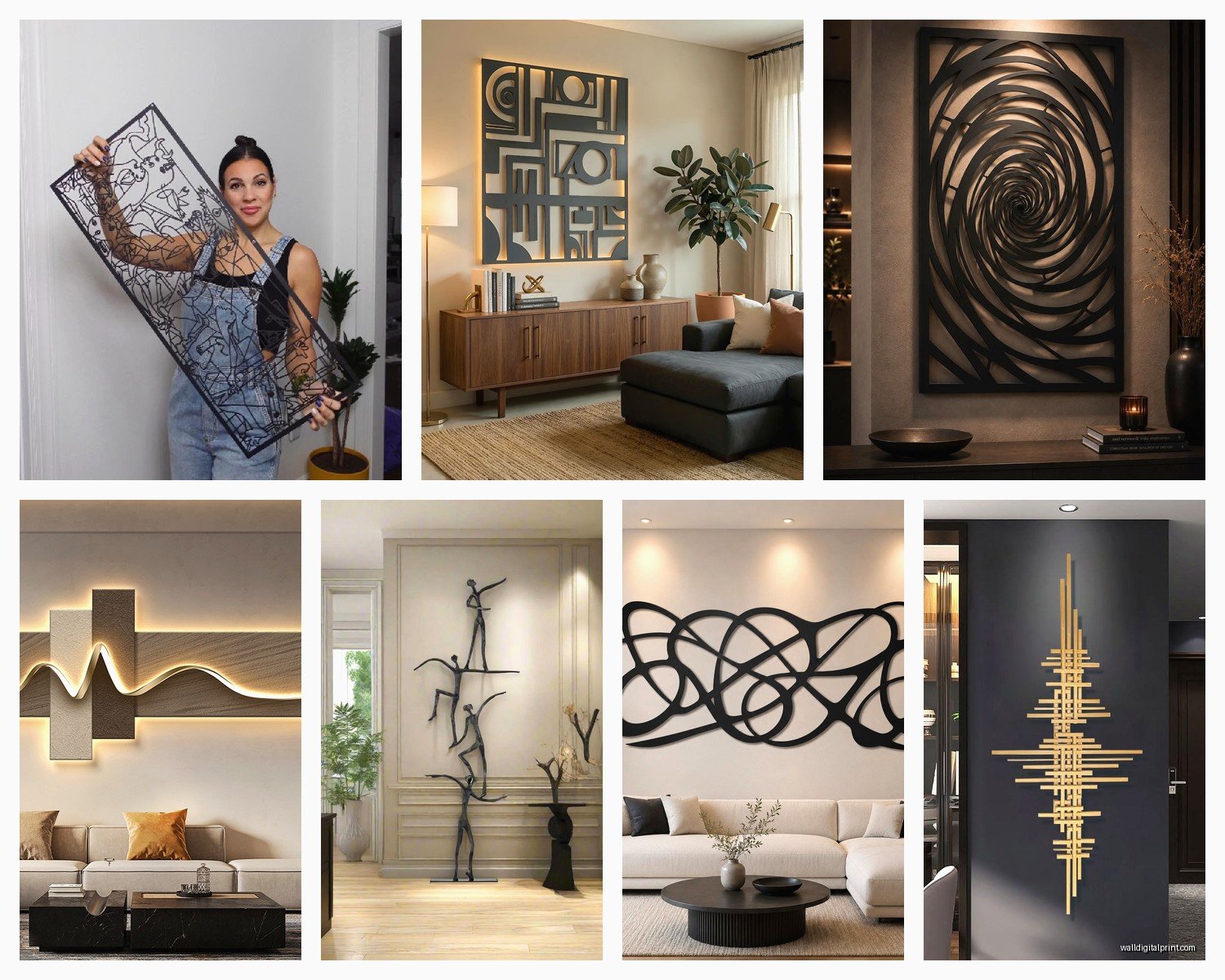
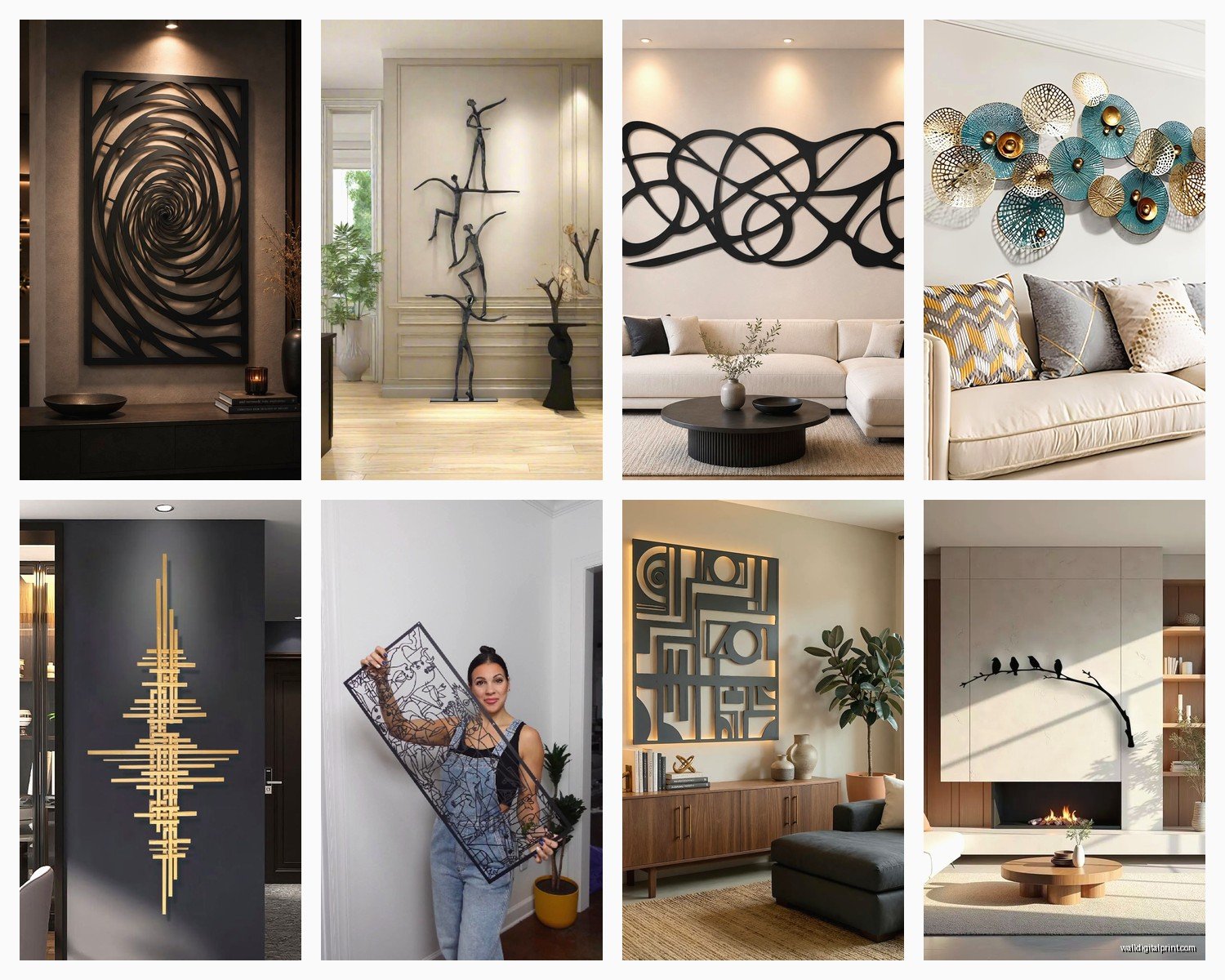
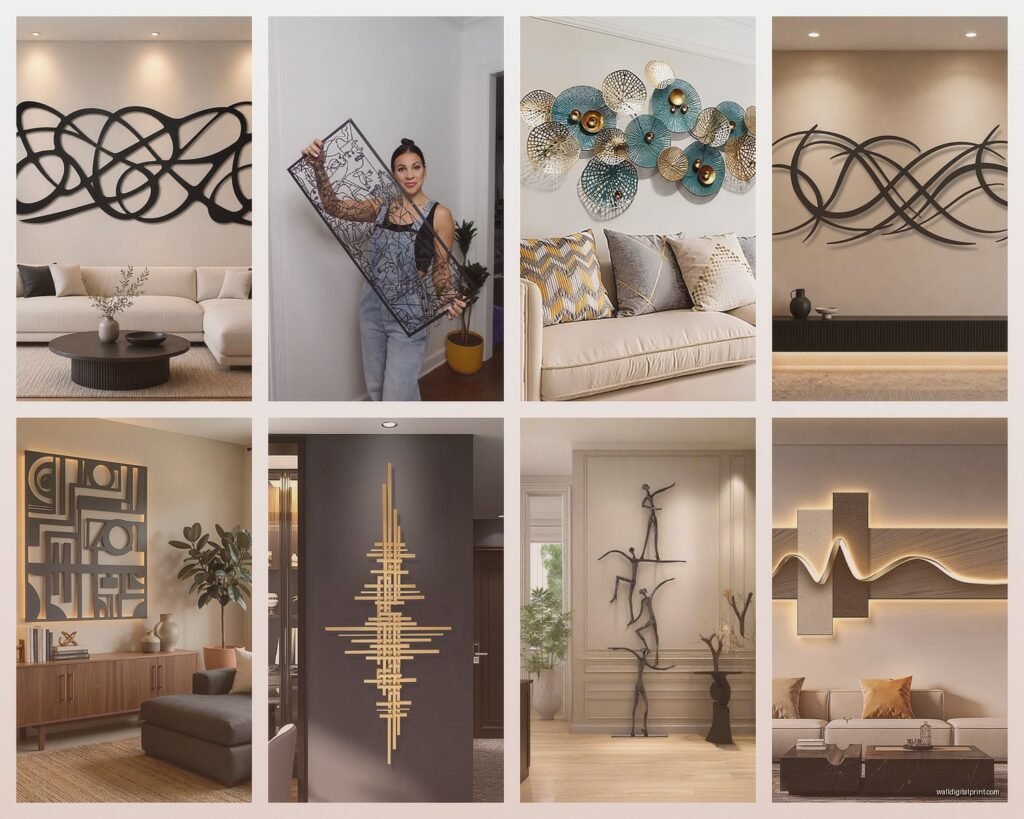
Contemporary metal art basically falls into a few categories and knowing which one matches your vibe saves so much time scrolling:
- Geometric abstracts – these are the angular, modern pieces with circles, lines, hexagons. Very mid-century modern vibes
- Nature-inspired – think tree branches, leaves, birds, waves. Still modern but softer
- Industrial minimalist – raw steel, iron, simple shapes. Warehouse loft aesthetic
- Fluid organic shapes – curved metal pieces that look almost like they’re moving
- Layered dimensional sculptures – multiple metal pieces mounted at different depths
I personally lean toward geometric because my living room is already kinda soft with the couch and rugs, so the metal adds contrast. But my friend Sarah did the nature-inspired route and it looks amazing in her craftsman-style house.
Sizing This Thing Correctly Because Everyone Gets It Wrong
Okay this is gonna sound weird but I actually use painter’s tape to map out the size before buying anything. Cut pieces of tape in the dimensions you’re considering and stick them on the wall. Live with it for a day or two. I learned this the hard way when I bought this gorgeous piece that was like 18 inches wide and it looked absolutely ridiculous on my 12-foot wall. Too small, just floating there sadly.
General rule that actually works: your wall art should take up about two-thirds to three-quarters of the furniture width below it. So if your couch is 84 inches, you’re looking at roughly 56-63 inches of art width. You can do one large piece or a grouping that spans that width.
For height, I hang the center of the piece at 57-60 inches from the floor – that’s standard gallery height. But if you’re mounting above furniture, leave 6-8 inches between the furniture top and the bottom of the art. Less than that and it looks cramped, more and it looks disconnected.
My Client’s Awkward Wall Situation and What We Did
Wait I forgot to mention – if you have a really tall wall like a vaulted ceiling situation, vertical pieces work better than horizontal. I had this client with a two-story living room and we used a tall branching metal tree sculpture that was about 5 feet tall. Filled the space without overwhelming it.
Also cathedral ceilings are tricky because you don’t wanna hang stuff too high. Keep it in the main sight line even if it means there’s wall space above it. Empty space isn’t bad, it’s actually sophisticated.
Materials and Finishes That Actually Matter
Not all metal is created equal and this affects how it looks in your space:
Brushed steel or aluminum – these have a matte finish, very contemporary, work well in modern spaces with lots of white or gray. Don’t show fingerprints as much which is nice.
Copper or bronze – warm tones, they patina over time which some people love (adds character) and some hate (looks old). I’m in the love it camp but you gotta know what you’re getting into.
Black iron or powder-coated steel – super versatile, works with almost any color scheme. This is my go-to recommendation when people are unsure because you literally can’t go wrong.
Polished/shiny finishes – chrome, polished brass, mirror-like steel. These are statement pieces, very glam, but they show every fingerprint and can feel dated fast if the trend shifts. I’d be careful with these unless your whole aesthetic is glam.
Mixed metal pieces that combine like copper and steel are having a moment right now. They add visual interest without being too matchy-matchy with your other decor.
Installation Without Destroying Your Walls
So most metal art is lighter than you’d think because it’s often hollow or thin gauge metal. But you still gotta mount it properly or you’ll have holes to patch later.
For pieces under 10 pounds, regular picture hanging strips or hooks work fine. I use the 3M Command strips for lightweight stuff all the time – they hold better than you’d expect and don’t damage walls when you remove them. Great for renters.
Anything heavier needs actual wall anchors. Find the studs if you can (I use one of those magnetic stud finders, cost like $8 and actually works). If your piece doesn’t line up with studs, use toggle bolts or molly bolts in drywall. The hardware usually comes with the sculpture but honestly it’s often cheap, so I replace it with better quality anchors from the hardware store.
The Leveling Thing That Nobody Talks About
Oh and another thing – metal sculptures with multiple hanging points are THE WORST to level. My trick: put a piece of painter’s tape across the back of the sculpture, mark where the hanging points are, then transfer that tape to the wall. Mark your nail/anchor spots, remove the tape, install hardware. Way easier than trying to measure and level each point individually.
I was watching The Bear the other night while installing a piece and got distracted and messed up the measurements. Had to patch two extra holes. Don’t be me, pause the show.
Mixing Metal Art With What You Already Have
Your metal sculpture doesn’t have to match your other decor exactly but it should relate to something in the room. If you have brass lamps, a brass or copper sculpture creates visual continuity. Black metal art works with black window frames or furniture legs.
I usually pull the metal finish from something that’s already in the room, even if it’s small like cabinet hardware or a picture frame. That makes the whole space feel cohesive instead of like you just randomly stuck art on the wall.
Color-wise, metal plays well with almost everything but it’s especially good with:
- Neutral walls (white, gray, beige) where the metal adds texture
- Deep jewel tones like navy, emerald, burgundy – creates drama
- Natural materials like wood and stone – the industrial/organic contrast
I’d be more careful with really warm yellows or oranges because some metals can clash. Test it if you can, or at least look at photos in similar color schemes online.
Where to Actually Buy This Stuff
I’ve bought from all over and here’s what I’ve learned:
Online retailers (Wayfair, Amazon, Overstock) have huge selections and decent prices, but you can’t see the quality in person. Read reviews carefully, especially about the finish quality and sturdiness. I’ve gotten some pieces that looked great in photos but felt cheap in person. Return policies are crucial here.
HomeGoods/TJ Maxx/Marshalls – hit or miss but when you find something good, it’s usually well-priced. Just gotta go regularly because inventory changes constantly. I found an amazing geometric piece at HomeGoods for $60 that I’ve seen similar versions of for $200+ online.
Etsy – best for unique, handmade pieces. More expensive but you’re supporting actual artists and getting something not everyone has. I commission custom pieces from Etsy sellers sometimes for clients who want specific sizes or colors.
Local art fairs and galleries – similar to Etsy but you see it in person first. Great for investment pieces. I got a sculpture from a local artist last year that’s probably appreciated in value already.
West Elm, CB2, Article – mid-range retailers with curated selections. Quality is usually consistent, styles are trendy but not too trendy. Good if you want something nice but don’t wanna spend hours searching.
Price Ranges and What You Actually Get
Under $50 – mass-produced, smaller pieces, often thin metal. Fine for starter pieces or groupings but won’t be heirloom quality.
$50-150 – sweet spot for most people. Decent quality, good variety of sizes and styles. This is where I shop for my own home usually.
$150-500 – better craftsmanship, unique designs, substantial weight and presence. Worth it for a statement piece in a main living area.
$500+ – artist-made, investment pieces, often custom or limited edition. I recommend this if you’re really into the piece and it’s gonna be a focal point for years.
Common Mistakes I See All the Time
Hanging it too high – seriously this is like 80% of people. Lower than you think, trust me.
Choosing a finish that doesn’t relate to anything else in the room – it just looks random and out of place.
Going too small – bigger is almost always better. A tiny piece on a big wall looks like an afterthought.
Not considering the wall color – some metals disappear against certain wall colors. Silver on light gray walls has basically no contrast, for example.
Forgetting about the surrounding space – leave breathing room around the piece. It shouldn’t be crammed between furniture or too close to doorways.
Styling Around Your Metal Art
Once you’ve got your sculpture up, you might need to adjust other stuff to make it really shine. I usually do a few things:
Add lighting – a picture light or even just repositioning a floor lamp to highlight the piece makes a huge difference. The shadows and dimension really come alive with directed light.
Balance the visual weight – if your metal art is on one side of the room, you need something with visual weight on the other side to balance it. Could be a tall plant, a bookshelf, a floor lamp, whatever.
Layer in complementary textures – metal is smooth and hard, so contrast it with soft textiles like a chunky knit throw or velvet pillows. The room feels more complete that way.
Keep surrounding walls relatively clear – give your statement piece space to breathe. You don’t need gallery walls everywhere, sometimes one great sculpture is enough.
Grouping Multiple Pieces
If you’re doing a gallery wall with metal sculptures or combining multiple pieces, keep odd numbers (3, 5, 7) and vary the sizes. I usually do one large focal piece with smaller complementary pieces around it.
Space them 2-4 inches apart generally. Closer feels cluttered, farther feels disconnected. Layout the arrangement on the floor first, take a photo, then recreate it on the wall. Saves so much time and wall damage from trial and error.
Oh and mix in other materials sometimes – metal with framed prints or mirrors can look really good. Doesn’t have to be all metal all the time.
Maintenance is Actually Super Easy
This is one reason I love metal art – it’s so low maintenance. Dust it every couple weeks with a microfiber cloth. For fingerprints or smudges, use a barely damp cloth with a tiny bit of dish soap if needed, then dry immediately.
Don’t use harsh chemicals or abrasive cleaners because they can damage finishes. And if you have copper or bronze that you want to keep from tarnishing, there are specific metal polishes, but honestly I like the aged look so I just leave mine alone.
That’s pretty much everything I’ve figured out through trial and error over the past few years. Metal wall art really does transform a space faster than almost any other decor change, and once it’s up, you’re done – no watering, no rearranging, just enjoying it.