Wall Art Guide, Wall Art Tutoriels
Zen Wall Art for Living Room: Peaceful Mindful Main Space
Sep
So I’ve been working with zen wall art in living rooms for like three years now and honestly it’s one of those things that sounds super simple until you’re standing in your living room at 11pm holding a level and questioning every life choice, you know?
What Actually Counts as Zen Wall Art
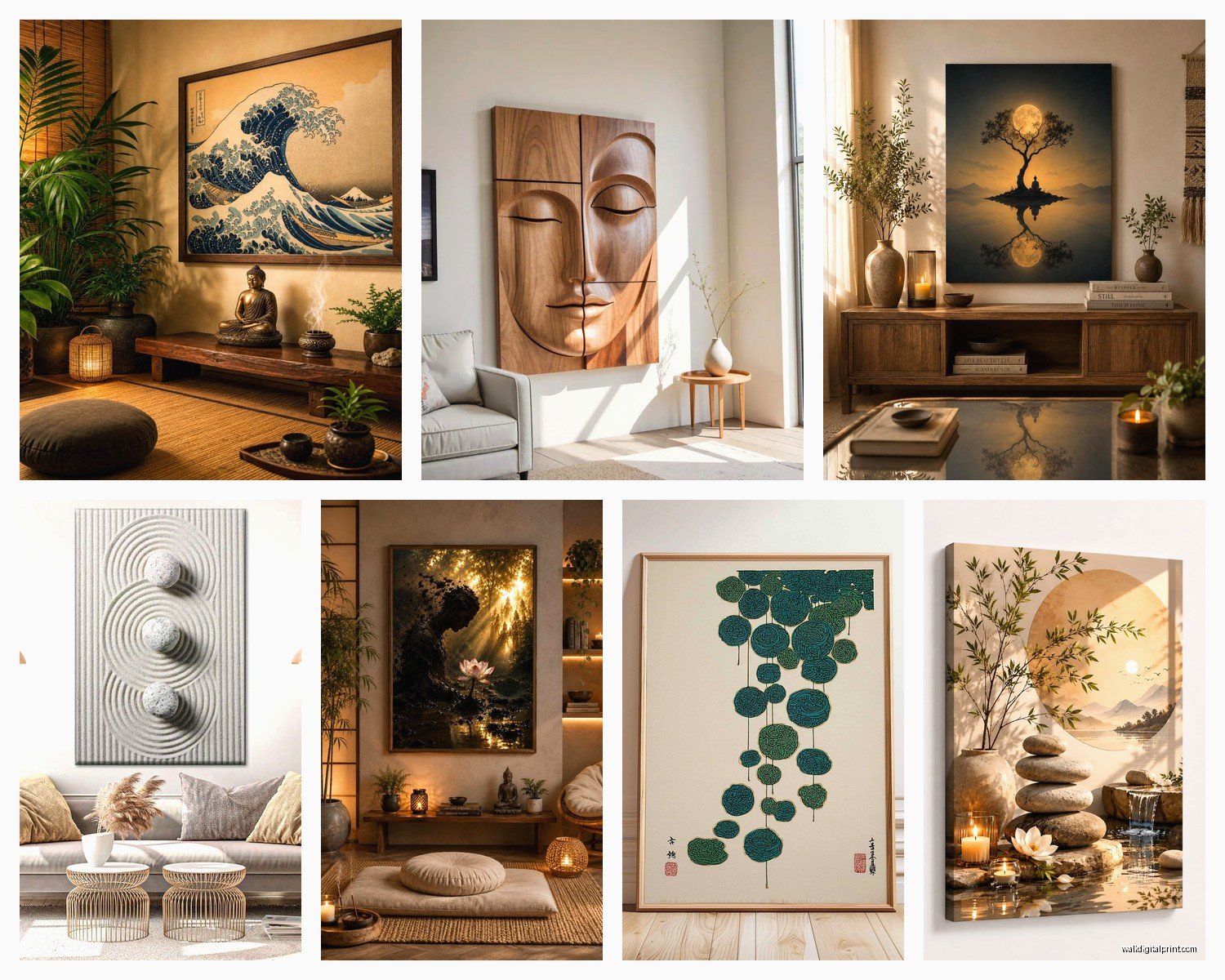
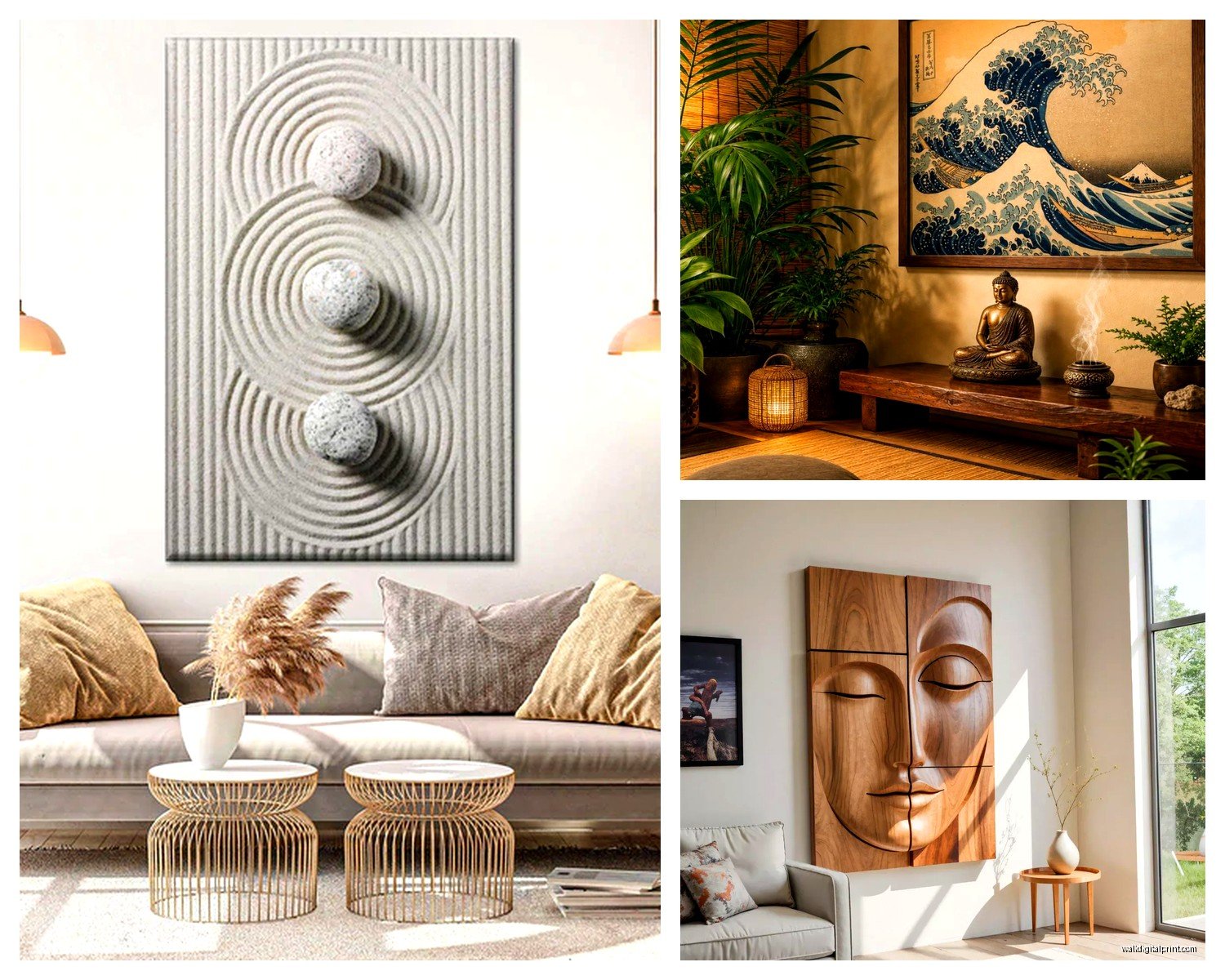
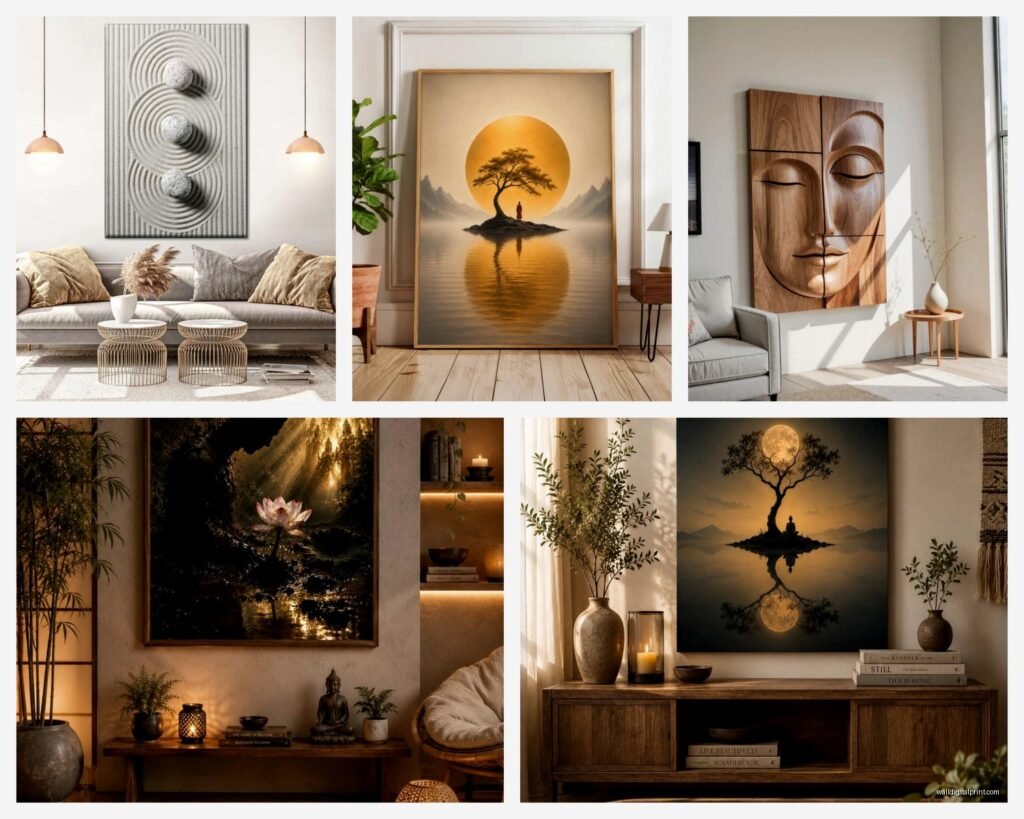
Okay first thing – zen doesn’t mean just slapping up a Buddha print and calling it a day. I learned this the hard way with a client who bought this massive gold Buddha face and her living room looked more like a Vegas hotel than a peaceful space. Real zen art is about negative space, natural elements, and honestly just not trying too hard.
The stuff that actually works: ink wash paintings (sumi-e style), simple line drawings of bamboo or rocks, abstract pieces with muted colors, black and white photography of nature, and yeah sometimes Buddha imagery but like subtle. My go-to is always those minimalist mountain line drawings or the enso circles – you know those brushstroke circles that aren’t quite closed? Those are weirdly powerful.
Size Matters Way More Than You Think
Here’s where everyone messes up including past me. You need your art to take up about two-thirds to three-quarters of your furniture width below it. So if your couch is 84 inches, you’re looking at roughly 56-63 inches of art width. This can be one large piece or a gallery wall but it needs to feel substantial.
I had this whole thing last month where my cat knocked over my coffee onto my sizing notes and I had to redo measurements for a client’s living room and honestly it was a blessing because I realized I’d been going too small. The piece we ended up with was 48×36 inches and it completely changed the room versus the 30×24 I’d originally planned.
Color Palettes That Don’t Make You Anxious
Stick with neutrals but here’s the thing – neutral doesn’t mean boring beige. I’m talking charcoal, warm grays, soft blacks, cream, natural wood tones, sage green, muted blue-grays. Maybe one accent color if you’re feeling spicy but keep it earthy.
The mistake I see constantly is people mixing cool and warm tones. Pick a lane. If your living room has warm wood floors and cognac leather, don’t go with cool gray art. Get something with warm undertones – maybe a sepia-toned nature photograph or art with cream backgrounds instead of stark white.
Wait I forgot to mention – if you have colorful furniture, your zen art should be even more neutral. Like my friend has this teal velvet couch and we did entirely black and white sumi-e paintings above it and it’s *chef’s kiss*. The art calms down the boldness of the furniture.
Framing Is Half the Battle
Simple frames. That’s it. That’s the whole tip. Natural wood, black, white, or no frame at all if you’re doing canvas. I default to natural oak or black ash frames probably 80% of the time.
Here’s something that’s gonna sound weird but floating frames are perfect for zen art. They create this gap between the art and the frame that adds to that negative space concept. You can get them on Amazon for like $30-60 depending on size and they make even basic prints look expensive.
Also mat boards – use them. A white or cream mat around your art creates breathing room which is literally the whole point of zen design. I usually do 3-4 inch mats for medium pieces, 2-3 inches for smaller ones.
Where to Actually Buy This Stuff
Etsy is honestly my secret weapon. Search for “minimalist line art,” “zen ink painting,” or “abstract neutral art” and filter by your size needs. I’ve found incredible artists who do custom sizing for reasonable prices. Usually $80-200 for good quality prints.
Society6 and Minted have decent options too but they’re more hit or miss. The quality is consistent but everything starts looking same-y after a while. I use them when I need something fast or when budget is really tight.
For original pieces if you’ve got $300-800 to spend, look at local art fairs or Instagram artists. I found this amazing artist last year who does these textured neutral abstracts and my clients always ask about her work. Just search hashtags like #minimalart #zenart #neutralart.
Oh and another thing – thrift stores and estate sales sometimes have perfect vintage pieces. I scored a 1970s ink wash painting for $40 last summer and it’s now in my own living room.
Placement Rules That Actually Matter
Eye level means the center of your art should be at 57-60 inches from the floor. This is like universal art hanging height and it works. Don’t hang stuff too high – it makes your ceilings look lower and creates this weird disconnected feeling.
Above the couch, leave 6-8 inches between the furniture and the bottom of your frame. Any more and it looks like it’s floating away, any less and it feels cramped.
For corner spaces or that weird wall next to your window – vertical pieces work better than horizontal. I did a tall narrow piece of bamboo stalks in a client’s corner last week and it made the ceiling feel higher.
Gallery Walls Without Losing Your Mind
If you’re doing a gallery wall for zen art, keep it to 3-5 pieces max. More than that and you lose the calm vibe. I like doing asymmetrical arrangements but with similar frames so there’s cohesion.
My method is to lay everything out on the floor first, take a photo, then trace each frame on kraft paper and tape the paper to the wall. Mark your nail holes through the paper. This has saved me from so many extra holes in the wall I can’t even tell you.
Keep spacing consistent – 2-3 inches between frames. Use a tape measure. Yes it’s tedious but eyeballing it never works out.
Lighting Makes or Breaks Everything
You need either natural light or really good artificial light on your art. Those cheap LED spotlights from IKEA are actually perfect – I use them all the time. The NÄVLINGE ones are like $15 and you can aim them at your art.
Avoid harsh overhead lighting directly on the art because it creates glare. Angled lighting from the side or above works better. Also dimmer switches are your friend – being able to adjust the mood is very zen.
This is gonna sound weird but I sometimes put art on walls that get morning light specifically because that soft early light makes neutral art look incredible. My living room faces east and watching my enso circle print in morning light is genuinely meditative.
What to Avoid Like Your Ex
Motivational quotes. Just no. “Live Laugh Love” is the opposite of zen. Words pull your brain into thinking mode instead of just being mode.
Overly busy patterns or too many elements in one piece. If you’re looking at art and counting things in it, it’s not zen enough.
Shiny metallic finishes unless they’re really subtle. That rose gold marble print trend? Not zen. Matte finishes only.
Anything that’s trying too hard to be “zen” – like if it has the word zen in the product title, it’s probably not actually zen. Real zen aesthetic is about simplicity not about loudly announcing itself.
Mixing Zen Art with Other Styles
Okay so this is actually possible but you gotta be strategic. Zen art plays really well with Scandinavian, Japanese, modern, and even some bohemian styles if you keep the boho elements natural.
I did this living room where we mixed zen ink paintings with some organic woven wall hangings and it worked because everything was in the same neutral palette and had natural textures. The key is keeping the color story consistent.
You can also mix zen art with family photos if you frame them all the same way. Black and white family photos in matching black frames mixed with zen nature prints can actually look really cohesive. Just don’t mix color family photos with zen art – it gets chaotic fast.
DIY Options That Don’t Look DIY
If you’re crafty or broke or both, you can make decent zen art. Get some large canvases from the craft store when they’re on sale (Michael’s always has 50% off coupons), paint them a neutral color, and add simple elements.
I’ve done the thing where you paint a canvas cream or gray and then use a thick brush to paint one simple element – a single branch, a mountain silhouette, a circle. The key is confidence in your brushstrokes. Don’t fuss with it. One stroke and done is very zen.
Pressed botanicals under glass also work. Get a simple IKEA frame, press some leaves or ferns, arrange them minimally on neutral paper, frame it. Boom, zen art for like $20.
Oh wait I forgot to mention – you can also frame nice fabric. I’ve used natural linen, textured cotton, even a piece of subtle wallpaper stretched over canvas boards. As long as it’s neutral and has interesting texture, it reads as intentional art.
Seasonal Switching
Some people like to rotate art seasonally which sounds high maintenance but hear me out. Having like 2-3 pieces you can swap keeps things feeling fresh without constant redecorating. I keep winter pieces (bare branches, snow mountains) and warmer season pieces (bamboo, stones in water) and switch them out twice a year.
This only works if you have storage space though. My storage closet is basically an art archive at this point and my partner makes fun of me but whatever, it works.
The Practical Stuff Nobody Tells You
Use proper hanging hardware. Those little sawtooth hangers that come with frames are trash. Get D-rings and picture wire or proper wall anchors if you’re going into drywall. Pieces falling off walls is extremely un-zen.
For heavy pieces over 20 pounds, find studs or use heavy-duty anchors. I use the Hillman Gorilla hooks and they’re honestly amazing – you can hang like 50 pounds on drywall.
Keep a level handy. That app on your phone works fine. Nothing kills zen vibes faster than crooked art and your eye will always notice even if you think it won’t.
Command strips can work for lighter pieces under 10 pounds and they’re great for renters but follow the weight limits exactly. I learned this when a frame crashed down at 2am and scared the hell out of me and my dog.
The other thing is that zen doesn’t mean empty. Some people go too minimal and their living room feels cold instead of peaceful. You still need enough art and decor to make the space feel intentional. Usually one large statement piece or a small curated gallery wall plus maybe one or two other smaller elements elsewhere in the room.
Anyway that’s basically everything I’ve learned from doing this over and over. Start with one good piece above your couch, keep it simple, and don’t overthink it because overthinking is literally the opposite of zen and you’ll just end up stressed which defeats the whole purpose right