
Wall Art Guide, Wall Art Tutoriels
Heart Wall Art: Love Valentine Romance Symbol Decor
Sep
So I’ve been down this rabbit hole lately because my living room needed something and I kept circling back to heart wall art, which sounds cheesy but hear me out. It’s actually way more versatile than you’d think if you do it right.
The Different Types You’ll Actually Find
Okay so first thing, heart wall art isn’t just those red glittery Valentine’s Day things from the drugstore. There’s like a whole world of options and I got kinda obsessed last month when a client asked for something romantic but not tacky.
Metal heart wall art is probably my favorite and I’ll tell you why. I bought this oxidized bronze piece from a local artist and it has this industrial edge that keeps it from being too sweet. The metal ones come in different finishes—brushed gold, matte black, copper, even rusted iron. The rusted ones are surprisingly sophisticated. They work in modern spaces, farmhouse vibes, whatever. Just make sure you’re checking the weight because some of them need actual anchors in the wall, not just a nail.
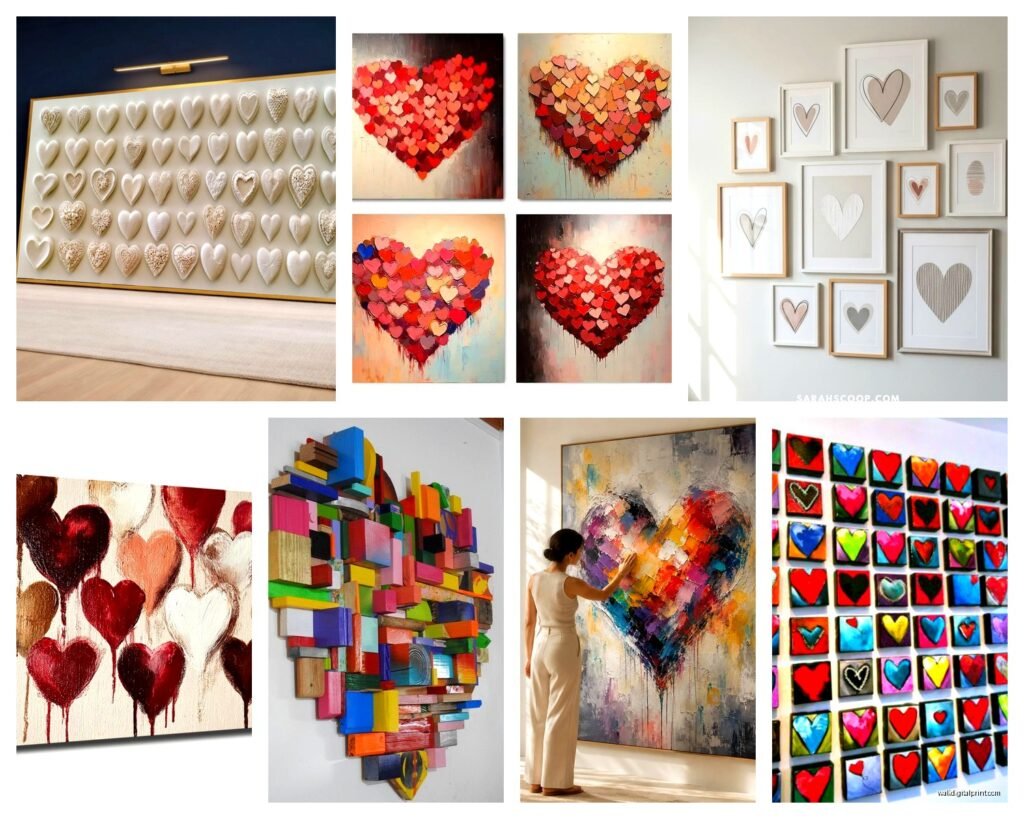
Canvas prints are everywhere and honestly hit or miss. I’ve tested probably fifteen different ones at this point. The cheap ones from big box stores look fine in photos but in person the colors are flat and the canvas is so thin you can see the wooden frame through it. Not cute. But there are some really beautiful abstract heart designs where the heart shape is subtle—like made from watercolor splashes or geometric lines. Those don’t scream “Valentine’s Day” and you can keep them up year-round without feeling weird about it.
Wood Options That Don’t Look Crafty
Wood heart art can go really wrong really fast, like it can look very DIY Pinterest fail. But I found this carved wooden heart at a flea market that’s probably from the 80s and it’s actually gorgeous because the wood has patina and the carving is deep and textured.
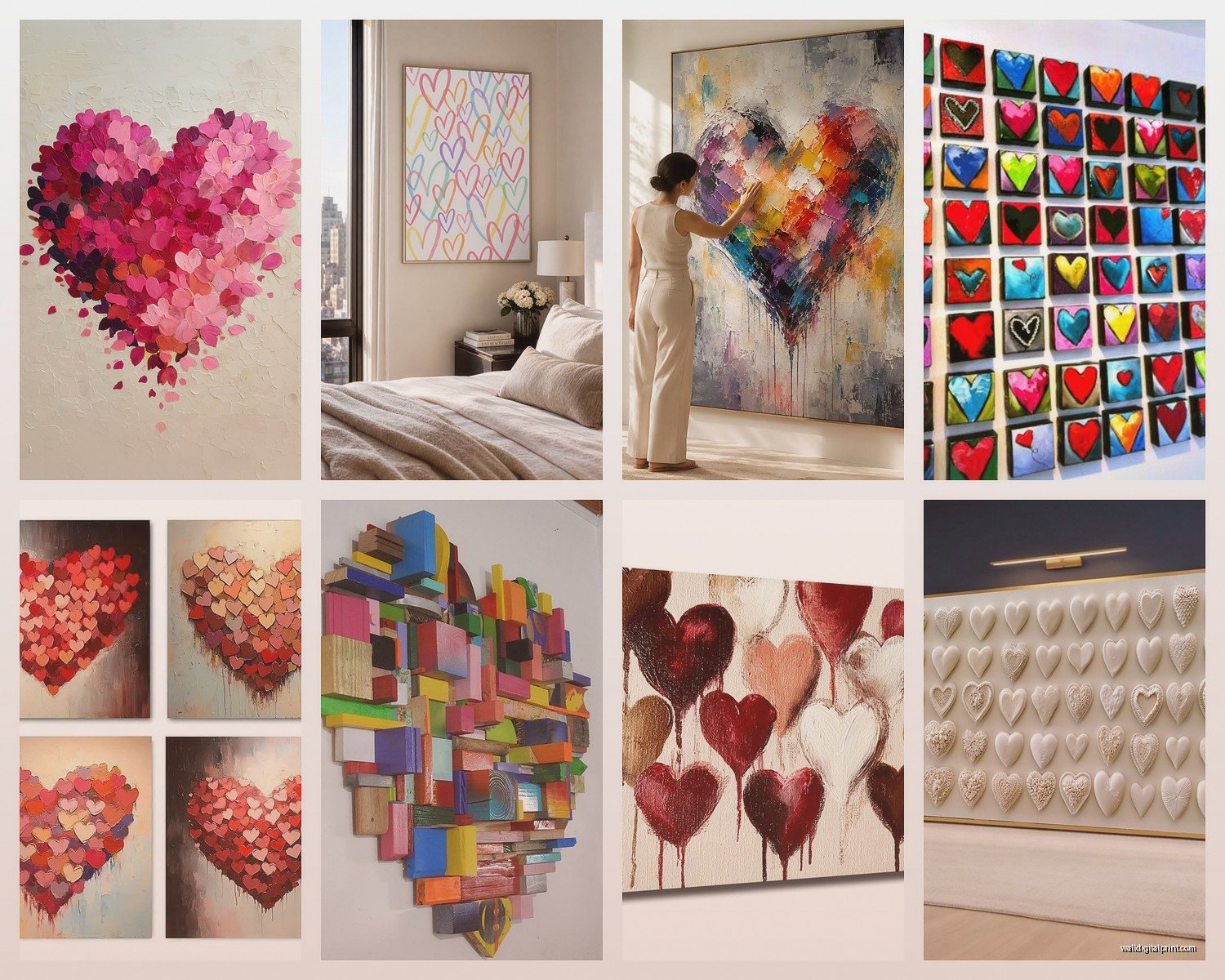
If you’re buying new wooden heart art, look for reclaimed wood or pieces where the heart is cut out (negative space) rather than a solid shape. There’s this trend of wooden hearts made from thin slats arranged in ombre colors and… I wanted to like them but they read very craft-store to me. However, a single piece of driftwood shaped vaguely like a heart? That works. Natural and organic shapes always feel less forced.
Where to Actually Hang This Stuff
Okay so funny story, I hung a heart piece above my bed and my friend came over and was like “are you okay” because apparently it gave off breakup energy? Which I didn’t see at all but now I can’t unsee it. So bedroom placement is tricky.
Above the bed can work but keep it minimal. A small metal heart, maybe 12 inches, centered above the headboard reads romantic without being overwhelming. Or do a gallery wall that includes a heart among other shapes and art. Don’t make the heart the focal point there.
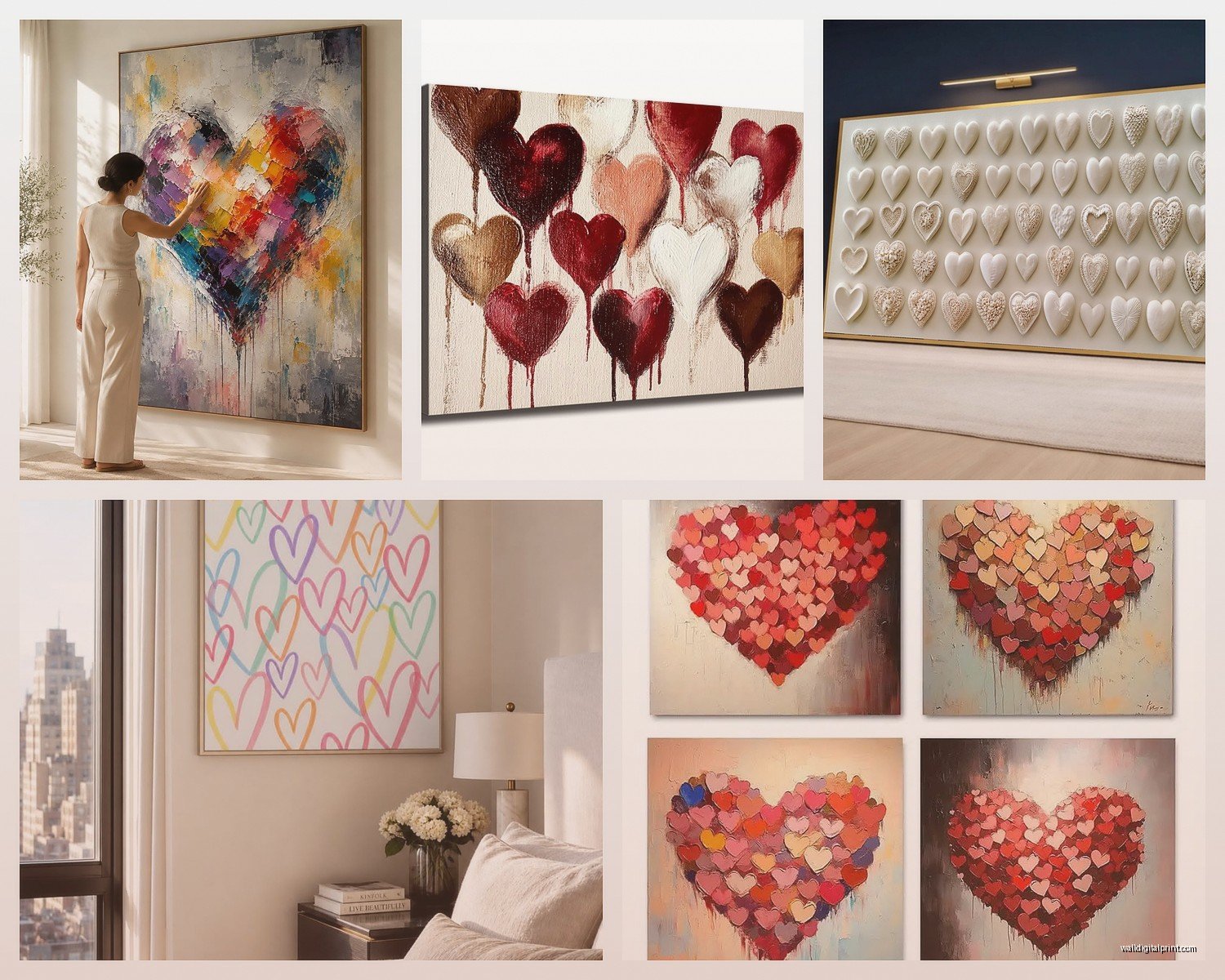
Living rooms are actually easier than you’d think. I have a large abstract heart canvas (it’s like navy and cream, very subtle) above my couch and people don’t even register it as Valentine’s decor. They just see it as art. The key is color palette—if you’re going with traditional red, you gotta commit to a bold look. Red heart art works in spaces that already have red accents or can handle a statement piece. Otherwise go neutral, metallics, or unexpected colors.
Entryways and Hallways
These are actually perfect spots that nobody thinks about. A heart in an entryway sets a welcoming tone without being in-your-face. I hung a small gold wire heart sculpture near my front door and it catches the light really nicely. Hallways can handle a series of small heart prints in matching frames—like three or five in a row. Just keep them the same size and evenly spaced, otherwise it looks chaotic.
Dining rooms can work too, especially if you entertain. There’s something nice about subtle romantic symbolism in a space where people gather. Just don’t go too literal—skip the “love” script typography and go for abstract or artistic interpretations.
Sizing This Thing Out
I messed this up so many times before figuring it out. The general rule is your art should take up about two-thirds to three-quarters of the furniture width below it. So if your couch is 90 inches, you want art that’s roughly 60-70 inches wide.
But hearts are weird because the shape affects how we perceive size. A heart that’s 24 inches wide actually looks bigger than a 24-inch square or rectangle because our eyes are drawn to the curves. So you can usually go slightly smaller with heart art than you would with other shapes.
For above a bed, I’d say 18-30 inches for a queen, up to 36 inches for a king. Anything bigger starts to feel like it’s gonna fall on you while you sleep. And honestly? Sometimes smaller is better. A 10-inch heart on an otherwise empty wall can be really striking because of the negative space around it.
The Color Thing Nobody Talks About
Red is obviously the default but it’s also the hardest to pull off. I’ve seen red heart art work beautifully in spaces with navy, charcoal, or black accents. The contrast is chef’s kiss. But in a beige room or with lots of warm wood tones, red can look like it’s from a different house.
My go-to recommendations: blush pink or dusty rose for softer spaces, black or dark gray for modern or masculine vibes, gold or brass for glam, white or cream for minimalist. Multi-colored hearts (like made from different materials or painted in gradients) are having a moment and they’re actually easier to style because they pull colors from your existing palette.
Oh and another thing, metallics change throughout the day with the light. That bronze heart I mentioned earlier looks completely different in morning light versus evening. It’s almost like having two pieces of art. So if you’re on the fence about a metallic piece, try to see it in person at different times if possible.
Mixing Finishes
You can totally mix a metal heart with wooden frames nearby or a canvas heart with metal decor elements. I do this all the time. The key is repeating shapes or colors elsewhere in the room so nothing looks random. If you have a copper heart, add copper candle holders or a copper lamp base somewhere. Creates visual cohesion that my cat definitely doesn’t care about but your guests will notice subconsciously.
DIY vs. Buying and Being Honest About Skill Level
Look, I’m gonna be real with you. Most DIY heart wall art tutorials you see online require more skill than they let on. I tried making one of those string art hearts and it took HOURS and looked janky. The nails were uneven, the string tension was all wrong, just no.
However, there are some easy DIYs that actually work. Framing fabric with a heart pattern is foolproof—buy fabric you love, stretch it over a canvas frame or in an embroidery hoop, done. I did this with a vintage floral fabric and cut a heart shape from solid pink fabric, appliquéd it on (just used fabric glue, didn’t even sew), and it looks intentional and handmade in a good way.
Painting an abstract heart on canvas is also doable if you embrace imperfection. Get a canvas, pick 2-3 colors, paint loose brushstrokes in a vague heart shape. The messier the better honestly, it reads as artistic. I did one while watching that show about the chess prodigy and it turned out great specifically because I wasn’t overthinking it.
What to Avoid Because I Learned the Hard Way
Neon hearts. Just… no. I bought a neon pink heart light thinking it would be cool and edgy and it’s been in my closet for two years. It’s too much. Unless you’re going for a full neon aesthetic in like a teen’s room or a creative studio space, skip it.
Word art that says “love” with a heart dotting the “i” or whatever. It’s dated and reads very 2010s in a not-good way. If you want text, go for something more poetic or unexpected. I saw one that said “heart and soul” in a cool font with a small heart incorporated and that worked because it wasn’t trying so hard.
Anything glittery for adult spaces. Glitter is for kids’ rooms or very specific holiday decor. A glitter heart on your wall year-round is gonna make people ask questions. If you want sparkle, go for metallic or crystal embellishments instead.
3D hearts that stick way out from the wall can be dust magnets and they’re hard to clean. I had one made of layered paper that looked cool initially but after six months it was dusty and some pieces were curling. Flat or low-profile is more practical.
Seasonal vs. Permanent and Making That Call
So here’s the thing, you can totally do heart art as permanent decor if you style it right. I keep mine up all year and nobody’s ever commented that it’s weird. The trick is choosing pieces that don’t scream Valentine’s Day specifically.
For seasonal/Valentine’s display, go ahead and bring out the red, the pink, the obvious romantic stuff. Create a gallery wall that you swap out, or have a ledge shelf where you can rotate art. I have a narrow shelf in my hallway where I put seasonal stuff and it’s easy to switch things around.
If you’re doing permanent heart art, think about what the piece says beyond romance. A heart can symbolize home, family, passion for life, courage (the whole “have a heart” thing), compassion. When I talk to clients about this, I encourage them to think about what the heart means to them personally beyond just romantic love.
Framing and Presentation Details
If you’re doing prints or canvas, the frame matters so much. A cheap frame makes expensive art look cheap, and a nice frame elevates budget art. I usually go for simple wooden frames in natural finish or matte black. White frames work for gallery walls or very light, airy spaces.
Matting is your friend with smaller prints. A small 5×7 heart print in a 16×20 frame with a wide mat looks intentional and collected. Without the mat, it can look like you ran out of larger art. I learned this from an art curator friend who came over and gently roasted my framing choices, and she was right.
For metal or wooden hearts that are sculptural, you usually don’t need frames obviously, but think about the wall color behind them. A black heart on a black wall disappears. You want contrast. I painted one wall in my dining room a deep sage green specifically because I knew my brass heart collection would pop against it.
The Multi-Heart Situation
Multiple hearts can work but there’s a tipping point where it becomes too much. I’d say max three heart pieces in one room, and they should be different sizes or styles. Like a large canvas heart, a small metal heart, and maybe heart shapes incorporated into other art.
Gallery walls that include hearts among other shapes and subjects are great. The heart becomes part of a larger story instead of the whole story. I did one with a mix of botanical prints, abstract art, one subtle heart print, and some black and white photos. The heart doesn’t dominate but adds a layer of meaning.
Collections of Small Hearts
Okay so this is gonna sound weird but I’ve seen really cool displays of vintage heart-shaped objects arranged on a wall or shelf. Like old heart-shaped tins, a heart-shaped mirror, heart-shaped frames with family photos. When you group them, it becomes a collection which feels more curated and less Valentine’s Day.
Just make sure there’s a unifying element—all the same color, all vintage, all metal, whatever. Random hearts in different styles grouped together looks like you just bought everything heart-shaped you could find, which… no.
Lighting Considerations
This is something I didn’t think about until I hung a really beautiful white carved wooden heart and realized you couldn’t see any of the detail because the wall was in shadow. If your art has texture or dimension, you need light on it.
Picture lights are an option but they’re pricey and require wiring or battery changes. I usually just make sure there’s a nearby lamp or overhead light that illuminates the wall. Directional lighting creates shadows that can actually enhance dimensional pieces—my metal hearts look completely different when light hits them from the side versus straight on.
For canvas or flat prints, avoid direct sunlight because it fades everything over time. I learned this the hard way with a beautiful watercolor heart print that got sun exposure through my west-facing window and now the colors are washed out. UV-protective glass helps if you’re framing something valuable or meaningful.
Where to Actually Buy This Stuff
Etsy is honestly great for unique pieces and you’re supporting small artists. I filter by “handmade” and read reviews carefully. Shipping can be expensive for larger metal pieces though.
Local art fairs and markets often have heart art, especially around Valentine’s Day but sometimes year-round. You can see it in person and talk to the artist which I always prefer. HomeGoods and TJ Maxx have surprisingly good art sometimes—you gotta dig but I’ve found some really nice pieces for like $20.
For high-end stuff, actual galleries or online retailers like Saatchi Art. Anthropologie has some good options too though they’re pricey. West Elm and CB2 occasionally have cool abstract heart pieces that are well-made.
Just avoid those print-on-demand sites where the same designs show up everywhere. You want your art to feel special, not like something in every third apartment.
