Wall Art Guide, Wall Art Tutoriels
Wrought Iron Wall Art: Forged Metal Traditional Scrollwork
Sep
So I’ve been working with wrought iron wall art for like eight years now and honestly it’s one of those things that either looks amazing or completely wrong, there’s not much middle ground. Let me walk you through what actually matters when you’re picking this stuff out.
Understanding What You’re Actually Buying
Okay so first thing – most “wrought iron” pieces you see aren’t technically wrought iron anymore. Real wrought iron hasn’t been commercially produced since like the 1970s or something. What you’re getting is mild steel that’s been forged and finished to look traditional. Which is fine! I’ve installed both vintage pieces and modern reproductions and honestly the new stuff holds up better because the powder coating technology is so much better now.
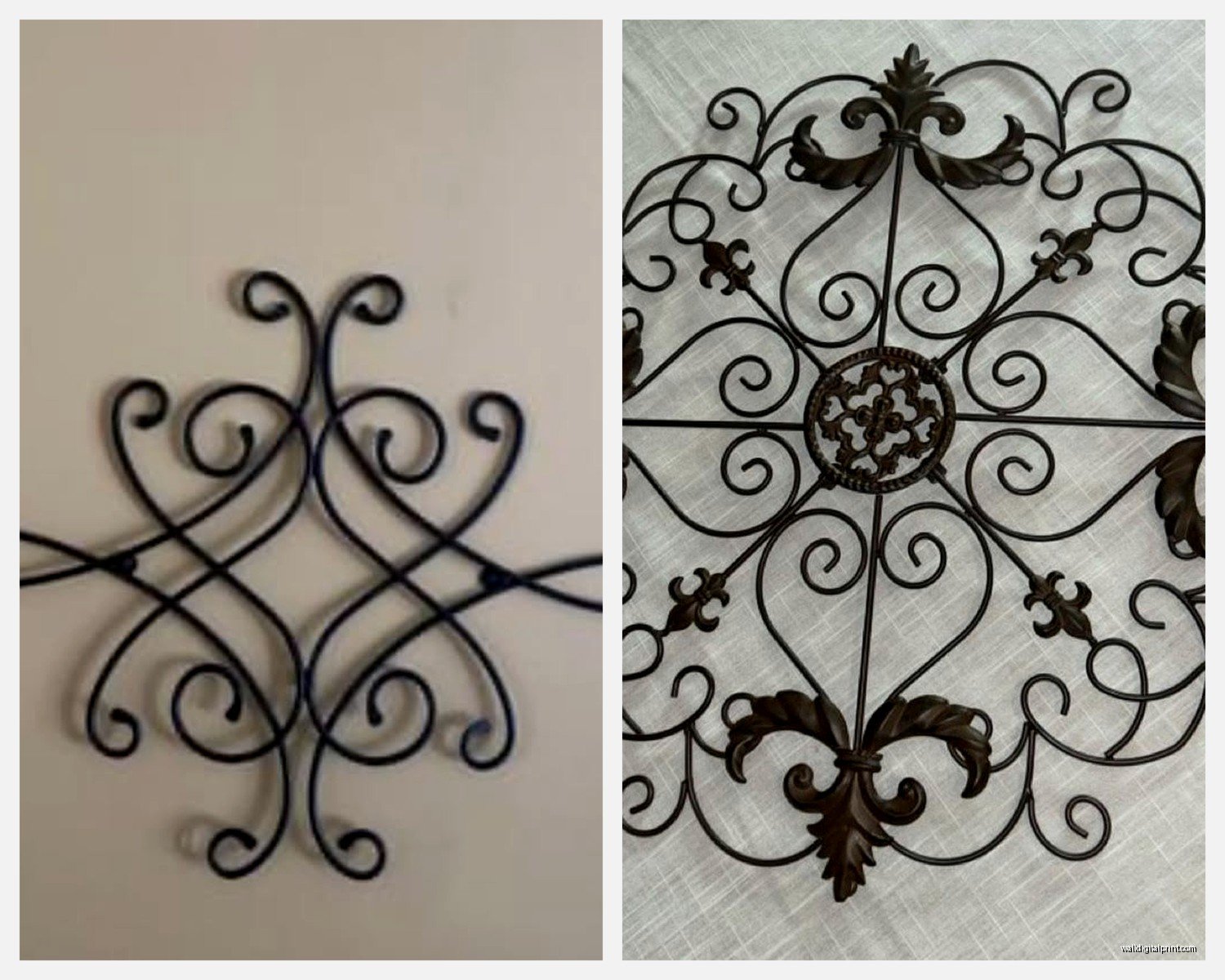
The scrollwork you’re seeing is either hand-forged (expensive, custom) or die-stamped (affordable, mass-produced). Hand-forged will have slight irregularities that actually make it look better – the curves aren’t perfectly symmetrical and there’s texture variation. Die-stamped looks more uniform. Neither is bad, just depends on what vibe you’re going for.
Sizing Is Where Everyone Messes Up
Oh and another thing – people always buy pieces that are way too small. Like I had a client last month who wanted to fill this massive wall above her sofa and she’d ordered this cute little 18-inch piece online. It looked like a postage stamp when we hung it up.
Here’s my actual rule that I use: measure your wall space and go for something that fills about 60-75% of the width. So if you’ve got a 6-foot wall, you want something around 4 feet wide minimum. Your eye needs to see it as intentional, not like you ran out of money halfway through decorating.
For height, I usually aim for pieces that are between 24-48 inches tall. Anything smaller reads as accessory rather than statement art. Which is fine if that’s what you want but most people buying scrollwork want impact.
The Weight Thing Nobody Warns You About
Real talk – this stuff is HEAVY. A 36-inch decorative piece can easily weigh 15-20 pounds. I’ve seen so many installations fail because people used regular picture hangers. Don’t do that.
You need wall anchors rated for at least double the weight of your piece. I always use toggle bolts or if you can hit a stud, heavy-duty screws directly into the wood. My go-to is the TOGGLER SnapSkru because they’re honestly idiot-proof and I mean that in the nicest way.
Most wrought iron pieces come with D-rings or keyhole slots on the back. Check those before you buy because some cheap pieces have the mounting hardware welded in weird spots that make leveling impossible.
Finish Options and What Actually Lasts
So finishes are where you can really customize the look. The standard is matte black powder coating which is classic and goes with everything. But I’ve been seeing more people go for bronze, copper, or even aged pewter finishes lately.
Powder coating is gonna be your most durable option. It’s baked on at high temps and resists chipping way better than paint. If you’re putting this in a humid area or anywhere near a bathroom or kitchen, powder coating is non-negotiable.
Oil-rubbed bronze is having a moment right now and it works really well with scrollwork because it highlights the dimensional details. The darker tones in the recesses create natural shadowing. I used this finish in my own dining room and my cat keeps trying to climb it but that’s a different issue.
Outdoor vs Indoor
Wait I forgot to mention – if you’re putting this outside you need to be way more careful about the finish. Look for pieces specifically rated for outdoor use with weather-resistant coating. Regular indoor pieces will rust within a season if they get rained on.
For outdoor installations I’ve had good luck with pieces that have a galvanized coating under the powder coat. It’s like insurance against rust. Costs a bit more but worth it if you’re mounting something on a covered porch or patio.
Style Matching Without Making It Look Theme-Park-ish
This is gonna sound weird but the biggest mistake I see is people going too matchy-matchy with scrollwork. Like they buy the wrought iron wall piece AND the matching candle sconces AND the side table with iron legs and suddenly their living room looks like a medieval times restaurant.
Pick one statement piece of scrollwork and then pull back. Let it be the star. Your other decor can complement it without being identical. I usually pair iron scrollwork with softer textures – linen curtains, a plush rug, maybe some organic wood elements. The contrast makes the iron look more intentional and less costume-y.
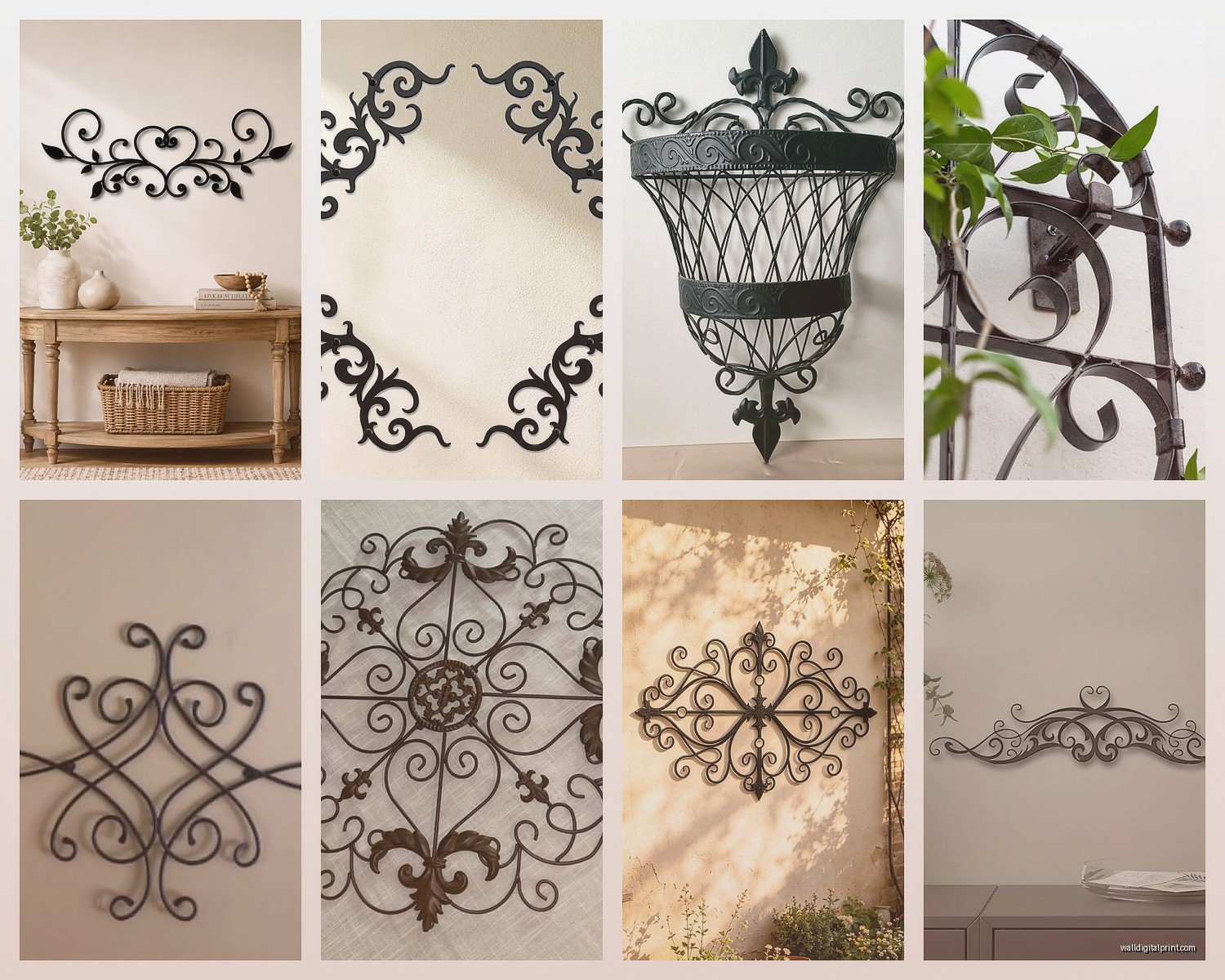
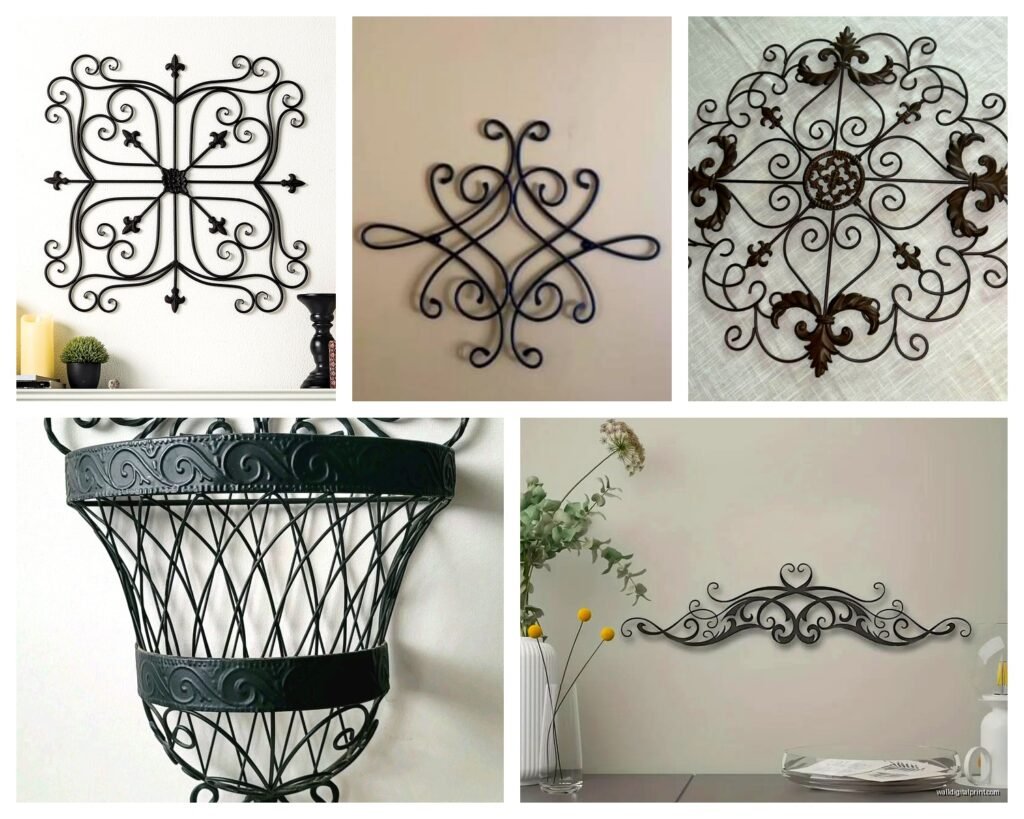
Traditional scrollwork patterns include:
- Fleur-de-lis motifs
- S-curve and C-curve combinations
- Rosette centers with radiating scrolls
- Tuscan-style grape vine and leaf patterns
- Gothic arch designs
- Celtic knot variations
The Tuscan style is probably the most popular right now and it’s pretty forgiving in terms of what decor styles it works with. Gothic stuff is more specific and you gotta commit to that aesthetic.
Installation Tips That’ll Save Your Walls
Okay so funny story – I once installed a 40-pound iron piece using the hardware that came with it and the whole thing crashed down at 3am. Scared the hell out of everyone in the house. Turned out the mounting brackets were decorative and not actually structural. Always test the included hardware before you trust it.
Here’s my actual installation process:
- Find your center point and mark it with painters tape
- Hold the piece up and have someone stand back to check placement
- Mark your mounting points through the hardware
- Drill pilot holes and install anchors
- Mount the piece and check level immediately
- Step back like 10 feet and check again because perspective matters
For really heavy pieces over 25 pounds, I use two mounting points minimum. French cleats are actually my favorite system for big scrollwork pieces because they distribute weight so well and you can adjust side-to-side easily.
The Level Thing
Use a actual level, not your phone app. I know the phone is convenient but wrought iron is often asymmetrical by design so you need to level the mounting hardware, not the visual appearance of the piece. This confused me for years until an old contractor explained it.
Where to Actually Buy This Stuff
So you’ve got a few options depending on budget and style specificity. Home Depot and Lowes carry basic scrollwork pieces in their wall decor section – usually $40-150 range. These are fine for starter pieces but the selection is pretty limited.
Wayfair and Overstock have huge selections online. I probably source 40% of my client pieces from Wayfair because their filtering system is actually good and they have measurements that are accurate like 90% of the time. Returns are easy too which matters with wall art.
For higher-end or custom work, Etsy has amazing artisans doing hand-forged pieces. Expect to pay $200-800 for custom work but the quality difference is noticeable. The scrolls are more organic and the welds are cleaner.
I found this one seller on Etsy last year who does incredible Tuscan-style pieces with hammered texture details… let me see if I can remember the shop name… okay I can’t remember but search “hand forged wall scroll” and look for shops with lots of detail photos showing the welds and finish closeups.
Mixing Metals and Breaking Rules
There’s this old design rule about not mixing metals but honestly it’s outdated. I mix wrought iron scrollwork with brass lighting and copper accents all the time. The key is being intentional about it – use each metal in substantial amounts so it looks like a choice, not a mistake.
If your scrollwork is black iron, you can absolutely have gold picture frames nearby. Just maybe add one more gold element somewhere else in the room so it feels balanced.
Scale and Grouping
Oh and another thing – you can group smaller scrollwork pieces together to create a gallery wall effect. I did this in a client’s hallway with five different medallion-style pieces arranged asymmetrically. Looked way better than one big piece would have in that narrow space.
When grouping, keep pieces within the same finish family but don’t stress about exact matches. Slight variation in the black tones actually adds depth.
Maintenance Is Easier Than You Think
Wrought iron wall art is super low maintenance. Dust it every couple weeks with a microfiber cloth or use your vacuum’s brush attachment. For deeper cleaning, just use mild soap and water with a soft cloth. Dry it immediately so water doesn’t sit in the crevices.
If you notice any rust spots starting (usually only happens in humid environments), you can touch them up with Rust-Oleum’s hammered metal spray paint. The hammered finish hides imperfections really well.
Don’t use harsh chemicals or abrasive cleaners because they’ll damage the powder coating. I learned this the hard way with a vintage piece I was restoring – used something too strong and stripped the finish in spots.
Trending Styles Right Now
So traditional scrollwork is always gonna be classic but I’m seeing some interesting variations lately. Geometric patterns mixed with organic scrolls are becoming popular. Also pieces that incorporate negative space more deliberately rather than being super ornate all over.
There’s also this trend toward oversized single-scroll designs – like one massive S-curve that’s super simple but dramatic because of the scale. These work really well in modern farmhouse spaces because they bridge traditional and contemporary.
Color-wise, people are moving beyond just black. Aged gold, verdigris patina, and rust finishes are showing up more. I’m not totally sold on all of these yet but the aged gold can look really elegant in the right space.
Common Problems and Fixes
The most common issue I deal with is pieces that look too small after installation. If this happens to you, don’t immediately take it down. Try adding flanking elements – maybe wall sconces on either side or floating shelves below. Sometimes you can make a too-small piece work by building around it.
Another issue is pieces that feel too heavy visually for the wall color. Dark scrollwork on dark walls can disappear. If you’re committed to both, add backlighting with LED strips or position it where natural light creates shadows that enhance the dimensional quality.
And if your piece is slightly crooked after installation but you’ve already patched the extra holes… just rotate your whole room 2 degrees. Kidding obviously but I’ve been tempted.
The Return Policy Check
Always always always check return policies before buying scrollwork online. Some sellers consider it custom or final sale once shipped. You want at least 30 days to return because you won’t really know if it works until you see it on your actual wall in your actual lighting.
Take photos right when you unbox it so if there’s damage you can document it immediately. Wrought iron ships poorly sometimes because it’s heavy and awkward shaped.
I’m watching this show about home renovations while I write this and they just hung a massive iron piece with regular nails and I’m cringing so hard. Don’t be like TV renovators who have unlimited budgets to fix their mistakes.
Anyway that’s basically everything I’ve learned through trial and error and client projects. The main things are getting the size right, installing it securely, and not overthinking the style mixing. Wrought iron scrollwork is pretty forgiving once you understand the basics.