Wall Art Guide, Wall Art Tutoriels
Chinoiserie Wall Art: Chinese-Inspired European Elegant Decor
Oct
So I’ve been totally obsessed with chinoiserie wall art lately and honestly it’s one of those things that sounds intimidating but is actually super forgiving once you understand the basic rules. Like, you can mess it up but it’s harder than you’d think.
What Actually Makes It Chinoiserie
Okay so first thing – chinoiserie isn’t actually Chinese art. It’s this whole European interpretation of Chinese and East Asian design from like the 17th and 18th centuries when everyone was obsessed with “exotic” stuff. The Europeans were basically making their best guess at what Chinese art looked like and adding their own flair, which is why you get these weirdly romanticized landscapes with pagodas and birds that don’t quite look… right? But in a charming way.
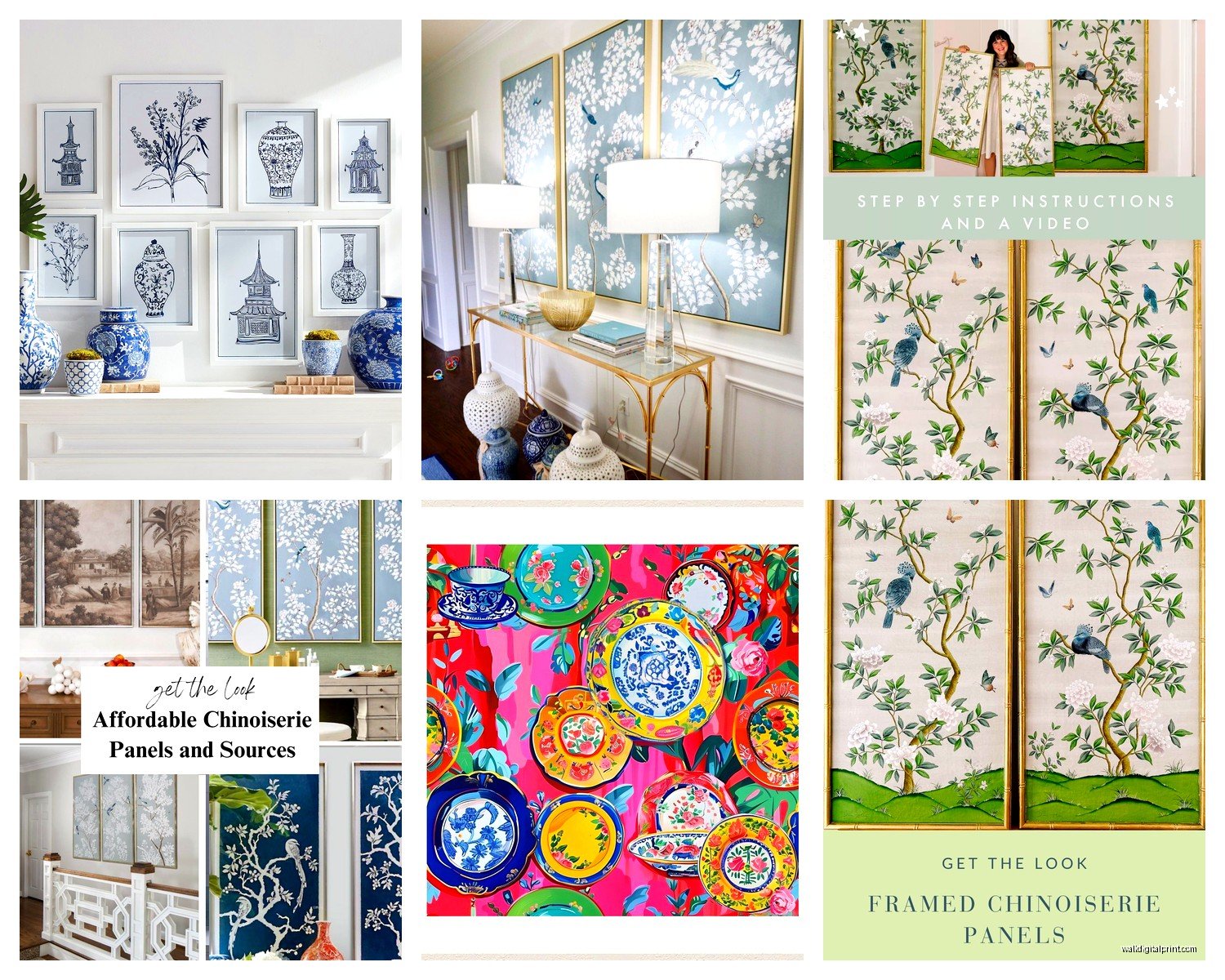
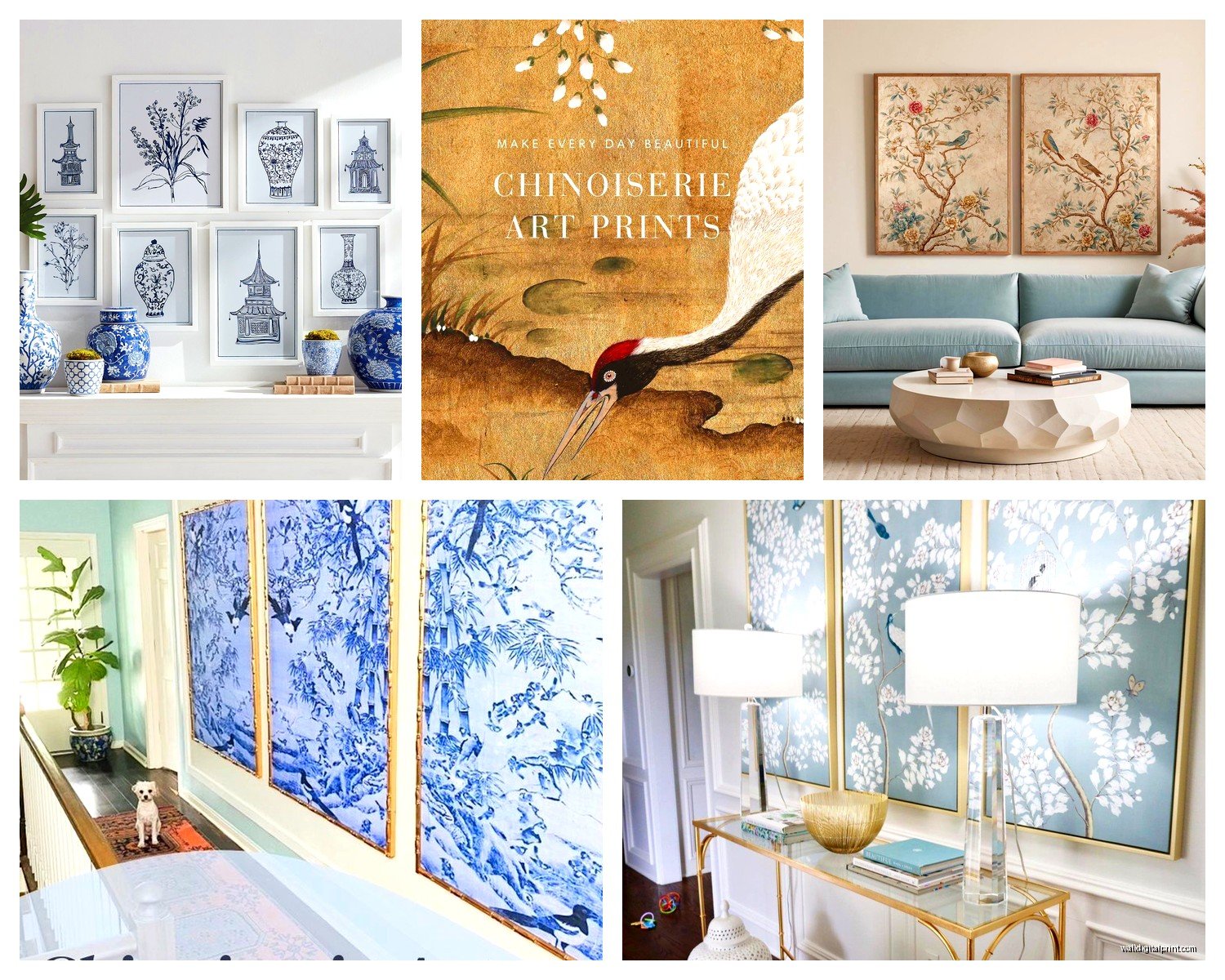
The key elements you’re gonna see: pagodas, bamboo, cherry blossoms (or plum blossoms), cranes, phoenixes, dragons, those weird spindly trees, lots of blue and white porcelain vibes, people in traditional dress doing elegant activities. The color palette is usually either blue and white OR really saturated jewel tones with gold accents.
Where to Actually Find Good Pieces
I spent like three weeks hunting for the perfect pieces for a client’s dining room and here’s what I learned. Etsy has a TON of vintage chinoiserie prints but you gotta be careful because the quality varies wildly. I bought one that looked gorgeous in photos and it arrived looking like someone printed it on their home printer in 2003.
For actual quality:
- Vintage stores and estate sales are goldmines if you have patience
- Anthropologie does modern chinoiserie that’s overpriced but consistently good quality
- Chairish and 1stDibs if you wanna spend real money on authentic vintage panels
- Society6 and Minted for affordable prints that are actually decent
- Local Asian antique shops sometimes have the real deal mixed in with tourist stuff
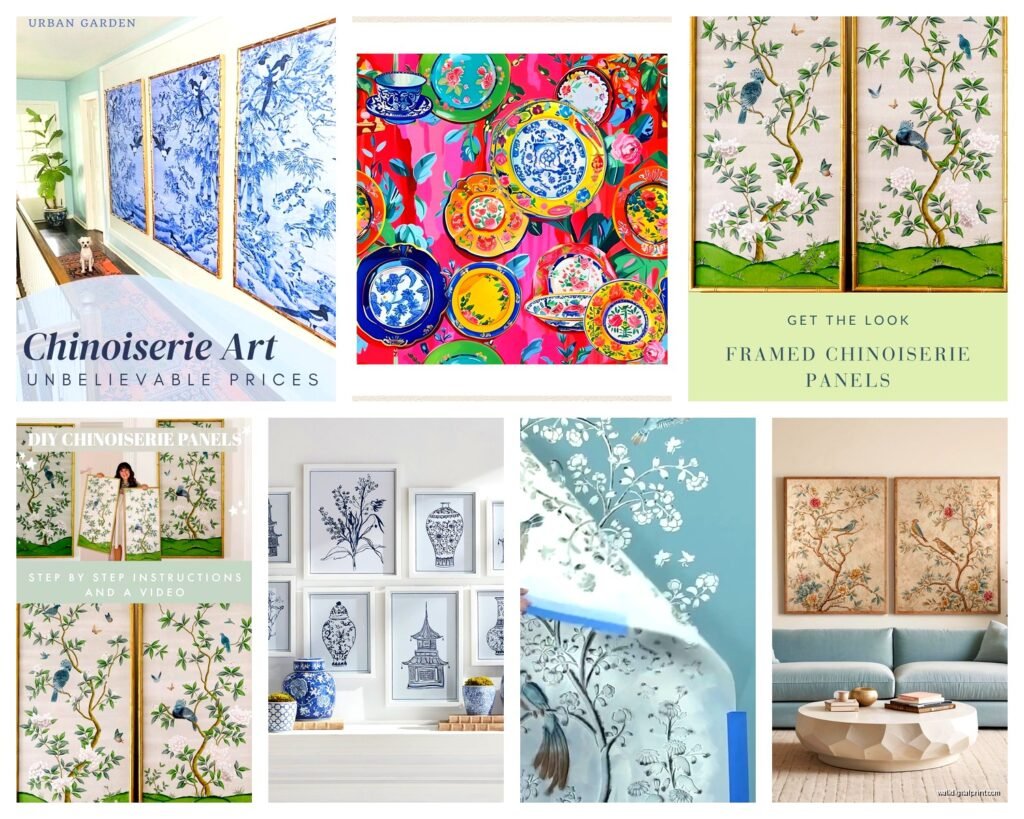
Oh and another thing – don’t sleep on wallpaper panels. Like, chinoiserie wallpaper panels that you frame? Game changer. de Gournay makes these insanely beautiful hand-painted ones but they’re like mortgage-payment expensive. Spoonflower lets you print custom designs on wallpaper and you can find chinoiserie patterns there for way less.
The Scale Thing Everyone Gets Wrong
This is gonna sound weird but the biggest mistake I see is people buying chinoiserie art that’s too small. These designs were originally meant for entire wall panels – we’re talking floor to ceiling. When you shrink that down to a tiny 8×10 print, it loses all its impact and just looks… confused?
For chinoiserie to work, you need either:
One large statement piece: I’m talking at least 36 inches in one direction, preferably bigger. Above a sofa, above a bed, on a big empty wall. Let it breathe.
A gallery wall of similar-sized pieces: Like four to six panels that are all roughly the same dimensions. The repetition is what makes it feel intentional instead of random.
I did a client’s entryway last month with four 24×36 panels in matching frames and it looked SO much better than the single small print they had before. My cat knocked one off the wall while I was installing them which was fun.
Color Coordination Without Looking Themed
Here’s where people panic – they think chinoiserie has to match everything perfectly. But actually? The slight clash is part of the charm.
Traditional blue and white chinoiserie works with:
- Warm wood tones (walnut, oak, teak)
- Brass and gold accents
- Crisp white walls obviously
- Surprisingly well with blush pink and coral
- Navy and deeper blues for a moody vibe
The colorful stuff (reds, greens, golds) is trickier but works when you:
- Pull one color from the art and echo it in pillows or a rug
- Keep the rest of the room pretty neutral
- Add in natural textures like rattan or linen to calm it down
Wait I forgot to mention – black backgrounds on chinoiserie are CHEF’S KISS. If you find panels with black lacquer backgrounds and gold details, grab them. They work in literally any room and add instant sophistication.
Framing Decisions That Actually Matter
Okay so framing. This is where you can elevate cheap prints or ruin expensive ones.
For blue and white pieces: simple white mats with gold or natural wood frames. Clean, classic, lets the art be the star.
For colorful panels: I usually skip the mat entirely and go with a thin gold bamboo-style frame or a simple black frame. The mat can make it feel too precious and formal.
For vintage panels or wallpaper: sometimes no frame at all – just mount them on foam board or hang them like tapestries. There’s this whole thing with decorative rods and tassels if you wanna get fancy.
The frames don’t all have to match perfectly which is good news for your budget. I mixed gold and brass frames in a living room last year and nobody noticed they were different finishes until I pointed it out. Your eye reads them as “similar enough.”
DIY Framing Hack
Michael’s and Hobby Lobby have those basic frames that go on sale for like 50% off constantly. Buy those, replace the backing with foam board, use double-sided tape to mount your print. Done. I’ve done this probably fifty times and clients think I spent hundreds on custom framing.
Room-by-Room What Actually Works
Living Room: Above the sofa is obvious but also consider flanking a fireplace with tall narrow panels. Or doing a whole gallery wall on the largest empty wall. I’m watching The Great British Baking Show while writing this and it’s very distracting.
Dining Room: This is like THE chinoiserie room. The formal vibe works perfectly here. One large piece or a set of four seasons panels if you can find them. Pairs beautifully with a chandelier and dark wood table.
Bedroom: Behind the bed is the move. Either one large horizontal piece or two vertical panels. Keeps the room feeling serene but interesting. Skip the super colorful stuff here unless you want energizing rather than calming.
Bathroom: Okay this sounds random but small chinoiserie prints in a powder room? *So* elegant. The blue and white especially feels clean and fresh. Just make sure they’re properly sealed/framed because humidity.
Entryway: Perfect spot for a statement piece since people only see it briefly. You can go bolder here than you might in a room where you spend hours.
Mixing Chinoiserie with Other Styles
This is where it gets fun. Chinoiserie plays well with:
Modern/Minimalist: The contrast is *chef’s kiss*. One ornate chinoiserie piece in an otherwise minimal room creates this perfect tension. Think white walls, simple furniture, one dramatic panel.
Traditional: Obviously works since they’re from similar eras. But don’t go full matchy-match or it feels like a museum.
Bohemian: The colors and patterns actually blend surprisingly well with boho vibes. Add some plants, textured textiles, and it works.
Coastal: Blue and white chinoiserie in a coastal room? Yes. The porcelain vibe fits perfectly with that crisp, airy feeling.
What doesn’t really work: Industrial (too soft and decorative), Ultra-modern (clashes with the historical feel), Farmhouse (I mean you could try but why).
The Authenticity Question
People always ask if they should buy “authentic” pieces versus reproductions. Here’s my honest take – unless you’re a serious collector or have unlimited budget, good reproductions are totally fine. Most people cannot tell the difference between a well-done modern print and a vintage one from across the room.
What matters more is the quality of the printing and framing. A crisp, well-printed reproduction looks better than a faded, poorly preserved “authentic” piece.
That said, if you find actual vintage chinoiserie panels at estate sales or antique shops for reasonable prices, grab them. They have this texture and depth that’s hard to replicate.
Common Mistakes I See All The Time
- Buying too small like I mentioned
- Mixing too many different chinoiserie styles in one room (pick a vibe and commit)
- Hanging them too high (center should be at eye level, around 57-60 inches)
- Trying to match the colors exactly to other decor (near-matches look intentional, exact matches look forced)
- Going full-on Chinese restaurant vibes by adding too many Asian-inspired elements. The art is enough, you don’t need the lucky cat and paper lanterns too
Budget Breakdown From Someone Who’s Done This
Shoestring ($50-150): Print your own from high-res images on Etsy or public domain sources, basic frames from Michael’s, DIY mounting. Totally doable and can look great.
Mid-range ($150-500): Quality prints from Minted or Society6, decent framing, maybe one vintage piece mixed with reproductions. This is the sweet spot honestly.
Investment ($500+): Vintage panels, custom framing, hand-painted wallpaper panels, antique pieces. Worth it if this is a forever room.
I usually tell clients to invest in one really good piece and fill in around it with more affordable options. Nobody’s gonna inspect every piece to check if it’s authentic.
The Wallpaper Panel Trick
Okay so funny story – I discovered you can buy chinoiserie wallpaper (the cheaper kind), cut it into panels, and frame it. Costs like $30 for enough wallpaper to make 4-6 panels. Add cheap frames and suddenly you have a gallery wall for under $150. Did this in my own hallway and guests always ask where I found such beautiful prints.
Lighting Makes or Breaks It
This is something people forget – chinoiserie art needs good lighting to show the details. If you’re hanging it on a dark wall or in a dim corner, you’re wasting it.
Picture lights are ideal but spendy. I usually just make sure there’s a nearby lamp or overhead light that highlights the piece. Natural light works too but watch for fading with valuable pieces.
When to Say No to Chinoiserie
Real talk – it’s not for everyone or every space. If your style is super minimal Scandinavian, chinoiserie is gonna fight you. If you hate pattern and detail, skip it. If your space is already really busy with other patterns, adding chinoiserie might be overload.
Also if you’re renting and can’t paint or make holes, the temporary hanging solutions don’t really work well with the heavier frames these pieces need. I mean you could try command strips but I’ve had mixed results.
Maintaining and Protecting Your Pieces
Dust them regularly with a microfiber cloth. If they’re behind glass, clean the glass with regular glass cleaner. Keep them out of direct harsh sunlight which will fade them over time.
For vintage pieces, sometimes you need to get them professionally cleaned or restored. I found this gorgeous set of panels at an estate sale that had water damage and spent $200 getting them restored but they’re now worth way more.
Resources I Actually Use
When I’m hunting for pieces or inspiration:
- Pinterest obviously but search “chinoiserie interiors” not just “chinoiserie art”
- Instagram hashtags: #chinoiseriechic #chinoiseriestyle #chinoiseriedecor
- The blog Chinoiserie Chic (original, I know) has great real room examples
- Design blogs like Emily Henderson and Studio McGee have featured chinoiserie rooms
- Actually walking through antique malls with your phone to check prices online
The key is seeing how other people styled it in real rooms, not just product shots.
Look, chinoiserie wall art is one of those things that feels intimidating because it’s so detailed and has this formal history, but it’s actually pretty forgiving. Start with one piece you really love, hang it properly, and build from there. You don’t need to know the difference between Ming and Qing dynasty styles or whatever. You just need to know if it makes you happy when you look at it.
And honestly? Sometimes the “wrong” choice ends up being the most interesting one. I put a really colorful chinoiserie panel in a client’s modern kitchen once and she was nervous but it ended up being everyone’s favorite part of the house.