Wall Art Guide, Wall Art Tutoriels
Exterior Wall Art: Outside Weather-Resistant Building Decor
Nov
So I’ve been completely obsessed with exterior wall art lately because my neighbor asked me to help with their sad beige garage wall and honestly it sent me down this whole rabbit hole of what actually survives outside. Like, you can’t just hang your regular canvas print out there and hope for the best, trust me.
Material Choices That Actually Last
Okay first thing – metal is gonna be your best friend here. I tested like five different materials on my own back wall last year and the metal stuff still looks perfect while everything else is… questionable. Powder-coated aluminum and corten steel are the two I keep coming back to. The aluminum is lighter which matters more than you’d think when you’re trying to mount something, and powder coating basically seals it against moisture and UV damage.
Corten steel is that rusty-looking material you see on fancy modern buildings, and it actually forms a protective layer of rust that stops it from corroding further. Sounds weird but it works. My client in Portland has had a massive corten piece on her wall for three years through all that rain and it’s fine. The rust color deepens a bit but that’s kinda the point.
Weather-Resistant Materials Worth Considering
- Powder-coated aluminum – lightweight, won’t rust, comes in any color
- Corten steel – develops protective rust patina, very architectural
- Marine-grade stainless steel – expensive but literally bulletproof
- Ceramic tiles or mosaic – traditional but needs proper installation
- Outdoor-rated resin sculptures – surprisingly durable
- Treated wood with marine varnish – high maintenance but beautiful
Marine-grade stainless steel is what you want if you’re near the coast. Regular stainless will pit and corrode from salt air but marine-grade has higher nickel content or something technical like that. I used it for a beach house project and the homeowner sends me photos every year like “still perfect!”
The UV Factor Nobody Talks About
Oh and another thing – UV resistance is just as important as waterproofing. I learned this the hard way with a painted wooden piece that looked amazing for like six months then faded to this sad grayish version of itself. The sun is brutal even if you live somewhere that doesn’t feel that sunny.
For painted pieces you need UV-resistant clear coat. Not just any varnish, specifically one rated for outdoor use with UV inhibitors. Spar urethane is what boat people use and it works great. You gotta reapply every couple years though which is annoying but better than the whole thing fading.
If you’re buying pre-made art, ask specifically about UV rating. Good manufacturers will powder-coat their metal pieces which includes UV protection, or use automotive-grade paints that are designed to not fade in sunlight. I have this one supplier who uses the same paint process as car manufacturers and their stuff is incredible.
Installation Methods That Won’t Fail
So installation is where people mess up constantly. You can’t just use regular screws and anchors like you would inside. I’ve seen so many pieces fall off walls during storms and it’s always because someone used indoor hardware.
Proper Mounting Hardware
- Stainless steel mounting brackets – not regular steel, it’ll rust
- Concrete anchors for masonry walls – the wedge type not the plastic ones
- Through-bolts for wood siding – with washers and weather seal
- French cleats for heavier pieces – distributes weight perfectly
- Silicone adhesive as backup – not primary support
French cleats are honestly genius for exterior art. It’s basically two interlocking pieces where one mounts to the wall and one to your artwork, and they hook together. The weight distributes evenly and you can easily remove the piece if you need to. Plus if you use aluminum or stainless cleats they won’t corrode.
Wait I forgot to mention – you need to think about wind load. Like actually think about it. A flat piece of metal art is basically a sail in strong wind. I always drill drainage holes in metal pieces too so water doesn’t pool anywhere, and I mount them with at least an inch of space behind so air can circulate. Trapped moisture is how things go bad.
Styles That Work Outside vs Inside
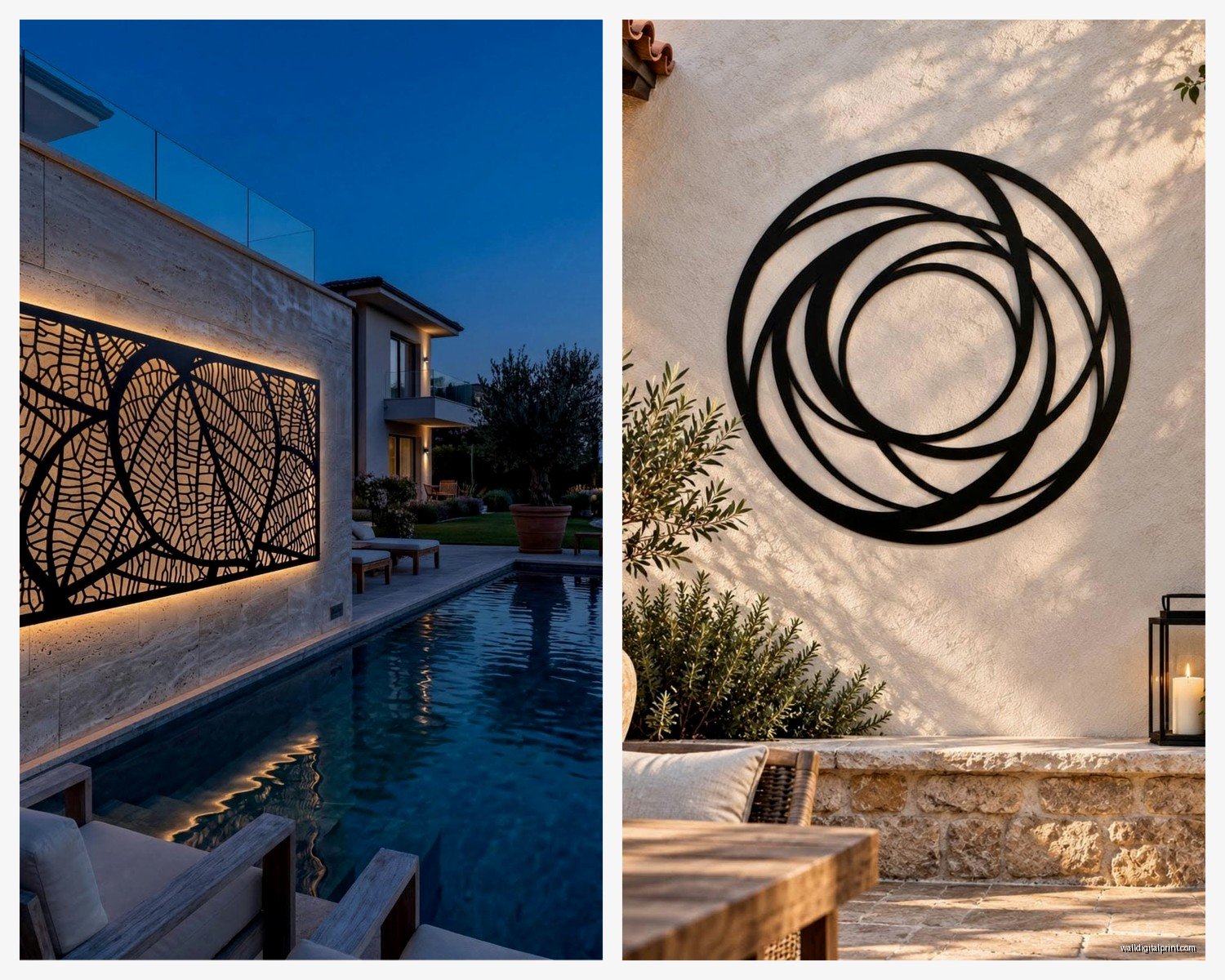
This is gonna sound weird but not all art styles translate well to exterior walls. Really detailed intricate stuff tends to get lost when you’re viewing it from a distance outdoors. I’ve found bold geometric designs, large-scale nature motifs, and abstract pieces with strong color contrast work best.
My go-to recommendation is oversized metal sculptures or wall reliefs. There’s this company that makes these amazing dimensional wave patterns out of aluminum strips and they cast the coolest shadows throughout the day as the sun moves. Way more interesting than a flat piece.
Mosaic work is super traditional but still looks incredible if done right. You can create custom designs with outdoor-rated ceramic or glass tiles. The grout needs to be exterior grade with a good sealer though – regular grout will crack and let water in within a year. I learned that one from a failed patio project, different context but same principle.
Color Considerations for Outdoor Spaces
Okay so funny story – I picked this gorgeous deep navy blue metal piece for a client’s cream-colored house and in my mind it looked perfect. In reality the navy read almost black outside and the whole thing felt heavy and dark. Colors behave differently in natural light versus indoor lighting and it took me longer than I’d like to admit to really get this.
Lighter colors tend to work better on darker walls and vice versa. But also consider what time of day the wall gets light. A wall that’s in shadow most of the day can handle brighter colors without them being overwhelming. Full sun all day? Maybe tone it down or the colors will feel aggressive.
Metallics are actually really forgiving because they change throughout the day. Copper, bronze, and gold tones catch light beautifully and create different moods depending on whether it’s morning or evening light. I’m obsessed with copper right now even though it develops that green patina over time… which I actually love but some people hate so know yourself.
Color Durability by Type
- Powder-coated colors – most durable, minimal fading
- Automotive paints – excellent UV resistance
- Natural metal patinas – copper, bronze, corten – change over time but stable
- Acrylic paints with UV sealer – okay but needs maintenance
- Stained wood – fades predictably, needs refinishing
Size and Scale Tips
People always go too small with exterior art. What looks proportional inside feels tiny on an exterior wall. My rule is to go at least 50% bigger than you think you need. A piece that’s 2 feet wide might look substantial in your living room but will disappear on a 15-foot garage wall.
I usually aim for art that takes up roughly one-third to one-half of the wall space. Not the entire wall necessarily but a significant portion. And if you’re doing a grouping of smaller pieces, treat the whole grouping as one large piece when you’re calculating size.
Height placement matters too – you want the center of the piece roughly at eye level when someone’s standing at a normal viewing distance from the wall. For a garage wall you might view from across the yard so eye level when you’re 20 feet back is different than when you’re right up close.
Maintenance Requirements You Should Know
Even weather-resistant stuff needs some maintenance, just way less than regular art. I rinse metal pieces with a hose maybe twice a year to get dust and pollen off. If you’re near the ocean you might need to do it more often because salt buildup is real.
Wood pieces need the most upkeep – you’re looking at refinishing every 2-3 years depending on your climate. I only recommend wood if you actually enjoy that kind of maintenance project or if the aesthetic is so perfect you’re willing to deal with it.
Ceramic and mosaic needs grout inspection annually. Look for cracks where water could get in and reseal as needed. It’s not hard just tedious.
Metal pieces with moving parts – like kinetic sculptures or anything with joints – need occasional lubrication with something like WD-40 or a marine-grade lubricant. Otherwise they seize up or start squeaking which drives everyone crazy.
Where to Actually Buy This Stuff
Oh man so there’s a bunch of options depending on your budget. Etsy has tons of metal art makers and you can usually message them about custom sizes. I’ve worked with several Etsy sellers who do amazing powder-coated aluminum pieces for reasonable prices.
For higher-end stuff I like Design Within Reach and Room & Board – they both have outdoor art sections now. West Elm does too but their quality is hit or miss honestly. I’ve had good luck with some pieces and others that started showing wear after one season.
Local metal fabricators are underrated. If you have a design in mind you can often get custom work done for less than buying retail. I did this for a client who wanted a specific geometric pattern and the local guy charged half what the “designer” version would’ve cost.
Architectural salvage yards sometimes have amazing vintage metal pieces – old gates, industrial parts, decorative elements from demolished buildings. These need restoration usually but they have character you can’t buy new. My own back wall has this old factory gear I found and had sandblasted and sealed.
DIY Options If You’re Handy
This is gonna sound weird but you can make decent exterior art yourself even without major skills. I’m not like super crafty but I’ve done a few projects that turned out well.
Simplest option is a wooden frame with galvanized wire or cable stretched across in a pattern, then train climbing plants on it. Technically living art but it counts. The structure is permanent and weather-resistant while the plants change seasonally.
Stenciled concrete walls work great too. You can use concrete stain or special masonry paint with stencils to create patterns directly on the wall. Seal it with a concrete sealer and it’ll last years. My dog trainer has this amazing geometric pattern on her back wall that she did herself over a weekend.
Mosaic projects are super accessible – you can buy outdoor tile adhesive and grout at any hardware store. Start small with a simple design. I made a sun pattern for my mom’s garden wall using broken ceramic tiles and it’s held up perfectly for five years now.
Quick DIY Project Ideas
- Succulent wall planters – living art that’s low maintenance
- Painted mural with exterior acrylic and UV sealer
- Mounted driftwood arrangement sealed with spar urethane
- Metal house numbers as sculptural elements
- Outdoor-safe LED light installation as art
- Vertical garden structure with weather-resistant frame
Common Mistakes I See Constantly
People hang lightweight pieces without considering wind. Even something that only weighs 10 pounds can act like a kite in strong wind and rip right off the wall. Use more anchors than you think you need.
Using indoor materials outside because they’re cheaper – it’s never worth it. That piece will look terrible in six months and you’ll have to replace it anyway. Just spend the money upfront on proper materials.
Not thinking about the background. A really busy or colorful wall can compete with your art. Sometimes you need to paint the wall a solid neutral color first so the art pops. I did a consultation where the art was beautiful but the wall was this crazy stone pattern and nothing worked until we painted the wall.
Forgetting about lighting. Exterior art at night is a whole different thing. If the wall has landscape lighting or you add spotlights, suddenly your art becomes a nighttime feature too. I always consider both day and night views now.
Oh and another thing – not considering how the piece will age. Some materials develop character as they weather and that’s beautiful. Others just look shabby. Know which one you’re getting. I love the patina copper develops but if you want things to stay looking new forever, stick with powder-coated aluminum.
Climate-Specific Considerations
If you’re somewhere with harsh winters, thermal expansion is a thing. Metal expands and contracts with temperature changes so your mounting system needs to accommodate that or things crack and warp. Use hardware with a little give or mount pieces with rubber washers that allow micro-movement.
Desert climates are brutal on colors – the UV exposure is intense and dust storms sandblast everything. Go for natural metal finishes that look better weathered or commit to regular maintenance.
Humid climates mean mold and mildew on anything porous. Sealed metal and ceramic work best. If you do wood, it needs anti-fungal treatment not just waterproofing.
Coastal areas need marine-grade everything because salt air corrodes standard materials crazy fast. Even “outdoor rated” stuff might not cut it near the ocean. Always specify marine-grade if you’re within like 5 miles of saltwater.
Honestly I could keep going but this is probably already way more than you wanted to know. The main thing is just think about your specific wall, your climate, and how much maintenance you’re actually willing to do. There’s no perfect solution for everyone but there’s definitely a right solution for your situation once you figure out those variables.