Wall Art Guide, Wall Art Tutoriels
Steel Wall Art: Metal Industrial Modern Sculptural Designs
Nov
So I’ve been completely obsessed with steel wall art lately and honestly it started because I walked into this coffee shop downtown and saw this absolutely massive geometric piece behind the counter and I literally stopped mid-order to stare at it. The barista thought I was having a stroke or something.
Anyway, steel wall art is having this huge moment right now but here’s the thing – you gotta know what you’re actually buying because the quality range is WILD. I learned this the hard way when I ordered what looked like an amazing abstract piece online and it showed up looking like someone cut it out with safety scissors in their garage. Not cute.
What Makes Good Steel Wall Art Actually Good
Okay so first thing – thickness matters way more than you’d think. You want at least 16-gauge steel for anything larger than like 12 inches. I’ve got a client who bought this gorgeous tree design that was super thin metal and within three months it was warping because her living room gets afternoon sun. The heat made it bend and now it looks wonky. Anything 14-gauge or thicker is gonna hold up better, especially for outdoor installations or rooms that get temperature fluctuations.
The finish is where people mess up constantly. You’ve got powder-coated options which are great if you want color that lasts, then there’s raw steel which will develop this beautiful patina over time but heads up – it WILL rust. Some people love that industrial vibe, some people freak out when they see orange spots appearing. I had to talk a client off a ledge when her raw steel piece started oxidizing because nobody told her that was gonna happen.
Types You’ll Actually See Out There
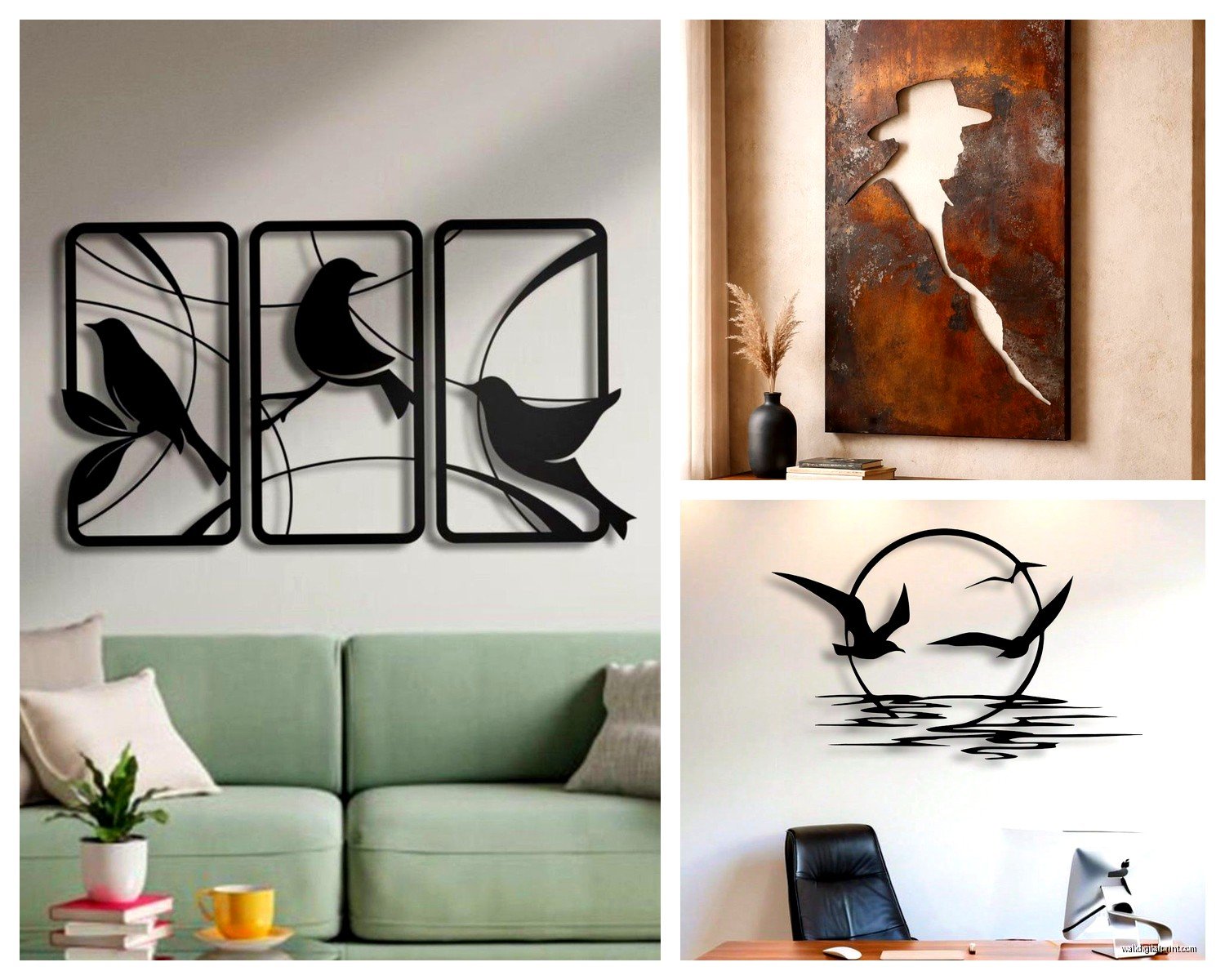
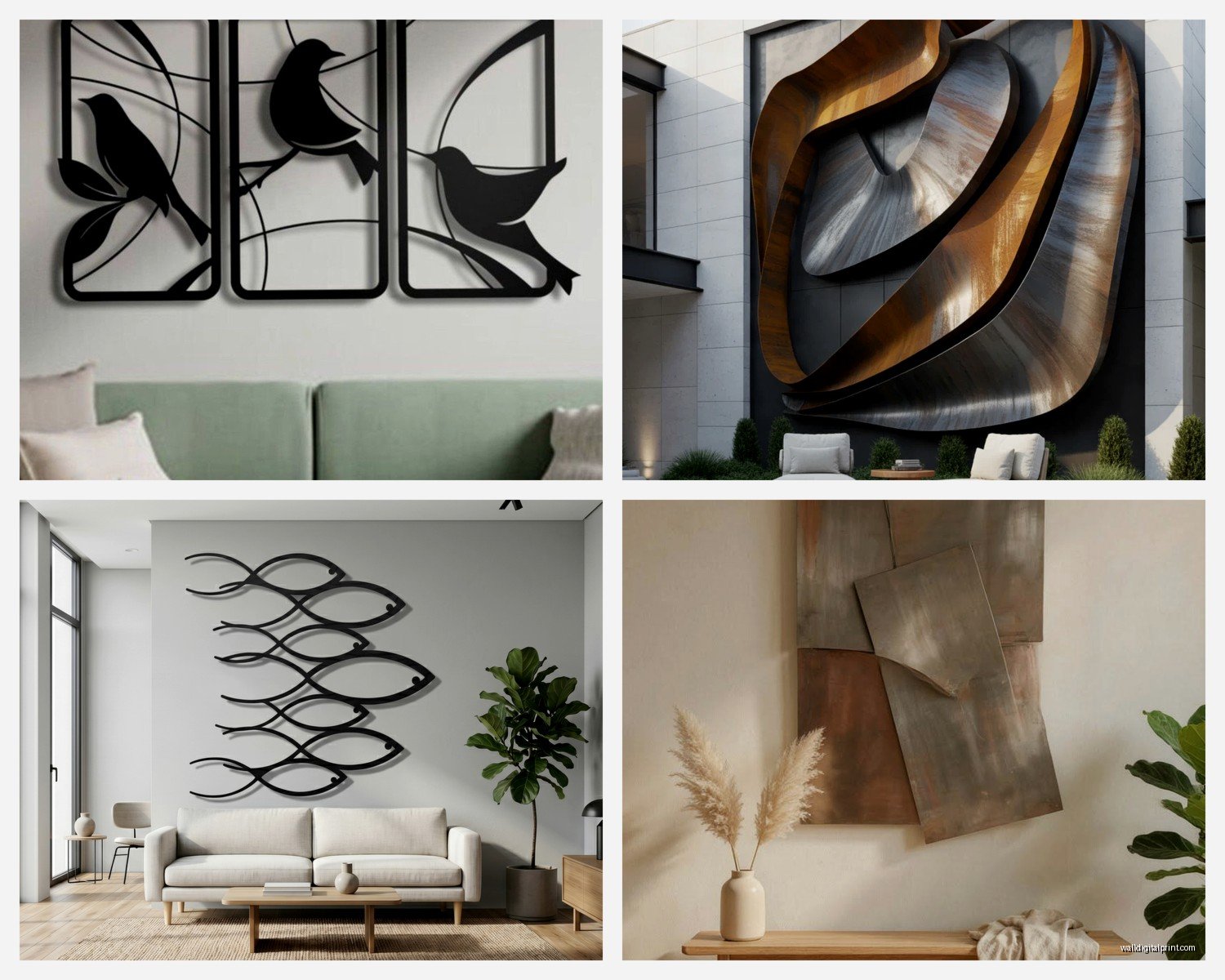
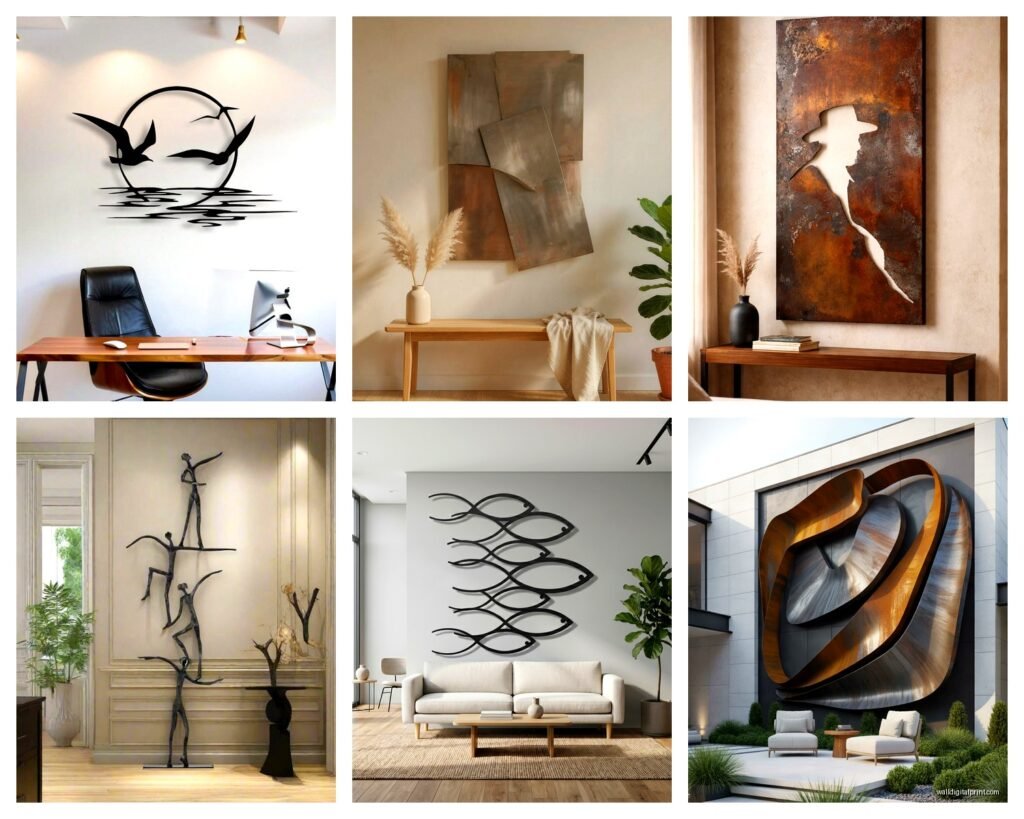
- Laser-cut geometric designs – these are everywhere right now and they look crisp as hell
- Hand-forged sculptural pieces – way more expensive but honestly the craftsmanship shows
- Industrial salvage art – repurposed gears, metal scraps, very steampunk
- Minimalist line drawings – my personal favorite for modern spaces
- 3D layered pieces – these have depth and cast cool shadows
Wait I forgot to mention – plasma-cut pieces are different from laser-cut and you can totally tell the difference up close. Plasma cutting leaves rougher edges which some people love for that authentic industrial feel, but laser cutting is precise and clean. Neither is better, it’s just about the vibe you want.
Sizing This Stuff Without Screwing It Up
Here’s my rule that I literally tell everyone – your wall art should take up about 60-75% of the furniture width below it. So if you’ve got a 6-foot couch, you’re looking at art that’s roughly 3.5 to 4.5 feet wide. I see people buy these tiny pieces for huge walls and it just looks lost and sad.
But also? Sometimes breaking that rule works. I put a massive 8-foot steel mountain range piece above a small console table in my own entryway and it’s dramatic and perfect. The ceiling height was like 12 feet though so it needed that scale.
For height placement, center the piece at eye level which is usually around 57-60 inches from the floor to the center of the art. Unless you’re putting it above furniture, then you want about 6-8 inches between the furniture top and the bottom of the art. My cat keeps trying to climb the console table to get to the hanging hardware and it’s become this whole thing.
Installation Real Talk
Okay so funny story – I once tried to hang a 40-pound steel piece with regular picture hanging wire and it literally ripped out of the drywall at 2am and scared me so badly I thought someone broke in. Steel is HEAVY. You absolutely need the right hardware.
What You Actually Need
For pieces under 15 pounds, heavy-duty picture hangers work fine. Anything heavier and you’re gonna want to hit studs with wood screws or use heavy-duty wall anchors. I’m talking the toggle bolt kind that expand behind the drywall, not those wimpy plastic things.
Most quality steel art comes with a French cleat system or D-rings welded to the back. French cleats are honestly the best for heavy pieces – one piece mounts to the wall, one attaches to the art, and they interlock. Super secure and you can adjust the positioning easily.
The Installation Process I Use
- Hold the piece up where you want it and mark the top corners with painters tape
- Measure down from your tape marks to where the hanging hardware sits on the back
- Use a level to mark where your wall hardware needs to go
- If possible, find studs with a stud finder – this is non-negotiable for anything over 25 pounds
- Drill pilot holes first so you don’t crack the drywall
- Install your hardware and triple-check it’s level before hanging
- Get someone to help you lift it if it’s big because trying to do it alone is how people punch holes in walls
Where to Actually Buy This Stuff
I’ve bought from probably 20 different sources at this point and the quality is all over the place. Etsy has amazing handmade options but you gotta read reviews carefully and look at customer photos, not just the listing photos. I found this incredible artist in Colorado who does custom mountain scenes and the quality is insane.
Wayfair and Overstock have budget-friendly options but it’s hit or miss. I ordered three pieces once and kept one, returned two because they looked cheap in person. The return process was fine though.
For higher-end stuff, there are specialty metal art studios that do custom work. Yeah it’s expensive – we’re talking $500 to several thousand – but the difference is obvious. The welds are cleaner, the metal is thicker, the finish is more durable.
Budget Breakdown
- Under $100 – mass-produced, thinner metal, might look great but won’t last forever
- $100-300 – sweet spot for quality pieces from smaller makers, good thickness, decent finishes
- $300-800 – professional artist work, custom options available, built to last
- $800+ – large-scale installations, complex designs, heirloom quality
Styling These Pieces So They Don’t Look Random
This is gonna sound weird but I always tell people to think about negative space. Steel art is all about the cutouts and shadows, so you need a background that lets those details show. A busy wallpaper behind intricate metalwork? Nope. Clean painted wall? Perfect.
Color-wise, black or dark bronze steel looks amazing on white, light gray, or even deep navy walls. Raw steel or copper tones pop against charcoal or black walls. I did a copper-finished geometric piece on a deep teal wall in a dining room last month and it’s *chef’s kiss*.
Oh and another thing – lighting changes everything with metal art. If you can add a picture light above it or even just position it where natural light hits it during the day, the shadows and dimension become this whole dynamic thing. I was watching The Bear the other night and noticed they have steel art in the restaurant scenes and the lighting on it is always so good.
Mixing Metals and Styles
People stress about this too much. You can totally mix different metal finishes in the same room. I’ve got brushed steel art, brass light fixtures, and copper accents in my living room and it works because there’s a cohesive color palette tying it together.
The trick is varying the scale and style. Don’t put three identical geometric pieces in a row – that’s boring. Mix a large organic sculptural piece with smaller geometric ones, or pair steel art with other materials like wood or canvas.
Room-Specific Ideas That Actually Work
Living rooms can handle bold statement pieces. I love oversized nature scenes or abstract geometric designs above the sofa. Just make sure it doesn’t overpower the space – you still want it to feel balanced.
Bedrooms work better with softer designs even in steel. I’ve used delicate tree branches, minimal line art, or organic shapes. The industrial vibe can feel harsh in a bedroom if you go too geometric or mechanical.
Dining rooms are perfect for dramatic pieces because you’re usually looking at the walls while sitting. I did a massive compass design in one dining room and it became the whole conversation piece.
Offices need something interesting but not distracting. Abstract or geometric designs work great. I’ve got this minimal mountain range piece in my office that I stare at when I’m on boring calls.
Maintenance and Long-Term Care
Raw steel will rust – we covered this but it bears repeating because people forget. If you want to prevent patina development, you gotta seal it with a clear coat. Renaissance Wax works great for this. Apply it every 6-12 months depending on humidity.
Powder-coated pieces are low maintenance but dust them regularly because buildup can dull the finish. I just use a microfiber cloth, nothing fancy.
For outdoor installations you absolutely need weather-resistant finishes or corten steel which is designed to rust but then stops rusting once it forms that protective layer. Regular steel outside will just keep deteriorating.
Custom vs Ready-Made
I’ve done both and here’s my take – if you have a specific vision or weird wall dimensions, custom is worth it. I had an artist create a piece that wrapped around a corner in a loft space and it’s literally perfect for that spot and only that spot.
Ready-made is great when you see something you love and it fits your space. No waiting, usually cheaper, and you know exactly what you’re getting.
The middle ground is semi-custom where you can choose sizes and finishes from existing designs. A lot of Etsy sellers offer this and it’s a good compromise.
Common Mistakes I See All the Time
Hanging it too high – seriously, bring it down to eye level
Choosing something too small for the wall – go bigger than you think
Not considering the weight and using wrong hardware – this ends badly
Putting outdoor pieces indoors or vice versa – the finishes aren’t interchangeable
Forgetting about the background color – wrong wall color kills the whole effect
Not thinking about the room’s existing style – a super industrial piece in a cottage-style room is gonna look confused
Trends I’m Seeing Right Now
Organic shapes are huge – think flowing curves, botanical designs, abstract nature scenes. The super rigid geometric stuff is still around but softening up.
Mixed materials are everywhere – steel combined with wood, acrylic, or LED lighting built in. I just installed a piece with integrated backlighting and it looks incredible at night.
Oversized minimalist designs – like a single continuous line drawing that’s 6 feet wide. Less is more but make it BIG.
Customizable modular pieces where you can rearrange sections – haven’t tried this yet but it’s on my list.
Anyway I gotta wrap this up because I have a client meeting in 20 minutes but honestly? Steel wall art is one of those things that seems intimidating but once you understand the basics it’s pretty straightforward. Start with something smaller if you’re nervous, make sure you hang it properly, and don’t overthink the style part – if you love it and it fits your space, it works.