
Wall Art Guide, Wall Art Tutoriels
Laundry Room Wall Art: Wash Utility Cleaning Space Decor

Nov
So I’ve been deep in this laundry room makeover thing lately and honestly, wall art for these spaces is way more complicated than you’d think. Like, you can’t just slap up whatever because of the humidity and cleaning products and… anyway, let me tell you what actually works.
Why Your Laundry Room Needs Different Art Than Other Rooms
Okay so first thing – regular paper prints are gonna warp. I learned this the hard way with a client’s space where we hung this cute vintage laundry poster and within three months it was all wavy and gross. The steam from the dryer, the moisture, it just destroys regular framed art. You need either acrylic prints, metal signs, or stuff that’s properly sealed behind glass with a moisture barrier.
I’ve been testing different materials in my own laundry room for like eight months now and here’s what survived:
- Metal tin signs (the vintage reproduction ones)
- Acrylic-mounted photographs
- Sealed wood signs with polyurethane coating
- Vinyl decals applied directly to walls
- Canvas prints that are sealed with a protective spray
What didn’t make it: watercolor prints, regular paper in cheap frames, anything with exposed edges that moisture can creep into.
The Actual Styles That Work
Everyone’s doing the farmhouse “wash dry fold repeat” thing right now but honestly if that’s your vibe, go for it. I’m not gonna judge. But there are so many other directions you can take this.
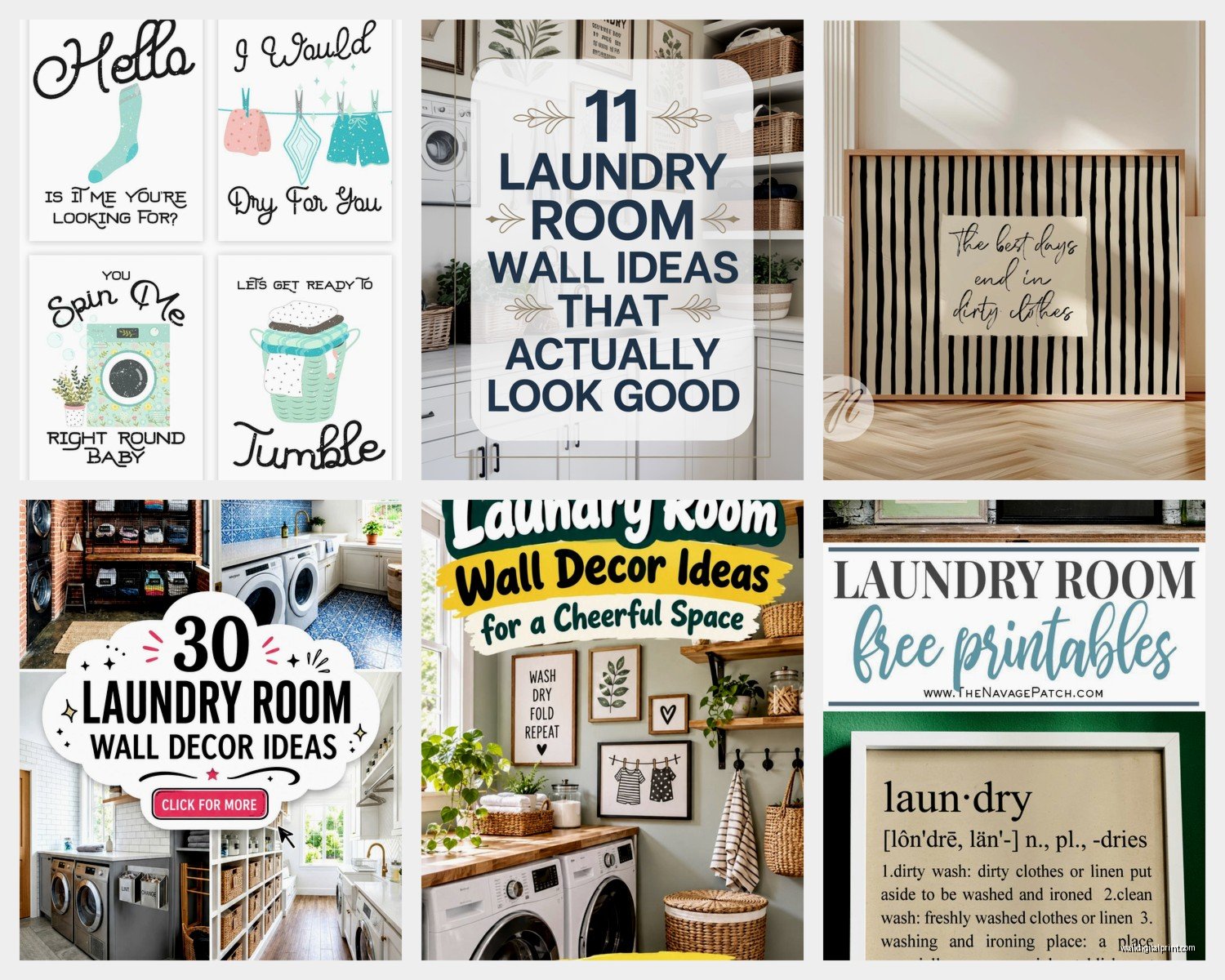
I did a client’s laundry room last spring with vintage botanical prints – like proper scientific illustrations of cotton plants and lavender. Sounds pretentious maybe but it looked incredible and she said it made her actually not hate doing laundry. Which… I mean, it’s still laundry, but you get what I’m saying.
Vintage Advertising Route
This is my personal favorite because you can find amazing reproduction metal signs on Etsy for like $15-30. Look for old soap advertisements, vintage washing machine ads, retro detergent packaging. The colors are usually really saturated and fun, and the metal holds up perfectly in humid conditions.
I found this amazing Tide advertisement from the 1950s that I had printed on metal and it’s become like, a conversation piece when people see my laundry room. Which is weird that people are talking about my laundry room but whatever.
Minimalist Typography
If you’re not into the vintage thing, simple text-based art works really well. But skip the obvious phrases everyone uses. I’ve seen some good ones that say stuff like “sorting out life” or just single words like “REFRESH” in modern fonts. You can get these as vinyl decals or have them cut from wood.
My sister did just a huge number “2” on her wall (it’s her second laundry room since moving? I don’t know, she’s weird) but it actually looks super cool and modern.
Photography and Nature Prints
This is where you gotta be careful with printing methods. I love using nature photography – like close-ups of soap bubbles, water droplets, that kind of thing. But get them printed on acrylic or metal, not paper. There’s this company called Fracture that does photos on glass and they’re perfect for humid spaces.
Oh and another thing – if you’re doing nature prints, stick to water-related imagery. It just makes sense thematically and doesn’t feel random.
Size and Placement Strategy
Okay so this is where people mess up constantly. They either go too small and it looks like an afterthought, or they try to create this huge gallery wall in a tiny laundry closet and it’s just chaos.
Here’s what I do: measure your biggest empty wall. If it’s above your washer and dryer, you’ve probably got like 5-6 feet of width to work with. Go for ONE large piece (like 24×36 or bigger) or a set of 3-4 medium pieces arranged simply.
I just finished a space where we did three 16×20 metal prints in a horizontal row and it looked so much better than the gallery wall the homeowner originally wanted. Sometimes less really is… wait I forgot to mention – make sure whatever you hang is secured properly because the vibration from your washer can literally shake stuff off the walls. Use proper anchors, not just nails.
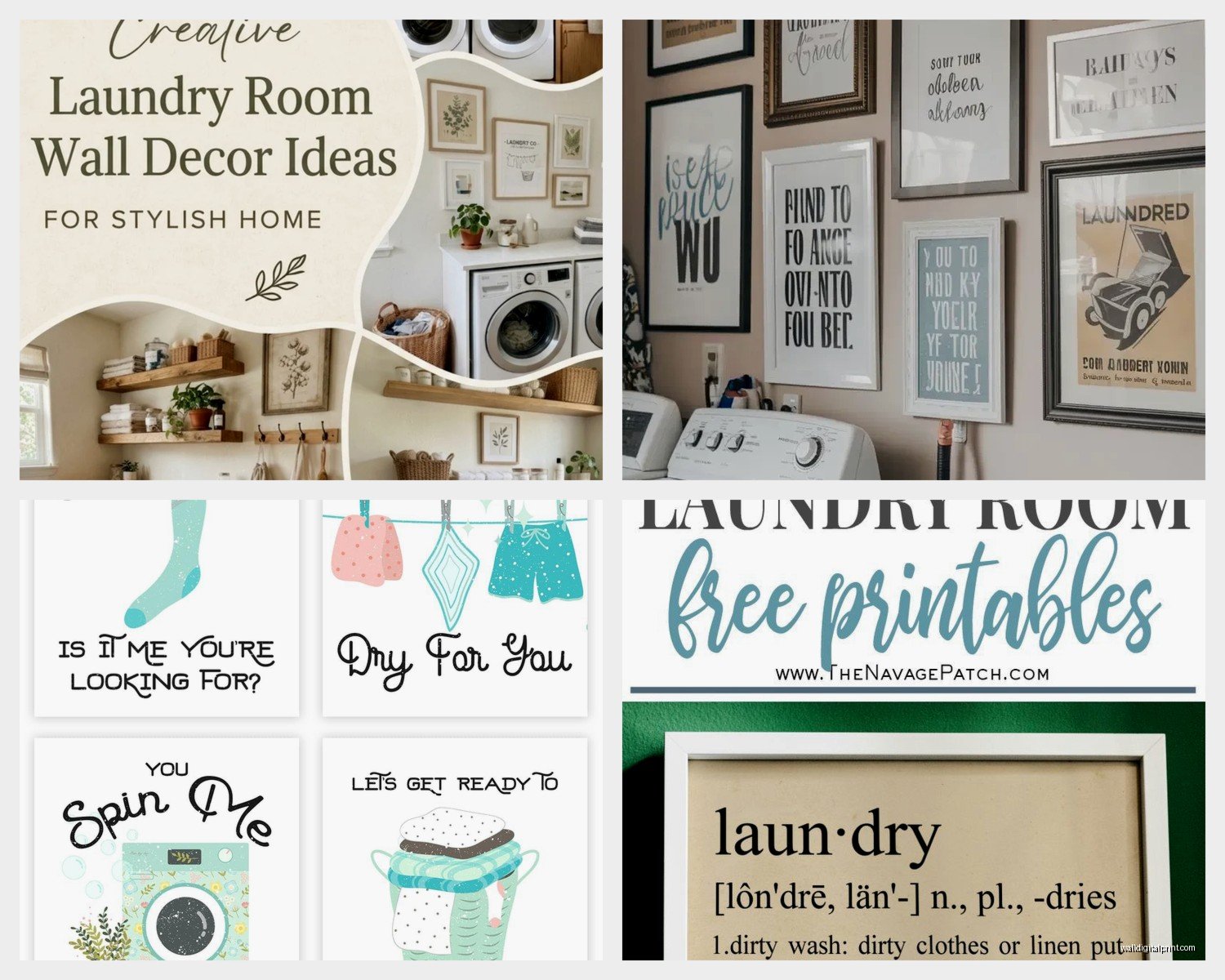
DIY Options That Don’t Look DIY
If you’re crafty at all, there are some really good options that’ll save you money. My cat knocked over my coffee while I was researching this yesterday and I found some good tutorials, so let me share what actually works.
Stenciled Wood Signs
Get a piece of nice wood from Home Depot (they’ll cut it for you), sand it, stain it, then use vinyl stencils to add text. Seal the whole thing with polyurethane – like three coats minimum. This protects it from moisture and makes it look professional. I made one that says “CLEAN SLATE” and it cost maybe $12 total?
Framed Fabric
This sounds weird but vintage tea towels or fabric with laundry-related patterns look amazing when stretched over canvas frames or put in deep shadow boxes. The key is making sure the frame is sealed – use that rubber weatherstripping tape around the back to keep moisture out.
Pegboard Art Walls
Okay this is both functional AND decorative. Paint a pegboard in a fun color, mount it on the wall, then use it to hang small cleaning tools, but also incorporate small art pieces, plants (fake ones that can handle humidity), and decorative elements. It’s like… functional wall art? I did this in a mudroom that doubled as a laundry space and people lost their minds over it.
Color Schemes That Actually Make Sense
Don’t just pick random colors. Look at your washer and dryer – they’re probably white. Your walls are probably white or light gray. You need your art to add personality without clashing with all that utilitarian stuff.
Colors I’ve had success with:
- Soft blues and aquas (water theme, feels clean)
- Warm yellows and oranges (energizing, makes the space feel less basement-y)
- Deep greens (surprisingly calming, works with plants)
- Black and white with one accent color (classic, can’t go wrong)
I did a whole laundry room in coral and navy last year and it was gorgeous. The client was hesitant but sometimes you gotta push people out of the all-white-and-gray comfort zone.
Where to Actually Buy This Stuff
Alright, real talk about where to shop. Etsy is great for unique stuff and you can often get custom sizes. Search for “laundry room metal sign” or “laundry wall art acrylic” and you’ll find tons. Read the reviews though – some sellers use really thin metal that dents easily.
Society6 and Redbubble let you get designs printed on different materials. Same artwork can become a metal print, canvas, or framed poster. The quality is pretty consistent and they have sales constantly.
For budget options, Target and HomeGoods actually have decent laundry room art now. It’s trendy stuff, very farmhouse-heavy, but it’s like $15-25 and holds up fine if you’re not ready to invest in custom pieces.
Amazon has… a lot of options. Quality varies wildly. Stick to sellers with lots of reviews and actual photos from buyers. I bought this set of three prints that looked amazing online and they arrived printed on what felt like thick napkins. Returned immediately.
Installation Tips Nobody Tells You
Your laundry room walls might be different from regular room walls. A lot of laundry spaces are in basements or additions where the walls are concrete or have weird textures. Command strips often don’t stick well in humid environments – they’ll hold for a while then just give up one day and you’ll find your art on the floor.
Use actual hardware. For metal signs, those sawtooth hangers on the back are usually fine with proper wall anchors. For heavier pieces, get French cleats or heavy-duty picture hanging strips rated for more weight than you think you need.
If you’re hanging above a washer/dryer, leave at least 4-6 inches of clearance. You need space for the air to circulate and also you don’t want your art vibrating against the wall every time you wash towels.
The Shelf Alternative
Sometimes hanging stuff is just annoying. I’ve started doing floating shelves with leaned art instead. Get a picture ledge or narrow floating shelf, then lean 2-3 pieces of art against the wall. You can swap them out easily, there’s no commitment, and it looks more casual and collected.
Plus you can add small plants (pothos do great in laundry rooms, the humidity makes them happy) or decorative containers for dryer sheets or whatever.
Themes Beyond the Obvious
If I see one more “laundry today or naked tomorrow” sign I’m gonna lose it. There are so many other directions you can take this.
I did a client’s space with a travel theme – vintage luggage posters and hotel laundry bag designs. Sounds random but laundry is about refreshing and renewing, so travel kind of fit? She loved it.
Another option: go full science. Diagrams of how soap works, chemical formulas for cleaning agents (rendered artistically, not like a textbook), microscope images of fabric weaves. It’s geeky but interesting.
Or just… pretty things that make you happy. Art doesn’t have to be literal. I have a print of Japanese waves in my laundry room because I like it and water is relevant enough. Nobody’s grading you on theme coherence.
Lighting Considerations
This matters more than you’d think. A lot of laundry rooms have terrible lighting – just a single overhead fixture that makes everything look dingy. If your art has dark colors or subtle details, you’re not gonna see them properly.
Consider adding a picture light above your main art piece, or even just better bulbs in your existing fixtures. I switched to daylight LEDs in my laundry room and it made such a difference. The art actually looks like it’s supposed to instead of all yellowy and dim.
Maintenance Reality Check
Whatever you hang is gonna get dusty and possibly splattered with detergent. Metal and acrylic you can just wipe down with a damp cloth. Wood signs need a bit more care – use a barely damp cloth and dry immediately. Canvas… honestly canvas gets gross in laundry rooms. The texture holds onto dust and it’s hard to clean without damaging the print.
Every few months, take stuff down and give it a proper cleaning. I know this sounds annoying but it takes like five minutes and keeps everything looking fresh.
Oh and if you use liquid fabric softener or bleach regularly, keep your art away from those areas. The fumes can actually fade certain inks over time. I noticed this with some prints I had near my folding area where I kept bleach – they got noticeably lighter after about a year.
When to Skip Wall Art Entirely
Real talk: if your laundry room is tiny – like closet-sized – or super cluttered with necessary storage, wall art might not be the move. Focus on making the space functional first. Get nice looking storage containers, paint the walls a color you like, add under-cabinet lighting. Those things will make more difference than trying to squeeze art into a cramped space.
I have a client with a laundry closet that’s literally 3 feet wide and we skipped wall art completely. Instead we did a fun peel-and-stick wallpaper on the back wall and called it done. Sometimes that’s the better choice.
Also if you’re renting and can’t put holes in walls, lean heavily into vinyl decals and those damage-free hanging strips. Or just do the shelf thing I mentioned earlier. Don’t stress about creating some Pinterest-perfect space if it’s not practical for your situation.
Anyway, that’s basically everything I’ve learned from doing like twenty laundry rooms over the past few years. Start with one piece you really love, make sure it’s properly sealed for humidity, and build from there. You don’t need to do it all at once – I’ve had the same three metal signs in my space for two years and keep meaning to add more but honestly it looks fine as is so… yeah. Just start somewhere and see what makes you actually enjoy being in there, even if it’s just for the thirty seconds it takes to switch a load over.
