Wall Art Guide, Wall Art Tutoriels
Abstract Metal Wall Art: Modern Sculptural Designs
May
So I’ve been working with metal wall art for like three years now and honestly it’s one of those things that can either look absolutely incredible or like you bought it from a hotel liquidation sale, there’s really no in between.
The first thing you gotta understand is that abstract metal pieces need breathing room. I made this mistake in my own living room where I hung this gorgeous copper and bronze geometric piece but surrounded it with too much other stuff and it just… disappeared. Metal art is sculptural, right? It casts shadows, it changes throughout the day as light moves, so you need at least 6-8 inches of negative space around it. My cat knocked over a plant last week and I had to rearrange everything and actually realized the piece looked WAY better with even more space, like 12 inches on each side.
Sizing Is Where Everyone Messes Up
Okay so the general rule is your piece should take up about 60-75% of the wall space you’re trying to fill. But with metal art, I actually go bigger because these pieces tend to be more open and airy than a solid canvas. Like if you have an 8-foot wide wall, you’re looking at something in the 4-6 foot range horizontally.
I worked with a client who bought this beautiful abstract wave design that was only 30 inches wide for above their king bed and it looked like a postage stamp. We ended up getting a 5-foot version and suddenly the whole room made sense. The thing is, metal pieces often have negative space built INTO the design, so they read as smaller than their actual dimensions.
Height placement though
Center point should be at 57-60 inches from the floor, which is standard gallery height. But here’s what nobody tells you… if your piece has a lot of vertical movement or upward-sweeping elements, hang it slightly lower, like 55 inches center point. The visual weight pulls your eye up naturally and you don’t want people getting neck strain.
Finish and Color Matching Your Space
This is gonna sound weird but I keep a little sample kit of metal finishes in my car because the lighting in stores is SO different from home lighting. You can usually request samples from better manufacturers or just buy small pieces to test.
The main finishes you’ll see:
- Brushed steel or aluminum – super modern, works in contemporary spaces, reflects light but not in a mirror way
- Blackened or oil-rubbed metal – adds drama, makes the piece recede into the wall slightly, good for traditional or industrial vibes
- Copper and brass – warm tones, they patina over time which is either cool or annoying depending on your personality
- Painted metal – gives you color options but make sure it’s powder-coated or it’ll chip
- Mixed metals – trendy right now but can look dated fast, proceed with caution
I have this rule where I try to pull at least one metal finish from somewhere else in the room. So if you have brushed nickel door handles, a brushed steel piece is gonna feel cohesive. If you have warm brass lamps, consider copper elements in your wall art.
Oh and another thing, matte finishes are WAY more forgiving than high-polish. High-polish shows every smudge and fingerprint and if you have kids or are just generally a messy person like me (I spilled coffee on my notes this morning), go matte.
Installation Is Not Complicated But Also Kind Of Is
Most metal wall art comes with either French cleats, D-rings, or keyhole mounts. French cleats are honestly the best for anything over 20 pounds because they distribute weight evenly and you can adjust left-right positioning easily.
You absolutely need a stud finder. I’ve seen so many people try to hang heavy metal pieces on drywall anchors alone and it’s a disaster waiting to happen. My friend did this and her $400 sculpture crashed down at 2am and scared her dog so bad he wouldn’t go in that room for a week.
For pieces under 15 pounds, heavy-duty picture hangers rated for the weight are fine. But read the weight rating and then use hardware rated for DOUBLE that weight because nobody wants to deal with repairs.
The level situation
Get a laser level if you’re hanging multiple pieces or anything with strong horizontal lines. Regular bubble levels work but laser levels are like $25 now and they’ve saved me so much time. I was watching that new cooking show on Netflix while installing a client’s piece last month and got distracted and had to redo it because I eyeballed it… just use the level.
Styles That Actually Work In Real Homes
I’m gonna break down what I’ve seen work consistently because there’s SO much abstract metal art out there and most of it is honestly pretty forgettable.
Geometric and angular designs work best in modern or contemporary spaces. Think overlapping squares, triangle compositions, hexagon patterns. These read as intentional and architectural. They’re also easier to position because you have clear horizontal and vertical lines to work with.
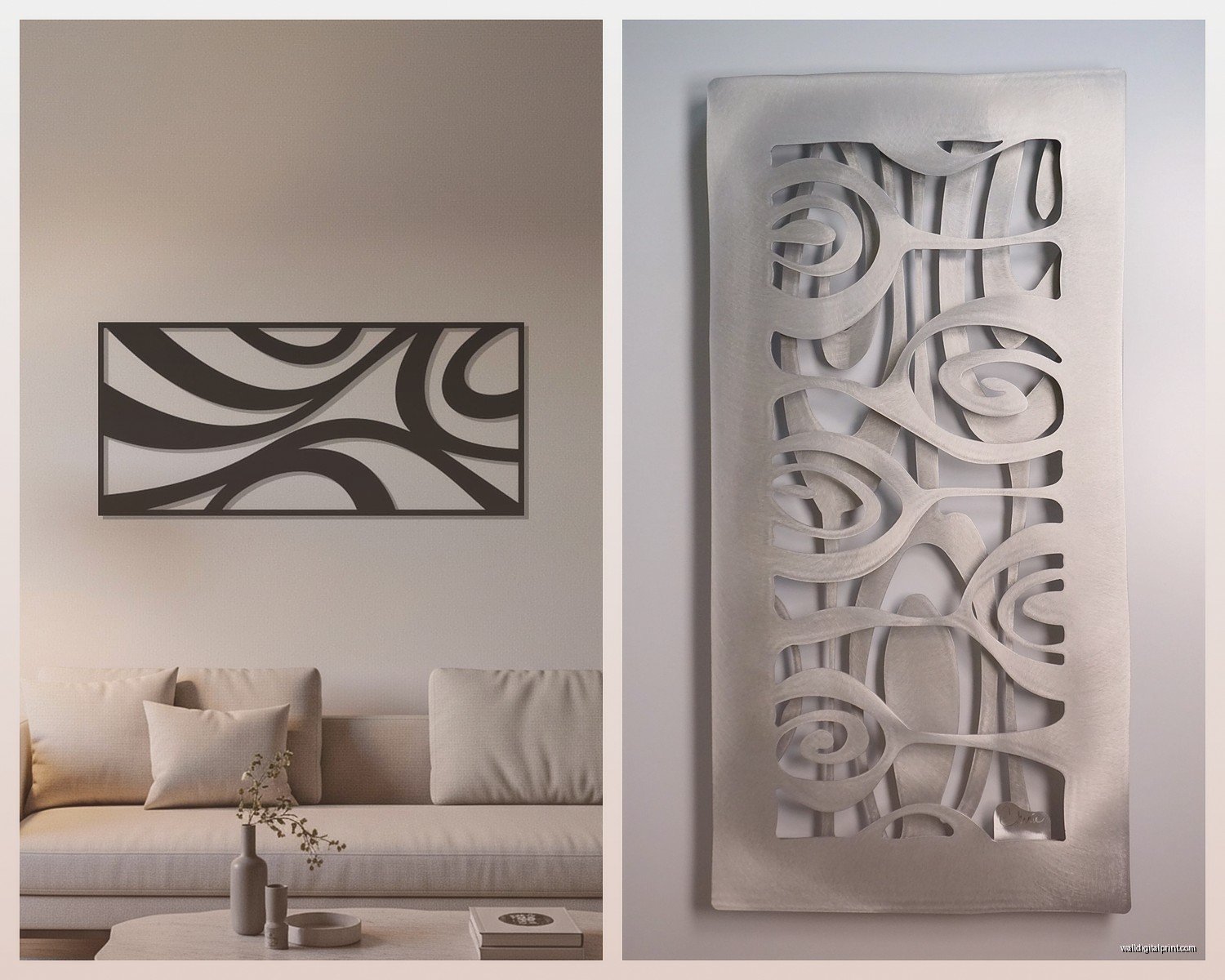
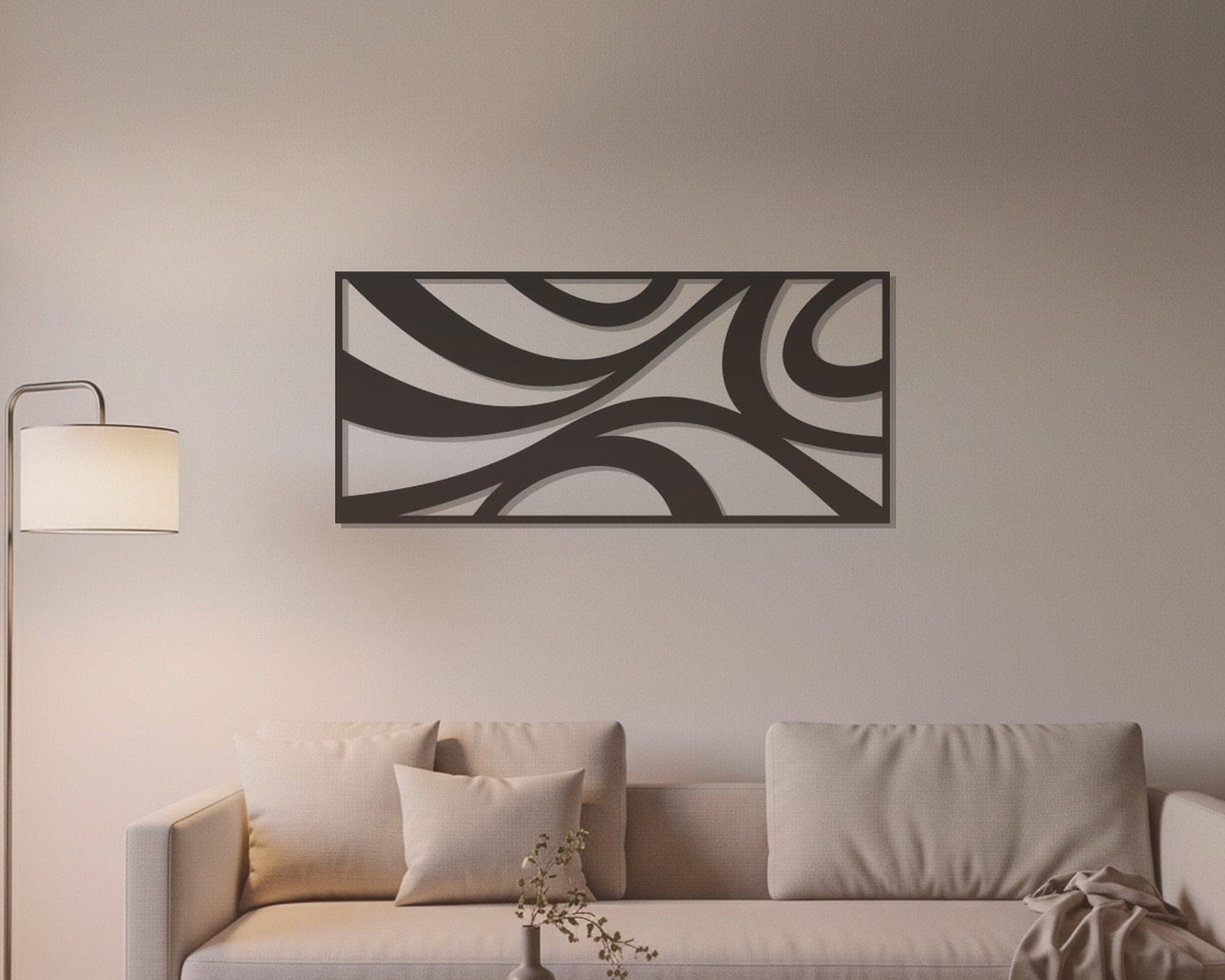
Flowing organic shapes like waves, wind patterns, or abstract florals soften modern spaces really well. I use these a lot in minimalist rooms that feel too cold. The metal keeps it from being too soft and romantic.
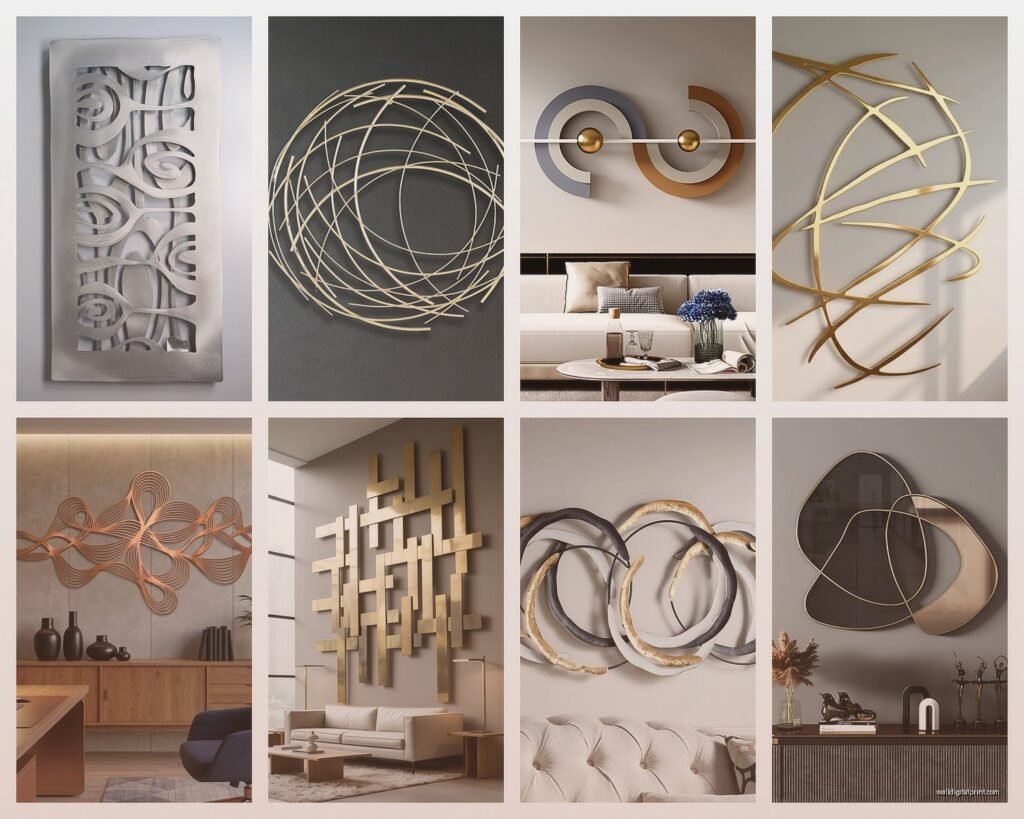
Circular and spiral designs are having a moment but be careful because they can feel very 2015 if you’re not careful. The ones that work have asymmetry or unexpected negative space, not just perfect concentric circles.
Layered dimensional pieces where different metal elements are mounted at varying depths… these are my favorite honestly because they create actual shadows and change so much throughout the day. But they need simple surroundings, you can’t put these in a maximalist room.
Color Walls and Backgrounds
Okay so funny story, I had a piece that looked AMAZING in my studio against white walls and then my client installed it against this deep charcoal wall and it completely disappeared. The contrast thing is real.
Light or bright walls: any finish works but especially beautiful with darker metals, copper, oil-rubbed finishes
Dark walls: you need either high-polish metals that reflect light, or pieces with painted elements that pop. Brushed silver can work but it needs to be substantial
Colored walls: this is tricky… pull a metal tone that either complements or contrasts deliberately. Like a warm copper piece on a cool blue wall creates tension in a good way. But brass on a yellow wall is just muddy.
Textured walls like brick or concrete: simpler designs work better, you’re already getting texture from the wall so super intricate metalwork becomes visual chaos
Lighting makes or breaks it
I cannot stress this enough. Metal art NEEDS proper lighting. Either natural light that hits it during the day or dedicated picture lights or track lighting. I’ve installed pieces that looked mediocre and then added two small LED spotlights and suddenly it’s a gallery moment.
Wall washers work well for larger pieces, but adjustable track lights let you highlight specific areas. And please… warm white bulbs (2700-3000K) for residential spaces. Cool white makes metal look cheap and sterile unless you’re going for a super industrial vibe.
Where To Actually Buy Quality Pieces
So you can find metal wall art literally everywhere from Target to high-end galleries and the quality difference is MASSIVE.
Budget options under $200: Target, West Elm, CB2 have decent starter pieces but expect thinner gauge metal and simpler designs. These are fine for apartments or rooms you’re not precious about.
Mid-range $200-$800: Wayfair has a huge selection (overwhelming honestly), Etsy has independent metal artists doing cool custom work, Article has some nice minimalist options. This is where I shop for most client projects.
Investment pieces $800+: Local metal artists, galleries, 1stDibs for vintage pieces. The metal is thicker, the welding is cleaner, the designs are more unique. Worth it if this is a forever home situation.
I found this amazing artist on Etsy who does custom geometric pieces and the quality is better than stuff I’ve seen for triple the price at fancy design stores. Sometimes you gotta dig through like 50 pages of results but there’s gold in there.
Maintenance Nobody Talks About
Metal art collects dust in all those crevices and shadows. I use a microfiber duster every couple weeks and for deeper cleaning, slightly damp microfiber cloth. Never use harsh chemicals or abrasive cleaners.
If you have copper or brass that you want to patina naturally, just leave it alone. If you want to keep it shiny, you’ll need to polish it every few months with metal polish specific to that finish.
Painted metal can chip at edges especially during cleaning, so be gentle. Touch-up paint exists but matching the exact color is basically impossible.
Combining Multiple Pieces
Gallery walls with metal art follow different rules than with frames. You need MORE space between pieces, like 4-6 inches minimum. The dimensional aspect means pieces can visually compete with each other if they’re too close.
I usually do odd numbers – 3 or 5 pieces – and vary the sizes significantly. Like one large focal piece with two smaller complementary pieces. Same-size multiples can work but they need to be intentionally matching, like a triptych situation.
Wait I forgot to mention, when you’re arranging multiple pieces, lay them out on the floor first in the exact configuration. Take a photo. Then measure the whole arrangement and mark it on the wall. I’ve rearranged floor layouts like eight times before finding the right composition and it saves SO much wall damage.
Mixing metal with other art
This works but you gotta be strategic. Metal art tends to dominate because of its dimensionality, so other pieces need strong visual weight. Large-scale photography, bold paintings, or textured fiber art can hold their own. Small delicate watercolors will get lost.
I did a client’s dining room where we mixed a large abstract metal piece with two framed botanical prints and it worked because the prints were oversized and had deep black frames that echoed the metal finish.
Common Mistakes I See Constantly
Hanging metal art in direct sunlight if it has any painted elements – the paint fades SO fast
Not considering the view from different angles… metal art looks different from the side than straight-on, make sure it works from your main seating areas
Buying pieces that are too intricate for the space – sometimes simple is better, especially in smaller rooms
Ignoring the weight and using inadequate hardware… just don’t
Choosing pieces that match your decor too perfectly – some contrast and tension actually makes rooms more interesting
Putting metal art in high-humidity areas like bathrooms without checking if it’s sealed properly – rust is real
Trending Styles Right Now
Okay so what I’m seeing a lot in 2024: oversized single-line drawings translated into metal wire, very minimalist. Topographic-inspired pieces with layered metal creating landscape depth. Abstract faces and figures done in continuous line style. Lots of natural motifs but abstracted – like leaves that are just curved metal strips suggesting the form rather than realistic.
The super ornate scrollwork stuff feels dated unless you’re doing like a specific Mediterranean or traditional style. Those sunburst mirrors had their moment and it’s passed.
Honestly the pieces that feel most current are the ones that embrace the metal’s industrial nature rather than trying to disguise it. Raw steel, visible welds, asymmetrical compositions.
You should think about what’ll still look good in 5-10 years though, not just what’s trendy right now. Classic geometric abstracts, organic flowing shapes, those have staying power.
My personal collection is mostly geometric stuff because I get bored easily and those pieces are versatile enough to move around and restyle without looking wrong. Just installed a new triangular piece above my desk and it’s been catching the afternoon light in this really cool way that makes me actually wanna work there instead of on the couch.